 FDA Thailand
 Factories / OEM
Cosmetic manufacturer in Thailand: choosing a factory and what to check first
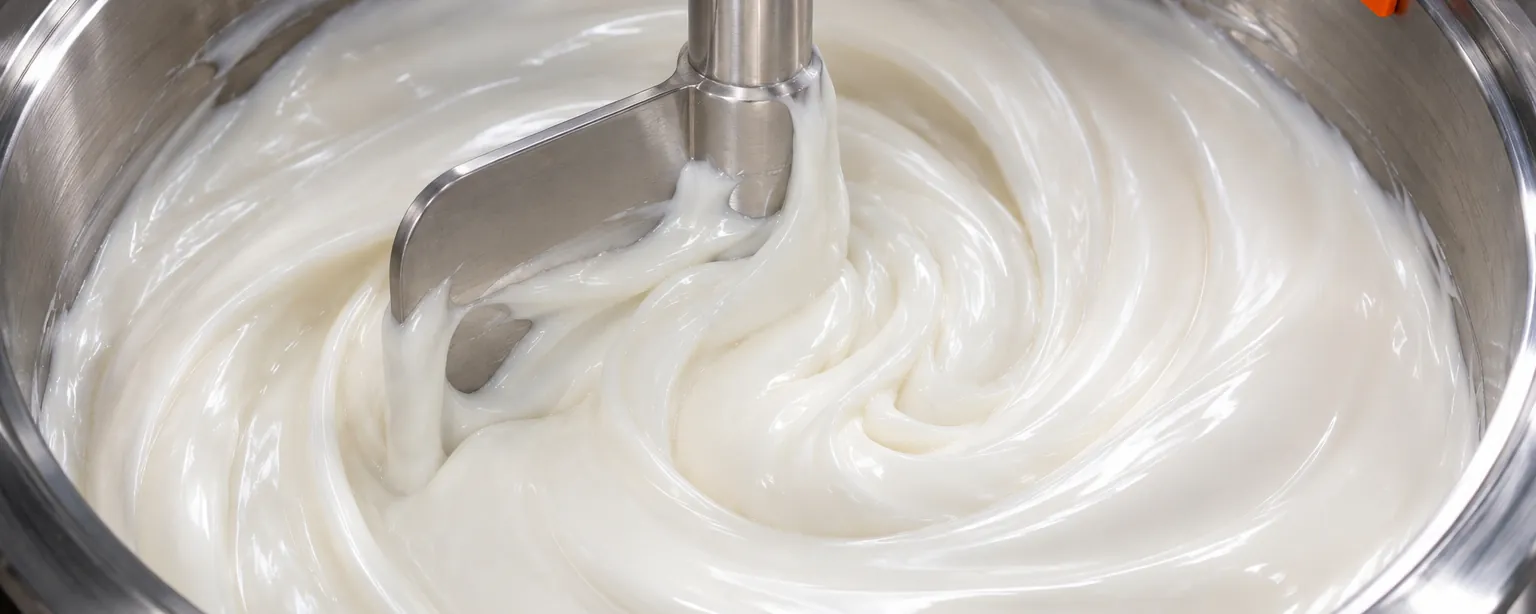
What a cosmetic manufacturer in Thailand does for your brand
People searching for a cosmetic manufacturer in Thailand are usually about to launch a skincare, make-up or hair care brand, or already have one and want a new producer. The questions that follow are the same: what will the factory do, what must the brand do itself, and how can you tell whether the factory is producing lawfully?
Section 4 of the Cosmetic Act B.E. 2558 (2015) defines a cosmetic as something applied to the external parts of the human body, including teeth and the oral mucosa, for cleanliness, beauty, changing appearance, suppressing body odour or keeping those parts in good condition. Section 14 requires anyone who will produce for sale, import for sale or manufacture cosmetics under contract to notify the product first, and to produce only after receiving the notification receipt.
When you hire a factory, the law gives each side a role: the contract manufacturer is the factory and the hiring party is the brand owner. A well-prepared cosmetic manufacturer can usually take on several parts of the work:
- Developing or adapting a formula and making samples to try
- Sourcing raw materials and packaging with quality documents
- Filing the notification as contract manufacturer, with your brand named as the hiring party
- Producing, filling, testing and releasing each batch
What the factory cannot do for you is decide the product name, the sales messages and the advertising. This guide gives the overall picture, from choosing how to outsource to the steps, checking the factory, the formula and the label. If you are making a cream and want the detail on notification ownership and contracts, read Contract cream manufacturing: what the factory must have.
OEM, ODM or ready-made formula: three ways to outsource cosmetic production
Cosmetic manufacturing services in Thailand come in several forms. The main difference is who develops the formula and who owns it when the work is done.
- OEM (Original Equipment Manufacturer): the brand already has a formula or product specification and the factory produces to it. This suits brands with their own formulator.
- ODM (Original Design Manufacturer): the factory develops a formula to the brand's brief, such as the target skin type, texture, fragrance and key ingredients.
- Ready-made formula: the factory already has developed formulas; the brand picks one and puts its own name on it. This is the fastest start, but the product may be similar to other brands using the same formula.
Whichever route you take, agree on ownership of the formula and its documents. Under contract manufacturing the receipt issued is form Jor.Ror.1, the contract manufacturing notification receipt, issued to the factory as contract manufacturer with the brand owner named as the hiring party. If you later move production elsewhere, the amendment form Jor.Kor.4 can change the name or address of premises only while the notifier remains the same person or legal entity, so it is not a way to transfer the notification. The new factory must file a new notification and will need the full formula and supporting documents.
With a ready-made formula, the trade name and cosmetic name on the label must match what was notified. Putting your brand name on the factory's existing product without a notification in that name means the product does not match its notification. Ask to see the receipt that carries your brand name before real production starts.
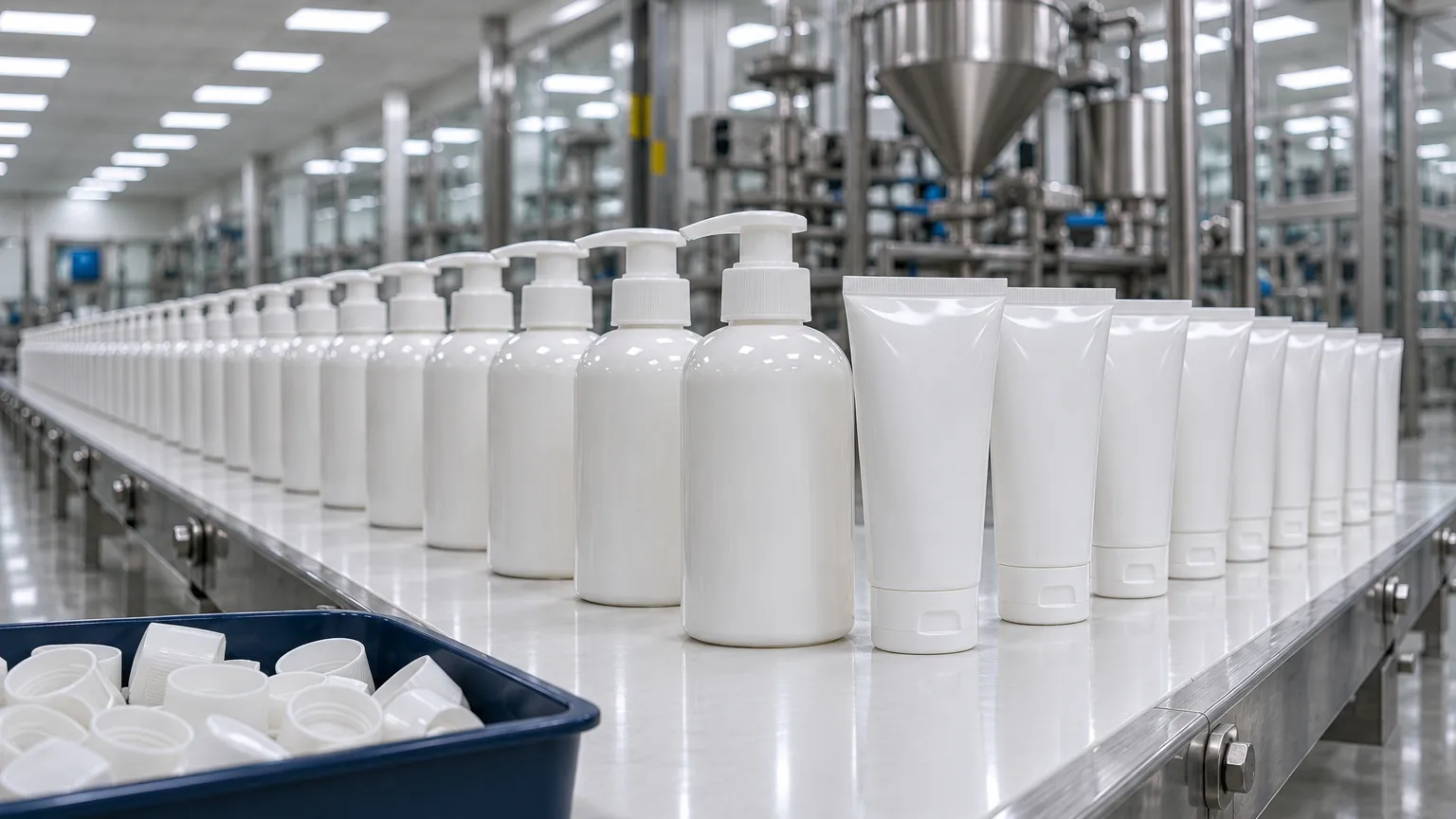
Source: Summary of outsourcing models used in the market · Contract manufacturing receipt Jor.Ror.1 under the MOPH notification on cosmetic notification (2018)
Cosmetic OEM in Thailand, step by step from brief to shelf
The sequence below works with most cosmetic factories. Some steps can run in parallel, but none should be skipped.
- Confirm the product is a cosmetic. The Thai FDA's notification criteria say products aimed at disease or at changing how the body functions are not cosmetics. If you plan claims like that, rethink the product first. You can run a first check with the product classification tool.
- Shortlist factories and check documents. Look at the premises, certificates and whether the production scope covers your product form.
- Check the formula against the ingredient lists. Prohibited substances, restricted substances, preservatives, colourants and UV filters.
- Make and test samples. Check texture, fragrance, stability and compatibility with the packaging you will actually use.
- Name the product and design the label. Check the name against prohibited words and include every mandatory label item.
- File the notification. The factory submits form Jor.Kor.1 as contract manufacturer, attaches the contract and receives form Jor.Ror.1.
- Produce and release the first batch. Produce exactly as notified, test quality and keep retained samples of the finished product.
- Launch and communicate. Sales messages must stay within the cosmetic scope and be backed by evidence.
Steps 1, 3 and 5 are where work most often has to go back. Checking the product type, formula and name before samples are made saves a lot of rework later. For the notification process in detail, see How to notify cosmetics in Thailand.
- 1Confirm it is a cosmetic
- 2Shortlist and check factories
- 3Check formula against the lists
- 4Make and test samples
- 5Name the product and design the label
- 6Factory files notification (Jor.Ror.1)
- 7Produce and release the first batch
- 8Launch within the cosmetic scope
Source: Cosmetic Act B.E. 2558 (2015) Section 14 · MOPH notification on cosmetic notification (2018)
Skincare, make-up or hair care: matching the product to the factory
The product form decides which factory can make it, because machinery, production rooms and certification scope differ from one factory to the next. A factory that makes excellent creams may not be able to make lipsticks, pressed powders or sprays.
| Product group | Examples | Ask the factory about |
|---|---|---|
| Creams and lotions | Moisturisers, body lotions | Emulsion mixing equipment, temperature control, filling into jars or tubes |
| Serums, gels and toners | Face serums, gel cleansers | Viscosity, clarity, and a preservative system suited to the formula |
| Cleansing and hair products | Liquid soap, shampoo, conditioner | Large mixing tanks, foam control, pump bottle filling |
| Make-up | Powders, lipsticks, eyeshadows | Powder pressing or stick moulding, and colourants allowed for each area of use |
| Sunscreens and sprays | Sunscreen creams, mineral water sprays | UV filters on the permitted list, evidence for the values printed on the label, pressurised filling |
Some ingredient lists are tied directly to the product form. The 2019 notification on UV filters lists 28 substances with maximum concentrations and bans certain forms in products with a risk of inhalation. The 2021 notification on permitted colourants states which cosmetic groups each colourant may be used in; some cannot be used around the eyes. A factory that regularly makes make-up or sunscreens will be familiar with these conditions.
A quick way to narrow the list is to ask whether the production scope on the factory's certificate covers your product form, and to see products it has already made in the same form.
Checking a cosmetic contract manufacturer yourself
You do not have to rely on what the factory tells you. Several documents can be checked yourself.
- Premises that meet the minimum rules. Annex A of the Ministry of Public Health notification on criteria for producing or importing cosmetics (2018) requires at least two separate rooms, separation from living quarters, a permanent sign reading "cosmetic production premises", a master formula matching the notification, production records and batch numbers. Use it as a question list when you visit.
- Premises certificate. The 2019 notification on certifying cosmetic production or import premises lets a notifier obtain a production premises certificate on form Sor.Kor.2 Kor. Ask for the original and check the name, address and expiry date.
- GMP certificate. If the factory claims ASEAN Cosmetic GMP, check its name against the list of certified establishments published by the Thai FDA, which shows the certificate number and its validity. For background, read What is ISO 22716.
- Notification numbers of products it already makes. Ask for the numbers of products the factory makes for other brands, then check them with the Thai FDA number checker to see whether the contract manufacturer's name and address match the factory you are talking to.
If the company you are dealing with is an intermediary without its own premises, that does not rule it out, but find out the name and address of the factory that actually produces from the start, because that name must appear on the notification receipt and on the label.
- ✓Premises meet Annex A, with the sign
- ✓Production premises certificate Sor.Kor.2 Kor
- ✓Name on the Thai FDA GMP list, if claimed
- ✓Notification numbers of products it makes are valid
Formula and ingredients: check the lists before notification
The formula is where notifications stall most often. The problem is rarely that the factory cannot make the product; it is usually that an ingredient is prohibited or used above the permitted level.
- Prohibited substances. The 2023 Ministry of Public Health notification on substances prohibited in cosmetics consolidated the list into one, and amendments followed, such as No. 5 (2025) and No. 6 (2026), adding several groups. A formula that passed before should be checked again whenever a new notification is issued.
- Restricted substances. The 2018 notification on substances that may be used, and its amendments, set the maximum level and conditions for each substance.
- Preservatives, colourants and UV filters. Each group has its own list; only listed substances may be used, within the stated limits.
A Thai FDA explanatory note says the notification system checks formulas automatically against legal conditions such as prohibited substances, preservatives, colourants and UV filters, so the formula entered must be right from the start. The 2017 notification on keeping cosmetic product information for inspection also requires producers and contract manufacturers to keep the formula with INCI names and percentages by weight, raw material specifications and production steps available for inspection.
If the brand buys raw materials and sends them to the factory, get complete documents from the supplier, such as INCI names, CAS numbers and information on relevant impurities. Run a first check with the formula checker and look up individual substances with the ingredient search. Recent additions are summarised in Thailand's banned cosmetic ingredients: latest updates.
Product names, labels and advertising: what the brand must handle
The factory is responsible for producing exactly as notified, but the product name, the label text and what the brand says to consumers are the brand owner's to manage.
Product name. The Thai FDA guideline on words that may not be used in trade names or cosmetic names says a name must not suggest a drug or claim effects beyond a cosmetic. The Thai FDA cosmetic notification criteria give examples such as CURE, MED, THERAPY and SLIMMING. Check the name before designing packaging; see Banned words in cosmetic product names.
Label. The Cosmetic Committee notification on cosmetic labels (2019) sets mandatory items such as the cosmetic name and trade name, the type, all ingredients in descending order, the notification number, and the name and address of the producer. Section 29 (1) of the Act classes a label that names a producer untruthfully as a counterfeit cosmetic, so the brand name appears alongside the factory's name rather than replacing it. Details are in Thai cosmetic label requirements.
Advertising. Unlike supplements, cosmetic advertising does not need prior approval, but Section 41 of the Act prohibits false or exaggerated statements, statements that mislead on material points, and claims beyond the purpose of a cosmetic. The 2024 ministerial regulation on unfair cosmetic advertising also prohibits two kinds of statement:
- Statements suggesting use inside the body, except for tampons and products for teeth and the oral mucosa
- Statements suggesting injection, use with devices that penetrate the body, or pushing substances deeper than the epidermis
Messages on brand pages, live streams and resellers' posts fall under the same rules. Check wording with the ad checker and labels with the label checker.
What to prepare before talking to a cosmetic factory
Preparing before the first meeting gives you answers you can compare across factories, and shows quickly which factories answer clearly.
- Product brief: target customers, product form, pack size and key ingredients
- The sales messages you want to use, so you can check early that they stay within the cosmetic scope
- Preferred route: OEM, ODM or ready-made formula, and who will own the formula
- The batch size the brand can take, to compare with each factory's minimum order
- Documents to ask for: production premises certificate, GMP certificate and scope, and a sample notification receipt the factory has filed
- Documents the brand wants to receive: a copy of the notification receipt, quality results for each batch, and label artwork that matches the notification
A factory that can answer document questions straight away and explain who is responsible for each step usually has its internal systems in order. Once you have chosen, use the contract checklist in Contract cream manufacturing together with the brand-side checklist in Starting your own skincare brand.
If you would like consultants to help develop the formula, check factories or prepare notification documents, see product development services and registration and notification services, or contact us through the contact page.
Frequently asked questions
What must a cosmetic manufacturer in Thailand have by law?
Premises that meet Annex A of the 2018 notification on criteria for producing or importing cosmetics, such as at least two separate rooms, a cosmetic production premises sign, a master formula and production records, and a notification for each product before production.
Who notifies the product when a factory makes it for my brand?
The factory files as contract manufacturer and receives form Jor.Ror.1, the contract manufacturing notification receipt, with the brand owner named as the hiring party. The brand does not need its own production premises.
What is the difference between cosmetic OEM and ODM?
With OEM the brand supplies the formula and the factory produces to it. With ODM the factory develops the formula to the brand's brief. The key difference is who owns the formula and the documents needed if you move factories.
Can I keep the same notification number if I change factory?
The amendment form Jor.Kor.4 only applies while the notifier remains the same person or legal entity, so it cannot transfer the notification. The new factory must notify again. Agree on handing over the formula and documents in the contract from the start.
Does an OEM cosmetic label have to show the factory's name?
Yes. The 2019 cosmetic label notification requires the producer's name and address, and Section 29 of the Act classes a label that names a producer untruthfully as a counterfeit cosmetic.
Does cosmetic advertising in Thailand need prior approval?
No prior approval is required, but messages must not be false or exaggerated or claim effects beyond a cosmetic under Section 41, and must avoid the two kinds of statement prohibited by the 2024 ministerial regulation.
Sources
- Cosmetic Act B.E. 2558 (2015) · Open source · Search our archive
- Thai FDA criteria for considering cosmetic notifications (revised 2021) · Open source · Search our archive
- MOPH notification on notification, issue of receipts, renewal, amendment and replacement of cosmetic notification receipts (2018) · Open source · Search our archive
- MOPH notification on criteria, methods and conditions for producing or importing cosmetics (2018) · Open source · Search our archive
- MOPH notification on certification of cosmetic production or import premises (2019) · Open source · Search our archive
- List of establishments certified to cosmetic GMP (Thai FDA) · Open source · Search our archive
- MOPH notification on keeping cosmetic product information for inspection (2017) · Open source · Search our archive
- MOPH notification on substances prohibited in cosmetics (2023) · Open source · Search our archive
- MOPH notification on substances prohibited in cosmetics (No. 6) (2026) · Open source · Search our archive
- MOPH notification on names, quantities and conditions of substances that may be used in cosmetics (2018) · Open source · Search our archive
- MOPH notification on colourants that may be used in cosmetics (2021) · Open source · Search our archive
- MOPH notification on UV filters that may be used in cosmetics (2019) · Open source · Search our archive
- Thai FDA explanatory note on cosmetic notification and automatic formula checking · Open source · Search our archive
- Thai FDA guideline on words prohibited in cosmetic trade names and product names (revised 2025) · Open source · Search our archive
- Cosmetic Committee notification on cosmetic labels (2019) · Open source · Search our archive
- Ministerial regulation on cosmetic advertising statements that are unfair to consumers or harmful to society (2024) · Open source · Search our archive
This article is for general information. It is not a Thai FDA ruling or legal advice, and rules change — check the latest notification or ask an expert before filing or producing. Spotted an error? Tell us and we will correct it
Related articles
 Factories / OEMContract cream manufacturing: what the factory must haveContract cream manufacturing in Thailand: what the factory must have, how to check GMP, whose notification it is, changing factories and contract terms.
 Factories / OEMWhat is ISO 22716? Cosmetic GMP explained for Thai factories and importersISO 22716 is the international cosmetic GMP guideline. How it compares with ASEAN GMP and Thai FDA rules, and how importers check certificates.

 Brand ownersStarting your own skincare brand: the legal checklistStart a skincare brand in Thailand legally in seven steps: the cosmetic test, names, formula, own site or OEM, notification, labels, after-launch duties.