 FDA Thailand
 Brand owners
Thai FDA hazardous substances registration: product types, notification and licences
What Thai FDA hazardous substances are, and the four types
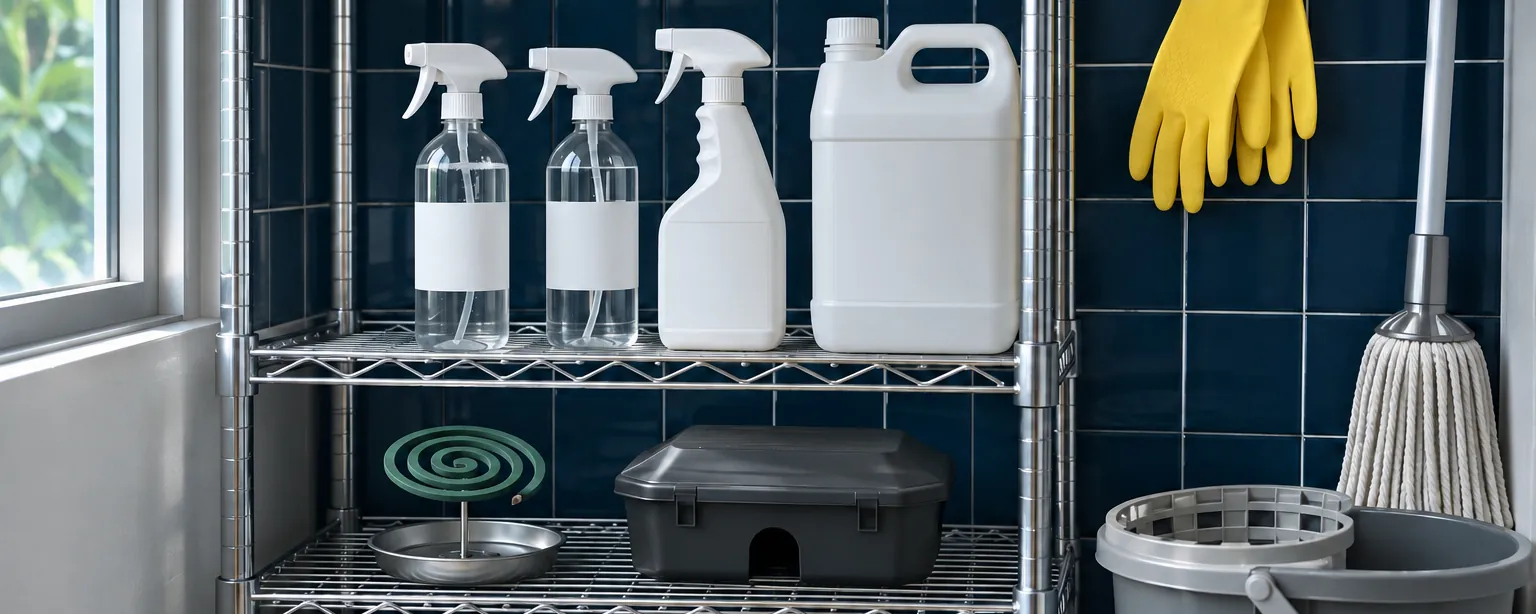
Thai FDA hazardous substances registration applies to household and public-health chemical products that fall under the Hazardous Substance Act B.E. 2535 (1992) and are supervised by the Thai Food and Drug Administration (Thai FDA). Typical examples are surface disinfectants, certain cleaning products, mosquito coils, topical mosquito repellents and rodent baits. Foreign brands, importers and factories first need to know which type their product is, because the type decides whether they notify, register or apply for a licence.
Section 4 of the Act defines hazardous substances broadly: explosive, flammable, oxidising, toxic, disease-causing, radioactive, mutagenic, corrosive or irritant substances, and any other substance that may harm people, animals, plants, property or the environment. Section 18 then sorts control into four types by risk.
- Type 1 manufacture, import, export or possession must follow prescribed rules. For products under the Thai FDA, the key rule is a factual notification before the first manufacture or import.
- Type 2 the operator must notify the activity in advance, and the product must be registered with the Thai FDA.
- Type 3 the operator needs a licence, and the product must also be registered.
- Type 4 manufacture, import, export, transit and possession are prohibited.
The Act has been amended several times. Amendment No. 4 of 2019 added definitions for transit, re-import and re-export and a chapter on advertising hazardous substances, so always read the consolidated text.
A common misunderstanding is that one chemical always has one type. In fact the hazardous substance list sets the type according to the intended use, so the same chemical can be a different type, or not a Thai FDA hazardous substance at all, when it is used for a different purpose.
Source: Hazardous Substance Act B.E. 2535, section 18, and the Thai FDA hazardous substance lists (updated 8 July 2025)
Which products the Thai FDA covers, and which go to other agencies
The hazardous substance list is a Ministry of Industry notification from 2013, amended up to No. 8 of 2025. It is split by responsible agency: the Department of Agriculture, the Department of Fisheries, the Department of Livestock Development, the Thai FDA, the Department of Industrial Works and the Department of Energy Business. Agricultural and factory chemicals therefore sit with other agencies. The Thai FDA list itself has three parts: named substances, substance groups and product groups.
The Thai FDA product-group list (consolidated, updated 8 July 2025) covers these main groups:
- Products that suppress, prevent, control, repel or kill insects, other animals or rodents are Type 2, for example mosquito coils, electric mosquito mats, topical mosquito repellents, rodent baits and flea and tick shampoos for pets. There is an exception for products made from essential oils or plant parts that contain no synthetic chemical as the active ingredient, as defined in the list.
- Disinfecting, cleaning, drain-unblocking, laundry-bleaching, correction-fluid and dry-cleaning products, with specific exceptions such as enzyme products or certain correction formats.
- Products that temporarily impair body functions for self-defence or to harm others are Type 4.
For cleaning products the type depends on the ingredient. The substance-group list classes non-ionic surfactants (other than nonylphenol ethoxylates) as Type 1 for cleaning uses within scope, excluding laundry detergent powder, while cationic surfactants are Type 3 under stated conditions. Amendment No. 8 of 2025 made hydrogen peroxide, and chlorine or chlorine-releasing substances, Type 3 when used for laundry bleaching, disinfecting, cleaning or, for the chlorine group, unblocking drains in household or public-health products. It also removed citronella oil from the Thai FDA list. If you sell insect-repelling essential oils, read how essential oils are classified by the Thai FDA as well.
Some listed items have exemptions. Naphthalene and p-dichlorobenzene mothballs used to repel insects or deodorise are exempt from registration (they must not be coloured or scented in a way that suggests food), and water-based correction fluids and solvent-free correction tapes or sheets are exempt from registration and operation notification. Each exemption covers only what the notification names.
Is your product a hazardous substance? Classification and the cosmetics boundary
The Thai FDA guidance on classifying hazardous substance products asks four questions in order:
- Purpose: is the product for household or public-health use? Industrial or agricultural use usually belongs to another agency.
- Form: technical-grade raw material, semi-finished product or finished product.
- Active ingredient: does it contain an insecticide or another active substance, and does it work chemically or physically?
- Listing: compare the substance, substance group and product group with the list, including its conditions of use.
The guidance warns against judging by the product name or the word "household" alone. If a substance is not listed but the product's purpose or claims match a controlled group, you may need a formal classification letter. Operators apply through the Thai FDA e-Submission system and print the reply from the system. More complex technical questions can go through a written technical consultation.
The Thai FDA also publishes separate guidance for chemicals used in industry (information as of 30 December 2025). Its examples include surface cleaners used in medical device manufacturing and ingredients used to make cosmetics or personal hygiene products, which are not Thai FDA hazardous substances. Once such a chemical is turned into a finished disinfectant or insecticide product, it must be classified again.
The boundary with cosmetics and medical devices
The word "disinfect" alone does not tell you which law applies. The Thai FDA summary of classification decisions for disinfecting and cleaning products (February 2025) looks at what the product is used on:
- Alcohol for cleaning hands without water is a cosmetic. The active ingredients are ethanol, isopropanol or n-propanol, and a total concentration below 70% by volume (or 65% by weight) makes it a cosmetic that may not be manufactured, imported or sold. Manufacturers or importers for sale must file a cosmetic notification; see how to notify cosmetics in Thailand.
- Disinfectants for household surfaces, floors, walls and sanitary ware fall in the disinfectant product group of the Thai FDA hazardous substance list.
- Products that disinfect skin or instruments may fall under drug law, and disinfectants for medical devices are assessed under medical device law, with risk levels that depend on the processing step.
Applying a product to skin does not automatically make it a cosmetic. Topical mosquito repellents are hazardous substances with their own Thai FDA efficacy test criteria, and flea and tick soaps or shampoos for pets have their own hazardous substance labelling notification. If you are sorting several soaps or shampoos, also read does soap need Thai FDA approval.
Type 1: factual notification before manufacture or import
Type 1 products do not need registration. Under the Ministry of Public Health notification on factual notification of Type 1 hazardous substances under the Thai FDA, B.E. 2567 (2024), which replaced the 2019 version, manufacturers and importers must:
- Notify before the first manufacture or import using form Wor Or./Sor Tor 5 (a Ministry of Public Health form under the hazardous substance law) with supporting evidence, one product at a time and electronically as the default channel.
- Confirm the notification periodically, every six calendar years counted from the year of notification, using form Wor Or./Sor Tor 24 by the end of January of the following year. Notifications issued before this rule took effect must be confirmed under the transitional provision, and a notification that is not confirmed in time must be filed again.
- File an additional notification before any change using form Wor Or./Sor Tor 16, for example a new colour or fragrance. A change of the domestic trade name, the name or ratio of an active ingredient, or the product's form requires a fresh first notification.
The Thai FDA process sheet asks for the full 100% formula at the first notification. Confirmation is done in the system and is accepted automatically, but cancellation needs a power of attorney that covers cancellation, or a signed letter of intent from an authorised signatory. The filer needs a digital user account and access rights to the hazardous substance system under a power of attorney.
A notification receipt does not exempt you from anything else. The Thai FDA practice manual on permits (2010) states that a notification receipt does not exempt premises and labelling rules, and that substances should be checked against the list conditions before notifying. A Type 1 product may carry a disinfecting claim only if the formula meets the conditions and test results support it; not every cleaning formula can claim to disinfect.
Refill stations
A Ministry of Public Health notification of 2025 allows possession of Type 1 products for refilling at a service point (refill station). It covers only liquid cleaners for floors, walls, sanitary ware and other materials based on the listed surfactants that have already been notified. The refill operator must notify with form Wor Or./Sor Tor 26 before starting, may not mix or alter the product, needs consent from the manufacturer or importer, must record every refill and must label the customer's container with a QR code linking to the full label.
Thai FDA hazardous substances registration for Type 2 and Type 3
Thai FDA hazardous substances registration applies to Type 2 and Type 3 products, both locally made and imported. The Ministry of Public Health notification on registration, issuance and renewal of registration certificates (No. 4), B.E. 2567 (2024) sets these basics:
- Registration applications are filed electronically as the default, with other channels only when that is not possible.
- A registration certificate is valid until the end of the sixth calendar year after the year of issue, although officers may set a shorter term when necessary.
- Samples made or imported for registration need a permit on form Wor Or./Sor Tor 8, or a self-declaration on form Wor Or./Sor Tor 15 for no more than 5 kg or 5 litres. The self-declaration is filed before manufacture or import, may be used once per registration and does not cover technical-grade or semi-finished insect or animal control products.
The hazardous substance group's process sheets split the work into filing in the system, completeness check, assessment by application type, decision and printing the certificate from the system. Pick the checklist that matches the product category from the start: if you choose the wrong one you cannot reuse the original receipt number. There are three checklist families:
- Cleaning products and correction products
- Disinfectants and laundry bleach
- Insect and rodent control products (separated into technical grade, semi-finished and finished)
Each family has sub-routes such as a new active ingredient, a previously registered active, repacking or combined packs, referencing an existing registration to use a new trade name, transfer of a registration, and export-only registration. An export-only registration cannot be used to sell in Thailand. To sell locally, the product must be registered again, citing the earlier file and adding the missing data.
The Thai FDA manual distinguishes a reference (refer) from a transfer. A reference shares data while the original registration stays with its owner and needs a letter of consent. A transfer is permanent, and the old certificate must be cancelled and returned when the new one is issued. Importers changing distributors should choose the right route from the outset.
- 1Classify the productCompare the Thai FDA lists with the intended use
- 2Set up system accessDigital user account and power of attorney
- 3Choose the checklistCleaning, disinfectant, or insect and rodent control
- 4File form Wor Or./Sor Tor 1Formula, label, SDS, efficacy and assay results
- 5Answer deficienciesRespond to officers' requests in the system
- 6Print the certificateThen notify the operation (Type 2) or apply for a licence (Type 3)
Source: Ministry of Public Health notification on registration of Thai FDA hazardous substances (No. 4) B.E. 2567 and Thai FDA process sheets
Documents for a hazardous substance registration dossier
Before you file, read the Thai FDA notification on the list of data, documents and evidence for hazardous substance registration, B.E. 2568 (2025). It took effect on 19 November 2025 and replaced the 2017 notification; pending applications follow the new rules with necessary adaptation. The core documents are:
- Form Wor Or./Sor Tor 1 and a draft label for products sold in Thailand.
- The product formula, with the function of each ingredient and the product specification. Insect and animal control products have extra specifications depending on the formulation.
- A safety data sheet (SDS) and a description of the manufacturing process.
- Data on a new active ingredient, if it has never been registered: identity, physical and chemical properties, analytical method, toxicology, environmental fate and disposal.
- Efficacy test results for insect and animal control products, disinfectants and laundry bleach. The method must match the directions for use on the label. If the Thai FDA has not set a method, submit your method, results and references. Chlorine- or oxygen-based products with documented use concentrations may submit references instead, under stated conditions.
- Active ingredient assay results when the substance is on the list that requires them. Results must come from a government or Thai FDA-recognised private laboratory and from the same batch used for efficacy testing, except where the notification allows otherwise.
- A certificate of free sale for imported insect or animal control products, subject to the conditions and exceptions. If no validity is stated, it is accepted for 2 years. Local manufacturers need evidence of registration of the raw material where applicable.
- Pack images, plus consent or data-access letters for repacking, references or transfers.
The September 2017 registration guidance is still useful on test reports. A report must link to the product filed; if the name differs, a letter must confirm it is the same product; if the report belongs to someone else, a consent letter is needed; and disinfecting claims must match the organisms, surfaces and method tested. For the document list itself, follow the 2025 notification.
A frequent problem for importers is that the foreign manufacturer's documents use different product names, formulas or batch numbers. Make sure the name, formula, SDS, label and test reports all point to the same product before you file.
Type 2 operation notification and Type 3 licences
A registration certificate authorises the product. Manufacturing, importing, exporting or holding it still requires separate documents depending on the type.
Type 2: operation notification receipt
The Thai FDA notification on notification, receipts and renewal for Type 2 operations, B.E. 2560 (2017), which replaced the 2013 version, requires a notification on form Wor Or./Sor Tor 3 with evidence and compliance with the relevant premises standards. The receipt is valid until the end of the third calendar year after the year of issue. Amendments use form Wor Or./Sor Tor 11 but cannot change the trade name, the name or amount of an active ingredient, or the product's form, and renewal uses form Wor Or./Sor Tor 12 before expiry. Filing is now through e-Submission, and the checklist separates new premises or production lines from existing ones; new premises need a map, a layout plan and photographs.
Type 3: licence
Manufacturing, importing, exporting or possessing Type 3 products requires a licence under the Ministerial Regulation of 1994, which sets detailed premises criteria: location and open space, building, ventilation, non-absorbent floors, fire exits, storage suited to the substance, spill prevention, emergency equipment, personal protective equipment, first aid, and waste handling that does not rely on dilution. Ministerial Regulation No. 5 of 2025 introduced electronic licences, made electronic filing the default and set form Wor Or. 9 for renewal.
Applications for a new production site, a new production line, a new storage site or possession involve a site inspection. The Thai FDA checklist asks for maps, layouts, photographs, proof of the right to use the premises, factory evidence where relevant, safety equipment and waste management. Anyone selling hydrogen peroxide or chlorine products in the groups that Amendment No. 8 of 2025 moved to Type 3 should check that the licences are in place.
Pest control services
Pest and rodent control service companies must notify possession of Type 2 products or obtain a Type 3 licence depending on the substances they use, and they need a supervisor for hazardous substances used in contracted services who has passed the training course under the Thai FDA notification of 2016. Businesses that hold registered finished products only to clean vehicles, wash or dry-clean clothes, or remove fleas and ticks from pets are exempt from notification and licensing within the scope of the exemption.
Labels and advertising
The Ministry of Public Health notifications on labels of hazardous substances under the Thai FDA (2015, and No. 2 of 2022) set the label content for products sold in Thailand. Duties differ by type: for Type 1 the operator prepares a compliant label, while for Type 2 and Type 3 a draft label is submitted with the registration.
- Active ingredient names must appear in both Thai and English; ratios may be in Thai or English; other prescribed items must be in Thai.
- Safety text in another language must match the Thai text, and letters must be at least 1 mm high and clearly legible.
- The registration number is shown as the letters "Wor Or Sor"
(วอส., the prefix used for Thai FDA hazardous substance registrations) followed by the number inside the Thai FDA frame, in a colour that contrasts with the background. Type 1 products show the notification number instead. - Pictograms, signal words and hazard statements must follow the Globally Harmonized System of classification and labelling (GHS) under the 2015 notification, which also requires manufacturers and importers to prepare safety data sheets.
- Very small containers that cannot carry everything must show at least the substance name, ratio, trade name, hazard pictogram and signal word; the rest can go on the outer pack or a leaflet.
The hazardous substance group's label review criteria (September 2025) list claims that need evidence and prohibit overstatements such as "safe", "non-irritating" or "guaranteed results". A one-step clean-and-disinfect claim needs a one-step cleaner disinfectant test, virus claims need results against that virus, and nature imagery must reflect the actual ingredients. The Thai FDA notification on disinfectant label claims pairs each claim with test organisms:
- "Kills bacteria" requires results against Staphylococcus aureus and Salmonella enterica (choleraesuis).
- "Kills bacteria in healthcare settings" also requires Pseudomonas aeruginosa.
- "Kills fungi" requires Trichophyton mentagrophytes.
- "Kills germs" may be used when results cover bacteria and fungi, or bacteria and viruses.
Advertising
Amendment No. 4 of 2019 prohibits advertising hazardous substances with unfair or socially harmful statements, such as false, exaggerated or materially misleading claims. The authority may order changes or stop an advertisement, and operators may ask for an opinion before advertising. The Thai FDA advertising guidance adds that:
- The product name must match the notification or registration. Properties and directions for Type 2 and 3 must match the label and registration data; Type 1 claims must match the notified data and be backed by credible scientific evidence.
- Comparisons are allowed only with your own products.
- No person may appear as, or imply being, a medical professional.
- Award claims need evidence with the source and year, and lucky draws, gifts or references to the monarchy must follow the Ministry of Public Health notification of 2024.
- ✓Trade name, and the name and ratio of active ingredients
- ✓Benefits, directions for use, warnings and storage
- ✓Poisoning symptoms and first aid (where applicable)
- ✓Wor Or Sor registration number in the Thai FDA frame, or the notification number
- ✓Net contents in metric units
- ✓Manufacturer or importer and country of manufacture
- ✓Manufacturing date and batch number
- ✓GHS pictograms, signal word and hazard statements
After registration: amendments, renewal and cancellation
Getting a registration is not the end. The holder must keep the documents aligned with the actual product for the whole life of the registration.
- Amending the certificate uses form Wor Or./Sor Tor 6 or a letter with evidence, filed through e-Submission as the default. This route cannot change the trade name, the name or amount of an active ingredient, or the product's form. Changes to benefits, efficacy or use rate need test results or supporting data.
- Renewing the certificate uses form Wor Or./Sor Tor 7 with evidence, filed electronically before the certificate expires within the window the notification sets. A surveillance inspection of your premises is not a renewal.
- Type 2 receipts and Type 3 licences follow their own renewal cycles, separate from the registration certificate. Amendments to a Type 3 licence cannot change the substance name, chemical formula, ratio or form.
- Label changes must be applied within the period you are told, and leftover stock is not a reason to keep using a label that no longer matches the registration.
- Replacement copies are not needed for certificates, receipts and licences issued through e-Submission, because you can print them from the system.
- Cancellation of a certificate or a Type 1 notification is filed in the system by someone whose power of attorney covers cancellation.
The Thai FDA penalty summary lists each obligation as a separate offence: not notifying a Type 1 product, not notifying a Type 2 operation, operating Type 3 without a licence, products that do not match the registration, labels and advertising. Being complete on one point does not cover another.
Checklist for foreign brands and importers
Use this list before you register or before the first shipment reaches Thailand.
- Write down the intended use: household, public health, industrial or agricultural.
- List the active ingredients with CAS numbers and compare them with the latest Thai FDA substance, substance-group and product-group lists.
- Check the boundary with cosmetics, drugs and medical devices by asking whether the product is used on hands, skin, instruments or surfaces.
- If in doubt, request a classification letter before investing in labels and packaging.
- Set up a digital user account and a power of attorney for the hazardous substance system.
- Type 1: prepare the full 100% formula, notify before the first manufacture or import, and diarise the confirmation cycle.
- Type 2 and 3: choose the right checklist and prepare the formula, SDS, efficacy results, assay results and certificate of free sale where required.
- Plan registration samples: permit or self-declaration.
- Obtain the operation notification receipt (Type 2) or the licence, with premises ready for inspection (Type 3).
- Prepare the label under the labelling and GHS rules, match every claim to test data, and check advertising against the registration.
- Keep separate renewal dates for every certificate, receipt and licence.
Our team can classify your product, prepare the dossier and file hazardous substance registrations with the Thai FDA. If you would like the formula or label reviewed before filing, send the details through the service pages below.
Frequently asked questions
How are Thai FDA hazardous substances different from those of other agencies?
The hazardous substance list splits responsibility by use. The Thai FDA covers household and public-health products such as disinfectants, some cleaning products and household insect control. The Departments of Agriculture, Fisheries, Livestock Development, Industrial Works and Energy Business supervise the items on their own lists.
Is alcohol hand gel a hazardous substance?
No. Alcohol used to clean hands without water is a cosmetic and needs a cosmetic notification, with an alcohol concentration that meets the minimum in the notification. Disinfectants for household surfaces fall in the disinfectant group of the Thai FDA hazardous substance list.
Do Type 1 products need registration?
No registration is needed, but you must file a factual notification on form Wor Or./Sor Tor 5 before the first manufacture or import, confirm it every six calendar years, and file an additional notification before any change.
What does an importer of a Type 2 product need?
A product registration certificate and an operation notification receipt for import. For imported insect or animal control products, the registration file also needs a certificate of free sale under the conditions of the 2025 notification.
How long is a hazardous substance registration valid?
Until the end of the sixth calendar year after the year of issue, unless officers set a shorter term. Renew on form Wor Or./Sor Tor 7 electronically before the certificate expires.
What if I am not sure my product is a hazardous substance?
Start with the Thai FDA classification guidance: purpose, form, active ingredient and list entry. If it is still unclear, request a classification letter through e-Submission or a written technical consultation before investing in labels and packaging.
Sources
- Hazardous Substance Act B.E. 2535 (1992), consolidated text · Open source · Search our archive
- Hazardous Substance Act (No. 4) B.E. 2562 (2019) · Open source · Search our archive
- Ministry of Industry notifications on the list of hazardous substances B.E. 2556 and amendments up to No. 8 B.E. 2568 (consolidated) · Open source · Search our archive
- Thai FDA hazardous substance list 4.1 (updated 8 July 2025) · Open source · Search our archive
- Thai FDA hazardous substance list 4.2 (updated 8 July 2025) · Open source · Search our archive
- Thai FDA hazardous substance list 4.3 (updated 8 July 2025) · Open source · Search our archive
- Ministry of Public Health notification exempting naphthalene and p-dichlorobenzene from registration · Open source · Search our archive
- Ministry of Public Health notification exempting correction products from registration and operation notification B.E. 2541 · Open source · Search our archive
- Thai FDA guidance on classifying hazardous substance products (info12-1) · Open source · Search our archive
- Requesting a classification letter for hazardous substance products (info12-2) · Open source · Search our archive
- Thai FDA infographic on classifying hazardous substance products · Open source · Search our archive
- Requesting a written technical consultation on hazardous substances (info25) · Open source · Search our archive
- Thai FDA guidance on classifying industrial chemicals and products (as of 30 December 2025) · Open source · Search our archive
- Thai FDA summary of classification decisions for disinfecting and cleaning products (February 2025) · Open source · Search our archive
- Ministry of Public Health notification on active ingredients and characteristics of prohibited alcohol hand hygiene cosmetics B.E. 2567 · Open source · Search our archive
- Efficacy test criteria for topical mosquito repellents · Open source · Search our archive
- Efficacy test criteria for mosquito coils · Open source · Search our archive
- Thai FDA notification on labelling of finished rodenticide products · Open source · Search our archive
- Thai FDA notification on labelling of pet ectoparasite control soaps and shampoos · Open source · Search our archive
- Ministry of Public Health notification on factual notification of Type 1 hazardous substances under the Thai FDA B.E. 2567 · Open source · Search our archive
- Type 1 factual notification, additional notification and confirmation (info19) · Open source · Search our archive
- User manual for confirming Type 1 notifications (15 April 2025) · Open source · Search our archive
- Ministry of Public Health notification on possession of Type 1 hazardous substances for refill stations B.E. 2568 · Open source · Search our archive
- Thai FDA manual on hazardous substance permits · Open source · Search our archive
- Ministry of Public Health notification on registration, certificates and renewal of Thai FDA hazardous substances (No. 4) B.E. 2567 · Open source · Search our archive
- Registration process for Type 2 and Type 3 products (Thai FDA hazardous substance group) · Open source · Search our archive
- Registration of cleaning products (info07) · Open source · Search our archive
- Registration with a new trade name referencing an existing registration (info09) · Open source · Search our archive
- Export-only registration (info01) · Open source · Search our archive
- Thai FDA practice note on export-only registration (2016) · Open source · Search our archive
- Permit to import or manufacture hazardous substance samples (info17) · Open source · Search our archive
- Thai FDA notification on data, documents and evidence for hazardous substance registration B.E. 2568 · Open source · Search our archive
- Infographic: registration document list under the 2025 notification · Open source · Search our archive
- Thai FDA guidance on registration of hazardous substances (September 2017) · Open source · Search our archive
- Registration checklist: cleaning and correction products · Open source · Search our archive
- Registration checklist: disinfectants and laundry bleach · Open source · Search our archive
- Registration checklist: insect and rodent control products · Open source · Search our archive
- List of hazardous substances requiring active ingredient assay results · Open source · Search our archive
- Thai FDA notification on notification, receipts and renewal for Type 2 hazardous substance operations B.E. 2560 · Open source · Search our archive
- Type 2 operation notification and amendments (info41) · Open source · Search our archive
- Checklist: Type 2 operation notification and amendments · Open source · Search our archive
- Ministerial Regulation B.E. 2537 under the Hazardous Substance Act · Open source · Search our archive
- Ministerial Regulation No. 5 (B.E. 2568) under the Hazardous Substance Act · Open source · Search our archive
- Checklist: Type 3 licence applications requiring site inspection · Open source · Search our archive
- Type 3 manufacturing licence for a new site or production line (info27) · Open source · Search our archive
- Type 3 possession licence (info34) · Open source · Search our archive
- Thai FDA notification on training courses for supervisors of hazardous substances used in contracted services B.E. 2559 · Open source · Search our archive
- Ministry of Public Health notification exempting possession of hazardous substances for certain contracted services · Open source · Search our archive
- Thai FDA frequently asked questions on hazardous substances (2022) · Open source · Search our archive
- Thai FDA rules for hazardous substance product labels · Open source · Search our archive
- Ministry of Public Health notification on labels of hazardous substances under the Thai FDA B.E. 2558 · Open source · Search our archive
- Ministry of Public Health notification on labels of hazardous substances under the Thai FDA (No. 2) B.E. 2565 · Open source · Search our archive
- Ministry of Public Health notification on the GHS classification and communication system for Thai FDA hazardous substances B.E. 2558 · Open source · Search our archive
- Hazardous substance labelling rules (info43) · Open source · Search our archive
- Thai FDA label review criteria for hazardous substances (September 2025) · Open source · Search our archive
- Thai FDA notification on claims on disinfectant labels · Open source · Search our archive
- Thai FDA advertising guidance for hazardous substances · Open source · Search our archive
- Hazardous substance advertising guidance (info30) · Open source · Search our archive
- Amending a hazardous substance registration certificate (info18) · Open source · Search our archive
- Renewing a hazardous substance registration certificate (info22) · Open source · Search our archive
- Replacement registration certificates and Type 3 licences (info21) · Open source · Search our archive
- User manual for cancelling registrations and Type 1 notifications (3 October 2025) · Open source · Search our archive
- Thai FDA summary of penalties under the Hazardous Substance Act · Open source · Search our archive
This article is for general information. It is not a Thai FDA ruling or legal advice, and rules change — check the latest notification or ask an expert before filing or producing. Spotted an error? Tell us and we will correct it
Related articles
 Brand ownersSelling essential oils in Thailand: cosmetic, herbal product or hazardous substance?Essential oil Thailand rules: when an oil is a cosmetic, herbal product, hazardous substance or OCPB product, plus banned fragrance materials, Piperonal.
 Brand ownersHow to notify cosmetics with the Thai FDA: a step-by-step guide from formula to notification numberThai cosmetic notification step by step: the cosmetic test, formula screening, applicant and premises rules, documents, JK.1 filing, labels and renewal.
 Brand ownersDoes soap need Thai FDA notification? Cosmetic vs herbal soapMost soap is a cosmetic and must be notified. Claims about health, disease or use on animals move it to other laws. See where the line falls.