 FDA Thailand
 Exporters
Exporting supplements: adapting labels and formulas per market

Exporting dietary supplements from Thailand: Thai rules and destination rules cover different things
Plans to export dietary supplements from Thailand often start with the product already sold at home, but a supplement rarely ships unchanged. The same product may need a different formula, different active-ingredient amounts, different label wording and a different language in each market, because every country decides for itself what counts as a supplement, which ingredients are allowed and what a label may say.
Planning therefore splits into two sides. The Thai side requires a licensed plant, good manufacturing practice (GMP), and minimum details on export labels under the food label notification. The destination side governs the formula, registration and label details, and exporters must check those against the destination's own law, or with the importer there, every time.
This guide covers what can be verified in Thai law and Thai FDA manuals, and gives general guidance on what usually needs adapting per market. For exports of processed food in general, see export processed food from Thailand.
The Thai base: a licensed plant that meets GMP
The Food Act B.E. 2522 (1979) requires anyone setting up a plant to produce food for sale to obtain a licence first, and production for export rests on the same base. The Thai FDA supplement permit manual (revised 2026) describes two stages: pass a GMP assessment of the production site, then apply for the licence.
- Sites with machinery totalling 50 horsepower or more, or 50 or more workers, file form Or.1 and receive a food production licence (Or.2).
- Smaller sites file form Sor.Bor.1 and receive a certificate for a non-factory production site (Sor.Bor.1/1).
- The site must meet GMP under Ministry of Public Health Notification No. 420 (2020).
The Thai FDA manual for export-only supplements states plainly that the site must already be licensed for that type of food. Brand owners using a contract manufacturer (OEM) should confirm the factory's licence covers dietary supplements and that it meets GMP 420. Questions to ask a factory are in supplement OEM in Thailand, and the requirements themselves in GMP 420.
Export-only supplements: do you need a food serial number?
The Thai FDA regulation on food serial numbers (2024) lists four groups of food that need a serial number. Dietary supplements fall in the group of foods with prescribed quality or standards, and the regulation exempts groups 2 to 4 when produced for export and not sold in Thailand.
The Thai FDA manual for export-only supplements adds:
- Products made only for export and not sold in Thailand need no food serial number.
- If a buyer or the destination wants a number, file a food registration of the export type through e-Submission to receive a Sor.Bor.5/1 certificate.
- The product must be saleable as a dietary supplement in the buyer's country.
- Products with an export-only certificate may not be sold in Thailand.
- After the number is issued, production must match what was permitted, and the plant must keep the permitted application, a document confirming the product can be sold as a supplement in the buyer's country with its formula, and the product quality specification.
If the same product will be sold in Thailand and abroad, it needs a domestic serial number, and the Thai product must meet the supplement notifications and carry a full Thai label. How to read the 13-digit number is in the 13-digit Thai FDA number, and the domestic process in register a dietary supplement in Thailand.
Source: Thai FDA serial number regulation 2024, export-only supplement manual, MOPH Notification No. 450 as amended by No. 474
Adapting the formula for each market: how far Thai rules allow
A common question is whether an overseas customer can ask for ingredients or amounts that differ from the formula sold in Thailand. Thai FDA documents that can be checked say:
- Quality follows the buyer's country. The export-only supplement manual requires quality to meet the buyer country's specifications and prohibits the use of banned substances.
- Evidence the product is saleable at destination. The plant must keep a document confirming the product can be sold as a dietary supplement in the buyer's country, alongside the formula.
- Novel food. The Thai FDA clarification of Notification No. 376 (2016) states that the novel food notification does not apply to novel foods produced for export. To sell in Thailand, however, a substance with less than fifteen years of history as food must pass a safety assessment first.
- The Thai formula. Products sold in Thailand must still meet Notification No. 293 (2005) and its amendments, including the types and maximum daily amounts of vitamins and minerals under No. 448.
What to check on the destination side
Each country has its own lists of permitted or prohibited substances, maximum amounts, permitted chemical forms of vitamins and minerals, permitted additives and contaminant limits. Some countries classify certain products as medicines or another category instead of supplements. Before agreeing a formula, ask the importer at destination to confirm in writing that it can be sold in the intended category, and check the regulator's published rules in that country too. Run a first check against Thai criteria with the formula check.
Export labels under Notification No. 474: any language, minimum details
Ministry of Public Health Notification No. 474 (2026) amends the food label notification No. 450 (2024) and replaces clause 7 on labels of food produced for export. No. 474 was published in the Royal Gazette on 30 October 2026 and took effect the next day. The new clause 7 says:
- Labels of food produced for export may be in any language.
- They must show at least one of the following: the food serial number, the food production premises number, or the name and address of the production site.
A product without a serial number, because it is made only for export, can therefore show the premises number or the site's name and address instead. The export-only supplement manual, written before No. 474, also mentions showing the country of manufacture. Keeping a made-in-Thailand statement on the label conflicts with nothing, and many destinations require country of origin under their own rules.
Adding export names or labels to a product that already has a serial number
If a product already has a domestic serial number and you want a foreign-language name or an export label, the Thai FDA e-Submission manual describes filing an explanatory letter to add a food name or label for export, under the food production licence. You enter the foreign name and the export countries, and can add several countries. For export labels on food in general, see export processed food from Thailand.
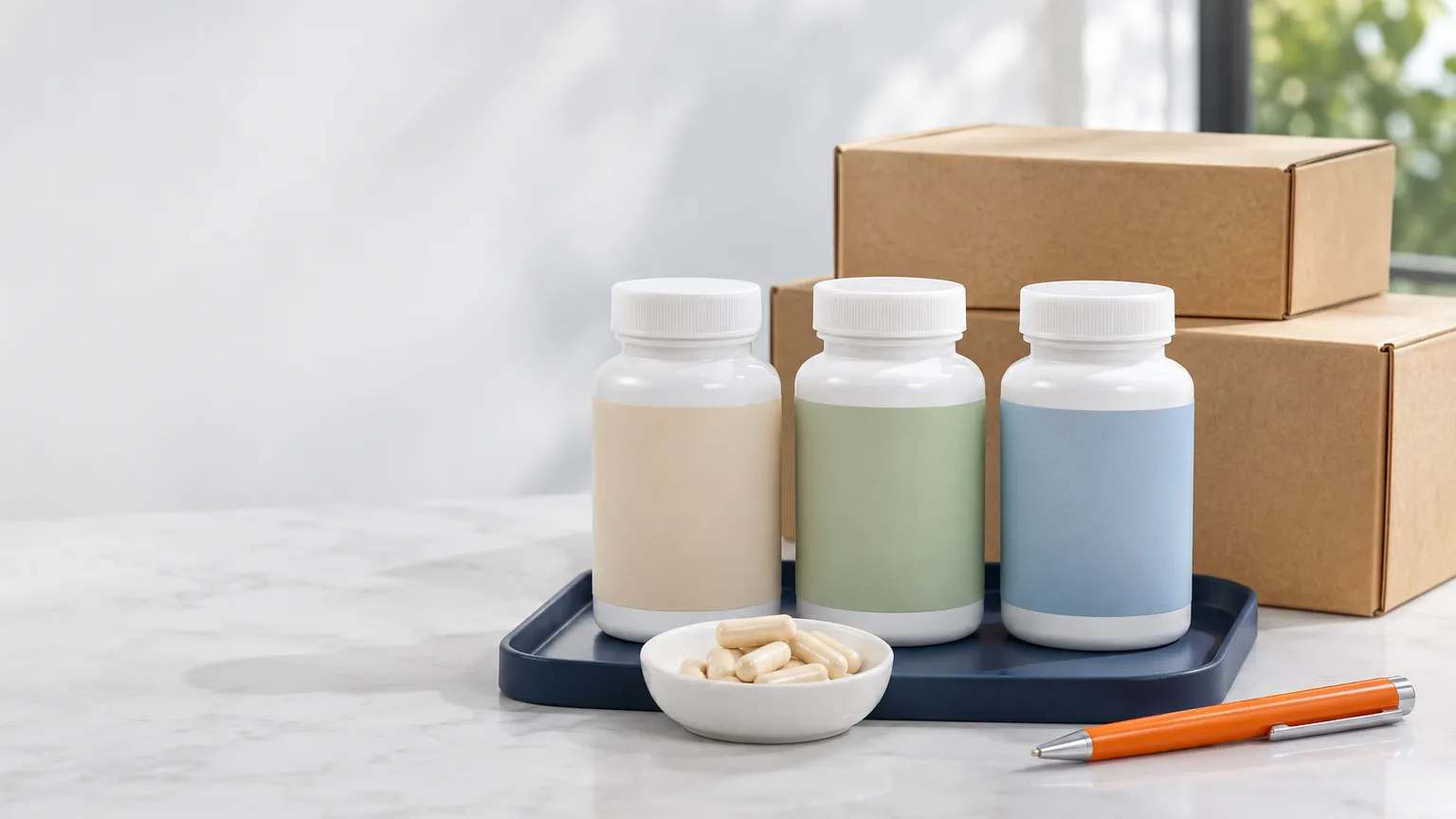
Adapting the label for each market: what to check against local rules
Notification No. 474 sets only the Thai minimum. Everything else on an export label depends on the destination's law. Ask the importer at destination for its list of mandatory items, then check them against the regulator's rules in that country every time. Items that often need adapting include:
- Language. Most countries set their own mandatory language. Some accept over-stickers; others require printing on the pack.
- Category name. What a supplement is called differs by country, and the Thai term required on Thai labels does not apply everywhere.
- Nutrient or active-ingredient tables. Format, units and daily reference values differ.
- Warnings and mandatory statements. Thai warnings are requirements for products sold in Thailand; destinations have their own.
- Claims. Most countries control health claims, prohibit implying that a product prevents or cures disease, and some allow only claims from an approved list.
- Local importer or responsible party. Many countries require the importer's name and address.
Be careful about printing large label runs before the importer confirms the content, because changing labels after production is costly. Check a draft against Thai criteria with the label check, and read Thai dietary supplement labels to see which items belong to the Thai market only.
Certificates buyers may ask for
Besides licences and labels, a buyer or destination may ask for certificates from Thai authorities. The Thai FDA public guide on export certificates for food premises and products describes three types:
- Certificate of Manufacturer for the production site. The licence must be valid and not suspended.
- Certificate of Free Sale for the product. For export-only products without a serial number, the formula, product details and process must be shown.
- Certificate of Ingredient, which needs the full 100% formula.
To have a certificate state that the site meets legal GMP, the site must be audited by an inspection body registered with the Thai FDA. The 2021 Thai FDA notification on certificates of food production system standards lets certification bodies listed with the Thai FDA issue certificates valid for three years, and prohibits putting the certification mark on product labels.
Buyers ask for different documents, and some destinations want health certificates or documents from other agencies as well. Get the buyer's document list before production starts. More detail is in health certificate for Thai food exports and Certificate of Free Sale for Thai FDA.
Samples for buyers
Before a real order, overseas buyers often want samples for testing or for registration at destination. The Food Act exempts from the section 14 and 15 licences the production, import or export of food used as samples for food registration or for buyers to evaluate, though the conditions still apply.
The Thai FDA public guide on one-off production and production of samples for registration or buyer evaluation explains:
- Production of samples uses form Or.15, and the site must hold an Or.2 licence or Sor.Bor.1/1 certificate for the food type concerned.
- Samples are only for registration or purchase evaluation and may not be sold.
- Quantities must match the purpose.
Use the same formula for samples as for production, because the buyer's test results and registration documents at destination will refer to it. Changing the formula after sending samples may mean restarting the destination process.
Exporting to China: check your product group under Decree 280 first
China is a market exporters ask about often. The Thai FDA guidance on registering food manufacturers exporting to China under the new Decree 280 of China's customs authority (GACC) summarises:
- GACC issued Decree 280 on 14 October 2025, effective from 1 June 2026, replacing Decree 248.
- There are three registration routes: through the competent authority of the producing country for listed food categories, self-registration through the CIFER system for other foods, and lists agreed between the two governments.
- Thailand's competent authorities are split by food type, and the Thai FDA covers special-purpose foods and functional foods.
The first step is to check which group your product falls into on China's list. This is China's grouping, not a Thai classification, so confirm with your importer in China before filing. Manufacturer registration is only one part; the formula and label must still be checked against Chinese rules separately.
For manufacturer registration with China and the Thai-side documents, see exporting food to China.
Checklist before accepting an overseas supplement order
Use this list before accepting a supplement order from abroad.
Thai side
- The site holds an Or.2 licence or Sor.Bor.1/1 certificate covering dietary supplements and meets GMP 420.
- You have decided whether to sell in Thailand too or export only.
- If export-only and the buyer wants a serial number, file the export type and keep evidence the product can be sold in the buyer's country.
- The export label shows a serial number, premises number, or the site's name and address.
- Certificate applications the buyer needs are ready.
Destination side (check against that country's rules)
- The product fits that country's supplement category.
- Every ingredient is permitted, at permitted amounts.
- Label language, mandatory statements, warnings and claims.
- Product or manufacturer registration steps at destination.
Check the formula with the formula check and the label with the label check. If you want our team to prepare the Thai-side documents, see document preparation or talk to an expert about a review of category, formula and label. Costs and timing are set out in the quotation.
- ✓Site licensed and meets GMP 420
- ✓Decided: also sold in Thailand, or export only
- ✓Evidence the product can be sold in the buyer's country
- ✓Export label shows the clause 7 minimumSerial number, premises number, or site name and address
- ✓Formula and label checked against destination rules
- ✓Certificates the buyer needs prepared
Frequently asked questions
Does an export-only supplement need a Thai FDA number?
It is not required. The 2024 serial number regulation exempts foods with prescribed quality or standards made for export and not sold in Thailand. If the buyer wants a number, file the export type, but the plant must still be licensed.
Must an export label include Thai?
No. The new clause 7 under Notification No. 474 allows any language, but the label must show a serial number, premises number, or the site's name and address. Languages the destination requires must be checked against its rules.
Can a product with an export-only number be sold in Thailand?
No. The Thai FDA manual states that products with an export-only certificate may not be sold in Thailand. To sell domestically, obtain a domestic serial number and a full Thai label.
Can an export formula use vitamin amounts above Thai limits?
The export-only supplement manual sets quality by the buyer country's specifications, prohibits banned substances and requires evidence the product can be sold as a supplement there. Such a product cannot be sold in Thailand.
Do I always need a Certificate of Free Sale?
Not always; it depends on the buyer and destination. The Thai FDA issues three export certificates: Certificate of Manufacturer, Certificate of Free Sale and Certificate of Ingredient. Get the buyer's list before production.
Sources
- Food Act B.E. 2522 (1979) · Open source · Search our archive
- Thai FDA manual on supplement permits (revised 2026) · Open source · Search our archive
- MOPH Notification No. 420 B.E. 2563 (2020) on production methods, equipment and food storage · Open source · Search our archive
- Thai FDA regulation on food serial numbers, 2024 · Open source · Search our archive
- Thai FDA public guide: new and amended applications for supplements produced for export · Open source · Search our archive
- MOPH Notification No. 293 B.E. 2548 (2005) on dietary supplements · Open source · Search our archive
- MOPH Notification No. 448 B.E. 2566 (2023) on dietary supplements (No. 5) · Open source · Search our archive
- MOPH Notification No. 376 B.E. 2559 (2016) on novel food · Open source · Search our archive
- Thai FDA clarification of MOPH Notification No. 376 on novel food · Open source · Search our archive
- MOPH Notification No. 450 B.E. 2567 (2024) on labelling of pre-packaged food · Open source · Search our archive
- MOPH Notification No. 474 B.E. 2569 (2026) on labelling of pre-packaged food (No. 2) · Open source · Search our archive
- Thai FDA e-Submission manual: adding labels for food produced for export · Open source · Search our archive
- Thai FDA public guide: export certificates for food premises and products · Open source · Search our archive
- Thai FDA notification on issuing food production system certificates, 2021 · Open source · Search our archive
- Thai FDA public guide: one-off production and samples for registration or buyer evaluation · Open source · Search our archive
- Thai FDA guidance on registering food manufacturers exporting to China under Decree 280 · Open source · Search our archive
This article is for general information. It is not a Thai FDA ruling or legal advice, and rules change — check the latest notification or ask an expert before filing or producing.
Related articles
 ExportersExporting processed food from Thailand: licences, standards and the certificates buyers ask forWhat to prepare to export processed food from Thailand: licence, GMP 420, lab results, traceability, Thai FDA certificates, export labels and samples.
 ExportersHealth certificates for Thai food exports: which certificate, who issues it, what to fileWhat buyers mean by a health certificate for Thai food exports, the three Thai FDA export certificates, documents, labels and China's Decree 280.

 Brand ownersThai dietary supplement labels: mandatory text, warnings, vitamin limits and restrictionsThai supplement label rules: mandatory items, the four warnings, ingredient warnings, vitamin limits, font sizes and restricted wording.