 FDA Thailand
 Brand owners
Thailand novel food regulation: Notification No. 376, verification and safety assessment before product permission
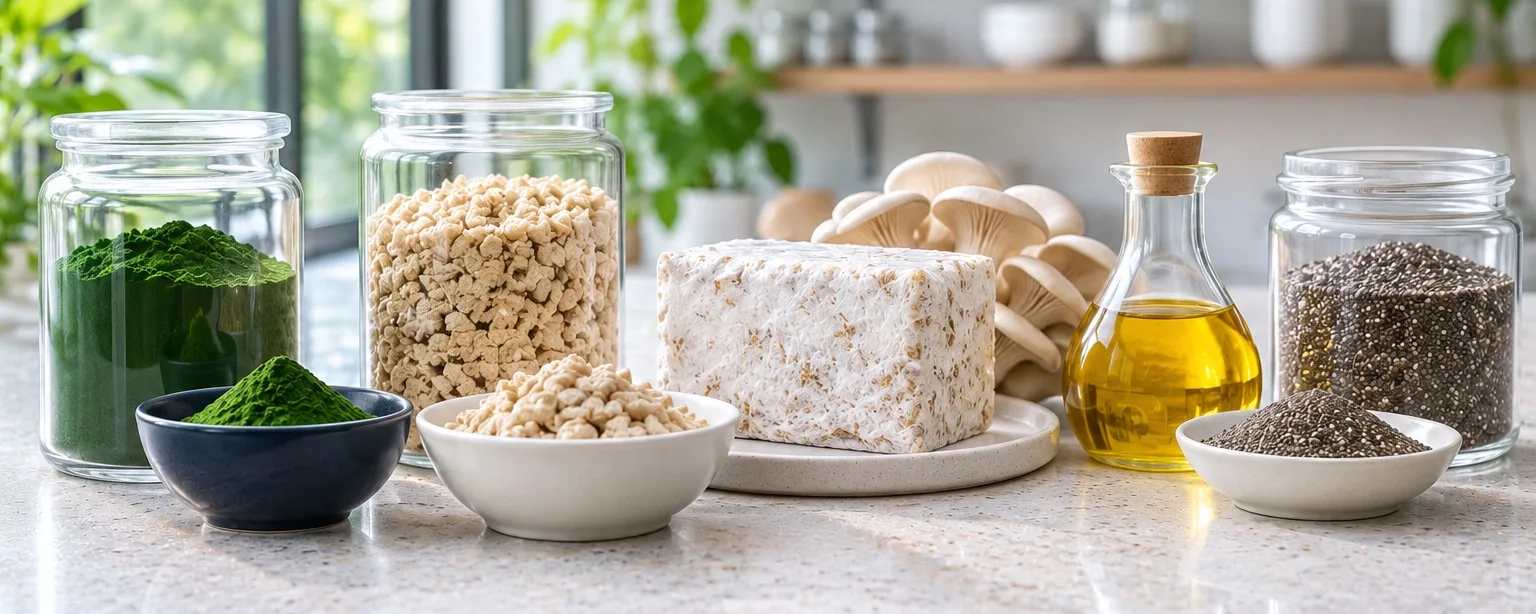
Thailand novel food regulation: the short answer for food, supplement and ingredient businesses
The core of Thailand novel food regulation is Ministry of Public Health (MOPH) Notification No. 376 B.E. 2559 (2016) on novel food, published in the Royal Gazette on 15 July 2016. Novel food is a substance used as food or as a food ingredient that has scientific evidence of a history of consumption as food of less than 15 years, or that comes from a production process that is not the usual process for that food and significantly changes its composition, structure or form.
- Before use novel food must pass a safety assessment first, and its label must be submitted to the Thai Food and Drug Administration (Thai FDA) for approval before use (clause 2).
- Who assesses a safety assessment body accepted by the Thai FDA (clause 3). The current list is in a Thai FDA notification dated 17 September 2025, which names five bodies.
- Not sure it applies file a request to verify novel food status directly with the Thai FDA.
- Outside the rule novel food made for export, and novel food permitted before the Notification came into force (clause 7).
This article covers the steps before you apply for a food serial number. The full supplement filing is in our guide to registering a dietary supplement, the meaning of the Thai FDA number is in the food registration number article, and substances added for a technical function, such as preservatives or colours, are covered in food additives and INS numbers.
Novel food under Notification No. 376: the three-part definition and what it excludes
Clause 1 of Notification No. 376 defines "novel food" in three parts.
- Short history of consumption a substance used as food or a food ingredient for which there is scientific evidence of a history of consumption as food of less than fifteen years.
- New production process a substance obtained from a process that is not the usual process for that food, which significantly changes its composition, structure or form, affecting nutritional value, metabolism or the level of undesirable substances.
- Products that contain item 1 or 2
The definition ends by excluding food additives and food derived from genetic modification techniques. Those two groups have their own assessment routes.
The Thai FDA explanatory notice dated 22 August 2016 says the scope covers specifically controlled food, food with prescribed quality or standards, food that must carry a label, and general food. Supplements, drinks and ingredients sold to factories therefore sit in the same scope. As evidence of a history of consumption, the explanatory notice gives examples such as articles in academic journals, published herbal texts that state use as food, and certificates from government agencies.
In practice, keep evidence of use as food separate from evidence of use as medicine, because the form asks you to state other kinds of consumption separately.
Examples the Thai FDA gives: unused plant parts, extracts and new processes
The explanatory notice gives two examples.
- A plant part not normally eaten ginseng is normally eaten as the root. If ginseng leaves, which have a history of consumption of less than 15 years, are eaten, the leaves are novel food.
- An extract eaten directly water spinach is normally eaten as stem and leaf. If it is extracted with ethanol to give an active substance B that is then eaten directly in that form, substance B is novel food.
Examples of new processes in the notice are nanotechnology, non-thermal pasteurisation and high hydrostatic pressure processing. "Significant change" is judged by comparing nutritional value, metabolism or the level of undesirable substances between the new process and the traditional process.
List of example ingredients that count as novel food
The Food Division document "List of raw materials or products that count as novel food" explains that materials with no history of human consumption, materials made by a process that does not follow the law, such as the notifications on food additives or enzymes, or materials made with new technology, count as novel food. Its table has 25 examples, such as eggshell membrane extract, tiger milk mushroom, silk cocoon and its extract, longan seed and peel extract, hyaluronic acid, allulose, synthetic vitamin K2, MSM and NMN.
The document introduces the table with the words "examples as follows". In practice, read it as a list of examples: an ingredient that is not listed can still be novel food if it meets the definition.
Where microorganisms, cell-cultured food and genetically modified food fit
Microorganisms
The definition in Notification No. 376 has no separate item for microorganisms. But the schedule asks for safety data on pure microorganisms where they are used in production, and a note to the schedule says that for chemicals produced by microorganisms, identity and safety data on the microorganism must also be filed. Probiotics outside the permitted list follow the "food that is not novel food" route in section 8.
Cell-cultured food
The public guide on requesting a food safety assessment (revised 20 October 2025) places food from cell culture in case 1 alongside novel food, with its own form (revised 11 October 2024). Its annex defines it as food developed from culturing animal cells in a bioreactor. The Thai FDA notification of 17 September 2025 assigns novel food of this kind, and novel food from genetically modified microorganisms, to one assessment body.
On the manufacturing side, the Thai FDA opened public consultation on a draft MOPH notification on production methods, production equipment and storage of food derived from cultured animal cells (posted 19 October 2026). The draft sets specific GMP rules, such as control of starting cells, cell banks, bioreactors and residue testing, requires a production supervisor trained under a course listed by the Thai FDA, and requires importers to hold certification of a production system equivalent to or not lower than these rules. It is still a draft, so producers and importers should follow the final version once issued.
Genetically modified food
Food from genetic modification is outside the novel food definition. It falls under MOPH Notification No. 431 B.E. 2565 (2022). Clause 2 makes food from genetically modified organisms a food that may not be produced, imported or sold, unless it is on List No. 1 attached to the Notification or has passed a food biosafety assessment.
Source: MOPH Notifications No. 376 and No. 431 · Thai FDA notifications of 17 Sep 2025 · Food Division public guides
Is your ingredient novel food? Two Thai FDA lists to open first
Before you file anything, open two documents from the Thai FDA Food Division.
List 1: raw materials that count as novel food
This is the list of 25 examples in section 3. In practice, if your ingredient is on it, start preparing the safety assessment dossier.
List 2: companies that have passed a food safety assessment
The September 2026 update has separate tables for novel food and for food that is not novel food. Its header states that the result is notified case by case to the company that applied. If a customer of that company or another company wants to use an assessed ingredient, it needs the consent of the applicant company, shown by that company's reply letter attached to the application, or it can file its own safety assessment.
In practice, when a supplier says an ingredient "has passed novel food", ask for the result letter and a written consent letter, then compare the specification, plant part and process with the lot you will actually buy.
Search a substance name first in our Thai FDA ingredient search, and check that the plant or animal is not on the list of food that may not be produced, imported or sold. Examples from that list are summarised in our article on importing supplements from Korea and Japan.
Novel food verification: when to file and what the form asks
The public guide on verification of novel food status (revised 31 October 2024) describes it as a preliminary review of scientific data to decide whether a product or raw material counts as novel food, and to learn how to proceed. Clause 3.1 of the Thai FDA notification of 17 September 2025 says verification is filed, with the application charge, directly with the Thai FDA, not through an assessment body.
In practice, verification suits borderline cases, such as a plant already eaten but a different part used, or a different extraction solvent. The guide requires that the item to be verified is not a food that may not be produced, imported or sold.
How to file
- File through the Thai FDA e-submission system. The applicant needs an Open ID account and access rights to the food system. The e-submission manual says to choose the menu "food safety assessment work" and then the verification of novel food process.
- Attachments must be in Thai or English. For data to be kept confidential, list it with reasons.
- When officers ask for clarification, answer every point within the set period, and reply "confirmed" for points you do not change.
What the verification form asks
The form asks for the ingredient name in Thai and English, scientific name, chemical name and molecular formula, intended use, for example as an active substance in a dietary supplement, preparation and recommended intake, and the production process. For an extract, state the solvent type and concentration and the extract ratio. The document checklist has 13 groups, such as history of consumption, foreign permission data (if any), specification, analysis results, production process, and chemicals, enzymes or microorganisms used in production.
Novel food safety assessment: assessment bodies, the report and filing with the Thai FDA
Clause 3 of Notification No. 376 requires you to file the safety assessment result from an assessment body accepted by the Thai FDA, with the evidence listed in the schedule. The steps are in the Thai FDA notification on novel food safety assessment bodies and assessment guidelines dated 17 September 2025, which repeals the version of 27 June 2023.
Assessment bodies
The notification names five bodies. Four can assess all novel food except novel food from genetically modified microorganisms or from cultured animal cells; the fifth assesses only those two groups. The Thai FDA notification on requirements for assessment bodies (20 October 2021) requires bodies to be neutral and independent of business, with at least three experts per case, including at least one toxicologist.
Steps
The applicant files one set of documents under the public guide with the assessment body and pays the assessment charge set by that body. The expert panel reviews it under Environmental Health Criteria 240. The body sends the report to the applicant and the Thai FDA. The applicant then files the report with the Thai FDA through e-submission using the novel food safety assessment form (revised 20 October 2025). The explanatory notice says the Thai FDA proposes it to a subcommittee to set quality or standards, conditions of use by food type, and the maximum permitted level. The public guide states that an application without a report from an accepted assessment body is returned and charges are not refunded.
Toxicology data
A note in the Thai FDA notification says that animal toxicology and mutagenicity data not published in an accepted journal must come from a well-designed study under OECD guidelines or an equivalent international standard, performed in a laboratory certified for Good Laboratory Practice (GLP). In practice, if there is no published toxicology for the ingredient, plan with a GLP laboratory from the product design stage, because this is often the longest part of the dossier to prepare.
- 1Open the two Thai FDA listsIngredients that count as novel food, and companies that passed an assessment (ask for a consent letter if one exists)
- 2File verification with the Thai FDA if unsureVerification form and document checklist via e-submission
- 3Send the dossier to an accepted assessment bodyOne set under the public guide; experts review under EHC 240
- 4Receive the assessment reportThe body sends it to the applicant and the Thai FDA
- 5File the result with the Thai FDANovel food assessment form via e-submission; no report = application returned
- 6Thai FDA sets quality and conditions of useSubcommittee sets standards, conditions and maximum level
- 7Apply for the product with its labelAttach the Thai FDA safety assessment letter and a colour Thai label
Source: Notification No. 376 clauses 2–3 · Thai FDA explanatory notice 22 Aug 2016 · Thai FDA notification 17 Sep 2025 clause 3 · Food safety assessment guide (20 Oct 2025)
Food that is not novel food, and probiotics outside the permitted list
Some ingredients are not novel food but still need an assessment. List No. 1 of the Thai FDA notification on food safety assessment bodies dated 17 September 2025 defines "food that is not novel food" as food other than novel food, for example food whose quality or standard differs from what was permitted, an increased serving size, or use in additional food categories, where this affects intake, nutritional value or safety. It includes probiotic microorganisms outside the list attached to the MOPH Notification on the use of probiotic microorganisms in food dated 27 June 2011 and its amendments.
The form for this case (revised 20 October 2025) uses the same document items 3.1 to 3.13 as novel food. Safety data cover genotoxicity, acute, subchronic and chronic toxicity; without a chronic toxicity study, at least a clinical study in healthy people is required.
Probiotics outside the list
The Thai FDA notification on criteria and guidelines for using probiotic microorganisms in food, dated 23 November 2026, repeals the notification of 8 February 2018 and its second amendment of 15 January 2026. Clause 2 (3) requires anyone using a probiotic outside the list annexed to the MOPH notification, or outside the strains the Thai FDA has already approved, to submit a report on safety and probiotic properties from an assessment body named by the Thai FDA. If new scientific information emerges later, the applicant must inform the Thai FDA and send it to the assessment body for review. The notification also adds Thai strains to the approved list and a new list of precautions for certain strains.
The scope table in the same notification allows only one assessment body to assess probiotics. The probiotic form (revised 11 October 2024) asks for genus, species, strain, isolation source and consumer group, with data on probiotic properties such as tolerance to gastric acid and bile salts and adhesion to the mucosa, and safety data such as antibiotic resistance. Annex 7 of the public guide asks for identification to strain level by both phenotype and genotype, and whole genome sequencing for bacteria.
In practice, ask the culture supplier for genome data at the supplier selection stage. For probiotics already on the list, see the supplement registration steps.
After the assessment: product permission and novel food labelling
A safety assessment result is not a food serial number. The next step is product permission by food type, with the label. Clause 4 of Notification No. 376 requires novel food to meet the quality or standard and conditions of use approved by the Thai FDA. Clause 5 also requires compliance with the notification for that food, for example a milk product containing novel food must still meet the notification on milk products.
Product applications
- Food with prescribed quality or standards, food that must carry a label, and general food such as tea, honey and bread. The Thai FDA guide uses form Sor Bor 7 for new applications and Sor Bor 8 for amendments, with the safety assessment letter from the Thai FDA and a colour Thai label.
- Milk, ice cream, drinks and food in hermetically sealed containers, coffee mixes the guide uses form Sor Bor 5 for new applications, with a separate guide for amendments.
- Dietary supplements the Sor Bor 7 guide title says it covers food other than dietary supplements. In practice, file through the route in our supplement registration guide and attach the assessment result letter for the ingredient. For imports, see importing dietary supplements.
The Sor Bor 7 guide also says that products with health claims must first pass a health claim assessment. A novel food assessment does not cover health statements on the label.
Novel food labels: three differences from a standard label
Clause 6 applies the notification on labels of food in containers, with these differences.
- Show the date of manufacture and the expiry date, in day-month-year order, marked "manufactured", "expiry" or "best before" as the case may be.
- The name of the key substance (if any). The explanatory notice gives the example of Caralluma fimbriata extract containing pregnane glycosides and saponin glycosides.
- Method of consumption, use or conditions of use, such as food type and maximum permitted level. The explanatory notice gives the example of Oligonol for use in dietary supplements at no more than 200 milligrams (mg) per day.
Other mandatory supplement label items are in our supplement label article.
Kratom and cannabis
The Food Division guideline on kratom leaf in dietary supplements cites Notification No. 430 B.E. 2564 (2021): kratom remains a food that may not be produced, imported or sold, with an exception once it passes a safety assessment and its label is approved under the novel food rule. A Thai FDA infographic on food containing cannabis, hemp and CBD lists "the product applied for counts as novel food" as one ground for returning an application. For an overview of these plants, see our article on controlled herbs, cannabis and kwao khruea.
Dossier checklist and common mistakes in practice
A novel food dossier follows items 3.1 to 3.13 of the document checklist in the form (revised 20 October 2025), which mirror the schedule to Notification No. 376. The public guide asks for a table of contents with documents in checklist order, so in practice name files by item number from the start. A note at the end of the form that is easy to miss: novel food that states a health expectation must include human study data.
Common mistakes
- Seeing a substance on the assessed list and assuming you can buy and use it the result is notified only to the applicant; you need a consent letter.
- Buying an ingredient with the same name but a different specification a different plant part, solvent or extraction ratio from the one assessed.
- Jumping to the product application the product guide asks for the Thai FDA safety assessment letter; without it the application lacks a key document.
- Using unpublished toxicology that did not come from a GLP laboratory
- A label with only "best before" and no manufacturing date, key substance name or conditions of use.
- Raising the daily amount or moving into other food types on your own this is within the scope of food that is not novel food, which also needs an assessment.
Check a full formula with our formula checker, or ask a case-specific question with RA Advisor. If you want consultants to help organise the dossier and prepare the application, see our registration service.
- ✓3.1 General data on the ingredientScientific name, part used, source
- ✓3.2 General data on the productFormula, purpose, expected effect of consumption, country of manufacture
- ✓3.3 History of consumption as foodDuration, countries, form and consumption data
- ✓3.4–3.5 Specification of ingredient and productKey substance, processing aid residues, contaminants, microbiology, stability
- ✓3.6 Analysis results for ingredient and productIn practice, use a laboratory accredited for the tests
- ✓3.7–3.8 Storage and production processSolvent, concentration and extract ratio for extracts
- ✓3.9 Chemicals used in productionChemical name, CAS No., INS No. and specification
- ✓3.10 Consumption adviceServing size, frequency, target group, warnings
- ✓3.11 Safety dataGenotoxicity, acute, subchronic and chronic toxicity, and human studies where required
- ✓3.12–3.13 Nutrition and foreign assessmentsAttach if available
- ✓Report from an accepted assessment bodyNo report = application returned
Source: Novel food safety assessment form with document checklist (revised 20 Oct 2025) · Schedule to Notification No. 376
Frequently asked questions
How is novel food different from a food additive?
The novel food definition in Notification No. 376 excludes food additives. Food additives have their own assessment bodies and criteria under the Thai FDA notification of 17 September 2025.
If a substance is on the assessed list, can another company use it straight away?
No. The result is notified only to the applicant company. Another company needs a consent letter from the applicant attached to its application, or it can file its own assessment.
How is novel food verification different from a novel food safety assessment?
Verification is a preliminary review of whether an item counts as novel food, filed directly with the Thai FDA. A safety assessment is done by an assessment body accepted by the Thai FDA, and the report is then filed with the Thai FDA.
Do products made only for export need a novel food assessment?
Clause 7 says the Notification does not apply to novel food made for export. In practice, check the destination country's rules before production. See our article on exporting supplements.
What extra items does a novel food label need?
Clause 6 requires the date of manufacture and the expiry date, the key substance name (if any), and the method of consumption or conditions of use, such as the maximum permitted level.
Which form applies to a probiotic strain that is not on the list?
Probiotics outside the list fall under food that is not novel food. They use a dedicated probiotic form, and one assessment body is listed for probiotic assessments.
Sources
- MOPH Notification No. 376 B.E. 2559 (2016) on novel food, Royal Gazette 15 July 2016 · Open source · Search our archive
- Thai FDA explanatory notice on MOPH Notification No. 376 on novel food, dated 22 August 2016 · Open source · Search our archive
- List of raw materials or products that count as novel food (Food Division) · Open source · Search our archive
- List of companies that passed a food safety assessment: novel food and food that is not novel food (September 2026 update) · Open source · Search our archive
- Public guide: verification of novel food status (revised 31 October 2024) · Open source · Search our archive
- Verification request form and document checklist (revised 31 October 2024) · Open source · Search our archive
- Thai FDA notification on novel food safety assessment bodies and assessment guidelines, dated 17 September 2025 · Open source · Search our archive
- Thai FDA notification on food safety assessment bodies and assessment guidelines, dated 17 September 2025 · Open source · Search our archive
- Thai FDA notification on requirements for accepted safety assessment bodies, dated 20 October 2021 · Open source · Search our archive
- Public guide: requesting a food safety assessment (revised 20 October 2025) · Open source · Search our archive
- Form for filing a novel food safety assessment result, with document checklist (revised 20 October 2025) · Open source · Search our archive
- Form for filing a novel food safety assessment result for cell-cultured food (revised 11 October 2024) · Open source · Search our archive
- Form for filing a safety assessment result for food that is not novel food (revised 20 October 2025) · Open source · Search our archive
- Form for assessing probiotic microorganisms outside the MOPH permitted list (revised 11 October 2024) · Open source · Search our archive
- Food Division e-submission manual for safety assessment requests (revision 2) · Open source · Search our archive
- Public guide: product permission and amendment where a novel ingredient or novel food is used (Sor Bor 7 and Sor Bor 8) · Open source · Search our archive
- Public guide: new applications for milk, drinks and sealed-container food using a novel ingredient or novel food · Open source · Search our archive
- Public guide: amendments for milk, drinks and sealed-container food using a novel ingredient or novel food · Open source · Search our archive
- MOPH Notification No. 431 B.E. 2565 (2022) on food from genetically modified organisms · Open source · Search our archive
- Food Division guideline on kratom leaf powder or extract as an ingredient in dietary supplements · Open source · Search our archive
- Thai FDA infographic: permission for food containing cannabis, hemp and cannabidiol (May 2025) · Open source · Search our archive
This article is for general information. It is not a Thai FDA ruling or legal advice, and rules change — check the latest notification or ask an expert before filing or producing. Spotted an error? Tell us and we will correct it
Related articles
 Brand ownersFood additives (INS numbers) in Thailand: limits and labellingWhat food additives and INS numbers mean in Thailand, how to read maximum levels under Notification No. 468, combining additives, and label rules.
 Brand ownersThai Controlled Herbs: Cannabis Flower, Kwao Krua, the Section 46 Licence and the Cannabis PrescriptionThailand controls two herbs, cannabis flower and Kwao Krua. Research, export, sale or processing for trade needs a section 46 licence: rules and forms.
 Brand ownersThai dietary supplement labels: mandatory text, warnings, vitamin limits and restrictionsThai supplement label rules: mandatory items, the four warnings, ingredient warnings, vitamin limits, font sizes and restricted wording.