 FDA Thailand
 Brand owners
Prebiotics, postbiotics and Thailand food regulation: inulin, FOS, GOS and synbiotics under Thai FDA rules
Prebiotics, postbiotics and Thailand food regulation: the short answer for manufacturers, importers and brand owners
For businesses researching prebiotics postbiotics Thailand food regulation, this guide covers what to check before adding inulin, fructo-oligosaccharides (FOS), galacto-oligosaccharides (GOS), resistant maltodextrin or heat-killed microorganisms to a food or dietary supplement. A prebiotic is a food component that gut microbes selectively use. The practical question for a business is which Thai Food and Drug Administration (Thai FDA) document covers that ingredient, and how much of it you may use.
In the law archive we searched, we found no notification titled "prebiotics". These ingredients appear in Thai FDA documents as "dietary fibre" or "sources of dietary fibre", spread across several documents:
- Dietary supplements The Thai FDA guidance on key ingredients in dietary supplements, dated 8 July 2024, lists inulin, FOS and resistant maltodextrin with total dietary fibre up to 25 grams per day, and GOS up to 10 grams per day.
- Sealed-container beverages The Food Division's ingredient list sets inulin at no more than 21 grams per day and GOS at no more than 3 grams per day.
- Nutrition labelling Inulin and FOS use 2 kilocalories per gram, the same factor as dietary fibre.
- Claims The additional other-function claims list of 31 October 2025 includes chicory inulin and FOS, each with conditions.
- Postbiotics The Thai FDA probiotic notice of 23 November 2026 sets its criteria for live microorganisms, so in practice you should consult the Thai FDA before developing a formula.
This article focuses on fibres and non-living microorganisms. For probiotic strain lists and viable-count rules, read our article on probiotics in food; for the full supplement registration process, see how to register a dietary supplement.
Prebiotics, probiotics, postbiotics and synbiotics: the scientific definitions
These four terms come from science, not from Thai statute. The widely used definitions come from expert consensus statements of the International Scientific Association for Probiotics and Prebiotics (ISAPP). In plain terms:
- Prebiotic a substrate that is selectively utilized by host microorganisms and confers a health benefit. Not every dietary fibre is a prebiotic. Research has linked inulin, FOS and GOS with increases in gut bifidobacteria, but effects depend on the substance, the dose and the person.
- Probiotic live microorganisms that, when consumed in adequate amounts, confer a health benefit. This matches the definition in clause 1 of the 2011 Ministry of Public Health (MOPH) notification on probiotics.
- Postbiotic inanimate microorganisms and/or their cell components that confer a health benefit, for example heat-killed lactic acid bacteria. Purified metabolites alone, such as an isolated organic acid, are not postbiotics under this definition.
- Synbiotic a mixture of live microorganisms and a substrate selectively used by microbes, such as a probiotic capsule with added inulin or FOS.
When you file with the Thai FDA, use the ingredient names that appear in Thai FDA documents, such as "inulin" or "fructo-oligosaccharide", rather than the single word "prebiotic".
Inulin, FOS and GOS in Thai FDA documents: raw materials, general food and food classification
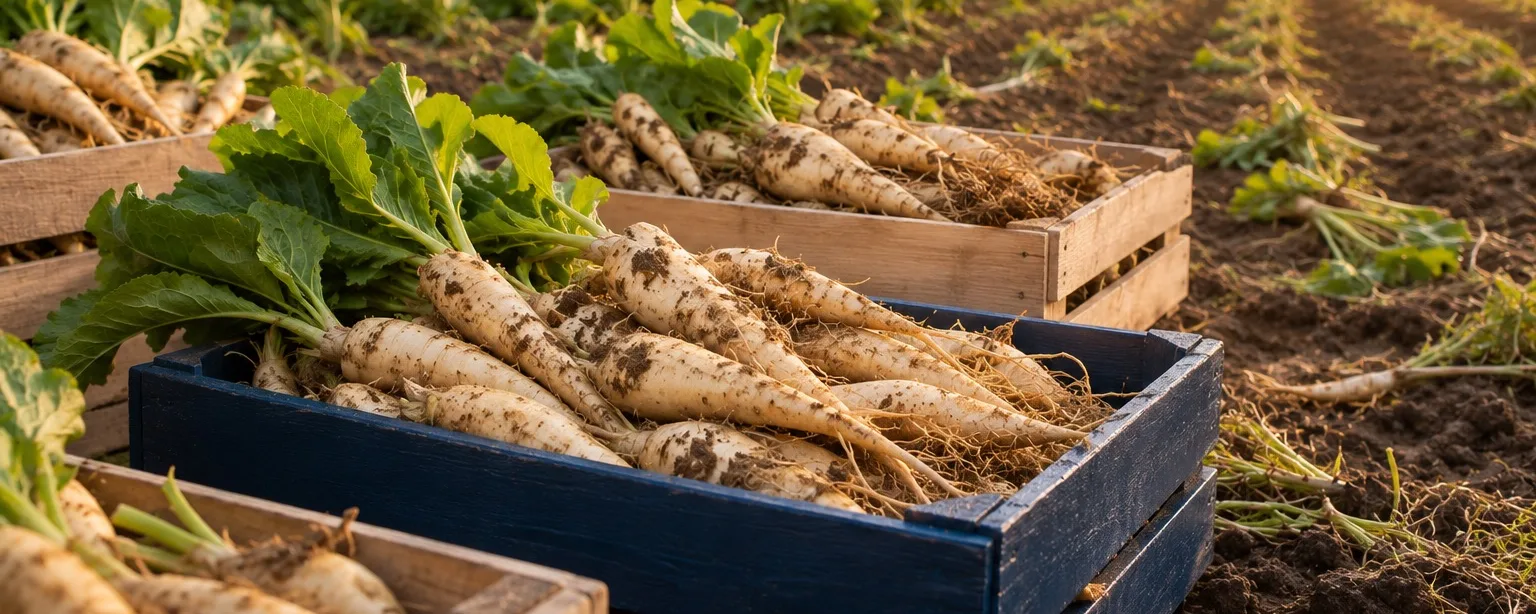
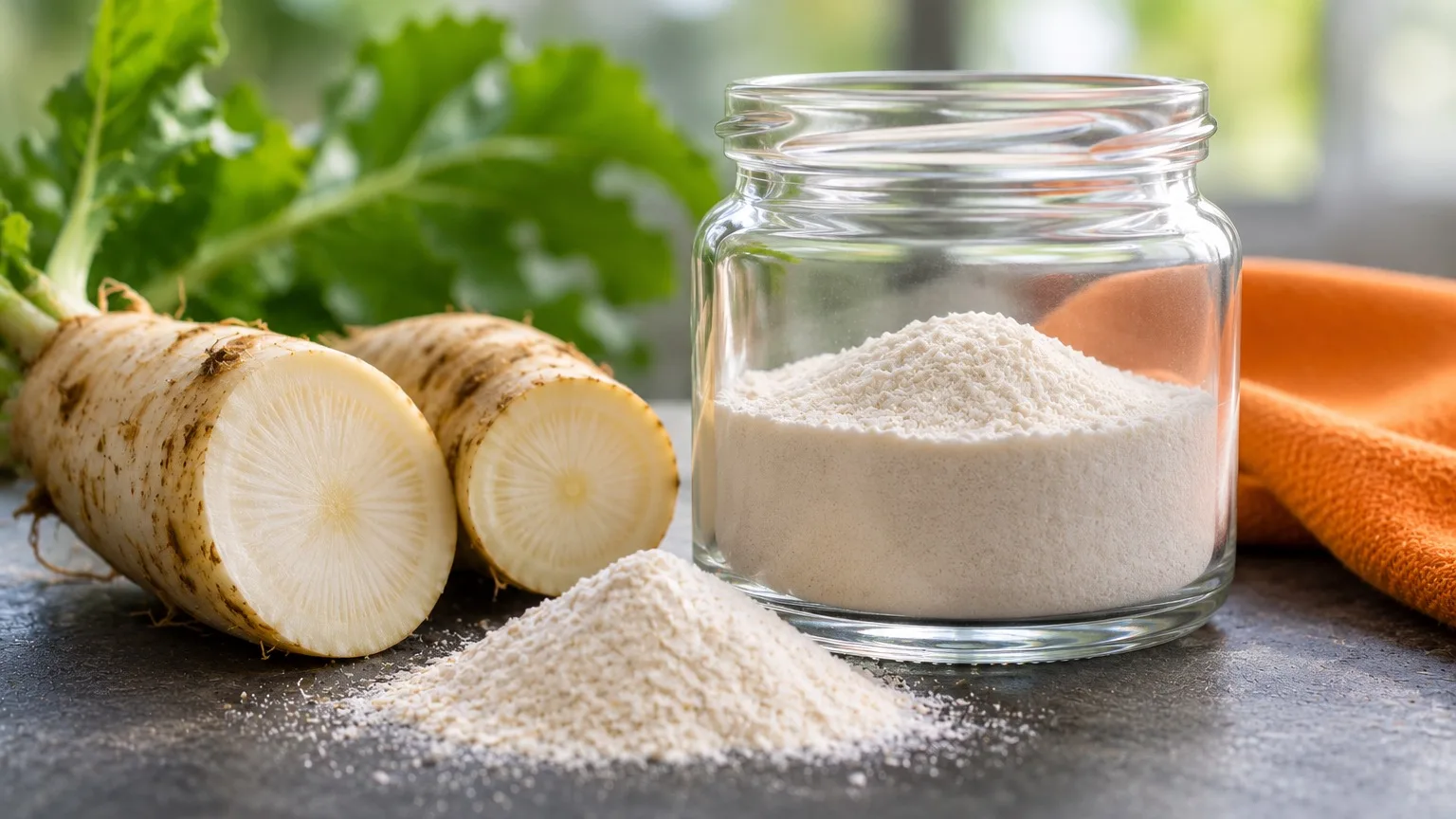
Inulin is the prebiotic businesses ask about most. It is extracted from chicory root or Jerusalem artichoke. The first question is whether you are selling inulin as a raw material or as a finished product.
The Thai FDA table of products classed as general food that need no food serial number (28 February 2008) lists "INULIN used as a raw material" and "OLIGOFRUCTOSE used as a raw material" under nutrients. The Food Division's food classification guideline (updated August 2026) gives "inulin from chicory root" as an example in the nutrient group of general food.
In practice, rely on the 2026 guideline first, and read "used as a raw material" as inulin sold to factories for further processing. Inulin packed in sachets or capsules with a daily dose for consumers usually falls under dietary supplements, which need a food serial number.
The classification guideline also asks whether an ingredient has at least 15 years of history of consumption as food, checked first against positive lists. If it is not found, the ingredient should be verified or assessed as a novel food under MOPH Notification No. 376. This matters for new oligosaccharides that are not yet on any list. See our novel food article, or start with the product classification advisor and the ingredient database.
Prebiotics in dietary supplements: total dietary fibre up to 25 grams per day
The key document is the Thai FDA notification on guidance for the use of key ingredients in dietary supplements, dated 8 July 2024. It applies to applicants for a food serial number for a dietary supplement, both manufacturers and importers. Clause 2 lets you use ingredients from the attached list, but if the source, part used or production method makes the ingredient one that needs a safety assessment, you must apply for that assessment before applying for permission.
Prebiotic entries in the attached list:
- Inulin (entry 438) inulin together with dietary fibre not more than 25 grams per day
- FOS (entry 404) FOS together with dietary fibre not more than 25 grams per day
- GOS (entry 336) GOS not more than 10 grams per day, and total dietary fibre not more than 25 grams per day
- Resistant maltodextrin (entry 424) and polydextrose (entry 403) together with dietary fibre not more than 25 grams per day
- Inulin-bearing plants such as chicory root water extract (entry 82) and ground Jerusalem artichoke (entry 161), with inulin plus dietary fibre not more than 25 grams per day
"Grams per day" means what the consumer gets per day under the directions on the label, not per tablet or sachet. In practice, add up every fibre in the formula. Inulin at 10 grams plus resistant maltodextrin at 8 grams is 18 grams per day; if the label says two sachets a day, the total exceeds 25 grams.
GOS raw materials are often syrups or powders that also contain lactose and other sugars. In practice, calculate from the GOS content on the supplier's certificate of analysis, not the total powder weight. For mandatory label statements see our supplement label article, and check the daily totals of a whole formula with the formula checker.
Sealed-container beverages and complete-formula foods: different ceilings
The same prebiotic can have different ceilings in different product types. Do not carry a number from one document over to another product category.
Beverages in hermetically sealed containers
The Food Division publishes a list of ingredients permitted in beverages in hermetically sealed containers (except caffeinated beverages) and coffee, updated 23 November 2021. It is not a regulation but a database of past approvals, which the document itself says may be revised if safety concerns arise. List No. 3 gives these fibre sources:
- Inulin from chicory or Jerusalem artichoke, not more than 21 grams per day (not more than 10 grams per serving occasion)
- FOS not more than 10 grams per day · GOS not more than 3 grams per day
- Resistant maltodextrin not more than 19 grams per day · Xylo-oligosaccharide (XOS) not more than 1.4 grams per day
In practice, calculate from the recommended daily intake of the drink and allow for consumers drinking more than one bottle. For ingredients not on the list, the document asks you to send evidence to the Thai FDA first. Other rules for this food category are covered in our article on sealed-container beverages, Notification No. 473.
Complete-formula foods for nutritional supplementation
The Food Division's Q&A on complete-formula foods for people who need nutritional supplementation (September 2026) answers in item 2 (2) that the formula may add GOS, FOS or inulin as a source of dietary fibre, with total dietary fibre of 2.5–25 grams per day. That is both a minimum and a maximum. The table below compares the three groups.
Source: Thai FDA guidance on key ingredients in dietary supplements, 8 Jul 2024 · Food Division beverage ingredient list · Food Division Q&A on complete-formula foods, Sep 2026
Nutrition labelling: inulin and FOS count at 2 kilocalories per gram
Saying "contains dietary fibre" or "high in dietary fibre" is a nutrition claim. Clause 3 of MOPH Notification No. 445 (2023) on nutrition labelling requires foods with nutrition or health claims to carry a nutrition label. For formats, see our article on full and short nutrition labels.
The Food Division's Q&A on Notification No. 445 (November 2024) asks which conversion factor applies when fructans, inulin or FOS are added. The answer: if these are analysed, the laboratory adds them to total dietary fibre and uses a conversion factor of 2 kilocalories per gram, the same as dietary fibre. "Kilocalories per gram" is the energy from one gram of the substance; ordinary carbohydrates use 4.
The same Q&A says energy and nutrient values must come from analysis of the final product by a government laboratory or one accredited to ISO/IEC 17025, and cannot be calculated from the formula. In practice, tell the laboratory that the formula contains inulin, FOS or GOS, because some dietary-fibre methods do not fully capture short-chain oligosaccharides, and the fibre figure on the label may come out lower than what you added.
Health claims: chicory inulin and FOS on the other-function claims list
MOPH Notification No. 447 (2023) on health claims on food labels sorts health claims into three types: nutrient function, other function and reduction of disease risk. Prebiotic claims fall under other function.
The Food Division's additional list of other-function claims, dated 31 October 2025, adds 4 items and 6 statements to List No. 2 of Notification No. 447, and claims must also follow the conditions of Notification No. 447. Two items concern prebiotics.
Chicory inulin The list's English version reads "Native chicory inulin helps to increase stool frequency. It contributes to normal bowel function." Conditions:
- non-fractionated chicory inulin with an average degree of polymerisation (DP) of at least 9, at least 4 grams per serving, or per 100 grams or 100 millilitres
- not allowed on caffeinated beverages, coffee, tea, herbal tea or carbonated flavoured drinks
- the label must state that at least 12 grams of inulin should be consumed per day, and that inulin plus dietary fibre should not exceed 25 grams per day
Fructo-oligosaccharide (FOS) The statement is that FOS increases beneficial bacteria (bifidobacteria) in the gut. The label must state that at least 8 grams of FOS should be consumed per day, that FOS plus dietary fibre should not exceed 25 grams per day, and that it should be consumed continuously for at least one week. The same beverage exclusions apply.
Notification No. 447 also requires Thai-language labels and a nutrition label, says labels must not imply the food can cure, relieve, treat or prevent disease, and requires other-function claims to carry the statement that the product has no effect in curing, relieving, treating or preventing disease. Claims outside the lists need an assessment by a body designated by the Thai FDA first, following the health-claim assessment manual.
In practice, each statement is tied to the substance named. Do not use the chicory inulin statement for inulin from other sources, and note that GOS has no statement on this list. Online advertising should stay within the same limits as the label; see our food advertising article.
Postbiotics in Thailand: the probiotic notice is written for live microorganisms
Non-living cells need no refrigeration and are easy to put into powdered drinks. But in the food-side documents we searched, we found no dedicated rules for postbiotics like those that exist for probiotics.
The probiotic rules are written for live microorganisms
Clause 1 of the 2011 MOPH notification on probiotics defines a probiotic as "live microorganisms" that benefit health when consumed in adequate amounts. Clause 2 (2) of the Thai FDA notice of 23 November 2026 requires at least 106 CFU (colony-forming units) of live probiotic microorganisms per 1 gram of food throughout shelf life. The 2026 notice has no provision on inactivated microorganisms.
In practice, a postbiotic product should not rely on the "deemed permitted" route of the probiotic notice, and a strain appearing on the probiotic lists does not mean its heat-killed cells are covered too. Consult the Thai FDA at the formula design stage on how the ingredient will be classified and what safety evidence it needs.
MOPH Notification No. 376 (2016) defines novel food to include substances with less than 15 years of history of consumption as food, or produced by a non-conventional process that significantly changes their structure, and requires a safety assessment by a body accepted by the Thai FDA. In practice, if the non-living cells of a strain have no history of food use, prepare for novel-food verification or assessment; see our novel food article.
Drug-side monographs are not food documents
The Thai FDA archive holds microbial monographs filed under low-risk drug registration. Some list the part used as "live cells and non-living cells", and some as "non-living cells", with a heat-kill method. These documents call the material an "active pharmaceutical ingredient", so they are drug-side documents. In practice, such a monograph does not by itself allow the strain to be used in food. If a supplier cites one, ask which food-side document supports food use.
The Food Division's guideline on microbial raw materials (1 May 2024) separates microbes used for fermentation (food additives) from single microbes used only as probiotics (dietary supplements). In practice, non-living cells fit neither group directly, which is another reason to ask the Thai FDA first.
- 1Split the formulaFibres · live microorganisms · non-living cells
- 2Fibres: compare with the ceiling for your product typeAdd up all fibres per day under the label directions
- 3Live microorganisms: use the Thai FDA notice of 23 Nov 2026Listed species or strain · at least 10⁶ CFU per gram throughout shelf life
- 4Non-living cells: consult the Thai FDA firstThe probiotic notice has no provision on non-living cells · drug monographs are not food documents
- 5No history of consumptionNovel-food verification or assessment under Notification No. 376
- 6Label statementsUse listed statements with their conditions, or apply for a health-claim assessment
Source: Thai FDA notice of 23 Nov 2026, clause 2 · 2011 MOPH probiotic notification, clause 1 · MOPH Notification No. 376 · other-function claims list of 31 Oct 2025 · practical recommendations
Synbiotics in Thailand: probiotic rules for the live part, fibre ceilings for the rest
Most synbiotics on the Thai market are supplements or drink powders combining live probiotics with inulin, FOS or GOS. In practice, check the formula in two parts.
The live part must meet the Thai FDA notice of 23 November 2026: a species on List No. 1 or a strain on List No. 2, the precautions in List No. 3, at least 106 CFU of live culture per 1 gram of food throughout shelf life, and identity and count evidence ready to show an inspector on request. Details are in our probiotics article.
A synbiotic-specific trap: the 106 CFU threshold is per gram of the whole product. Adding a lot of fibre increases sachet weight and dilutes the count per gram. In practice, calculate counts against the final formula weight and test counts at the end of shelf life.
The fibre part follows the ceiling of the document for your product type, as above. In practice, hygroscopic fibre powders can speed up loss of viable cells, so choose low-moisture grades and run shelf-life studies on the real formula.
Label statements Clause 4 of the 23 November 2026 notice requires probiotic health claims to follow the 2011 MOPH probiotic notification, as amended by Notification No. 346, and to be assessed under the manual. Inulin or FOS statements use the other-function claims list. In practice, the word "synbiotic" does not appear on the claims lists cited in this article; if you use it in a name or description, check that it does not imply more than the permitted statements.
Document checklist: fibre specifications, daily intake, labels and microbial evidence
The items below are practical recommendations for your product file, not a list that any single notification spells out.
Fibre part
- Raw material specification and certificate of analysis (COA) percentage of inulin or GOS, DP, moisture and free sugars
- Source and production method for example water extraction from chicory root, or enzymatic production from lactose, to match list conditions and check novel-food status
- Daily intake table for all fibres combined, under the label directions
- Final product analysis for the nutrition label, using a method that captures the oligosaccharides in the formula
- Draft label with claims checked against the lists and all mandatory statements
Microbial part
- Strain identity genus, species and strain code matching the probiotic lists
- Viable counts at end of shelf life, per gram of the whole formula including fibre
- Non-living cells inactivation method, proof that no viable cells are detected, evidence of food use or a safety assessment, and a record of your consultation with the Thai FDA
Common mistakes
- Counting only the added fibre and forgetting fibre from vegetable or fruit powders
- Using supplement ceilings for ready-to-drink beverages
- Using the chicory inulin statement for inulin from another source
- Assuming heat-killed cells of a listed strain are covered like live cells
If you want our consultants to review the formula, classify the product and prepare the file, contact us through product registration services, or search every source cited here in our law archive.
- ✓Fibre specification and COAActive content, DP, moisture, residual sugars
- ✓Source and production methodMatch list conditions and check novel-food status
- ✓Daily fibre intake tableAll fibres combined, against the ceiling for the product type
- ✓Final product analysisFor the nutrition label · inulin and FOS at 2 kcal per gram
- ✓Draft label and claimsMatch the claim lists, with mandatory statements
- ✓Identity and viable counts (live part)At end of shelf life, per gram of the whole formula
- ✓Non-living cell fileInactivation method, no-viable-cells result, safety evidence, record of Thai FDA consultation
Source: Practical recommendations · conditions taken from the Thai FDA documents cited in this article
Frequently asked questions
What is a prebiotic, and how is it different from ordinary dietary fibre?
A prebiotic is a substrate that gut microbes selectively use and that confers a health benefit, such as inulin, FOS and GOS. Some fibres are not food for any particular microbial group. Thai FDA documents name these ingredients individually and classify them as dietary fibre.
How much inulin can a dietary supplement contain per day?
Entry 438 of the Thai FDA guidance on key ingredients in dietary supplements (8 July 2024) sets inulin together with dietary fibre at no more than 25 grams per day. In practice, add up every fibre in the formula.
Is the GOS ceiling the same for beverages and supplements?
No. For dietary supplements GOS is up to 10 grams per day, while the ingredient list for sealed-container beverages gives GOS up to 3 grams per day.
How are inulin and FOS counted for energy on the nutrition label?
The Q&A on Notification No. 445 says that if these are analysed, the laboratory adds them to total dietary fibre and uses 2 kilocalories per gram. Label values must come from analysis of the final product.
Can a postbiotic (heat-killed) product use the probiotic notice?
The Thai FDA probiotic notice of 23 November 2026 sets its criteria for live microorganisms and has no provision on non-living ones. In practice, consult the Thai FDA on classification and safety evidence; without a history of consumption, a novel-food assessment may be needed.
Can the label say inulin supports bowel function?
The additional other-function claims list of 31 October 2025 has statements for chicory inulin: non-fractionated, average DP of at least 9, at least 4 grams per serving, excluded from some beverages, with the required statements, and following Notification No. 447.
Sources
- Thai FDA notification: guidance on the use of key ingredients in dietary supplements, 8 July 2024 · Open source · Search our archive
- Food Division list of ingredients permitted in beverages in hermetically sealed containers (except caffeinated beverages) and coffee, updated 23 November 2021 · Open source · Search our archive
- Food Division food classification guideline for permission under MOPH notifications, August 2026 · Open source · Search our archive
- Thai FDA table of products classed as general food without a food serial number, 28 February 2008 · Open source · Search our archive
- Food Division Q&A on complete-formula foods for people who need nutritional supplementation, September 2026 · Open source · Search our archive
- MOPH Notification No. 445 (2023) on nutrition labelling · Open source · Search our archive
- Food Division Q&A on MOPH Notification No. 445 (2023) on nutrition labelling, November 2024 · Open source · Search our archive
- MOPH Notification No. 447 (2023) on health claims on food labels · Open source · Search our archive
- Food Division additional list of other-function claims to List No. 2 of Notification No. 447, 31 October 2025 · Open source · Search our archive
- Food Division manual for health-claim assessment of food, 30 November 2021 · Open source · Search our archive
- Thai FDA notice on criteria and practice for the use of probiotic microorganisms in food, 23 November 2026 · Open source · Search our archive
- MOPH notification on the use of probiotic microorganisms in food, 27 June 2011 · Open source · Search our archive
- Food Division guideline on food classification of microbial raw materials, 1 May 2024 · Open source · Search our archive
- MOPH Notification No. 376 (2016) on novel food · Open source · Search our archive
- Low-risk drug registration monograph for a microorganism usable as live and non-living cells (drug-side document, no. 1) · Open source · Search our archive
- Low-risk drug registration monograph for a microorganism usable as live and non-living cells (drug-side document, no. 2) · Open source · Search our archive
- Low-risk drug registration monograph for non-living microbial cells (drug-side document) · Open source · Search our archive
This article is for general information. It is not a Thai FDA ruling or legal advice, and rules change — check the latest notification or ask an expert before filing or producing. Spotted an error? Tell us and we will correct it
Related articles
 Brand ownersThailand novel food regulation: Notification No. 376, verification and safety assessment before product permissionThailand novel food regulation explained: the 15-year definition, Thai FDA lists, verification, accepted assessment bodies, forms, labels and probiotics.
 Brand ownersThailand probiotic food regulation: what the Thai FDA notice of 23 Nov 2026 changes, strain lists, 10⁶ CFU and evidenceThailand probiotic food regulation under the Thai FDA notice of 23 Nov 2026: species and strain lists, precautions, 10⁶ CFU per gram, evidence to keep.
 Brand ownersThai dietary supplement labels: mandatory text, warnings, vitamin limits and restrictionsThai supplement label rules: mandatory items, the four warnings, ingredient warnings, vitamin limits, font sizes and restricted wording.