 FDA Thailand
 Brand owners
Protect a Formula in Thailand: Trade Secrets, Patents, Petty Patents, Trademarks and Licensing Your Formula
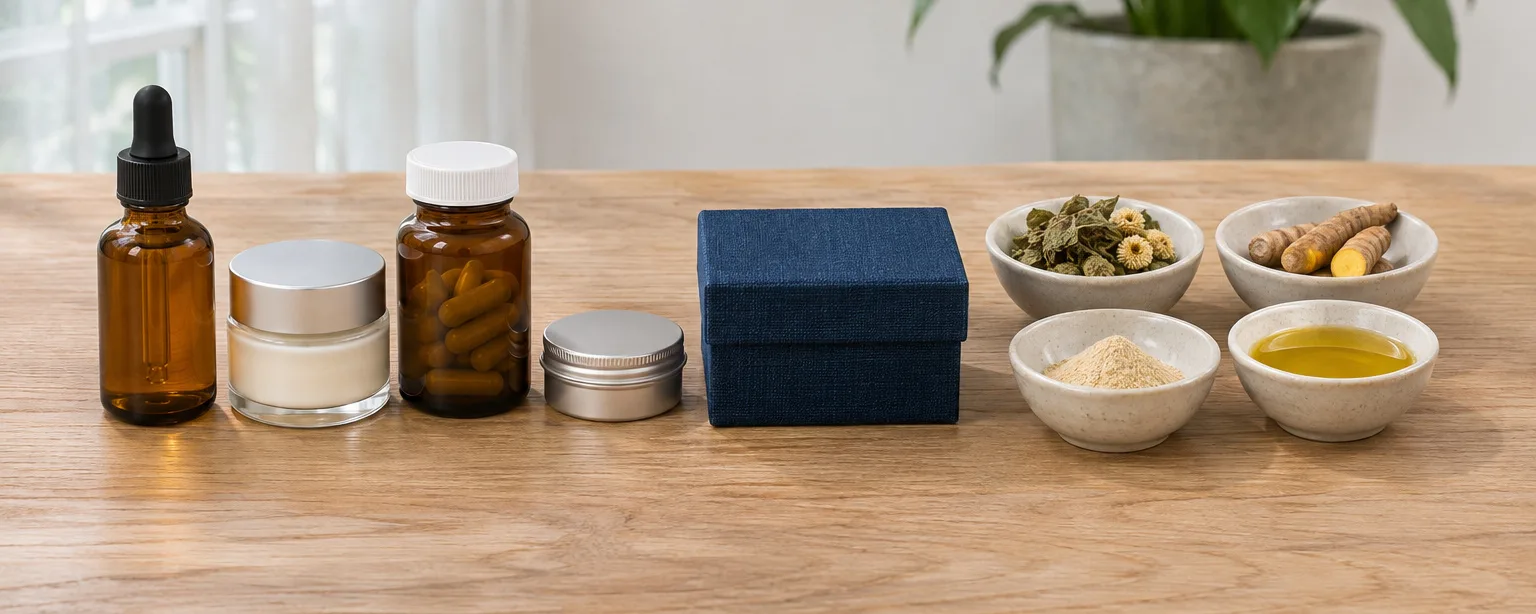
How to protect a formula in Thailand: intellectual property comes in layers, not one law
Brand and formula owners often ask: "How can I protect my formula, and can I let others use it and earn income from it?" To protect a formula in Thailand you can use several layers. The first layer to understand for herbal, cosmetic and supplement formulas is the trade secret, followed by patents or petty patents, trademarks, and copyright in your documents.
Intellectual property is not one law. Each mechanism has its own Act, so the conditions, the term and the way you license others differ.
- Trade secrets: Trade Secrets Act B.E. 2545 (2002) and Amendment No. 2 B.E. 2558 (2015)
- Patents and petty patents: Patent Act B.E. 2522 (1979), Amendment No. 2 B.E. 2535 (1992), Amendment No. 3 B.E. 2542 (1999) and NCPO Head Order No. 1/2562 (2019)
- Trademarks: Trademark Act B.E. 2534 (1991), Amendment No. 2 B.E. 2543 (2000) and Amendment No. 3 B.E. 2559 (2016)
- Copyright: Copyright Act B.E. 2537 (1994) and its amendments up to No. 5 B.E. 2565 (2022)
- Rights in Thai traditional medicine knowledge: Act on Protection and Promotion of Thai Traditional Medicine Knowledge B.E. 2542 (1999)
This is part 3 of the series on herbs, law and formula rights. It follows Thai traditional medicine formula rights, which covers the types of Thai traditional formulas, and Thai controlled herbs: cannabis flower and Kwao Krua, which covers the section 46 licence. This part answers the questions of owners who developed their own formula.
In practice, one serum formula can use every layer: the ratios and process conditions stay a trade secret, a new extraction process is assessed for a patent, the blend name is registered as a trademark, and the SOP is a written work with copyright. Layering lets each mechanism cover the gaps of the others.
Trade secret Thailand: which formulas qualify, reasonable measures, licensing and infringement
The Trade Secrets Act B.E. 2545 (2002) defines a trade secret as trade information that meets three conditions (section 3):
- it is not generally known or not yet accessible among the people concerned;
- it has commercial value because it is secret; and
- its controller has taken reasonable measures to keep it secret.
"Trade information" includes a formula, pattern, compilation, program, method, technique or process. A cream formula, a herbal drink formula or a production process can therefore fall within the definition if all three conditions are met.
Reasonable measures: the part the owner must do
In practice, the definition gives no list of what counts as enough, so the owner should act and keep evidence, for example:
- sign a non-disclosure agreement (NDA) with staff, contract manufacturers and partners before sending formula data;
- show each party only what it needs, for example supply a premix to the factory instead of the full formula;
- restrict file access, use codes instead of raw material names, and mark formula documents "confidential".
Licensing and transfer
A trade secret can be transferred. The owner may disclose, take, use or permit others to use it, and may set conditions to keep it confidential (section 5). A transfer other than by inheritance must be in writing signed by the transferor and the transferee, and if no period is set, the transfer is deemed to be for 10 years. In practice, a licence to use should also be in writing.
What is infringement, and what is not
Infringement is disclosing, taking or using without consent in a way contrary to honest commercial practice, including breach of contract, bribery, threats, fraud, theft or espionage (section 6). Section 7 lists cases that are not infringement; two matter most to formula owners:
- Independent discovery: a competitor who develops a similar formula on its own does not infringe.
- Reverse engineering of a product obtained in good faith, unless a contract with the owner or seller expressly says otherwise.
In practice, contracts with buyers of your blend should therefore prohibit reverse engineering.
The production process presumption
The controller may ask the court for an interim order to stop infringement before filing suit, and may sue to stop it and claim compensation. If the secret is a production process and the defendant's product is the same, the defendant is presumed to have used the secret (sections 8 to 13). In practice, this helps owners of extraction processes.
Amendment No. 2 of 2015 changed only the committee and the penalty provisions. It did not amend chapters 1 to 3 on definitions, transfer, licensing, infringement, exceptions and court procedure, so the rules above are still those of the 2002 Act. The Act has penalty provisions in sections 31 to 36.
Patents and petty patent Thailand: the three tests and what section 9 excludes
An invention can be patented if it is (1) new, (2) involves an inventive step and (3) is industrially applicable (Patent Act B.E. 2522 (1979), sections 5 to 8).
"New" includes never having been disclosed in a document, publication, display or to the public in or outside Thailand before the filing date. In practice, do not post your formula, submit a paper or explain your process at a trade booth before asking a patent agent whether to file.
Section 9: inventions that are not protected
- micro-organisms and their components occurring in nature, animals, plants, or extracts from animals or plants;
- scientific and mathematical rules and theories;
- computer programs (data systems for operating a computer);
- methods of diagnosis, therapy or treatment of human or animal disease;
- inventions contrary to public order, good morals, health or public welfare.
The current wording of section 9 comes from Patent Act Amendment No. 2 of 1992, which removed the old bans on food, beverages, drugs or drug mixtures and agricultural machinery and introduced the new item (1). As a result, food and drug formulas are no longer excluded by category, but plants and plant extracts remain excluded.
In practice, a formulation or extraction process your team developed may be worth assessing with a patent agent to see whether it meets the tests. This article does not say that any formula is patentable.
Petty patents, and how long protection lasts
Amendment No. 3 of 1999 added the petty patent system (chapter 3 bis). It protects inventions that are new and industrially applicable, without the inventive step. You cannot hold both a petty patent and a patent for the same invention. Section 9 also applies to petty patents (section 65 decem). A petty patent lasts 6 years from filing and can be renewed twice, 2 years each time.
An invention patent lasts 20 years from the filing date in Thailand, and a process patent extends to products made by that process.
Formulas containing cannabis: NCPO Head Order No. 1/2562
This order is not yet in the published consolidated text of the Patent Act. Clause 1 says that, if used commercially, the following inventions are deemed not protected under section 9 (5): (1) inventions with cannabis or natural cannabis extracts as a component, (2) substances with the same chemical structure, and (3) salts, esters and ethers of the substances in (2).
Clause 4 says clauses 1 and 2 cease to apply when the narcotics law is amended to allow cannabis to be used for medical research. The order does not say whether clauses 1 and 2 have already ceased, so this must be checked against the narcotics law in force. For the cannabis flower licence, see Thai controlled herbs: cannabis flower and Kwao Krua.
Licensing a patent
A patent owner may license or assign the patent (section 38), but may not impose conditions, restrictions or royalties that unfairly restrict competition, and may not collect royalties after the patent expires; such terms are void (section 39). Licence and assignment contracts must be in writing and registered with the competent official (section 41). Sections 38 and 39 also apply to petty patents.
The right to apply for a patent on an invention made by an employee under an employment contract belongs to the employer unless the contract says otherwise. The Patent Act has penalty provisions in sections 85 to 86.
Trademark registration Thailand: trademarks, certification marks and licence agreements
In practice, a trademark protects a name or symbol, not the formula itself. The Trademark Act B.E. 2534 (1991) recognises four types of mark:
- Trademark: used with goods.
- Service mark: used with services.
- Certification mark: used by its owner on other people's goods or services to certify origin, composition, production method, quality or other characteristics.
- Collective mark: used by companies in the same group or members of an association, cooperative, group of persons or other organisation.
What registration gives you
A registrable mark must be distinctive, must not be prohibited, and must not be the same as or similar to a mark already registered by someone else. A registered owner has the exclusive right to use the mark with the registered goods. An unregistered mark cannot be used to sue for infringement or claim compensation. Registration lasts 10 years from the registration date and can be renewed.
In practice, search existing marks before printing labels, and file in the classes of goods you will actually sell.
Trademark licence agreements must be registered
The owner may license others to use the mark for all or some of the registered goods. The agreement must be in writing and registered with the Registrar. The application must show at least (1) conditions that let the owner genuinely control the quality of the licensee's goods, and (2) the licensed goods (sections 68 to 69).
Section 79/1, added by Amendment No. 3 of 2016, says that unless the agreement provides otherwise, a trademark licence does not end because the mark is assigned or inherited.
Certification marks: rules and capability
The applicant must file regulations on use of the mark, stating the origin, composition, production method, quality or characteristics to be certified, and the criteria, methods and conditions for permitting use, and must show it is capable of certifying.
In practice: an ingredient brand versus a certification programme
In practice, a formula owner who wants other brands to use its blend has two main routes. The first is to register the blend name (an ingredient brand) as a trademark and grant registered licences letting customers show the name on their labels, with quality-control conditions. The second is a certification programme showing that products use the blend to specification, which must be registered as a certification mark, with the owner acting as certifier. Choose the route that fits your business model. The Trademark Act has penalty provisions in sections 108 to 110.
Copyright: it protects formula documents and SOPs, not ideas or procedures
Under the Copyright Act B.E. 2537 (1994), literary works include books, writings, printed matter and computer programs. In practice, formula documents, SOPs, training manuals and label text you write yourself can be works with copyright.
However, section 6 paragraph two says copyright protection does not cover "ideas, procedures, processes or systems, methods of use or operation, concepts, principles, discoveries, or scientific or mathematical theories". This wording has been in the Act since the original text and was not changed by Amendments No. 2 to 5.
In practice, if someone reads your SOP and makes the product by following its steps, copyright helps against copying the document, but it does not stop use of the procedure. To protect procedures and processes, rely on trade secrets or patents.
Who owns it, and transfer
For a work made by an employee as an employee, unless agreed otherwise in writing, copyright belongs to the creator, but the employer may publish it for the purpose of the employment. For a commissioned work, copyright belongs to the person who commissioned it unless agreed otherwise (sections 9 to 10).
A transfer of copyright other than by inheritance must be in writing signed by both parties, and if no period is set the transfer is deemed to be for 10 years (sections 15 to 17). Copyright lasts for the life of the creator plus 50 years after the creator's death.
Amendments that matter for business documents
Amendment No. 2 of 2015 protects rights management information and technological measures used to prevent copying or control access. Amendment No. 5 of 2022 lets copyright owners notify online service providers to take down infringing works under section 43/6. The Copyright Act has penalty provisions in section 69.
Personal Thai traditional medicine formulas: a separate rights system
If your formula is a Thai traditional medicine formula, the law is the Act on Protection and Promotion of Thai Traditional Medicine Knowledge B.E. 2542 (1999), which works differently from the laws above. Details are in Thai traditional medicine formula rights; this section covers only the points that affect licensing.
- Who can register: personal formulas or texts can be registered. The applicant must be a Thai national and the inventor, improver or successor.
- No transfer: rights in Thai traditional medicine knowledge cannot be transferred except by inheritance (section 35).
- Term: the life of the right holder plus 50 years after the right holder's death.
- Licensing: the right holder may permit others to use the right.
The Ministerial Regulation of 2012 on right holders permitting others to use rights in Thai traditional medicine knowledge says the person to be licensed must be a Thai national. The permission must be in writing and state at least the date, the details of the right holder and licensee, the registration certificate number, the rights granted, the scope and the period, and a copy must be filed with the Registrar.
In practice, if your partner is a foreign company, or your plan is to sell the formula rights outright, check with the Department of Thai Traditional and Alternative Medicine and a lawyer first. To check whether a formula matches a declared formula, use the formula rights check tool.
Licensing your formula for income: the business framework before you talk money
Each law above lets the owner license others, but on different conditions. This section is business practice, not law. Use it as a framework before negotiating, then have a lawyer draft the actual contract.
Which rights, exclusive or not
In practice, split the rights into items: the right to use the formula in the licensee's own products, to manufacture or have it manufactured, to sell, and to research and develop it further, and say who owns improved formulas. A non-exclusive licence lets the owner license several parties at once. An exclusive licence should be tied to performance, such as a minimum purchase or a launch deadline, and fall back to non-exclusive if targets are missed.
Territory, channel, term, and a staged path
State the countries, sales channels, product types, the term and renewal conditions. In practice, the term should match the life of the right you grant, because the Patent Act bans royalties after a patent expires. Formula deals often start with an option, a short paid reservation, then grow step by step as shown in the diagram after this section.
Revenue components
- Upfront payment on signing
- Milestone payments, for example when the product number is issued
- Royalties per contract period
- Minimum royalties, even if the licensee sells little
- Supply income from selling the blend, which also helps keep the secret
In practice, royalties should be priced per grant and per term of the right, not per kilogram of formula, because weight is a raw material cost. If you also sell the blend, keep the product price separate from the royalty in the contract.
What each law requires in writing
- Trade secrets: a transfer other than by inheritance
- Patents: licence and assignment contracts, also registered with the competent official
- Trademarks: licence agreements, also registered with the Registrar
- Copyright: a transfer other than by inheritance
- Thai traditional medicine knowledge: the permission, also filed with the Registrar
- 1Check what rights you holdTrade secret, patent, trademark, copyright or Thai traditional medicine rights
- 2Sign an NDA before disclosureDisclose only what is needed, and ban reverse engineering
- 3OptionA short reservation while the partner tests the formula and the market
- 4Non-exclusive licenceState the rights, territory, channel and term, in writing
- 5Exclusivity once targets are metTie it to minimum purchases or a launch deadline
- 6Assignment or joint ventureOnce both sides trust the market, and register where the law requires
Source: Practice drawn from the Trade Secrets Act B.E. 2545 section 5 · Patent Act sections 38–41 · Trademark Act sections 68–69 · Copyright Act sections 15–17
Formulas built on a national formula or with Wisdom Fund money: who owns the new formula
If your new formula is developed from a national Thai traditional formula, you first need permission to use it under section 19 (steps in Thai traditional medicine formula rights), and the rights in the new formula depend on the contract with the grantor.
Clauses 10 to 12 of the 2015 Ministerial Regulation on permission to use national formulas say the contract must state the purpose, the formula details, ownership of intellectual property in new formulas developed, the rate and method of paying compensation, and a contract term equal to the permit term.
The Por.Thor. 17 contract form, set by the 2020 notice of the Department of Thai Traditional and Alternative Medicine, has terms that directly affect formula owners:
- intellectual property in work improved beyond what was permitted belongs to the licensee, unless agreed otherwise in writing;
- the permission is not an exclusive right;
- the licensee must use it itself, may not transfer the right, and may not disclose the formula to others, including affiliated businesses.
In practice, if you plan to let other brands use the improved formula, read the signed contract and consult the grantor or a lawyer first, because the bans on transfer and disclosure still apply.
Formulas developed with Thai Traditional Medicine Wisdom Fund money
The 2025 notice of the Fund's administrative subcommittee applies to projects outside the Department that receive Fund money. Clause 32 says intellectual property arising from research supported by the Fund belongs solely to the Department of Thai Traditional and Alternative Medicine or the Fund, with fifty percent of income after expenses shared with the grantor and the grantee. Publication of reports needs permission from the subcommittee chair and must not affect applications for intellectual property protection.
The published file of the notice is missing some text. In practice, if your brand wants to own the formula, agree the rights clearly before signing and read the actual grant contract.
Seven mechanisms compared: what each protects, registration, term and licensing
The table after this section sums up seven mechanisms on one page. The term column is filled only where the law sets a term in years.
In practice, a blend of commonly available raw materials usually relies on trade secrets together with a trademark, while a newly developed process should be assessed for a patent before disclosure.
The published consolidated Patent Act does not yet include NCPO Head Order No. 1/2562, and the consolidated Copyright Act does not include Amendments No. 4 and 5. In practice, read later amendments alongside a consolidated text. Each text is in the law library.
Source: Trade Secrets Act B.E. 2545 · Patent Act B.E. 2522 and Amendments No. 2–3 · Trademark Act B.E. 2534 and Amendments No. 2–3 · Copyright Act B.E. 2537 · Thai Traditional Medicine Knowledge Act B.E. 2542 · Ministerial Regulation of 2012 on licensing rights in Thai traditional medicine knowledge
Checklist before you show your formula to a factory or partner
Before you send your formula to a contract manufacturer, investor or interested brand, go through the checklist after this section. Each item is practice drawn from the laws above. First answer three questions:
- What rights do you actually hold? Developed in-house, commissioned, built on a national formula, or funded by the Fund.
- How much does the other side need to know? A factory may need the process steps but not the extract source or the full ratios.
- Will you file a patent or petty patent? If you have not decided, do not disclose the inventive part.
In practice, keep copies of every document sent, with the date and recipient. Patent and petty patent applications, trademark registration and licence drafting should be handled by a patent agent or lawyer. Our consultants can organise formula documents and plan the Thai FDA route for the product, or ask the advisor first.
- ✓Know who owns the formulaContracts with staff, consultants or universities cover rights in the work
- ✓Check where the formula came fromIf built on a national formula or funded by the Fund, read the rights clauses first
- ✓Sign an NDA before sending dataDefine the confidential information, the period, and a ban on reverse engineering
- ✓Disclose only what is neededUse raw material codes, or supply a premix instead of the full formula
- ✓Decide on patents firstAsk a patent agent before disclosing the inventive part
- ✓Register your trademarkSearch and file in the classes you will sell, before printing labels
- ✓Mark documents and keep recordsKeep copies sent, with the date and recipient each time
Source: Practice drawn from the Trade Secrets Act B.E. 2545 sections 3, 5–7 · Patent Act sections 5–9, 11–12 · Trademark Act sections 6–8 · Wisdom Fund notice (2025) clause 32
Frequently asked questions
What is a trade secret in Thailand, and can a product formula qualify?
It is trade information that is not generally known, has commercial value because it is secret, and whose controller has taken reasonable measures to keep it secret (section 3 of the Trade Secrets Act B.E. 2545). Trade information includes a formula, method, technique or process.
If a competitor analyses our product and copies the formula, is that infringement?
Section 7 says reverse engineering of a product obtained in good faith is not infringement, unless a contract with the owner or seller expressly says otherwise. In practice, put a ban on reverse engineering in contracts with partners.
Can a herbal formula or plant extract be patented in Thailand?
Section 9 of the Patent Act excludes micro-organisms occurring in nature, animals, plants, or extracts from animals or plants. For a new formulation or extraction process, in practice ask a patent agent to assess it.
How does a petty patent differ from a patent?
A petty patent must be new and industrially applicable but needs no inventive step. It lasts 6 years from filing and can be renewed twice, 2 years each time, while an invention patent lasts 20 years. Section 9 applies to both.
We want other brands to show our blend name on their labels. What do we need?
Register the name as a trademark, then make a written licence agreement and register it with the Registrar. The application must show conditions that let the owner genuinely control the quality of the licensee's goods, and the licensed goods.
How should we price a formula licence?
In practice, price it per grant and per term, not per kilogram of formula. For patents, the Patent Act bans collecting royalties after the patent expires.
Sources
- Trade Secrets Act B.E. 2545 (2002) · Open source · Search our archive
- Trade Secrets Act (No. 2) B.E. 2558 (2015) · Open source · Search our archive
- Patent Act B.E. 2522 (1979), consolidated to Amendment No. 3 B.E. 2542 (1999) · Open source · Search our archive
- Patent Act (No. 2) B.E. 2535 (1992) · Open source · Search our archive
- Patent Act (No. 3) B.E. 2542 (1999) · Open source · Search our archive
- NCPO Head Order No. 1/2562 (2019) amending the patent law and special patent measures · Open source · Search our archive
- Trademark Act B.E. 2534 (1991), consolidated to Amendment No. 3 B.E. 2559 (2016) · Open source · Search our archive
- Trademark Act (No. 2) B.E. 2543 (2000) · Open source · Search our archive
- Trademark Act (No. 3) B.E. 2559 (2016) · Open source · Search our archive
- Copyright Act B.E. 2537 (1994), consolidated to Amendment No. 3 B.E. 2558 (2015) · Open source · Search our archive
- Copyright Act B.E. 2537 (1994), Royal Gazette original · Open source · Search our archive
- Copyright Act (No. 2) B.E. 2558 (2015) · Open source · Search our archive
- Copyright Act (No. 5) B.E. 2565 (2022) · Open source · Search our archive
- Act on Protection and Promotion of Thai Traditional Medicine Knowledge B.E. 2542 (1999) · Open source · Search our archive
- Ministerial Regulation on right holders permitting others to use rights in Thai traditional medicine knowledge, and revocation by the Registrar, B.E. 2555 (2012) · Open source · Search our archive
- Ministerial Regulation on applying for and granting permission, limits on rights and compensation for using national formulas or texts B.E. 2558 (2015) · Open source · Search our archive
- Department notice on forms under the national formula regulation (forms Por.Thor. 15–17), 2020 · Open source · Search our archive
- Thai Traditional Medicine Wisdom Fund subcommittee notice on criteria for Fund spending on projects outside the Department (2025) · Open source · Search our archive
This article is for general information. It is not a Thai FDA ruling or legal advice, and rules change — check the latest notification or ask an expert before filing or producing. Spotted an error? Tell us and we will correct it
Related articles
 Brand ownersThai Controlled Herbs: Cannabis Flower, Kwao Krua, the Section 46 Licence and the Cannabis PrescriptionThailand controls two herbs, cannabis flower and Kwao Krua. Research, export, sale or processing for trade needs a section 46 licence: rules and forms.
 Brand ownersThai Traditional Medicine Formula Rights: National, General and Personal Formulas Before the Thai FDA StepsThai traditional medicine formulas come in 3 types. National ones need permission to use, personal ones the right holder's consent, then Thai FDA steps.
 Brand ownersThai FDA Registration Process: 8 Steps From Product Classification to Approval and RenewalThai FDA registration process in 8 steps for brand owners, makers and importers: product group, applicant, site licence, online filing, documents, labels.