 FDA Thailand
 Brand owners
Thai Traditional Medicine Formula Rights: National, General and Personal Formulas Before the Thai FDA Steps
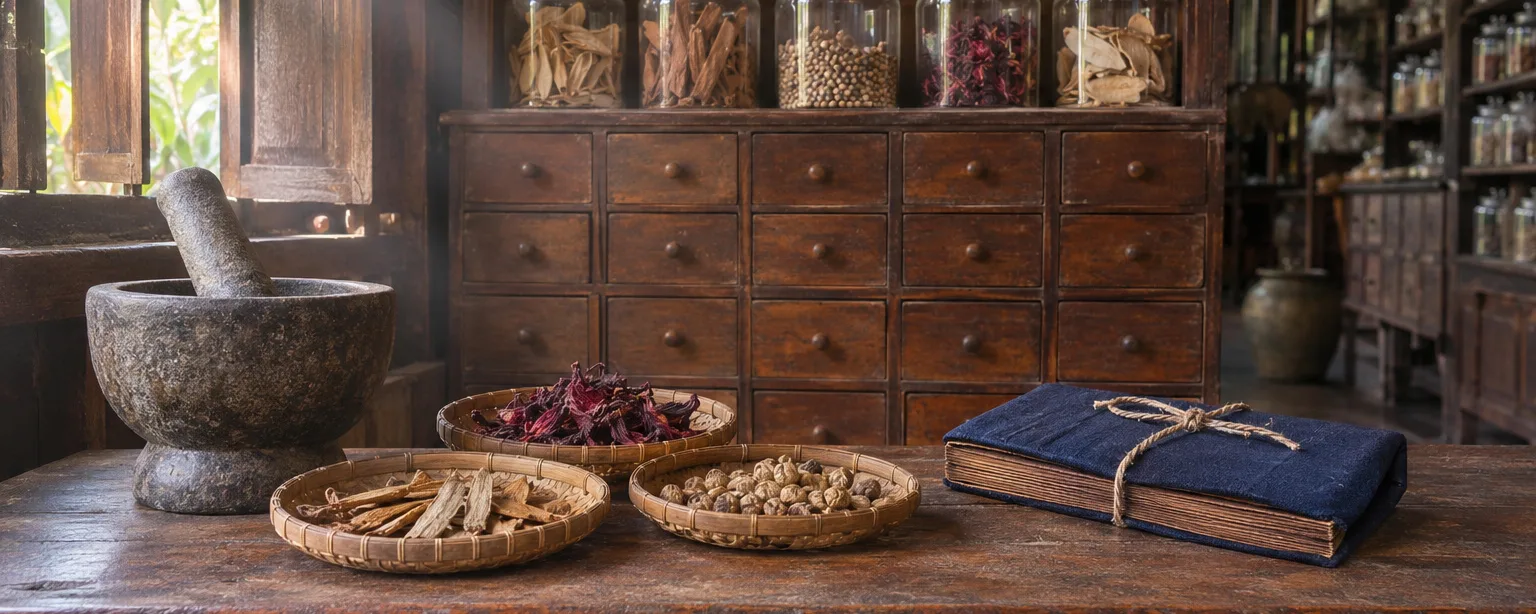
What a Thai traditional medicine formula is, and why two agencies are involved
A Thai traditional medicine formula is a recipe that sets out the ingredients and the preparation method according to Thai traditional medicine. Brand owners who want to make ya hom (a traditional aromatic remedy) or another herbal product from an old formula usually start by finding a factory and preparing a Thai FDA application. There is an earlier question to answer on day one: does anyone hold rights in this formula? The work involves two laws and two agencies.
- The Thai FDA looks at the product under the Herbal Products Act B.E. 2562 (2019). Its definition of herbal products includes herbal medicines, among them Thai traditional medicines (section 4). There are three levels of permission: a licence to manufacture, import or sell (sections 17 and 20), a formula registration certificate (section 34), and a detailed-notification or notification receipt (section 45). The Minister issues notices that say which route each product takes (section 6).
- The Department of Thai Traditional and Alternative Medicine looks at rights in the formula under the Protection and Promotion of Traditional Thai Medicinal Intelligence Act B.E. 2542 (1999). The rights it protects are rights in Thai traditional medicine formulas and Thai traditional medicine texts (sections 14 and 16).
A permission from one side does not replace the other
The two come from different laws, so in practice you should regard them as two gates you must pass. A Thai FDA number does not give you the right to use a formula, and permission to use a formula still leaves the Thai FDA steps. The application form for using a national formula itself lists, as its first purpose, using the formula to register a drug formula and obtain a drug production licence under the drug law or another law.
This is the first article in our series "Herbs, law and formula rights" and it focuses on the rights side. For the Thai FDA steps, read Thai herbal product notification and which law covers traditional medicine today.
Thai traditional medicine knowledge: national, general and personal formulas
The Protection and Promotion of Traditional Thai Medicinal Intelligence Act B.E. 2542 (1999) divides Thai traditional medicine knowledge into three types: national formulas or texts, general formulas or texts, and personal formulas or texts (sections 14 and 16). Two words need to be kept apart. A formula (tamrap) is a recipe that sets out the preparation method and ingredients. A text (tamra) is a body of medical knowledge recorded in folding books, palm-leaf manuscripts or stone inscriptions, or handed down orally. One text can hold hundreds of formulas.
- National formulas are declared by the Minister under criteria in a B.E. 2558 (2015) ministerial regulation issued under section 17 paragraph two, for example formulas compiled by a state agency with traceable reference documents, or formulas that show national identity. They must not already be protected under this law.
- Personal formulas belong to an inventor, improver or successor who registers the rights. Anyone else who wants to use one needs permission from the right holder.
- General formulas are formulas in widespread use, or whose protection has expired, declared under a ministerial regulation issued under section 18 paragraph two.
In practice, then, the first question is where the formula came from, because the answer decides whose permission you need.
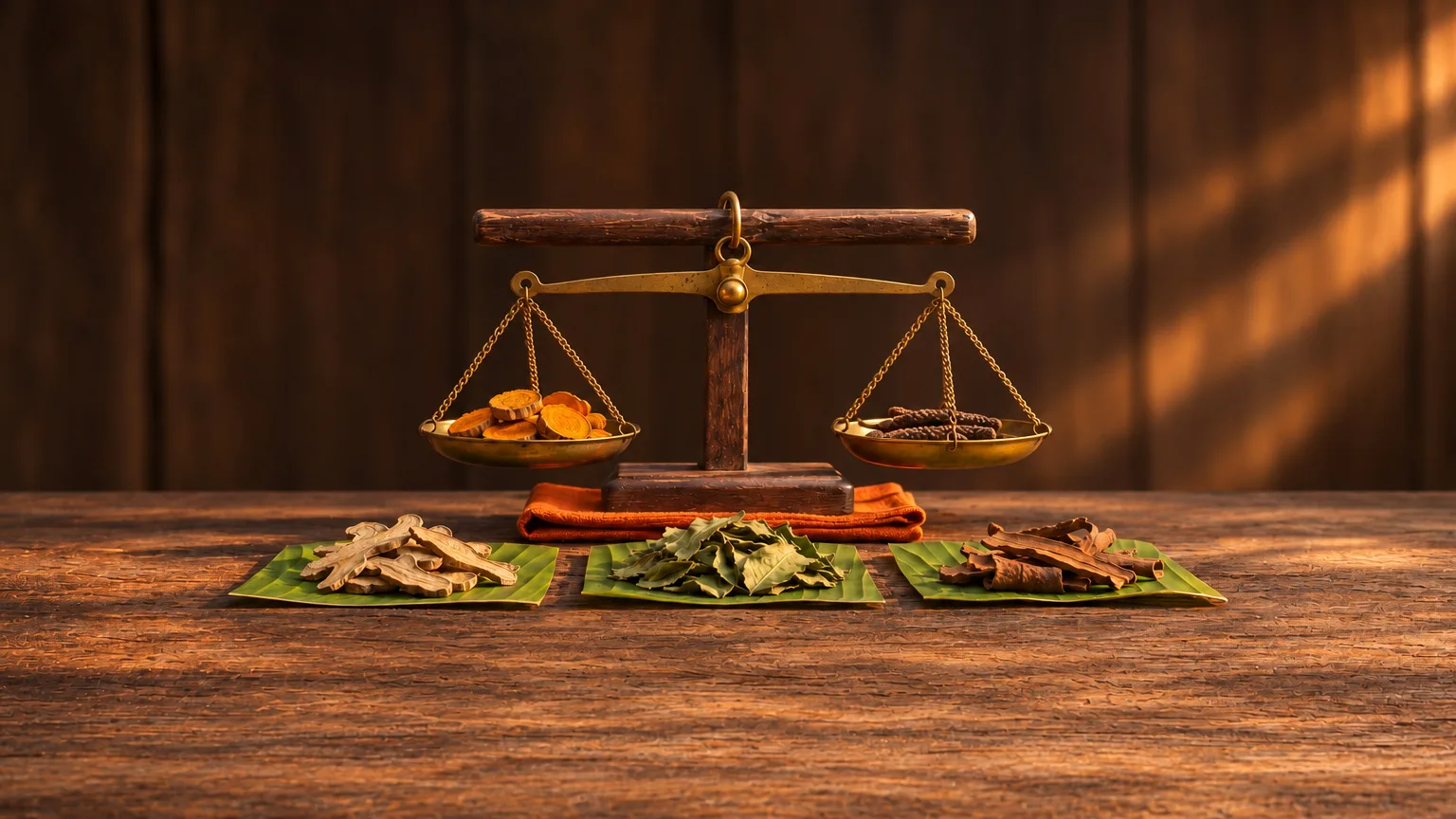
Source: Protection and Promotion of Traditional Thai Medicinal Intelligence Act B.E. 2542, sections 14 16 17 19 21 33 34 36 · 2015 ministerial regulations on national formulas, general formulas and permission to use · 2012 ministerial regulation on licensing rights
National Thai traditional formulas: what the 26 notices contain
National formulas are declared in batches through Ministry of Public Health notices issued under sections 4 and 17. Our archive holds 26 of them: the first notice of B.E. 2558 (2015), which has no number, notices No. 2 to No. 25, and notice No. 28 of B.E. 2563 (2020). Of these, No. 12 is a draft file, so we cannot confirm that the gazetted version says the same.
Each notice makes the texts in its annex national Thai traditional medicine texts, and the formulas in those texts national Thai traditional formulas. This is the key sentence: every formula in a listed text is covered, not only the formulas whose names are printed.
Only 3 notices name individual formulas
- First notice, B.E. 2558 (2015): the 380 stone inscriptions of Wat Phra Chetuphon (Wat Pho), medical parts only, 1,061 formulas in total, of which 744 are recorded as "name not specified".
- Notice No. 3, B.E. 2559 (2016): the stone inscriptions of Wat Ratchaorasaram, 186 formulas, 37 of them named.
- Notice No. 11, B.E. 2560 (2017): the Sapha Unalom Daeng formulary of R.S. 112, a list of 141 entries.
The others list texts and formula counts
For example, notice No. 4 lists 35 old documents of the National Library with 2,369 formulas, and notice No. 28 lists 16 texts with 1,404 formulas. Some notices, such as No. 2, give counts for only some texts; the other texts have neither a count nor formula names.
In practice, if your formula was copied from a text that appears in a list, assume it is a national formula even if you cannot find its name. Our formula rights check tool shows all 26 notices for you to scroll, or lets you type a formula or text name to search.
When you need permission to use a national formula, and the steps under the 2015 ministerial regulation
Section 19 provides that anyone who will use a national Thai traditional formula to register a drug formula and obtain a drug production licence, or research and adapt it into a new formula for trade, must apply for permission to use it and pay compensation for that use to the licensor. The details sit in the ministerial regulation on applying for and granting permission, limits on rights and compensation for the use of national formulas or texts, B.E. 2558 (2015).
Three purposes on application form ภ.ท. 15
- Registering a drug formula and obtaining a drug production licence under the drug law or another law
- Researching and developing a new drug formula for trade
- Researching a national text to develop new knowledge for trade
For other cases, such as importing, the summaries we rely on say nothing specific, so ask the Department first.
Who files, where, and with what
Individuals, juristic persons and state agencies can apply, with the registrar at the Department in Bangkok or at a provincial public health office. Applicants must be of age, be domiciled or resident in Thailand, and must not have had a licence under this Act revoked, unless the stated period has passed. The core documents are copies of the ID card and house registration, a statement that you will use the formula yourself, and a proposed work plan (juristic persons add company documents). The application must give the formula name, basic ingredients and the number of the notice that made it a national formula.
You can ask for preliminary information first
A B.E. 2560 (2017) committee notice lets an applicant who wants preliminary information file the form attached to it. The registrar discloses the herbal ingredients and their proportions and the indications of the formula. In practice, this lets you compare the recipe you hold with the formula in the notice before you invest.
Four possible outcomes
The Department's citizen manual (April 2020) sorts outcomes into: permission needed; permission needed after adaptation; no permission needed after adaptation; and permission not appropriate. If you are unsure which applies to your formula, ask the registrar to explain it in writing.
- 1Find the source textCompare it with the notice lists and note the notice number
- 2Ask for preliminary informationThe registrar discloses ingredients with proportions and the formula's indications
- 3File form
ภ.ท. 15At the Department or a provincial public health office, choosing a section 19 purpose - 4Receive the outcomePermission needed, needed after adaptation, not needed after adaptation, or not appropriate
- 5Sign contract
ภ.ท. 17Before the licence, covering IP in any new formula and how compensation is paid - 6Receive licence
ภ.ท. 16Stating the formula, licence term, period of use and limits on rights - 7Report every calendar year-endEven before any benefit, and notify when benefit is received
Source: 1999 Act section 19 · 2015 ministerial regulation on permission to use · 2017 committee notice on preliminary information · 2020 citizen manual · 2020 Department notice on forms
The contract, compensation and your duties after permission
Once approved, the applicant signs a contract with the licensor before the licence is issued. The forms now in use come from a B.E. 2563 (2020) Department notice: the application
Contract conditions in form ภ.ท. 17 that affect daily work
- Attach a work plan, such as a production plan, confidentiality measures, a proposed selling price, product format or marketing plan.
- Use the formula yourself, do not transfer the right, and do not disclose the formula to others, including affiliates.
- If you engage an outside party, sign a confidentiality agreement with them and notify the licensor in writing.
- Report on use at the end of every calendar year, even before any benefit is received.
- Intellectual property in improved work belongs to the licensee unless agreed otherwise in writing.
- The permission is not an exclusive right.
Compensation follows set criteria
The ministerial regulation says compensation must not exceed the rate announced by the committee and sets criteria for a minimum rate. The contract form allows payment in instalments or in one sum, and the licensor may ask for security. We do not give figures here because they depend on the criteria and on each contract; ask the Department directly.
In practice, a brand using a contract manufacturer should sign a confidentiality agreement with the factory before sending the formula. Because the permission is not exclusive, your product's edge has to come from development and quality.
Personal formulas: registering rights with the Department of Thai Traditional and Alternative Medicine, and licensing others
Personal formulas or texts can be registered. The applicant must have Thai nationality and be the inventor, improver or successor (sections 20 and 21). The application uses form
The formula must list every ingredient and its quantity, contain no modern drug substance, carry a name that does not exaggerate, and must not fall under the prohibitions in section 22.
Rights, term and passing the right on
- Rights (section 34): "only the right holder" has the right to produce, research, sell, adapt or develop the registered formula. Section 34 paragraph two sets out three exceptions: (1) study, research or experiments under rules issued by the Minister; (2) preparing medicine for an individual on a doctor's prescription by a licensed Thai traditional medicine practitioner; (3) folk production for a livelihood, or production by state hospitals, government offices or state agencies for use in state hospitals, under rules issued by the Minister. A brand producing for sale is therefore not within these exceptions.
- Term (section 33): the right holder's lifetime plus 50 years from death, after which the Minister declares it a general formula or text.
- Passing it on (section 35): the right cannot be transferred to others except by inheritance. The heir must apply to register with the registrar within two years of the right holder's death; otherwise the right ends. Buying the right from its owner is therefore not possible; the route the law opens is licensing others to use the right (section 36).
Licensing others to use the right (2012 ministerial regulation)
- The licensee must have Thai nationality and must not have had the same kind of licence revoked under section 41, unless one year has passed since the revocation order.
- The licence must be in writing, citing the rights registration certificate number, the rights granted, the scope and the term, and a copy must be filed with the registrar, including when it is amended or ends.
- For a licence to produce medicine, the licensee must keep the method and ingredients in line with the licensed formula.
In practice, if the recipe comes from a healer or a family that still carries it on, ask early whether the rights are registered and ask to see the
General Thai traditional formulas: what qualifies
The ministerial regulation on declaring general Thai traditional formulas or texts, B.E. 2558 (2015), issued under section 18 paragraph two, sets criteria for declaring formulas in widespread use, or whose protection has expired, as general formulas. Formulas that qualify are:
- formulas declared as traditional household remedies under the drug law;
- formulas the Department designates for primary health care;
- formulas compiled, developed or improved by the state, with evidence from experience of use or research on safety and medical benefit;
- formulas whose protection under section 33 has expired, or for which nobody applied to register the inheritance within two years of the right holder's death.
Practical cautions
A formula becomes general when it is declared, not because it is well known, so look for that declaration or ask the Department. Names also repeat: the same name can appear in several texts with different recipes. For example, the name ya prasa phlai appears in the lists of both the first notice and notice No. 11. What decides the question is which text your actual recipe matches, not the name on the box.
A general formula still goes through the Thai FDA steps as usual.
Thai controlled herbs: cannabis inflorescence, Kwao Krua and the section 46 licence
The Act also lets the Minister declare controlled herbs, and prohibits research, export, or sale or processing of controlled herbs for trade without a licence (sections 44 to 48). Research by state agencies is exempt, and anyone holding more than the announced quantity must notify the registrar. Two herbs are currently covered.
- Cannabis (B.E. 2568 / 2025 notice): it repeals the B.E. 2565 (2022) notice and makes cannabis, plants of the genus Cannabis in the family Cannabaceae, a controlled herb for the inflorescence only. Anyone who will research, export, sell or process it for trade needs a licence under section 46.
- Kwao Krua (B.E. 2549 / 2006 notice): white, red and black Kwao Krua, including tubers, underground roots or any part, but not Kwao Krua already compounded into a medicine formula.
There is much more detail here; read Thai controlled herbs: cannabis flower, Kwao Krua and the section 46 licence. In practice, if your formula contains cannabis inflorescence or Kwao Krua, start with the controlled-herb licence before the Thai FDA steps.
The Thai FDA side and the formula-rights side compared, with a ya hom brand example
| Topic | Thai FDA (Herbal Products Act 2019) | Department of Thai Traditional and Alternative Medicine (1999 Act) |
|---|---|---|
| What it looks at | The product, and the site that makes, imports or sells it | Rights in formulas and texts, and controlled herbs |
| Documents issued | Licence to manufacture, import or sell · formula registration certificate · detailed-notification or notification receipt | Permission to use a national formula |
| Who files | The holder of a manufacturing or import licence, or a party that hires a licence holder | National formula: individuals, juristic persons or state agencies · personal formula: a Thai national who is the inventor, improver or successor |
| Where to file | Electronically as the main channel | The registrar at the Department or a provincial public health office |
| Term | Licences, certificates and receipts: 5 years | Permission to use: as stated on the licence · personal rights: holder's lifetime plus 50 years |
Example: a brand wants to make ya hom from an old formula
Suppose a brand has a ya hom recipe from an old folding book and wants a contract manufacturer to make it for sale. The order we recommend:
- Trace the recipe. Search the text or formula name in the formula rights check tool. Some ya hom names do appear in the lists, such as ya hom nam kaeo in the first notice and ya hom nawakot in notice No. 11, but the same name does not mean the same recipe.
- If the text is on a national list, ask for preliminary information to compare ingredients, file
ภ.ท. 15 with the purpose of registering a drug formula and obtaining a production licence, and sign contractภ.ท. 17. Because a factory is involved, sign a confidentiality agreement with it and notify the licensor in writing. - If the recipe comes from a healer with registered rights, get a written licence that states scope and term, and have it filed with the registrar.
- Check the recipe for controlled herbs.
- Move to the Thai FDA steps. Ya hom is a Thai traditional medicine, which falls within the definition of herbal products. The factory needs a manufacturing licence, and the product needs registration, detailed notification or notification as the notices require. See herbal product GMP for the factory and herbal product names and labels.
Claims on the label and in advertising should come from the approved information. If you plan to import a finished product instead, read importing herbal products.
A practical order of steps, and why not found does not mean not protected
The order that saves the most rework is: check rights in the formula first, then controlled herbs, then the Thai FDA steps. If the recipe has to change, documents prepared early for the Thai FDA have to be redone.
- Write down where the recipe came from: text, volume, catalogue number, or the inventor and successor.
- Search the national formula notices, and ask the formula's owner whether the rights are registered.
- National formula: ask for preliminary information, apply for permission to use, sign the contract · personal formula: get a written licence from the right holder.
- If the recipe contains a controlled herb, get the section 46 licence.
- Classify the product and line up a licensed factory; see the Thai FDA registration process and what the Thai FDA is.
- File the registration, detailed notification or notification, prepare the label, and get advertising approval where the law requires it.
Not found in the lists does not mean not protected
- Most national notices list only text, volume or group names; only 3 name individual formulas, so formulas in the other texts have no name to search.
- Registered personal formulas have no public name list in our data.
- Formula names are spelled in many ways, and one name can mean different recipes.
- Our archive does not hold notices No. 26 and No. 27, and No. 12 is a draft.
If you cannot find it, search by the name of the text the recipe came from, then ask the Department before investing in production. The 1999 Act has penalty provisions in sections 77 to 82. If you would like our team to trace a formula's origin or plan the order of work with the Thai FDA, contact our consultants.
- ✓You know where the recipe came fromText, volume, catalogue number, or inventor and successor
- ✓You have searched the national formula noticesBy formula name and by text name
- ✓You have asked about registered rightsIf registered, you hold a written licence from the right holder
- ✓You hold the formula-rights permission or contractIncluding a confidentiality agreement with your contract manufacturer
- ✓You have checked for controlled herbsCannabis inflorescence, Kwao Krua
- ✓You have planned the Thai FDA routeManufacturing licence, registration, detailed notification or notification, label and advertising
Source: Practice guidance drawn from the 1999 Act sections 19 34 46 · 2012 and 2015 ministerial regulations · contract form
Frequently asked questions
How many types of Thai traditional medicine formula are there?
Three: national formulas or texts, general formulas or texts, and personal formulas or texts, under sections 14 and 16 of the Protection and Promotion of Traditional Thai Medicinal Intelligence Act B.E. 2542 (1999).
I want to sell a product made from a formula in an old text. Whose permission do I need?
If the text is on a national Thai traditional formula notice, you need permission to use it under section 19, and the product still goes through the Thai FDA. Browse the notices in the formula rights check.
I already have a Thai FDA number. Do I still need permission to use the formula?
The two come from different laws, so in practice check both. The Thai FDA number covers the product; rights in the formula fall under the 1999 Act.
Is permission to use a national formula exclusive?
No. Contract form
Can a family healer's formula be registered?
The applicant must have Thai nationality and be the inventor, improver or successor. The right lasts for the holder's lifetime plus 50 years from death.
Which herbs are controlled herbs?
The current notices cover cannabis, inflorescence only (B.E. 2568 / 2025 notice), and white, red and black Kwao Krua (B.E. 2549 / 2006 notice). Research, export, sale or processing for trade needs a licence under section 46.
Sources
- Protection and Promotion of Traditional Thai Medicinal Intelligence Act B.E. 2542 (1999) · Open source · Search our archive
- Protection and Promotion of Traditional Thai Medicinal Intelligence Act B.E. 2542 (English translation) · Open source · Search our archive
- Department notice on details of applications to register rights in Thai traditional medicine knowledge (2014) · Open source · Search our archive
- Ministerial regulation on declaring national Thai traditional formulas or texts B.E. 2558 (2015) · Open source · Search our archive
- Ministerial regulation on declaring general Thai traditional formulas or texts B.E. 2558 (2015) · Open source · Search our archive
- Ministerial regulation on applying for and granting permission, limits on rights and compensation for using national formulas or texts B.E. 2558 (2015) · Open source · Search our archive
- Committee notice on disclosing preliminary information on national formulas or texts B.E. 2560 (2017) · Open source · Search our archive
- Citizen manual: applying for permission to use national Thai traditional formulas or texts (April 2020) · Open source · Search our archive
- Department notice prescribing forms
ภ.ท. 15–17 for national formula permission B.E. 2563 (2020) · Open source · Search our archive - Ministry of Public Health notice declaring national Thai traditional texts and formulas B.E. 2558 (first notice) · Open source · Search our archive
- Ministry of Public Health notice declaring national Thai traditional texts and formulas (No. 2) B.E. 2558 · Open source · Search our archive
- Ministry of Public Health notice declaring national Thai traditional texts and formulas (No. 3) B.E. 2559 · Open source · Search our archive
- Ministry of Public Health notice declaring national Thai traditional texts and formulas (No. 4) B.E. 2559 · Open source · Search our archive
- Ministry of Public Health notice declaring national Thai traditional texts and formulas (No. 11) B.E. 2560 · Open source · Search our archive
- Draft Ministry of Public Health notice declaring national Thai traditional texts and formulas (No. 12) B.E. 2560 · Open source · Search our archive
- Ministry of Public Health notice declaring national Thai traditional texts and formulas (No. 28) B.E. 2563 · Open source · Search our archive
- Ministerial regulation on applying to register rights in Thai traditional medicine knowledge B.E. 2555 (2012) · Open source · Search our archive
- Department notice prescribing rights registration application form
ภ.ท. 7 B.E. 2555 (2012) · Open source · Search our archive - Ministerial regulation on right holders licensing others and revocation by the registrar B.E. 2555 (2012) · Open source · Search our archive
- Ministry of Public Health notice on controlled herbs (cannabis) B.E. 2568 (2025) · Open source · Search our archive
- Ministry of Public Health notice on controlled herbs (Kwao Krua) B.E. 2549 (2006) · Open source · Search our archive
- Ministerial regulation on licences to research, export, sell or process controlled herbs for trade B.E. 2559 (2016) · Open source · Search our archive
- Ministerial regulation on licences to research, export, sell or process controlled herbs for trade (No. 2) B.E. 2569 (2026) · Open source · Search our archive
- Herbal Products Act B.E. 2562 (2019) · Open source · Search our archive
- Ministerial regulation on herbal product formula registration, detailed notification and notification B.E. 2563 (2020) · Open source · Search our archive
This article is for general information. It is not a Thai FDA ruling or legal advice, and rules change — check the latest notification or ask an expert before filing or producing. Spotted an error? Tell us and we will correct it
Related articles
 Brand ownersThai Controlled Herbs: Cannabis Flower, Kwao Krua, the Section 46 Licence and the Cannabis PrescriptionThailand controls two herbs, cannabis flower and Kwao Krua. Research, export, sale or processing for trade needs a section 46 licence: rules and forms.
 Brand ownersThai FDA Registration Process: 8 Steps From Product Classification to Approval and RenewalThai FDA registration process in 8 steps for brand owners, makers and importers: product group, applicant, site licence, online filing, documents, labels.
 Brand ownersWhat Is the Thai FDA? What the Thai Abbreviation Stands For, What It Regulates, and What the Number on Each Label MeansWhat is Thai FDA: what the agency is, which laws it enforces for food, drugs, cosmetics, herbal products and devices, and what label numbers mean.