 FDA Thailand
 Brand owners
Thai Food Label Requirements: What Must Be on the Label, with an Example (2026)
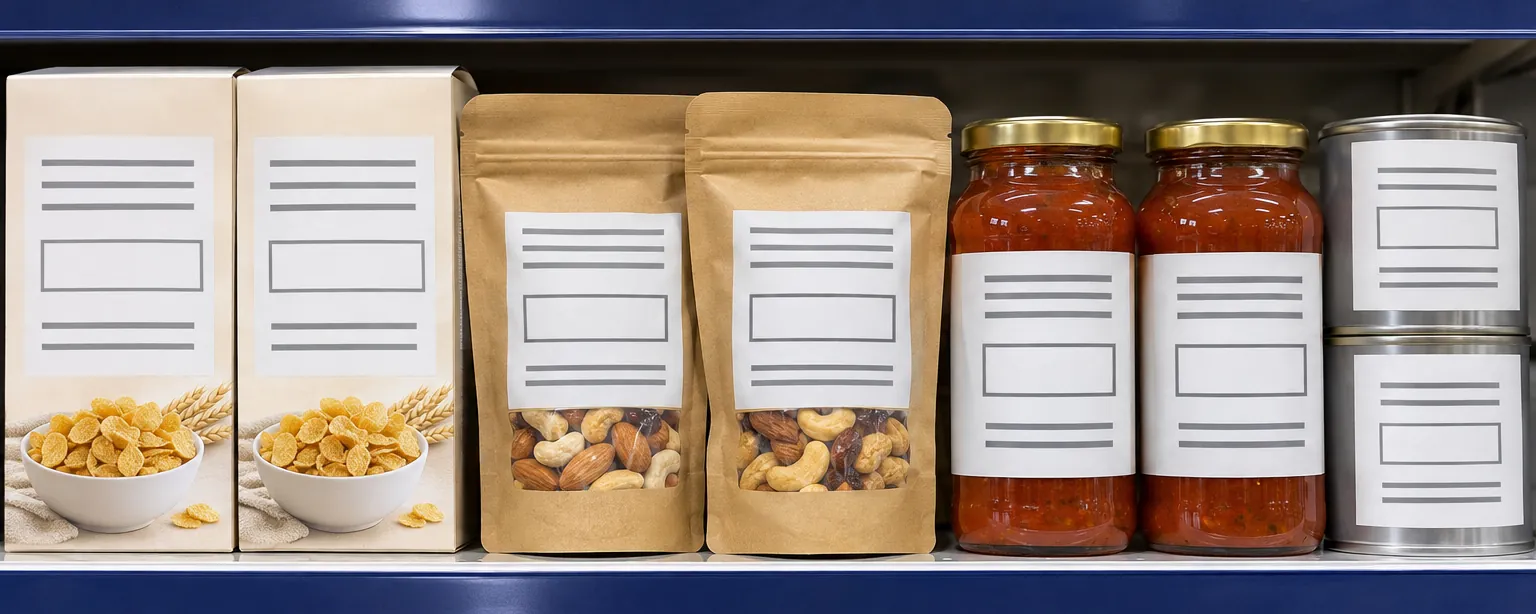
Thai food label requirements: which notification applies now
Thai food label requirements decide whether a packaged food can be sold in Thailand at all. The label tells the buyer what the food is, who made or imported it, what is in it, whether it contains something they are allergic to and until when it can be eaten. For brand owners, factories and importers, the label is also something to get fully right before sale.
The general rules for pre-packaged food are in Ministry of Public Health (MOPH) Notification No. 450 B.E. 2567 (2024) on the labelling of food in containers. It took effect on 19 July 2024 and was then amended by MOPH Notification No. 474 B.E. 2569 (2026), published in the Royal Gazette on 30 October 2026 and in force from 31 October 2026. Anyone designing a label today has to read the two together, or use the consolidated version published by the Thai Food and Drug Administration (Thai FDA).
Notification No. 450 repealed the four earlier notifications on the same subject: No. 367 (2014), No. 383 (2017), No. 401 (2019) and No. 410 (2019). If your team still works from a guide or label template that cites No. 367, review the whole set, because the allergen list, letter heights, exemptions and export label rules have all changed.
Notification No. 474 changed five main areas:
- Exemptions from labelling were rewritten, and nine food groups must now carry a label even when the producer sells direct.
- The allergen list added sesame, split tree nuts into nine named nuts, and moved sulphites and lactose into the statements annex.
- Digital labels are now allowed under a new clause 5/1, but the core information must stay on the pack.
- Export labels now need only one identifying item.
- Letter heights under clause 15 were rewritten.
This guide covers the general rules that apply to almost every food. Nutrition labels, GDA labels and dietary supplements have additional rules of their own, and each has a separate article linked in the relevant section.
Which foods need a label, and which are exempt
The starting point in clause 3 is that food in containers, meaning food wrapped or packed for sale, must carry a label unless it falls under one of four exemptions:
- The producer sells direct to consumers and can give buyers information about the food, for example street vendors, stalls, make-and-sell shops, or the producer's own e-commerce channel.
- Fresh food that has not been processed, such as whole fruit or shellfish in the shell.
- Fresh food that has only been shelled, cut or trimmed, packed so the food is visible and not sold direct to consumers, such as trimmed vegetables, minced pork or peeled shrimp.
- Food made to be served in restaurants, hotels, schools, hospitals and similar places, including delivery straight to the person who ordered it.
The first exemption has a condition online sellers need to watch. The Thai FDA explanatory notice says a producer who places food on consignment somewhere else loses the exemption. The Food Division's Q&A adds that selling through the producer's own social media page or account is exempt, but consignment on an online marketplace platform is not, and the full label is required.
Notification No. 474 also lists nine groups that must be labelled even when the producer sells direct:
- food additives
- infant formula, including infant formula for special medical purposes
- follow-on formula for infants aged six to twelve months, and young child formula
- supplementary food for infants and young children
- food for special dietary uses
- dietary supplements
- foods with added extracts, added nutrients (such as vitamins, minerals or amino acids) or added synthetic substances (such as synthetic caffeine)
- foods for which a notification sets a specific warning
- foods covered by a product-specific notification on production methods, equipment and storage
Two further conditions are easy to miss. First, an exempt food that already has a food serial number must follow the notification in full. Second, if an exempt food carries a label anyway, that label must not be false or misleading under clause 4, and any expiry or best-before date shown must follow clause 5 (9). The explanatory notice also says that food sold as a raw material to another cook for further production is not exempt and needs a full label.
If you are not sure whether your product counts as food, or whether it needs a food serial number, see getting a Thai FDA food number. Snacks, chilli pastes and drinks are covered in do snacks, chilli paste and drinks need Thai FDA approval.
- 1Is it in one of the nine non-exempt groups?For example supplements, foods with added extracts or vitamins, foods under product-specific GMP rules
- 2Who sells it?The producer selling direct and able to inform buyers, or consignment elsewhere
- 3Through which channel?Own online channels can be exempt; marketplace consignment is not
- 4Fresh food or food served on premises?Unprocessed fresh food, or restaurant food and direct delivery
- 5Does it already have a food serial number?If so, the full label rules apply
- 6ResultNo exemption applies: label every item in clause 5
Source: MOPH Notification No. 450 (2024) clause 3 as amended by No. 474 (2026), and the Food Division Q&A
The mandatory items on a Thai FDA food label
Clause 5 says the label of food produced for sale, imported for sale or sold must be in Thai. Other languages may appear as well. At minimum the Thai text must give the following, unless the Thai FDA has exempted a particular item:
- Food name, following clause 14 (see the section on names below).
- Food serial number, 13 digits inside the Thai FDA frame, in the format set by the Thai FDA Regulation on food serial numbers B.E. 2567 (2024).
- Name and address of the manufacturer, repacker, head office or importer, with a word that makes the role clear, such as "produced by", "repacked by", "head office" or "imported by". Imported food must also show the name and country of the manufacturer.
- Net quantity in metric units: net weight for solids (or a count if weight cannot be given), net volume for liquids, and either weight or volume for semi-solids.
- Main ingredients as approximate percentages by weight. Listing them in descending order is optional. The exceptions are labels smaller than 35 square centimetres in total (ingredients may go on the outer pack instead), single-ingredient foods, and dried, powdered or concentrated foods, which may give percentages as reconstituted.
- Allergen information (see the next section).
- Food additives, by functional class. Colours and preservatives must be followed by the specific name or the INS number (International Numbering System for food additives). Flavour enhancers and sweeteners must be followed by the specific name. Other classes may use the words "food additive" with the specific name or INS number. See food additives and INS numbers in Thailand.
- Flavouring statement: "natural flavour", "nature-identical flavour", "artificial flavour", "natural taste" or "nature-identical taste", as used. See Thai flavouring label rules.
- Expiry or best-before date (see the section on dates).
- Warnings, if any. Where several notifications require similar warnings, they may be combined as long as every required statement is complete.
- Storage instructions, if any, such as "store in a dry place" or "refrigerate after opening".
- Preparation instructions, if any.
- Additional statements in the annex to the notification, which now has ten entries.
- Any other statement required by a product-specific notification, such as directions for foods intended for infants, young children or a particular group of people.
The annex is worth checking every time you design a label:
- Food sold direct to consumers with a separate sachet of desiccant or oxygen absorber inside must say "contains (type of sachet)", for example a desiccant sachet, in red letters at least 3 millimetres high on a white background.
- Food containing aloe vera, ginkgo leaf, chia seed, plant stanols or sterols, Jerusalem artichoke or dried gymnema leaf must carry the warning text set in the annex, some in red and inside a box.
- Food sweetened with aspartame must state that people with phenylketonuria should note the product contains phenylalanine. Phenylketonuria is a condition in which the body cannot break down phenylalanine.
- Food containing lactose must state "contains lactose" (added by No. 474).
- Food with residual sulphite of 10 milligrams per kilogram or more, calculated as sulphur dioxide, must state "contains sulphite" (added by No. 474).
Nutrition information, nutrition labels and GDA labels are a separate set of rules for certain foods. See full and short Thai nutrition labels, the Thai GDA label and Notification 467 on nutrition labelling.
Allergen labelling in Thailand: the 10 groups after the 2026 amendment
Clause 5 (6), as amended by No. 474, requires the statement "Allergen information: contains ..." when an allergen is used as an ingredient, and "Allergen information: may contain ..." when there is a risk of cross-contact during production. The blank names the type of food that contains the allergen. If you leave out the heading "Allergen information", the "contains ..." or "may contain ..." text must be placed inside a box. Either way it must be clearly visible and easy to read.
The ten groups under the current notification are:
- Cereals containing gluten: wheat, rye, barley, oats, spelt or their hybrids. Exempt are glucose syrup or dextrose from wheat, maltodextrin from wheat, glucose syrup from barley, and alcohol distilled from cereals.
- Crustaceans, such as crab, shrimp, mantis shrimp and lobster.
- Eggs and egg products.
- Fish and fish products, except fish gelatine used as a carrier for vitamins and carotenoids.
- Peanuts and peanut products.
- Soybeans, except refined soybean oil, certain tocopherols, phytosterols and stanol esters derived from soy.
- Milk and milk products, except lactitol.
- Nine tree nuts: almond, cashew, hazelnut, pecan, pistachio, walnut, Brazil nut, macadamia and pine nut.
- Molluscs and squid and their products.
- Sesame and sesame products (new in No. 474).
Two things changed from the original No. 450. Sulphite is no longer on the allergen list; it moved to annex entry 10 with the statement "contains sulphite". Lactose was removed from the milk group and moved to annex entry 9 with the statement "contains lactose". Labels made under the earlier wording need updating within the transition period set by No. 474.
Examples given in the Thai FDA explanatory notice include "Allergen information: contains wheat flour, milk powder and may contain tree nuts". Where an ingredient name is technical, it must be explained so buyers understand it, for example "contains casein (milk protein)" or "contains soy lecithin".
There are two exceptions. The first is where the allergen is a main ingredient and the food name already states it clearly, such as fresh cow's milk or roasted peanuts. The second is where an allergen risk assessment has been done following Codex (the joint FAO/WHO food standards programme) and the residual protein meets the Codex level. If the name does not reveal the allergen, for example a custard made with egg or crab sticks made from fish, the declaration is still required. Producers may also declare allergens beyond the list voluntarily.
A "gluten free" statement is governed by MOPH Notification No. 384 (2017). Only the words "gluten free" or the Thai equivalent may be used, and a product made from gluten cereals that has been processed to remove gluten must contain no more than 20 milligrams of gluten per kilogram in the final product and carry the statement that it has been specially processed to remove gluten.
Expiry dates on food labels in Thailand: expiry, best before and production date
Expiry dates on food labels in Thailand are the question producers ask most. The notification defines two terms:
- Expiry is the date marking the end of the food's quality under the storage conditions stated on the label.
- Best before is the date marking the end of the period in which the food keeps its good quality; after it the quality may change.
For selling purposes the two have the same effect: after the stated date the food can no longer be offered for sale. Producers may choose either term, unless a product-specific notification sets the wording, for example by requiring both a production date and an expiry date. In that case the product-specific notification applies.
Day, month and year, or month and year
- Shelf life of 90 days or less: show day, month and year.
- Shelf life over 90 days: show day, month and year, or month and year only.
The date must always be preceded by the Thai words for "best before" or "expiry". English terms with the same meaning, such as Best before or Expiry date, may be added alongside, but the Thai wording is required.
Order and format
Dates run day-month-year or month-year. The month can be a number or a word. Examples in the Thai FDA explanatory notice include "best before 31 Mar 2568", "expiry 31/03/68" and "best before 03/2569". Years may use the Buddhist or Christian era, in four or two digits, and numerals may be Arabic or Thai. Any other order, such as year-month-day, must be explained on the label, for example "best before (year month day) 2025-03-31".
Date printed away from the wording
Many factories print the date on the base of the box or on the seal of the bag. This is allowed, but the label must say clearly where to find it, for example "best before (day month year): see base of pack", and the date must actually be in that place.
What sellers need to know
The expiry or best-before date must fall within the period in which the food can still be sold. The Thai FDA's explanatory notice states that the label date must be the same as or later than the date of sale; put simply, a product must not be sold past its label date. This duty extends to sellers, not only to manufacturers, so retailers and online sellers should rotate stock by date and pull products that reach their date.
For certain processed foods under MOPH Notification No. 456 (2025), such as dried jelly, chewing gum, sweets and meat products that previously showed only a production date, the label must now show a best-before or expiry date under the general labelling rules.
Language, letter height and placement
Once you know what goes on the label, it has to be legible. Clause 15, as rewritten by No. 474, says Thai text must be clear and easy to read, letter size must match the label area, and letters must be at least as high as follows:
| Text | Label area | Minimum letter height |
|---|---|---|
| Food name | 35 cm² or more | 2 mm |
| Food name | Less than 35 cm² | 1 mm |
| Food serial number in the Thai FDA frame | Any size | 2 mm (Thai FDA Regulation on food serial numbers) |
| Net quantity, ingredients, allergen information, date | Up to 100 cm² | 1 mm |
| Net quantity, ingredients, allergen information, date | Over 100 cm² | 1.5 mm |
| Nutrition text, nutrition label, GDA and nutrition claims covered by specific notifications | Any size | 1 mm |
Beyond letter height, designers need to know a few more rules:
- Placement: the food name, net quantity and expiry or best-before date must be clearly visible. The explanatory notice gives the main front panel as an example of where the name should sit.
- Colour: background and text must contrast enough to read clearly. The food serial number and annex statements have their own colour, size and format rules.
- Durability: a label that is stuck, attached or printed must be permanent, must not peel or tear easily, must be in an exposed position and must be in proportion to the pack.
- Small labels: if the whole label is smaller than 35 cm², the ingredients may go on the outer packaging instead, but everything else stays on the label.
- Neck tags: the Thai FDA Q&A counts a bottle neck tag as a food label, so its text must follow the notification too.
Check sizes on a true-scale file before printing. To measure letter heights from a PDF, use check artwork before print, or use label spec before design to get the mandatory items and minimum heights for your label size.
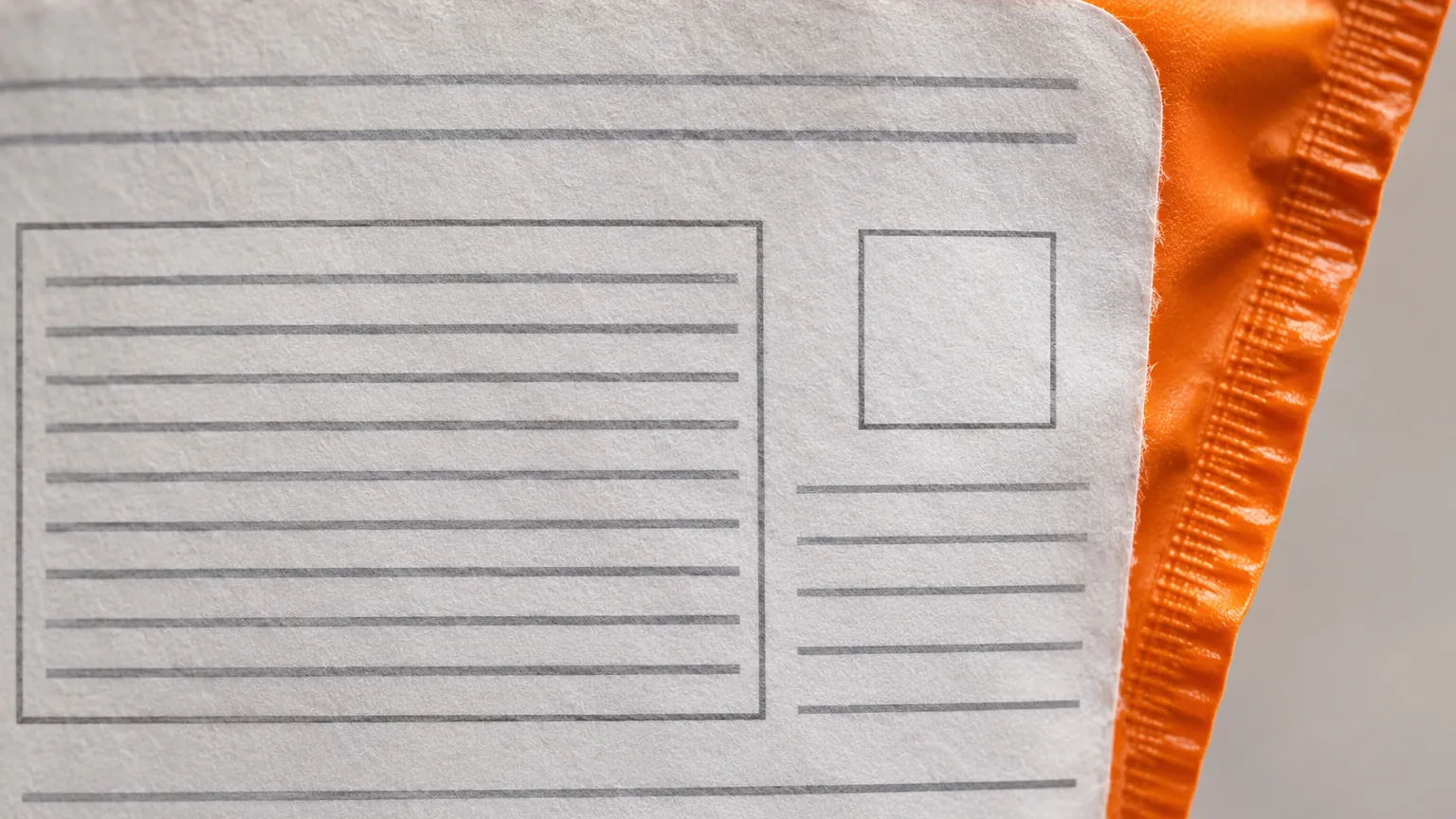
Food label example Thailand: a mock label, panel by panel
The table in this section is a food label example for Thailand, using a fictional product called "Sesame Grain Cookies", 120 grams, with a nine-month shelf life, sold in retail shops, with a desiccant sachet inside the bag. Each row shows what that panel must say and what to check. All text is illustrative and does not describe a real product.
Points to notice in this example:
- A trade name must be accompanied by a name that states the type of food, here "sesame grain cookies", and the brand name must carry the word for "brand" or "trademark".
- The ingredients include wheat flour, oats, butter and sesame, so the label must declare wheat, oats, milk and sesame. If the same line also makes almond cookies, add "may contain almond".
- The raising agent in the example is not a colour, preservative, flavour enhancer or sweetener, so the words "food additive" may be used with its INS number instead of the functional class name.
- The shelf life is over 90 days, so month and year are enough, and because the date is printed on the seal, the label says where to find it.
- There is a desiccant sachet inside, so the red statement on a white background, at least 3 mm high, is required.
Check separately whether this product needs a nutrition or GDA label. To read the panel of figures, see how to read a Thai nutrition label, and for the Healthier Choice symbol, see the Healthier Choice logo. Once you have a draft, upload a photo or paste the text into the Thai FDA label check to see what is missing.
Source: Consolidated MOPH Notification No. 450 (2024) as amended by No. 474 (2026), and the Thai FDA Regulation on food serial numbers (2024)
Thai label for imported food, raw materials, exports, digital labels and gift baskets
Some foods follow different conditions from labels for ordinary retail sale.
Imported food
Food imported for sale in Thailand needs a Thai label that covers every item in clause 5. It must show the importer's name and address with the words "importer" or "imported by", and the manufacturer's name and country. The Food Division's Q&A explains that changing only the label of imported food, without changing the container, is not repacking. If you use a Thai sticker, that sticker is the label and must be permanent and not peel easily under clause 10. If you already have the foreign label, the foreign label to Thai label tool drafts a sticker in the required order.
Food sold as a raw material to other producers
Where food is sold to another food producer for processing and not to consumers, repackers, cooks or retailers, the label must show at least five items: food name, food serial number, name and address of the manufacturer or importer, net quantity, and expiry or best-before date. English may be used instead of Thai, but the label must carry a statement that the product is a raw material for food processing only, or wording with the same meaning, and full Thai details under clause 5 must be given in a manual or sales document every time. Where buyer and seller have an agreement to share ingredient percentages, the percentages need not appear on the label or in the documents.
Food produced for export
The new clause 7 under No. 474 lets export labels use any language, with at least one of three items: the food serial number, the food production site number, or the name and address of the production site. The destination country's own rules are a separate check.
Digital labels
Clause 5/1, added by No. 474, allows a manufacturer or importer to provide label information through a digital label, for example a code that opens an information page. The information must be complete, available at all times and kept running. Seven items must still be printed on the pack: food name, food serial number, net quantity, ingredients, allergen information, expiry or best-before date, and warnings. Infant formula, follow-on and young child formula, supplementary food for infants and young children, food for special dietary uses and dietary supplements must show every item on the pack; a digital label can only add to it. Dietary supplements have further label rules, summarised in Thai supplement label requirements.
Assorted food in baskets or boxes
Several foods, or several units of the same food, packed together in a basket, box or bag for sale must be labelled under the 2010 MOPH notification on assorted food in containers. The Thai label must give the name or type of each item and the expiry or best-before date of each item.
Specially controlled food
Under clause 8, labels of specially controlled foods, and other foods named by the Minister, must be submitted to the Thai FDA for approval before use, so they cannot be used ahead of approval.
Food names, claims, pictures and trademarks
Several rules govern wording on the label. They apply in every language on the pack, including brand names and trademarks.
Food names
Clause 14 allows one of three kinds of name: the specific or common name of the food, a name that states the type or kind of food, or a trade name. A trade name must be accompanied by text stating the type or kind of food; it may sit on the same line and in a different size, but must be easy to read. If a name could mislead about the nature or origin of the food, extra wording must be added, such as the packing medium, production method, form, part of the plant or animal, or origin.
Text, pictures and marks must not mislead
Clause 4 prohibits text, pictures, devices or trademarks that are false or deceptive, that suggest an ingredient which is absent or present in too small an amount to have the suggested effect, or that sound or look like words boasting exaggerated benefits. Labels must also respect Thai culture and good morals. Clause 11 adds that a label must not cause confusion with another type of product.
"Contains" and "free from" claims
Clause 12 prohibits claims about substances banned in food, about additives that have no conditions of use in the additives notification, and about substances that are not normally present in that food. Examples from the explanatory notice of unacceptable wording are "cholesterol-free water" (water never contains cholesterol) and "borax-free meatballs" (borax is already banned in food). Factual wording that shows a real difference and can be proven is still allowed, for example "pure butter with no vegetable oil".
Trademarks, organic and "new"
- Clause 13 requires the word for "brand", "trademark" or "registered trademark" next to the brand name, or an English word or symbol with the same meaning.
- The Thai FDA Q&A says "organic" may only be used on products certified by the responsible body.
- The Food Division's checklist for label amendments says "new" or "new look" may only be used for products not previously on sale, and for no more than one year.
Health claims and advertising are a separate set of rules. If you plan to use that kind of wording on the label or a sales page, check it before printing.
Transition periods for old labels and a pre-print checklist
Labels already printed do not always have to be discarded at once. The transition periods are:
- Labels under the old No. 367: clause 17 of No. 450 allowed them to be sold for up to two years from 19 July 2024. That period has ended, so any label still following the old rules must be redone.
- Labels under No. 450 before amendment: No. 474 allows them to be sold for up to two years from 31 October 2026. However, labels for the nine groups that are not exempt under clause 3 (1) had to follow the amended rules from the day No. 474 took effect.
- Certain processed foods under No. 456, such as bread, sauces, chewing gum, sweets and jelly, that held a food serial number before the notification took effect may use their old labels for up to two years from 3 May 2025.
If a product already has a food serial number and only needs label changes that do not affect benefits, quality, properties or safety, the Thai FDA regulation allows a partial label amendment through the online system. Changes that affect the formula or quality require a full product amendment under the Thai FDA manual.
Before sending files to the printer, have the team go through the checklist below item by item and compare it with the documents filed for the food serial number, because the name, formula and manufacturer on the label must match what was approved. If you are unsure whether a statement is acceptable, ask the RA Advisor or search the full text in the Thai FDA notification archive.
- ✓Every clause 5 item is present in Thai
- ✓Name, formula and manufacturer match the food serial number filing
- ✓All ten allergen groups under No. 474 checked, including sesame
- ✓Sulphite and lactose use the annex wording
- ✓Date carries best before or expiry and uses a valid format
- ✓Letter heights meet the minimum for the label size
- ✓Annex warnings complete, with the right colour, size and box
- ✓No misleading claims
Frequently asked questions
What must be on a food label in Thailand under the latest rules?
Under MOPH Notification No. 450 (2024) as amended by No. 474 (2026), the Thai text must give at least the food name, food serial number, name and address of the manufacturer or importer, metric net quantity, ingredients as percentages, allergen information, food additives, flavouring statement and expiry or best-before date, plus any warnings, storage and preparation instructions, annex statements or product-specific statements that apply.
Is Notification No. 367 still valid?
No. No. 367 (2014) was repealed by No. 450 (2024), together with Nos. 383, 401 and 410. The two-year period for selling stock with old labels, counted from 19 July 2024, has ended. The rules now in force are No. 450 as amended by No. 474, effective 31 October 2026.
Does food sold online need a label?
A producer selling direct to consumers through its own online channels, and able to give buyers information, is exempt. Consignment on an online marketplace or at another location is not exempt. Nine groups, including dietary supplements, foods with added extracts or vitamins and foods under product-specific production rules, must always be labelled even when sold direct.
What is the difference between best before and expiry?
Expiry marks the end of the food's quality; best before marks the end of the period in which it keeps good quality. For selling purposes both have the same effect: after the stated date the food can no longer be sold. Foods with a shelf life of 90 days or less must show day, month and year; longer shelf life may show month and year only.
Which allergens must be declared in Thailand?
After the No. 474 amendment there are ten groups: cereals containing gluten, crustaceans, eggs, fish, peanuts, soybeans, milk, nine named tree nuts, molluscs and squid, and sesame. Sulphite at 10 mg/kg or more is declared with the annex statement contains sulphite, and lactose with contains lactose.
Can a QR code or digital label replace the printed label?
A digital label is allowed under clause 5/1, added by No. 474, but the food name, food serial number, net quantity, ingredients, allergen information, expiry or best-before date and warnings must always be printed on the pack. Infant foods, food for special dietary uses and dietary supplements must print every item on the pack.
Sources
- MOPH Notification No. 450 B.E. 2567 (2024) on the labelling of food in containers · Open source · Search our archive
- MOPH Notification No. 474 B.E. 2569 (2026) on the labelling of food in containers (No. 2) · Open source · Search our archive
- Consolidated MOPH Notification No. 450 (2024) as amended by No. 474 (2026) · Open source · Search our archive
- Thai FDA corrigendum to MOPH Notification No. 450 (2024) · Open source · Search our archive
- Thai FDA explanatory notice on the MOPH notification on labelling of food in containers, 9 August 2024 · Open source · Search our archive
- Food Division Q&A on the MOPH notification on labelling of food in containers · Open source · Search our archive
- Thai FDA Regulation on food serial numbers B.E. 2567 (2024) · Open source · Search our archive
- MOPH Notification No. 456 B.E. 2568 (2025) on labelling of certain processed foods · Open source · Search our archive
- MOPH Notification on labelling of assorted food in containers B.E. 2553 (2010) · Open source · Search our archive
- MOPH Notification No. 384 B.E. 2560 (2017) on gluten-free labelling · Open source · Search our archive
- Food Division checklist for partial label amendments · Open source · Search our archive
- Thai FDA Regulation on food serial numbers (No. 2) B.E. 2569 (2026) · Open source · Search our archive
- MOPH Notification No. 367 B.E. 2557 (2014) on labelling of food in containers (repealed) · Open source · Search our archive
- MOPH Notification No. 383 B.E. 2560 (2017) on labelling of food in containers (No. 2) (repealed) · Open source · Search our archive
- MOPH Notification No. 401 B.E. 2562 (2019) on labelling of food in containers (No. 3) (repealed) · Open source · Search our archive
- MOPH Notification No. 410 B.E. 2562 (2019) on labelling of food in containers (No. 4) (repealed) · Open source · Search our archive
This article is for general information. It is not a Thai FDA ruling or legal advice, and rules change — check the latest notification or ask an expert before filing or producing. Spotted an error? Tell us and we will correct it
Related articles
 Brand ownersThai FDA registration for snacks, chili paste and beverages: which category and which formHow snacks, chili paste (nam prik) and drinks are classified by the Thai FDA, which form to file, home-based premises, GMP level and label rules.
 Brand ownersThailand flavouring regulations: Notification No. 223, three flavour types, labels and EU 1334/2008 comparedThailand flavouring regulations explained: the 3 flavour types under Notification No. 223, label items, MSG vs flavourings, and Thai vs EU 1334/2008 rules.
 Brand ownersGetting a Thai FDA food serial number: what you need, step by stepHow to get a Thai FDA food serial number: which form fits your food group, foods that need none, the e-Submission steps, documents, and duties afterwards.