 FDA Thailand
 Factories / OEM
Thai herbal product responsible person: who qualifies under the 2026 notification
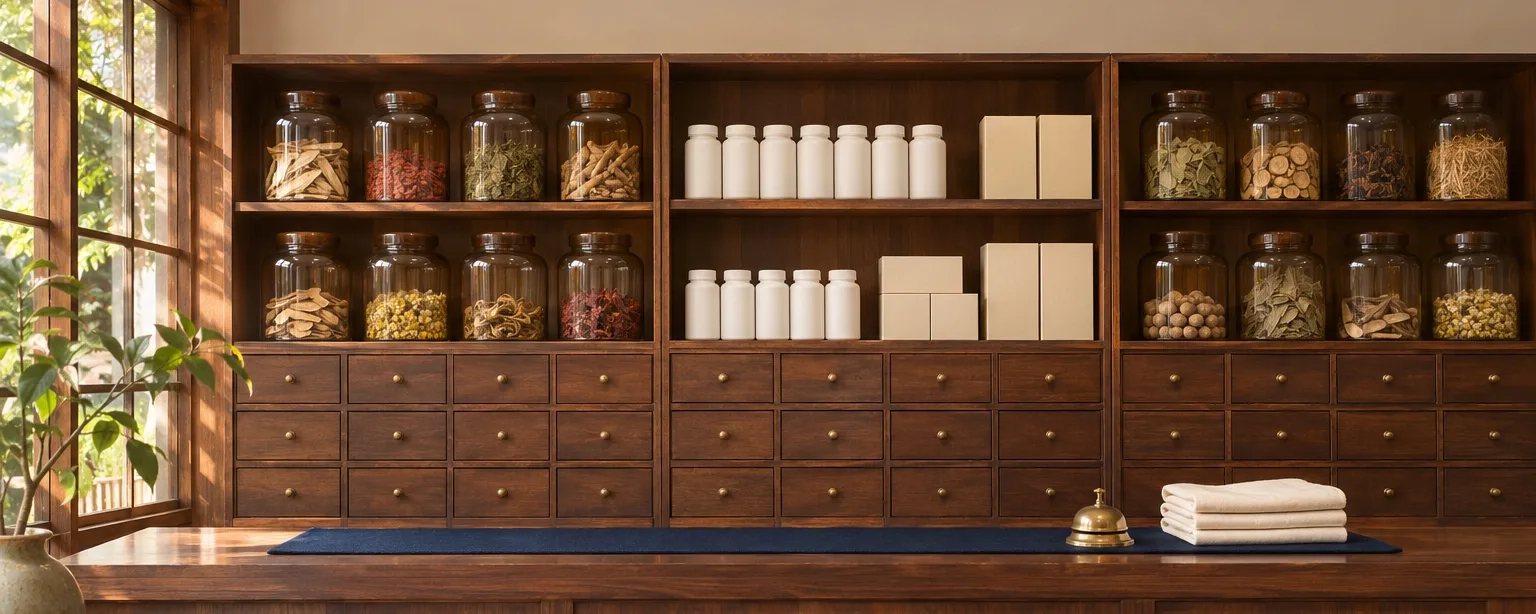
What is a Thai herbal product responsible person, and why does the licence need one?
A Thai herbal product responsible person is a qualified individual whom the holder of a licence to manufacture, import or sell herbal products must station at the licensed site to oversee its professional work. Owners of Thai traditional medicine factories, herbal product importers and Thai traditional medicine shops often just call this person "the operator". The person's name and professional licence number are tied to the site licence.
Licences to manufacture, import or sell herbal products are issued under Sections 17 and 20 of the Herbal Products Act B.E. 2562 (2019) and last five years under Section 22. Clause 2 of the 2020 Ministerial Regulation on applying for and issuing these licences requires the applicant to submit documents on the applicant's own qualifications under Section 19 and documents on the responsible person together with the application. The qualifications, numbers and working conditions of responsible persons are set in a separate Ministry of Public Health notification, which was reissued in 2026.
This article is for owners of herbal manufacturing sites, importers and sellers who need to appoint someone to this role, or who need to check whether their current person still meets the new notification. Our own recommendations are marked "in practice" so they stay separate from what the notification says. If you are not yet sure which group of herbal product you handle, start with our overview of the Herbal Products Act and Thai traditional medicine, because the product category decides who may serve as the responsible person.
The 2026 notification on herbal responsible persons: who it covers and when it applies
The notification now in force is the Ministry of Public Health Notification on the qualifications, number, criteria, methods and conditions for the work of responsible persons at sites that manufacture, import, sell and store herbal products B.E. 2569 (2026). It was signed on 29 October 2026 and published in the Royal Gazette on 16 November 2026 (Volume 143, Special Part 273 Ngor).
Clauses 2 and 3 state that the notification takes effect once ninety days have passed from its publication in the Royal Gazette, and that it repeals the notification on the same subject from B.E. 2565 (2022). In practice the ninety days end around the middle of February 2027; anyone planning a new application around then should confirm the effective date with the licensing officer.
The notification is organised by type of site: clause 5 covers manufacturing sites, clause 6 import sites and clause 7 sale sites. Clauses 8 and 9 deal with using the same person at one location, clause 10 with training, clause 11 with presence at the site, and clauses 12 and 13 are transitional provisions for existing licensees. Every clause uses the words "at least one person", so a site may appoint more than one responsible person.
For anyone reading up on herbal responsible persons: sites licensed after the notification takes effect follow the 2026 criteria, while existing sites and responsible persons have a separate date, covered in the last section.
- Notification signedSigned by the Minister of Public Health
- Published in the Royal GazetteVolume 143, Special Part 273 Ngor, pages 8–12
- Notification takes effectCounted from publication · repeals the 2022 text (clauses 2–3)
- Applies to existing sites and responsible personsClauses 5–9 for existing sites (clause 13) · clause 10 for existing responsible persons (clause 12)
Source: Ministry of Public Health Notification on responsible persons at herbal product manufacturing, import, sale and storage sites B.E. 2569, clauses 2–3 and 12–13
Herbal responsible person qualifications at manufacturing sites: herbal medicines, herbal-derived drugs and herbal health products
Clause 5 (1) of the 2026 notification requires a site licensed to manufacture herbal medicines to have at least one responsible person from any of these groups:
- (a) a licensed Thai traditional medicine practitioner in Thai pharmacy or Thai medicine
- (b) a licensed applied Thai traditional medicine practitioner
- (c) a licensed practitioner of Chinese traditional medicine under the healing arts law
- (d) a licensed pharmacist
For a site manufacturing herbal-derived drugs (in Thai, ya phatthana chak samunphrai), the responsible person must fall under (d), a pharmacist. The Secretary-General of the Thai FDA may, however, issue criteria allowing a person under (a) or (b) to serve at such a site. In practice, if a Thai traditional medicine factory also makes a herbal-derived drug, check whether a Secretary-General notification covers that product before deciding that no pharmacist is needed.
Clause 5 (2) covers sites manufacturing herbal health products. The same four professions apply, with extra routes depending on how the product is used:
- Oral products: the responsible person may be a scientist in food science and technology or food technology, a scientist from another field whose curriculum relates to work in a food or herbal product manufacturing site, or a scientist from another field with at least three consecutive years of work in food or herbal product manufacturing at a licensed food or herbal manufacturing site.
- External-use products: the responsible person may be a cosmetic science scientist, a scientist from another field whose curriculum relates to work in a cosmetic or herbal product manufacturing site, or a scientist from another field with at least three consecutive years of work in cosmetic or herbal product manufacturing.
The notification says these persons may serve "in addition to (a), (b), (c) or (d)", so the new routes sit alongside the four professions; they do not replace them.
In practice, "at least three consecutive years" should be backed by evidence, such as an employment letter from a licensed manufacturing site stating the position and the dates of employment. Keep the academic transcript as well if you rely on a related curriculum, because the notification uses the broad phrase "another field whose curriculum relates". Premises, equipment and quality system requirements are covered separately in herbal product GMP in Thailand.
Raw material sites: new routes for food engineers and graduates who complete approved training
Clause 5 (3) covers sites manufacturing raw materials, meaning substances used as ingredients in herbal products, such as herbal powders or extracts. The notification allows seven groups:
- (a) to (d): the same four professions as for herbal medicine manufacturing, namely Thai traditional medicine practitioners in Thai pharmacy or Thai medicine, applied Thai traditional medicine practitioners, Chinese traditional medicine practitioners and pharmacists
- (e) persons qualified under clause 5 (2), paragraph two or three, namely food or cosmetic scientists or persons with the experience described in the previous section
- (f) a food engineer, or an engineer from another field whose curriculum relates to work in a food or herbal manufacturing site, as approved by the Thai FDA
- (g) a person assigned by the licensee to work at that raw material site who holds at least a bachelor's degree and has completed a training course approved by the Thai FDA under clause 10
The last paragraph of clause 5 (3) adds that at least one responsible person at a raw material site must have qualifications consistent with the nature or type of raw material, as the Secretary-General of the Thai FDA announces.
An earlier 2022 Thai FDA notification divided raw materials into two groups. The first, such as ground powders and extracts made with water or ethyl alcohol, could use any of the four professions or a food or cosmetic scientist. The second, raw materials made by other processes, could use a pharmacist or a scientist in those fields. That Thai FDA notification was issued under the 2022 ministry notification, which has now been repealed. In practice, extract makers should watch for the Secretary-General's notification under the 2026 text and in the meantime pick someone who meets both sets of criteria.
Route (g) helps small raw material sites that struggle to station a pharmacist or Thai traditional medicine practitioner, but it has two conditions: a bachelor's degree or higher and completion of a course approved by the Thai FDA. In practice, put the licensee's assignment in writing with the person's name, position and site. If the raw material is for export, see exporting Thai herbs: raw material, extract and finished product.
Import and sale sites: who can be the responsible person
Clause 6 requires a site licensed to import herbal products to have at least one responsible person stationed there who is a Thai traditional medicine practitioner in Thai pharmacy or Thai medicine, an applied Thai traditional medicine practitioner, a Chinese traditional medicine practitioner or a pharmacist.
Where the imported products are herbal health products, the notification opens extra routes similar to those for manufacturing:
- Oral products: a scientist in food science and technology or food technology, a scientist from another field whose curriculum relates to work at a food or herbal product import site, or a scientist from another field with at least three consecutive years of work in importing food or herbal products.
- External-use products: a cosmetic science scientist, a scientist from another field with a related curriculum, or a person with at least three consecutive years of work in importing cosmetics or herbal products.
The experience must have been gained at a food, cosmetic or herbal product import site under the relevant law. In practice, an import company that already has staff handling food or cosmetic registrations should check whether one of them has three consecutive years of experience; that person may be able to serve as the responsible person for an import site handling herbal health products. Bear in mind the rule on serving as a responsible person under another law at the same time, explained in the section on form SorMorPor 4. Ports of entry and import documents are covered in importing herbal products into Thailand.
Clause 7 requires a site licensed to sell herbal products to have at least one responsible person who is a Thai traditional medicine practitioner in Thai pharmacy or Thai medicine, an applied Thai traditional medicine practitioner, a Chinese traditional medicine practitioner or a pharmacist. Unlike manufacturing and import, this clause has no scientist or experience route.
The 2023 Ministry of Public Health notification on importing and selling herbal products also sets out this group's work: the responsible person at import and sale sites must oversee storage, delivery and traceability records, and at sale sites must question customers before selling and make sure sales staff who are not responsible persons are knowledgeable. Which shops need a sale licence in the first place is covered in the overview of the Act linked in the first section.
Source: Ministry of Public Health Notification on responsible persons B.E. 2569, clauses 5–7
What changed between the 2022 and 2026 notifications
Owners of sites licensed under the 2022 notification often ask whether they need to replace their responsible person. The answer depends on the type of site and the person's qualifications. These are the points where the two texts differ:
- Herbal medicine manufacturing: the 2022 notification, clause 4, matched professions to types of medicine: Thai traditional medicines used Thai or applied Thai traditional medicine practitioners, Chinese medicines used Chinese traditional medicine practitioners, and herbal-derived drugs used pharmacists. The 2026 notification, clause 5 (1), lists the four professions together for herbal medicine manufacturing sites and sets the herbal-derived drug condition in the following paragraph.
- Herbal health products: the 2022 text allowed a food scientist for oral products and a cosmetic scientist for external-use products. The 2026 text adds scientists from other fields with a related curriculum and persons with at least three consecutive years of experience, for both manufacturing and import.
- Raw materials: the 2026 text adds food engineers or engineers in related fields approved by the Thai FDA, and persons assigned by the licensee who hold a bachelor's degree and have completed a course approved by the Thai FDA.
- Sale sites: the 2022 notification, clause 5, required a pharmacist for selling herbal-derived drugs, except items the Secretary-General allowed Thai traditional medicine shops to sell. The 2026 notification, clause 7, lists the four professions for sale sites without a separate herbal-derived drug condition in that clause.
- Training: the 2022 text required completion of an accredited course. The 2026 text, clause 10, adds that the course certificate lasts five years from its issue date and that further training must be completed before it expires.
- Transition: the 2022 text gave existing responsible persons five years before they had to complete training, and exempted existing sites from clauses 4 to 8 for five years. The 2026 text sets a fixed date: 17 March 2027.
In practice, read the full notification on the sale-site change and the grouping of professions for herbal medicine manufacturing, and ask the licensing officer before restructuring your staff, because other notifications on sales channels and on specific medicines may add conditions. If your current person already meets both texts, the main remaining task is the training certificate.
One person for several categories, presence throughout operating hours, and no second site at the same time
Clause 8 of the 2026 notification says that where sites licensed to manufacture, import or sell herbal products are at the same location, the responsible person may be the same individual, provided that person qualifies for the herbal product type concerned. For example, a company that makes and sells Thai traditional medicines from one building may use one pharmacist or Thai traditional medicine practitioner for both licences.
Clause 9 covers a single manufacturing or import site that handles more than one herbal product type. The responsible person may be one individual, provided that person meets the qualifications for every type under clause 5 and/or clause 6. For example, if a factory makes Thai traditional medicines and oral herbal health products with one responsible person, that person must be one of the four professions in clause 5 (1), because a food scientist only qualifies for the health product side. If the same factory also makes herbal-derived drugs, the person must be a pharmacist unless a Secretary-General notification provides otherwise.
Clause 11 requires responsible persons under clauses 5, 6 and 7 to be present at the site where they serve throughout operating hours, and not to serve as responsible person at several sites at the same time.
In practice, these two clauses mean planning shifts around the operating hours stated in the licence. If a factory runs two shifts or a shop opens from morning to late evening, one person usually cannot cover every hour. Appoint more than one responsible person and divide the hours clearly. A pharmacist already employed full time at a pharmacy or hospital should not also serve as responsible person at a herbal site during overlapping hours, because that would conflict with the declaration on form SorMorPor 4.
Responsible person training in Thailand: accredited courses and a five-year certificate
Clause 10 of the 2026 notification requires responsible persons at sites licensed to manufacture, import or sell herbal medicines, herbal health products, herbal-derived drugs and raw materials to complete a course accredited under the criteria and methods set by the Thai FDA. The course certificate lasts five years from its issue date, and a person who has completed the course must take further training before the certificate expires. This applies to every profession, including pharmacists and Thai traditional medicine practitioners who already hold a professional licence.
The accreditation rules are in the 2024 Thai FDA notification on criteria and methods for accrediting training courses for responsible persons under the herbal products law. It repealed the 2022 notification on the same subject, but courses accredited under the old text remain accredited until they expire or are revoked. Eligible course organisers are higher education institutions teaching Thai traditional medicine, Chinese medicine, pharmacy, food science or cosmetic science, the relevant professional councils, and non-profit consumer protection organisations approved by the Thai FDA. An accredited course is valid for three years.
The 2024 notification also sets minimum course content by type of site. Manufacturing courses cover law and duties for at least 1 hour and raw material inspection, manufacturing methods and quality control for at least 10 hours, with sub-topics that differ by profession. Import courses cover law, quality checks and storage. Sale courses cover law, safe use, quality checks and storage, and taking a history from and advising consumers.
For responsible person training in Thailand, in practice choose a course that matches the type of site where the person will serve, because manufacturing, import and sale content differ. Check that the course is still within its accreditation period on the day of training, keep the certificate in the site file, and diary the expiry date several months ahead so there is time to book further training. For a raw material site responsible person under clause 5 (3) (g), completing a course approved by the Thai FDA under clause 10 is also part of the qualification itself.
Paperwork and duties: form SorMorPor 4, substitutes, prohibited diseases and the site sign
Beyond qualifications and training, several other notifications and forms concern responsible persons.
Form SorMorPor 4, the responsible person's declaration: the 2024 Thai FDA notification on application forms and licences sets form SorMorPor 4 as the declaration of the responsible person stationed at the site. On this form the responsible person declares that he or she is not the responsible person at several herbal manufacturing, import or sale sites at the same time, and is not a responsible person under another law at the same time unless at the same location, and states his or her regular job and working hours. The form is accompanied by a copy of the professional licence, healing arts licence or degree certificate, or proof of completing training, and a medical certificate showing the person does not have a disease under Section 19 (5) of the Act. Form SorMorPor 4 is used for new licence applications and for licence renewals.
Prohibited diseases: a 2020 Ministry of Public Health notification lists the diseases that disqualify licensees and responsible persons: leprosy, tuberculosis in a dangerous stage, elephantiasis, narcotic addiction and chronic alcoholism.
Substitutes: a 2022 Thai FDA notification issued under Section 26, paragraph three, says that when a responsible person temporarily cannot perform the role, the licensee may notify the name of a substitute for up to ninety days from the day the substitute starts, using form SorMorPor 8. Notice is given in advance or no later than three days after the substitute starts, and the licensee must clearly display the substitute's photograph and professional or healing arts licence number at the site.
Sign: a 2021 Herbal Products Committee notification requires a responsible person sign showing the person's name, qualification, professional or healing arts licence number and operating hours; sale sites must also display a photograph.
Ongoing duties: the 2021 Ministry of Public Health notification on additional duties requires responsible persons at manufacturing, import and sale sites to oversee accurate records and reports and sign them, and to oversee sales channels, recalls and adverse event reporting.
In practice, these duties make the responsible person more than a name on a licence. Write the duties into the employment contract or job description so they match the notifications, agree working hours that match form SorMorPor 4 and the sign, and keep a list of qualified substitutes ready for leave or illness.
The transition to 17 March 2027 and a preparation checklist
Clause 12 of the 2026 notification applies clause 10, on training, from 17 March 2027 to responsible persons who were serving at licensed manufacturing, import or sale sites on the day before the 2022 notification was repealed. Clause 13 applies clauses 5 to 9 from 17 March 2027 to sites that held a licence on the day before the 2022 notification was repealed.
The notification itself does not set out a filing procedure for the transition. In practice, existing licensees should use the time before 17 March 2027 to check three things: whether each responsible person's qualifications match the product types under clauses 5 to 7, whether the training certificate is still valid, and whether actual working hours satisfy clause 11. If a person must be replaced or added, file a request to amend the licence particulars, which the 2024 Thai FDA forms notification sets as form SorMorPor 3.
The checklist below works for existing sites preparing for 17 March 2027 and for new sites applying after the notification takes effect. In practice, start by listing the site type and every product type on the licence, splitting herbal health products into oral and external use, then match each person's qualifications and collect the evidence: professional licence or degree certificate, transcript, employment letters and training certificates.
Search the full notifications in our Thai FDA law library, ask case-specific questions with the Thai FDA advisor, and if you want our team to help plan a manufacturing site and prepare licence documents, see our factory setup and document preparation services. For product numbers once the site is licensed, read herbal product notification in Thailand.
- ✓Qualifications match the site and product typeClauses 5, 6 and 7
- ✓One person for several types must qualify for all of themClauses 8 and 9
- ✓Training certificate within its five-year validityClause 10
- ✓Present throughout operating hours, not serving at another site at the same timeClause 11 · form SorMorPor 4
- ✓Medical certificate showing no prohibited diseaseMOPH notification 2020, clause 2
- ✓Substitutes and form SorMorPor 8 ready for leaveThai FDA notification 2022, clauses 3–5
- ✓Sign shows current name, qualification, licence number and operating hoursCommittee notification 2021, clause 3 (2)
- ✓Duties written into the employment contract to match the additional duties notification
Source: MOPH responsible person notification B.E. 2569 · MOPH prohibited diseases notification B.E. 2563 · Thai FDA substitute notification B.E. 2565 · Herbal Products Committee sign notification B.E. 2564
Frequently asked questions
Can a pharmacist be the responsible person at a Thai traditional medicine factory?
Clause 5 (1) of the 2026 Ministry of Public Health notification lists licensed pharmacists as one of the four groups who may serve as responsible person at a herbal medicine manufacturing site. In practice, check any other notification covering the specific medicines and ask the licensing officer before changing personnel.
Do herbal responsible person qualifications for herbal health products always require a Thai traditional medicine practitioner or a pharmacist?
No. Clauses 5 (2) and 6 also allow a food scientist for oral products, a cosmetic scientist for external-use products, a scientist from another field with a related curriculum, or a person with at least three consecutive years of experience at a relevant manufacturing or import site.
How long is a responsible person training certificate valid?
Clause 10 of the 2026 notification makes the course certificate valid for five years from its issue date, and further training must be completed before it expires.
Can one responsible person cover both the factory and the shop?
Yes, if both are at the same location and the person qualifies for the product types, under clause 8. Clause 11, however, requires presence throughout operating hours and prohibits serving at several sites at the same time, so a factory and a shop at different locations need different people.
When must sites licensed before the new notification comply?
Clauses 12 and 13 apply clauses 5 to 10 to sites and responsible persons in place before the 2022 notification was repealed from 17 March 2027.
What happens when the responsible person is on sick leave or holiday?
A 2022 Thai FDA notification allows the licensee to notify a substitute on form SorMorPor 8 for up to ninety days, in advance or no later than three days after the substitute starts, and to display the substitute's photograph and licence number at the site.
Sources
- Ministry of Public Health Notification on the qualifications, number, criteria, methods and conditions for the work of responsible persons at herbal product manufacturing, import, sale and storage sites B.E. 2569 (2026) (clauses 2–3 and 5–13 · Royal Gazette pages 8–12) · Open source · Search our archive
- Ministry of Public Health Notification on the same subject B.E. 2565 (2022) (repealed · clauses 4–10) · Open source · Search our archive
- Herbal Products Act B.E. 2562 (2019) (Sections 17, 20 and 22) · Open source · Search our archive
- Ministerial Regulation on applying for and issuing licences to manufacture, import or sell herbal products B.E. 2563 (2020) (clause 2) · Open source · Search our archive
- Thai FDA Notification on application forms and licences to manufacture, import or sell herbal products B.E. 2567 (2024) (clauses 4–10 · form SorMorPor 4) · Open source · Search our archive
- Form SorMorPor 4: declaration of the responsible person (pages 1–2) · Open source · Search our archive
- Thai FDA Notification on renewing licences to manufacture, import or sell herbal products (clause 4) · Open source · Search our archive
- Thai FDA Notification on criteria and methods for accrediting training courses for responsible persons under the herbal products law B.E. 2567 (2024) (clauses 3–9 and 13–14) · Open source · Search our archive
- Thai FDA Notification on accrediting training courses for responsible persons B.E. 2565 (2022) (repealed · clauses 3–9) · Open source · Search our archive
- Thai FDA Notification on qualifications of responsible persons at sites licensed to manufacture or import herbal raw materials B.E. 2565 (2022) (clause 4) · Open source · Search our archive
- Thai FDA Notification on notifying a substitute for the responsible person B.E. 2565 (2022) (clauses 3–5 · form SorMorPor 8) · Open source · Search our archive
- Ministry of Public Health Notification on diseases that disqualify licensees and responsible persons for herbal products B.E. 2563 (2020) (clause 2) · Open source · Search our archive
- Ministry of Public Health Notification on additional duties of licensees and responsible persons B.E. 2564 (2021) (clauses 6–9) · Open source · Search our archive
- Ministry of Public Health Notification on criteria, methods and conditions for importing and selling herbal products B.E. 2566 (2023) (clauses 6, 8 and 9) · Open source · Search our archive
- Herbal Products Committee Notification on displaying signs and licences of licensees and responsible persons B.E. 2564 (2021) (clause 3 (2)) · Open source · Search our archive
This article is for general information. It is not a Thai FDA ruling or legal advice, and rules change — check the latest notification or ask an expert before filing or producing. Spotted an error? Tell us and we will correct it
Related articles
 Factories / OEMHerbal product GMP in Thailand and when PIC/S appliesThai herbal product GMP by process risk: which of Documents 1–5 applies, when PIC/S GMP is mandatory, who inspects, and when a GMP mark may go on labels.
 Brand ownersThai traditional medicine regulation: what a 'traditional drug' is and which law applies todayHow Thai traditional medicine moved from the Drug Act to the Herbal Products Act 2019: old registrations, licences, product categories, sales channels.
 ExportersExporting Thai herbs: raw material vs extract vs finished productExport Thai herbal products: raw herbs, extracts and finished products fall under different rules, licences, GMP standards and Thai FDA certificates.