 FDA Thailand
 Importers
Importing herbal products into Thailand: ports of entry and documents

Importing herbal products into Thailand: the three layers
To import herbal products into Thailand for sale, you pass three layers under the Herbal Products Act B.E. 2562. First, the business needs an import licence. Second, each product needs approval through registration, detailed notification or notification. Third, every shipment must clear a designated herbal product inspection checkpoint announced by the Ministry of Public Health.
First confirm the product really is a herbal product. Section 4 defines four groups: herbal medicines, products whose key ingredient is or is derived from herbs for health, materials used to manufacture herbal products, and other items the Minister announces. It excludes anything classed as food, cosmetics, medical devices or modern medicine. A product containing herbs may therefore sit under another law; some essential oils, for example, are cosmetics. See essential oil classification for worked examples.
This article follows the steps in order: licence, product evidence, choosing the checkpoint, documents at the port, and imports for other purposes such as samples or personal use.
- 1Confirm it is a herbal productUnder the Section 4 definition
- 2Get an import licenceSection 19 qualifications and compliant premises
- 3Hold product evidenceRegistration, detailed notification or notification
- 4Pick a checkpoint from the 2025 notice54 food and drug checkpoints
- 5Request an LPI and prepare port documentsDeclaration, invoice, CoA and samples
- 6Store and keep recordsKeep the CoA for at least 5 years
Source: Herbal Products Act B.E. 2562 · 2025 notice on herbal product checkpoints · Food and Drug Import-Export Inspection Division
Herbal Products Act Thailand: who can hold an import licence
Section 19 sets applicant qualifications, including owning the business, being at least 20, residing in Thailand, having import or storage premises and equipment as announced, appointing a responsible operator, not being bankrupt, and not having had a licence revoked under the Act in the two years before applying. For a juristic person, its representative must meet some of these too. The applicant and the responsible operator may be the same person.
Clause 2 of the 2020 Ministerial Regulation on herbal product licences lists supporting documents, such as ID or company registration number, a work permit if the applicant is not Thai, qualification documents for the applicant and the responsible operator, a site map with coordinates, building plans, and title deeds or the owner's consent. Clause 3 allows premises already used for food, cosmetics, drugs or medical devices to serve herbal products too, if they meet the announced criteria.
Applications go electronically by default. Where that is not yet possible, Bangkok applicants file at the Thai FDA and provincial applicants at the Provincial Public Health Office, though import applications may also go to the Thai FDA (Clause 14). The licence lasts 5 years under Section 22, and renewal must be filed no more than 90 days before expiry under Clause 8.
For which products qualify for notification, see herbal product notification.
Import sites, storage sites and the responsible operator
The 2023 MOPH notification on importing and selling herbal products requires import and storage sites to be structurally sound, with suitable storage space, temperature and humidity control, protection from sunlight, separate storage areas, goods kept off the floor, and pest control. Where finished products and raw materials share a space, mix-ups must be prevented.
Import licensees must also control distribution with traceability, control quality to the product specifications, hold quarantined and returned goods separately until assessed, and keep enough staff.
On the people side, Section 32 sets the responsible operator's duties at the import site: being present at the storage or import site, keeping imported products compliant, overseeing imports, controlling storage and release, and checking labels and leaflets before sale. Section 28 requires the licensee to import only at the licensed site, display signs and the licence, keep import records, and retain samples as announced.
Product evidence before import: registration, detailed notification or notification
Section 58(4) prohibits importing herbal products that are not registered, detail-notified or notified as required. An import licence alone is not enough. The Food and Drug Import-Export Inspection Division page on imports for sale lists the accepted evidence: a registration certificate, a detailed notification receipt, a notification receipt, or a still-valid former traditional medicine registration. These approvals last 5 years under Sections 39 and 49.
2026 notices importers should know
The MOPH notification (No. 4) B.E. 2569 on herbal products requiring registration or notification replaced Lists 1 to 3 for notified products with new lists: 208 Thai traditional medicine formulas, 15 herbal-developed medicines and 88 herbal health products. Each entry sets the formula, dose and directions, contraindications and warnings. Approvals issued before it took effect remain valid until they expire.
Then No. 5 B.E. 2569 (dated 14 August 2026) exempted three types from registration, detailed notification and notification: herbal compresses, foot-soak herbs and herbal steam products. A follow-up Thai FDA notification sets standards for manufacturing or importing these for sale. For example, the herbs must be dry, free of mould and foreign matter, and labels must carry nine items: product name, ingredients, uses, directions, contraindications, warnings, precautions, manufacturing date, and the manufacturer's name and address.
What cannot be imported
The 2022 notification on herbal products prohibited from import bans herbal products that are, contain, or contain extracts of cannabis or hemp plants. Exceptions cover certain state agencies, state universities for specified study, and clinical research imports under the relevant notification.
Herbal product inspection checkpoints: the 2025 notice
Section 29(2) requires import licensees to pass inspection at a herbal product checkpoint announced by the Minister. Choosing the port or airport is therefore not just a logistics decision. Goods entering through a point not on the list cannot clear this step.
The MOPH notification on inspection checkpoints for imported herbal products B.E. 2568, published in the Government Gazette on 31 March 2025, repealed the notification of 11 March 2020, which had listed 49 checkpoints. It now designates 54 food and drug checkpoints. Examples on the list include:
- Bangkok Port food and drug checkpoint
- Laem Chabang Port food and drug checkpoint
- Suvarnabhumi Airport, both the cargo terminal and arriving passengers
- Chiang Mai Airport food and drug checkpoint
- Phuket Airport food and drug checkpoint
The full list is in the schedule to the 2025 notice. Check your checkpoint against the current notice whenever you change shipping routes, especially if you relied on the repealed 2020 list.
Documents at the port and the certificate of analysis
The Inspection Division page on importing herbal products for sale (dated 21 February 2025) sets out the steps: hold the import licence and the product evidence, request a License per Invoice (LPI) for every import, file a power of attorney, and prepare the customs declaration. At the checkpoint, have ready:
- The customs declaration or postal notice
- The invoice or bill of lading
- The LPI for that lot
- The manufacturer's certificate of quality analysis
- Samples for inspection
The certificate of analysis is not only for the port. Section 29(2) requires import licensees to hold the manufacturer's certificate showing the quality analysis and keep it for at least 5 years.
For herbal raw materials that are natural plant or animal products, the 2025 guideline on checking certificates of analysis at the port requires the scientific name, the part used, the appearance, and a foreign matter result of no more than 10 percent by weight or as the pharmacopoeia sets, signed by the manufacturer in the country of origin. Send this guideline to your supplier before they issue the document so the CoA does not miss what the checkpoint checks.
Importing herbal raw materials for manufacturing
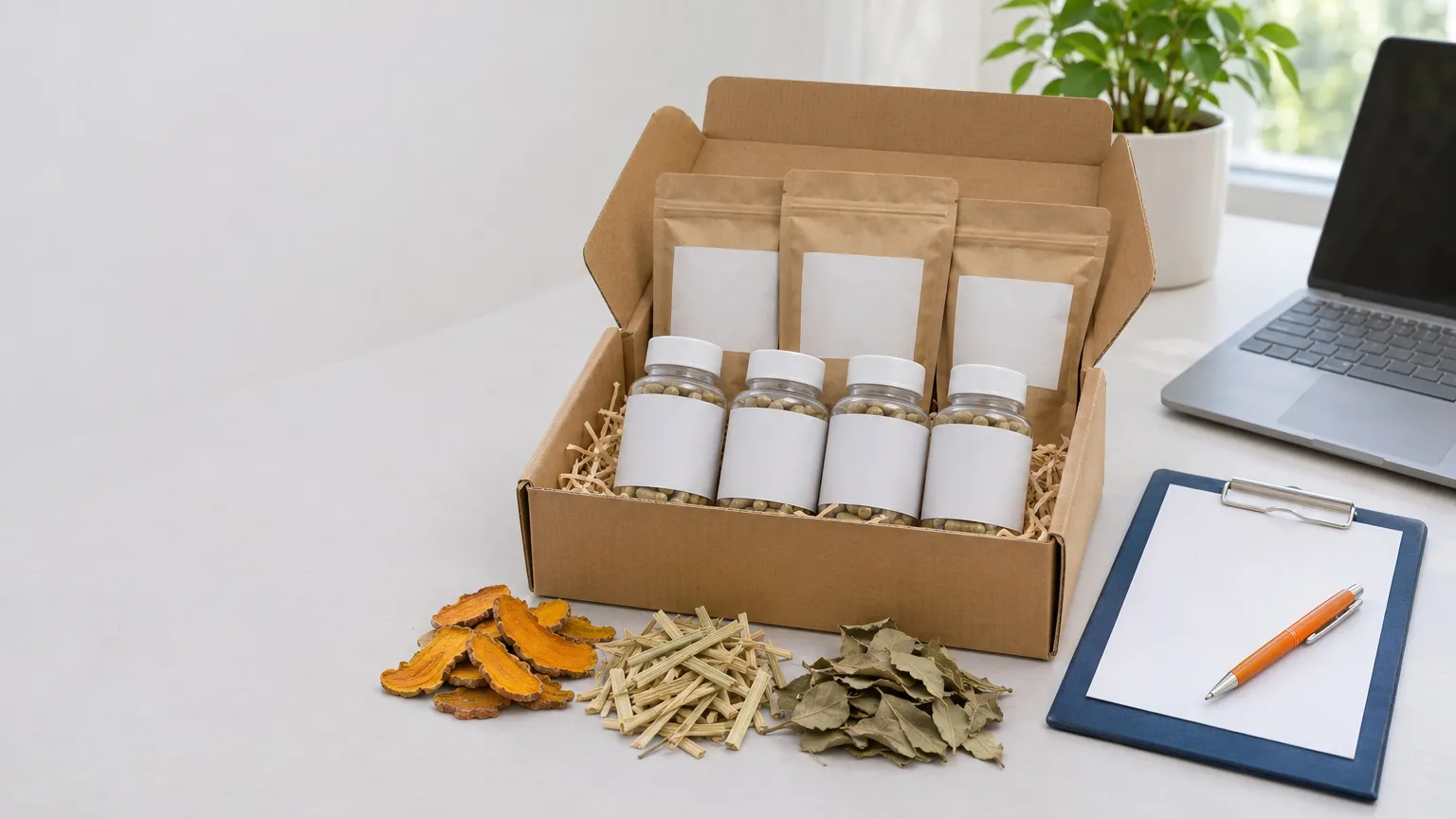
Materials used to manufacture herbal products are herbal products under Section 4, so raw material imports for manufacturing fall under this Act too. The Inspection Division page on imports for other purposes says importers of herbal raw materials for manufacturing need an import licence from the Herbal Products Division, a power of attorney for customs formalities, and at the port the customs declaration or postal notice, invoice or bill of lading, the manufacturer's quality analysis document, and a label translated as required.
Product registration under Section 34 does not apply to materials used in manufacturing (Section 35(3)). Raw material importers should therefore focus on the licence, the CoA and storage that meets the site criteria. If the same material will go into food or cosmetics, check that destination law separately.
If you both import and export, see exporting herbal products from Thailand for the outbound documents.
Imports for samples, analysis, exhibitions or personal use
Section 35 exempts from registration samples for registration and products imported for research, analysis, exhibition or donation, but the importer must notify in writing under the announced rules.
- Samples for registration or notification. Notify on form Tor.Yor.1, electronically by default. Import only after receiving the notification number, within 1 year of its issue, and within set quantities, such as up to 500 tablets or capsules, 500 grams of powder or cream, or 500 millilitres of liquid.
- For analysis, exhibition or donation. Use forms Wor.Kor.1, Nor.Tor.1 and Bor.Jor.1 respectively. Exhibition items may not be sold and must be returned or destroyed, with evidence sent to the Thai FDA.
- For personal use. The importer must be an individual, the quantity must not exceed 90 days of need, and resale is prohibited. If the goods are sent or ordered rather than carried in person, notify on form Sor.Mor.Por.15.
These routes cover only the stated purposes. Samples or personal-use items cannot be resold. To sell, go back to the licence and product evidence route described above.
Source: MOPH notifications on sample imports (2021), analysis, exhibition or donation (2021), and personal use (2022)
Checklist before ordering the first herbal product shipment
Use the checklist below before confirming an order with an overseas supplier. If you are not sure whether the product is a herbal product, food or cosmetic, start with the product classification check, then use the import readiness check.
Choose the checkpoint when you book transport, and get the CoA before goods leave the country of origin. Missing documents at the port leave goods waiting, which is harder to fix than preparing in advance.
Frequently asked questions
Can herbal products enter Thailand through any port?
No. Section 29(2) requires inspection at a designated herbal product checkpoint. The current 2025 notice lists 54 food and drug checkpoints and repealed the 2020 list.
What documents are needed at the checkpoint?
The customs declaration or postal notice, the invoice or bill of lading, the LPI for that lot, the manufacturer's certificate of quality analysis, and samples for inspection.
How long must the certificate of analysis be kept?
At least 5 years, under Section 29(2) of the Herbal Products Act.
Do imported herbal compresses or herbal steam products need notification?
Notice No. 5 of 2026 exempts herbal compresses, foot-soak herbs and herbal steam products from registration and notification, but they must meet the Thai FDA standards and the nine-item label rule.
Can I import herbal products containing hemp extract?
The 2022 notice bans importing herbal products that are, contain, or contain extracts of cannabis or hemp, except for the agencies and purposes it lists.
What do I need to order herbal products for my own use?
If the goods are sent or ordered rather than carried in person, notify on form Sor.Mor.Por.15, keep the quantity within 90 days of use, and do not resell.
Sources
- Herbal Products Act B.E. 2562 (2019) · Open source · Search our archive
- Ministerial Regulation on applying for and issuing licences to manufacture, import or sell herbal products (2020) · Open source · Search our archive
- MOPH Notification on criteria, methods and conditions for importing and selling herbal products (2023) · Open source · Search our archive
- MOPH Notification on inspection checkpoints for imported herbal products B.E. 2568 (2025) · Open source · Search our archive
- MOPH Notification on inspection checkpoints for imported herbal products (11 March 2020, repealed) · Open source · Search our archive
- Food and Drug Import-Export Inspection Division: importing herbal products for sale (steps and port documents) · Open source · Search our archive
- Guideline on checking certificates of analysis for herbal raw materials at the port (2025) · Open source · Search our archive
- Food and Drug Import-Export Inspection Division: importing herbal products for other purposes · Open source · Search our archive
- MOPH Notification on herbal products prohibited from import B.E. 2565 (2022) · Open source · Search our archive
- MOPH Notification on herbal products requiring registration, detailed notification or notification, and ingredients for notified herbal products (No. 4) B.E. 2569 (2026) · Open source · Search our archive
- MOPH Notification on herbal products requiring registration, detailed notification or notification (No. 5) B.E. 2569 (2026) · Open source · Search our archive
- Thai FDA Notification on criteria for herbal compresses, foot-soak herbs and herbal steam products exempt from product approval (2026) · Open source · Search our archive
- MOPH Notification on notifying the manufacture or import of herbal product samples for registration or notification (2021) · Open source · Search our archive
- MOPH Notification on notifying the manufacture or import of herbal products for analysis, exhibition or donation B.E. 2564 (2021) · Open source · Search our archive
- MOPH Notification on importing herbal products for personal use B.E. 2565 (2022) · Open source · Search our archive
This article is for general information. It is not a Thai FDA ruling or legal advice, and rules change — check the latest notification or ask an expert before filing or producing.
Related articles
 ExportersExporting Thai herbs: raw material vs extract vs finished productExport Thai herbal products: raw herbs, extracts and finished products fall under different rules, licences, GMP standards and Thai FDA certificates.

 Brand ownersHerbal product notification in Thailand: what qualifiesThai herbal product notification only covers products matching the official lists. Small changes need detailed notification; others need registration.
 Brand ownersSelling essential oils in Thailand: cosmetic, herbal product or hazardous substance?Essential oil Thailand rules: when an oil is a cosmetic, herbal product, hazardous substance or OCPB product, plus banned fragrance materials, Piperonal.