 FDA Thailand
 Brand owners
Thailand Herbal Tea FDA Registration: Plant Tea Rules No. 426 and No. 471, Plant List, Quality, Labels and Filing
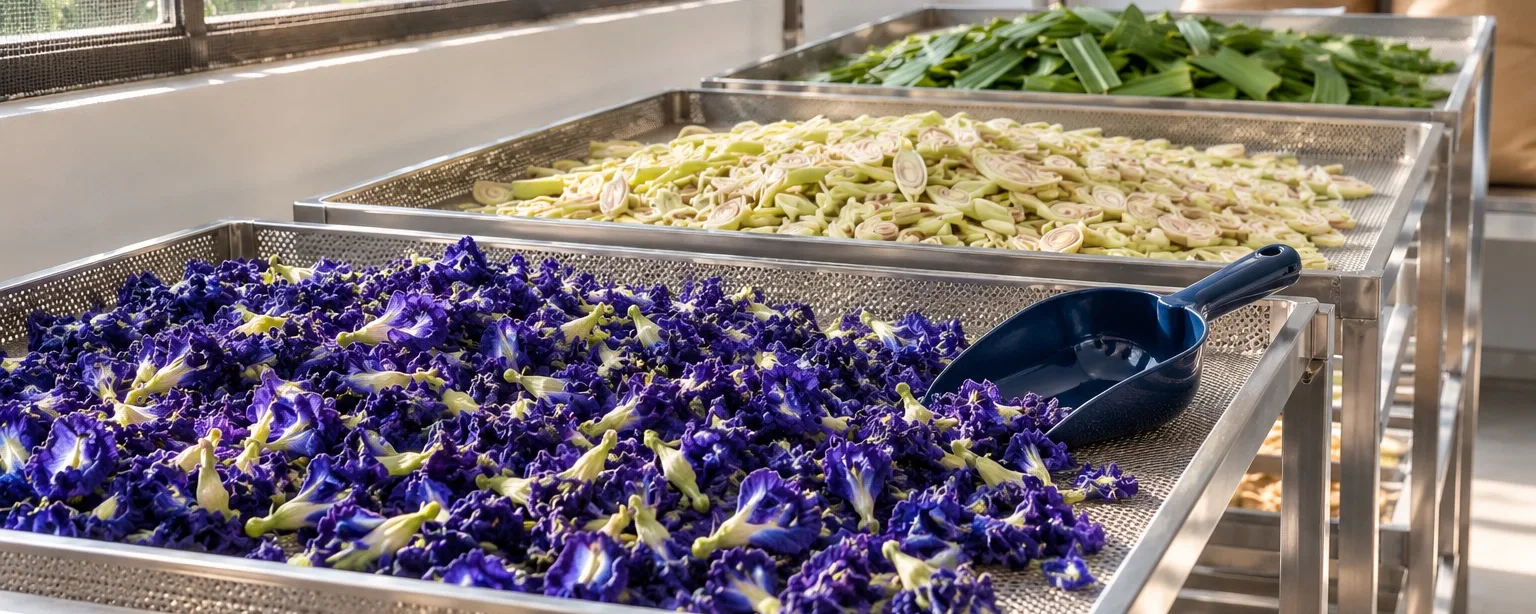
Thailand herbal tea FDA registration: the short answer for small producers and brand owners
Thailand herbal tea FDA registration, under current law, means getting a product permission for "plant tea" (cha chak phuet) under Ministry of Public Health (MOPH) Notification No. 426 (B.E. 2564, 2021), as amended by No. 471 (B.E. 2569, 2026). The older MOPH Notification No. 280 (B.E. 2547, 2004) on herbal tea was repealed by clause 1 of No. 426.
- Legal status Plant tea is a food with prescribed quality or standards (No. 426, clause 2).
- Permitted plants They must follow the list annexed to the notification, which after No. 471 runs from entry 1 to entry 300, includes some mushrooms, and no longer includes entry 92, licorice.
- No flavouring with other substances The Thai FDA explanatory notice gives sugar, salt, seasonings and food additives as examples.
- Product application form The Food Division's food-category manual places plant tea in the group filed on form Sor Bor 7.
- Label It must carry the warnings listed against each plant in the annex (No. 426, clause 8).
This article is for small producers, community enterprises and brand owners starting a herbal tea in tea bags or dried pieces. For an overview of other drinks and snacks, see our article on snacks, chili paste and beverages.
Is your herbal tea plant tea, tea, a beverage or a herbal product?
Plant-based drinks that look alike can fall under different notifications. The Food Division's classification infographic sorts them as follows.
- Tea Camellia tea at 90 percent or more, with other plants at no more than 10 percent for flavour, is "tea" under Notification No. 196 (B.E. 2543, 2000), for example 90 percent green tea leaves with 10 percent dried bael fruit.
- Plant tea Plants from the No. 426 list making up 100 percent, or Camellia tea below 90 percent, with no added flavour or taste, for example lotus petals with chrysanthemum flowers.
- Beverage in a hermetically sealed container A recipe like item 2 that is flavoured or sweetened falls under Notification No. 356, for example the same recipe with 2 percent added sugar.
- Plants not on the No. 426 list If the plant appears on the list of plants permitted in sealed-container beverages, or has a history of consumption as a drink, the product is a beverage. If neither applies, the business must file documents to have the plant added.
The food-category manual explains that "tea" means the dried leaves, buds and young stems of the Camellia tea plant, with at least 1.5 percent caffeine. Lemongrass tea or flower tea with no tea leaves is therefore assessed under the plant tea notification.
The other boundary is herbal products. Section 4 of the Food Act B.E. 2522 (1979) excludes drugs from the definition of food. Section 4 of the Herbal Products Act B.E. 2562 (2019) defines herbal medicines as being "for the treatment, cure and relief of human illness or the prevention of disease", and excludes items that are food for humans. No. 426 itself states it was issued so as not to overlap with health products under the herbal products law. In practice, a product based on a medicinal formula or sold to relieve symptoms should follow the herbal product route instead.
The infographic predates No. 471. In practice, check each plant against the amended list; our product classification tool can help with a first screen.
Source: Food Division infographic on classifying tea, plant tea and beverages · Food-category manual, Sor Bor 7 group (revised 20 Aug 2026), pp. 5–6 · Food Act 1979, s. 4 · Herbal Products Act 2019, s. 4
What plant tea means under Notification No. 426, and what happened to the old herbal tea rule
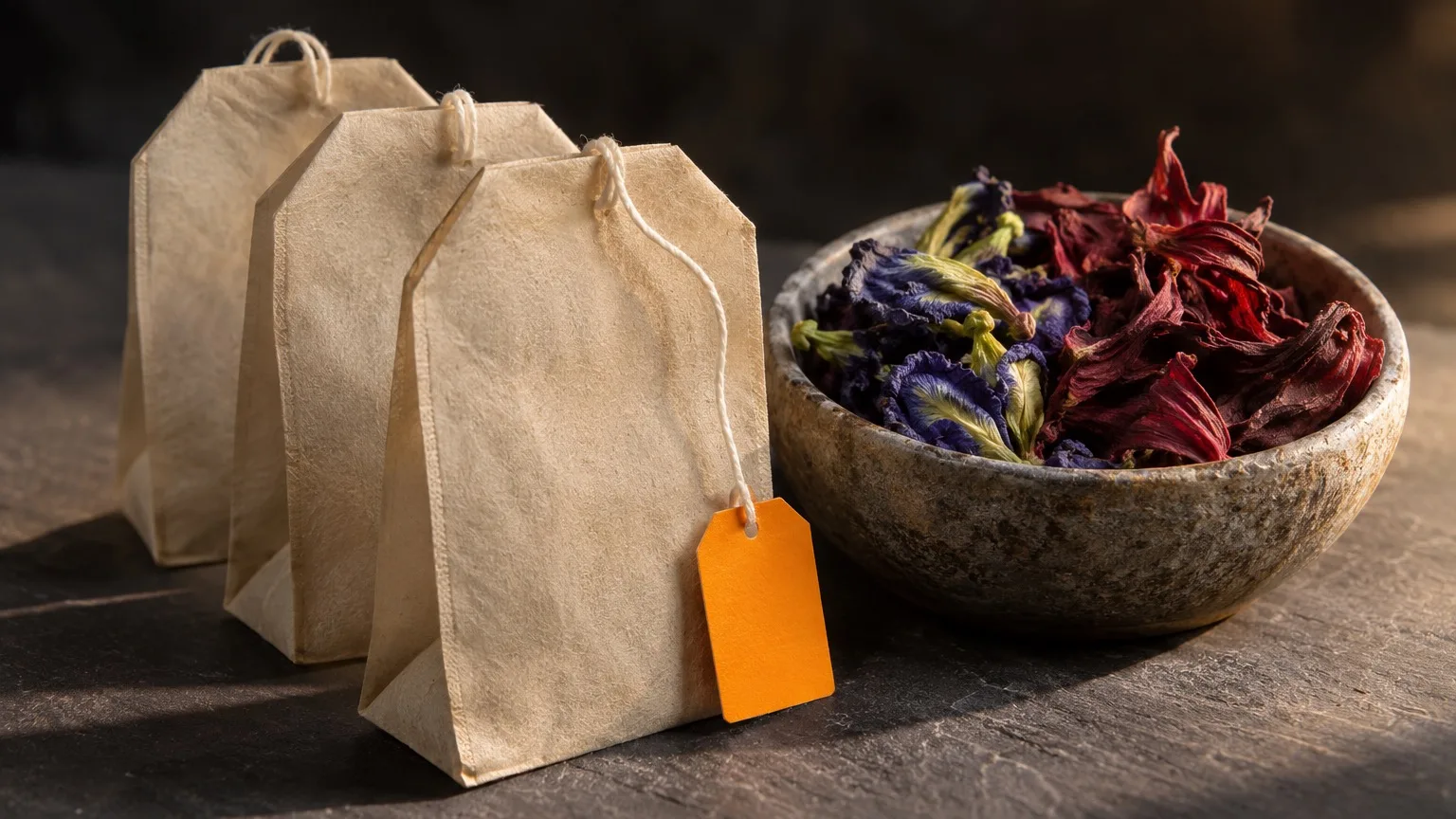
Clause 3 of No. 426, as amended by No. 471, defines plant tea as a product obtained from parts of plants and mushrooms that have been dried, possibly coarsely ground or reduced in size, intended to be consumed by boiling or steeping in water.
The Thai FDA explanatory notice adds that coarse grinding or size reduction does not include boiling the material in water and turning the resulting liquid into an instant powder. Ginger or roselle boiled and then dried to a powder is therefore not plant tea. The Food Division's guidance on No. 471 also gives the example of dried-and-powdered or spray-dried recipes containing an unlisted mushroom, which remain beverages in hermetically sealed containers. In practice, if your product is a fully soluble powder, plan for the beverage route from the start.
A short history of the old herbal tea rules
Before 2021, herbal tea fell under Notification No. 280 dated 4 June 2004, together with a Thai FDA notice dated 11 February 2010, issued under clause 3 of No. 280, which added three plants: stevia leaf, licorice root, and artichoke flower heads and leaves. The copy of that Thai FDA notice on the Food Division website is stamped "repealed".
To be clear: No. 280 and the 2010 herbal tea plant list are historical documents, not the criteria used for applications today. Clause 9 of the explanatory notice lists stevia, licorice and artichoke among the plants on the No. 426 list, and licorice was later removed by No. 471.
No. 426 took effect on 14 May 2021 and gave existing licence holders two years to comply. The explanatory notice set the deadline at 13 May 2023 and stated that once labels and quality were brought into line, the existing food detail notification would be treated as reclassified as plant tea.
The plant list: which plants, which parts, and what to do with a plant that is not listed
Clause 4 of No. 426 requires the plants to follow the annexed list of plants and plant parts, plus any further names the Minister announces. Each row of the list gives the scientific name, common names, the plant part and any warning.
The plant part column is where producers slip, because the same plant may be allowed only in part: Asiatic pennywort (bua bok) uses leaf and stem; galangal uses the peeled rhizome, young stem and flower; pineapple uses the fleshy part of the fruit. Annex 1 of the explanatory notice explains that "fruit" means flesh with peel and seed, "fleshy part of fruit" means flesh only without peel and seed, and "stem" means the aerial part without roots. In practice, if your recipe uses the peel or seed of a fruit listed for its flesh only, regard that part as not listed.
What about a plant that is not listed?
The explanatory notice sets three criteria for listing a plant:
- a history of use as food, or as plant tea, of more than 15 years, with no natural toxins or other substances that may harm health;
- no indications, no limit on serving size and no restriction to a specific consumer group;
- no intended therapeutic, relieving, preventive or curative effect on disease, and no intention to improve body functions.
A business wishing to use an unlisted plant must meet these criteria and submit information for case-by-case consideration: product information (formula, manufacturing method, intended benefit, amount and directions for consumption) and plant information (scientific and common names, part used, history of food use, and foreign legal status where available). The Thai FDA collects such names for later notifications; No. 471 is the first such addition since 2021. The full 300-entry list with warnings is searchable in our ingredient database.
What Notification No. 471 (2026) changed: mushrooms, 99 new entries and the removal of licorice
MOPH Notification No. 471 (B.E. 2569) on plant tea (No. 2) is dated 4 August 2026, was published in the Royal Gazette on 19 August 2026 and applies from the day after publication. The Food Division's guidance gives the effective date as 20 August 2026. It makes four changes.
1. Mushrooms enter the definition (clause 2)
The definition changes from "parts of plants" to "parts of plants and mushrooms". Mushrooms added to the list include wood ear, bamboo mushroom (veiled lady), shiitake and snow fungus, using the fruiting body.
2. Licorice, entry 92, is removed (clause 3)
The Food Division's licorice safety factsheet explains that the food-safety subcommittee considered that glycyrrhizin in licorice affects kidney function and may raise blood pressure or cause low blood potassium, so it recommended removal, with a review once safety data for plant tea use are compiled.
3. Plants and mushrooms 202 to 300 are added (clause 4)
The guidance counts 99 new entries, for example kiwifruit (flesh with seeds), Chinese chive (leaf and stem), cardamom (seed) and star anise (pod and seed).
4. Grace period for licorice (clause 5)
Producers, importers or sellers of plant tea containing licorice that was permitted earlier may keep selling it, but for no more than one year from the date the notification took effect. The guidance gives the end date as 20 August 2027.
No. 471 does not amend the quality criteria in clause 5, or the production, packaging and labelling clauses 6 to 8 of No. 426. If your recipe has no licorice and uses none of the new entries, it barely affects your existing product.
- Notification No. 280 on herbal teaRepealed by No. 426, clause 1
- Thai FDA notice adds 3 herbal tea plantsStevia, licorice, artichoke · copy stamped repealed
- No. 426 on plant tea takes effectPlant list of 201 entries
- Deadline to comply with No. 426For existing licence holders, per clause 9 of the explanatory notice
- No. 471 takes effectMushrooms, entries 202–300, licorice removed
- One year ends for plant tea with licoricePer Food Division guidance
Source: MOPH Notification No. 426 (2021) · Thai FDA explanatory notice of 7 Jun 2021 · MOPH Notification No. 471 (2026) · Guidance on No. 471 (updated 28 Aug 2026), p. 3 · Thai FDA notice of 11 Feb 2010
What existing licence holders must do after No. 471
The Food Division's guidance on permissions under No. 471 (updated 28 August 2026) splits existing licence holders into two groups.
Group 1: permitted as plant tea, recipe contains licorice
The guidance shows the new food category as a beverage in a hermetically sealed container (Notifications No. 356, 402 and 465). The food name changes too, for example from "licorice root herbal tea" to "licorice root herbal beverage", and the certificate changes from form Sor Bor 7/1 to Sor Bor 5/1. The business applies to the licensing authority (the Thai FDA or the provincial health office) to amend the food category, with a letter of intent and the food serial number, then files an amendment on form Sor Bor 6 in the e-Submission system; the premises must first cover the new food category.
Licorice is not banned from all food. The safety factsheet shows conditions for beverages and coffee, for example powdered licorice below 1.5 grams per day.
Group 2: permitted as a beverage, recipe contains entries 202 to 300
If the ingredients and quality meet the plant tea criteria, the guidance allows the business to keep the existing serial number and certificate, or, if it wishes, to amend on form Sor Bor 8. An example is "white jelly fungus beverage" renamed "white jelly fungus tea". Pending beverage applications that now meet the plant tea criteria should be returned or cancelled and refiled as a food detail notification (Sor Bor 7).
In practice, before switching category, check the effect on labels already printed, because the food name and certificate form may change.
Quality criteria for plant tea: moisture, pathogens, heavy metals and what must not be added
Clause 5 of No. 426 sets seven quality criteria, and the Thai FDA explanatory notice fills in the numbers.
- Moisture not more than 10 percent by weight.
- Pathogenic microorganisms per Notification No. 416 (2020): Salmonella not detected in 25 grams, and Staphylococcus aureus not more than 100 per gram (CFU/g means colony-forming units per gram).
- Contaminants within the limits of Notification No. 414 (2020).
- Pesticide residues per the notification on food with pesticide residues.
- No modern drugs, psychotropic substances or narcotics.
- Food additives per the food additive notification, and none added to colour, flavour or sweeten.
- No flavouring with other substances other than listed plants or the leaves, buds and young stems of Camellia tea.
The heavy-metal table in the explanatory notice (milligrams per kilogram) splits plants into two groups:
- Plants on the former herbal tea list, such as bael, roselle, ginger, lemongrass and chrysanthemum: cadmium 0.3 (dry basis), tin 250, lead 0.5, total mercury 0.02, total arsenic 2.
- Plants on the list permitted in sealed-container beverages: no cadmium value in this table, tin 250, lead 1, total mercury 0.02, total arsenic 2.
A note under the table says values marked with an asterisk may not need testing where technical data show no contamination risk, and testing may be done on the raw material or the finished product. In practice, test a real production lot, send the microbiology items to a laboratory that offers that testing, and, because the explanatory notice predates No. 471, ask the licensing authority which group applies to entries 202 to 300.
Plant tea labels: food name, ingredients and plant-specific warnings
Clause 8 of No. 426 requires plant tea labels to follow the notification on labelling of prepackaged food, currently No. 450 (B.E. 2567, 2024) as amended by No. 474 (B.E. 2569, 2026), and to carry the warnings stated in the plant list. General mandatory items are covered in our food label article.
Annex 2 of the explanatory notice shows two sample labels. The first, marked as a single-type example, is "chamomile tea with marigold", listing each flower by percentage with a boxed warning for people allergic to pollen. The second, a mixed example, is "mixed fruit tea, cinnamon flavour", listing the main ingredients by approximate percentage, including 5 percent cassia bark, with the cinnamon warning. Both show the producer, the Thai FDA mark with the food serial number, a best-before date and a net quantity of 2 g.
The explanatory notice lists additional warnings for 27 entries, in four wordings:
- "People allergic to pollen should not consume", for example galangal flower, Roman chamomile, lavender and marigold;
- "People taking anticoagulants should not consume", for garlic, Korean ginseng and ginger;
- "Increases the risk of urinary stones", for the amaranth group;
- "People taking anticoagulants and people with low blood sugar should not consume", for the cinnamon species.
In practice, a multi-plant recipe should carry the warning of every plant that has one, even at a small share. For the food name, the Food Division's food-naming criteria say it must not suggest medicinal properties such as treating, relieving or preventing disease. A plain plant name such as "lemongrass tea with pandan leaf" is the safe choice. You can screen a draft with our label checker.
Thai FDA herbal tea application step by step: premises, GMP and the Sor Bor 7 form
The permission route for plant tea has three layers: premises, production system and product.
Step 1: check the recipe against the list
Match every plant to the list as amended by No. 471, by scientific name and part used. Confirm there is no sugar, salt, flavouring or additive used to colour or flavour, and that the product is not a powder made from a boiled extract.
Step 2: production or import premises
Section 14 of the Food Act prohibits setting up a food factory for sale, and section 15 prohibits importing food for sale, without a licence. Small producers whose premises are not a factory receive a non-factory food production premises number instead. See our food production licence article.
Step 3: production system under GMP Notification No. 420
Clause 6 of No. 426 requires plant tea producers and importers to follow the notification on production methods, which the explanatory notice identifies as No. 420 (2020). Importers must hold certification to a standard equivalent to or not lower than the criteria in the annex to No. 420 (clause 6). In practice, a tea producer should set up controls for receiving dried raw material, removing foreign matter, controlling moisture after drying and storing product away from humidity.
Step 4: file the product on form Sor Bor 7
The food-category manual (revised 20 August 2026) places plant tea in the group filed on form Sor Bor 7, while sealed-container beverages are filed on Sor Bor 5. The manual uses 11 items of information, including the food name, appearance, the full formula in percent (with common name, scientific name and part used for any plant), a detailed process, intended use, directions, container, pack size and storage. For the system steps, see our food serial number article.
Step 5: label and advertising
If you plan to advertise or use reviews, see our food advertising rules article. A document checklist follows this section.
- ✓Table of every plant in the recipeScientific name, common name, part used and list entry
- ✓Formula in percent totalling 100No sugar, salt, flavouring or colouring additives
- ✓Detailed manufacturing processFrom raw material receipt, drying and size reduction to packing
- ✓Premises licensed for plant teaWith a GMP 420 system, or equivalent certification of the foreign producer
- ✓Test results under clause 5Moisture, pathogens and heavy metals from a real lot
- ✓Draft labelNo medicinal name, ingredients in percent, all plant warnings
- ✓Licorice checkIf present, plan for the beverage route
Source: Practical recommendation · criteria from MOPH Notification No. 426, clauses 5–8, and the food-category manual, Sor Bor 7 group, p. 1
Common mistakes: drug-like claims, medicinal herbs and blending with Camellia tea
1. Drug-like claims
One of the Thai FDA criteria for listing a plant is that there must be no intended therapeutic, relieving, preventive or curative effect, and the Food Act excludes drugs from food. Words such as "lowers blood pressure", "flushes kidney stones" or "kidney tonic" on a label or sales post move the product outside the food framework. This article does not vouch for any health effect of any plant. In practice, describe taste, aroma and how to brew instead.
2. Medicinal herbs or unlisted plants
A recipe adapted from a folk medicine formula and renamed "tea" is not plant tea if it contains an unlisted plant, and clause 5(5) still requires no modern drugs, psychotropic substances or narcotics. Check every plant against the list before ordering bulk raw material.
3. Blending Camellia tea without checking the ratio
Clause 5(7) allows Camellia leaves, buds and young stems to flavour plant tea, but if tea leaves reach 90 percent and other plants are at most 10 percent for flavour, the Food Division infographic classifies the product as "tea" under No. 196, which has its own caffeine criteria.
4. Adding sugar, sweeteners or flavour
These turn the product into a beverage in a hermetically sealed container, even at 2 percent sugar as in the infographic example.
5. Relying on old documents
The 2010 herbal tea plant list no longer applies. Use the latest list and check that the recipe contains no licorice. If you would like help with classification and documents, start with our regulatory advisor or see the services below.
Frequently asked questions
Which form do I use to register a herbal tea with the Thai FDA?
A herbal tea that fits the definition of plant tea under MOPH Notification No. 426 (2021) is filed on form Sor Bor 7, according to the Food Division's food-category manual, after the production or import premises are licensed. If the product is a beverage in a hermetically sealed container, it is filed on Sor Bor 5 instead.
What is the difference between herbal tea and plant tea?
Herbal tea was the category name under Notification No. 280 (2004), which No. 426 repealed. The law now uses plant tea: a product from parts of plants and mushrooms, dried and possibly coarsely ground or reduced in size, for boiling or steeping in water. Herbal tea is still used in the market, but the food name on the label must match the permitted category.
What did Notification No. 471 change?
No. 471 (2026), effective 20 August 2026, made four changes: mushrooms were added to the definition, licorice (entry 92) was removed, plants and mushrooms 202 to 300 were added, and previously permitted plant tea containing licorice may be sold for no more than one year from the effective date. Quality and labelling rules remain those of No. 426.
Is an instant herbal tea powder plant tea?
No. The Thai FDA explanatory notice says coarse grinding or size reduction in the plant tea definition does not include boiling the material and turning the liquid into an instant powder. Such products should follow the sealed-container beverage route.
Can I add sugar or stevia to plant tea?
Flavouring with substances other than listed plants or Camellia tea leaves is not allowed; the explanatory notice gives sugar, salt, seasonings and food additives as examples. With these, the product becomes a beverage in a hermetically sealed container. A listed stevia leaf differs from an extracted sweetener; in practice, check the plant name and part on the list before use.
What must plant tea be tested for before filing?
Clause 5 of No. 426 covers moisture of not more than 10 percent by weight, pathogens under No. 416, contaminants and heavy metals under No. 414, pesticide residues, and no modern drugs or narcotics. In practice, test a real production lot and send microbiology items to a laboratory that offers that testing.
Sources
- MOPH Notification No. 426 (B.E. 2564) on plant tea · Open source · Search our archive
- MOPH Notification No. 471 (B.E. 2569) on plant tea (No. 2) · Open source · Search our archive
- Food Division guidance on product permissions under MOPH Notification No. 471 (B.E. 2569) on plant tea (No. 2), updated 28 Aug 2026 · Open source · Search our archive
- Thai FDA notice: explanation of MOPH Notification No. 426 (B.E. 2564) on plant tea, dated 7 June 2021 · Open source · Search our archive
- Food Division infographic: classifying borderline products between tea, plant tea and sealed-container beverages · Open source · Search our archive
- Food-category manual for the Sor Bor 7 food group (revised 20 Aug 2026) · Open source · Search our archive
- Guidance on classifying food for permission under MOPH notifications (updated August 2026) · Open source · Search our archive
- Food Division factsheet: safety information on licorice root · Open source · Search our archive
- MOPH Notification No. 420 (B.E. 2563) on production methods, equipment and food storage (GMP) · Open source · Search our archive
- MOPH Notification No. 416 (B.E. 2563) on pathogenic microorganism standards · Open source · Search our archive
- MOPH Notification No. 414 (B.E. 2563) on food containing contaminants · Open source · Search our archive
- Consolidated MOPH Notification No. 450 (B.E. 2567) on labelling of prepackaged food, as amended by No. 474 (B.E. 2569) · Open source · Search our archive
- Food Division criteria for naming food · Open source · Search our archive
- Food Act B.E. 2522 (1979) · Open source · Search our archive
- Herbal Products Act B.E. 2562 (2019) · Open source · Search our archive
- MOPH Notification No. 280 (B.E. 2547) on herbal tea (repealed) · Open source · Search our archive
- Thai FDA notice listing plants or plant parts used as raw materials for herbal tea, dated 11 February 2010 (repealed) · Open source · Search our archive
This article is for general information. It is not a Thai FDA ruling or legal advice, and rules change — check the latest notification or ask an expert before filing or producing. Spotted an error? Tell us and we will correct it
Related articles
 Brand ownersThai Food Label Requirements: What Must Be on the Label, with an Example (2026)Thai food label requirements under Notifications 450 and 474: mandatory items, 10 allergen groups, expiry dates, letter heights and a mock label.
 Brand ownersThai FDA registration for snacks, chili paste and beverages: which category and which formHow snacks, chili paste (nam prik) and drinks are classified by the Thai FDA, which form to file, home-based premises, GMP level and label rules.
 Brand ownersGetting a Thai FDA food serial number: what you need, step by stepHow to get a Thai FDA food serial number: which form fits your food group, foods that need none, the e-Submission steps, documents, and duties afterwards.