 FDA Thailand
 Brand owners
Ceramic and enamelled food containers in Thailand: Notification 92 lead and cadmium limits and buyer documents
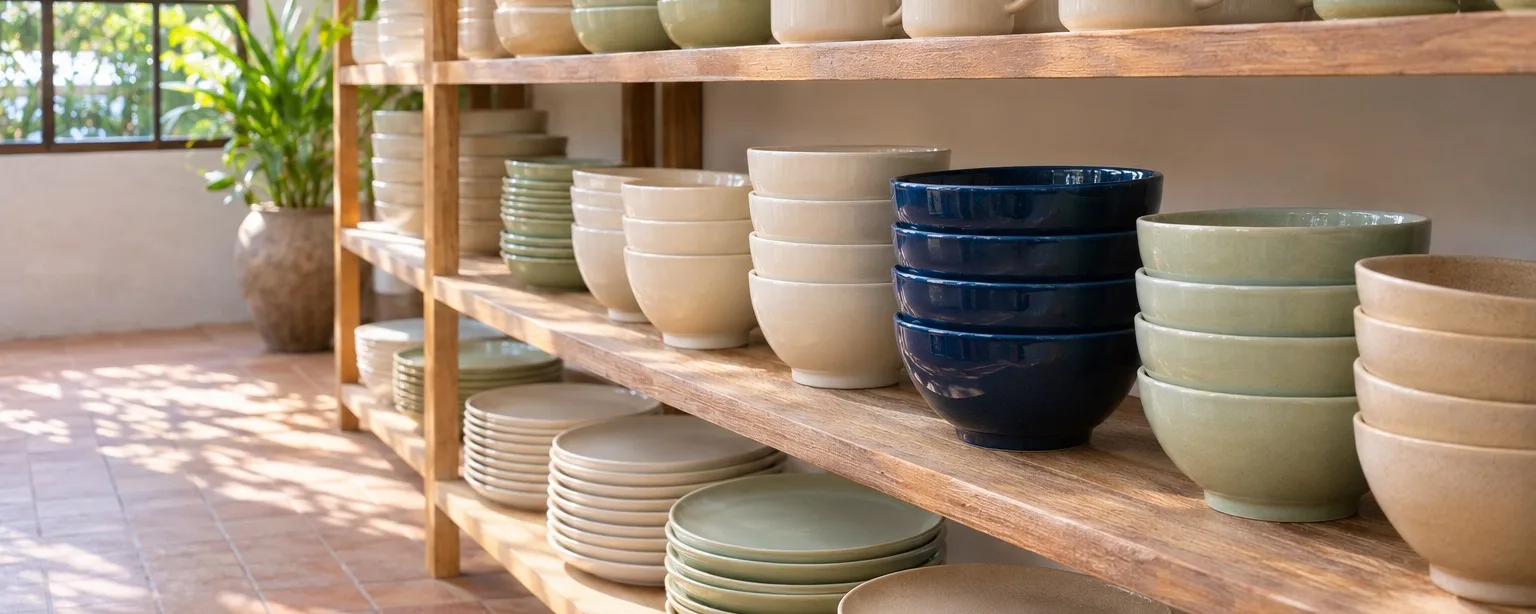
Thailand ceramic food container regulation: the short answer for makers, importers, OEM tableware producers and food businesses
Thailand ceramic food container regulation is set by Ministry of Public Health (MOPH) Notification No. 92 B.E. 2528 (1985) on the quality or standard of food containers, the use of containers, and the prohibition of certain materials as food containers. It covers ceramic ware such as plates, bowls, cups, mugs and clay pots, and enamelled metal ware such as enamel pots and trays. For these two groups the notification sets numeric limits on the lead and cadmium that can leach out.
- General requirements (clause 4) clean, no heavy metals or other substances migrating into food in amounts that may harm health, no pathogenic microorganisms, and no colour bleeding into food
- Lead and cadmium limits (clause 6 and Schedule No. 2) set by five container categories in milligrams per litre, for example flatware: lead no more than 7, cadmium no more than 0.7
- Test method the AOAC (United States) methods named in the notification, with a separate method for cookware
- Prohibitions (clauses 7 and 8) no containers that previously held fertiliser, poisons or substances that may be hazardous to health, and no containers made for non-food goods
This article is for makers and importers of containers, OEM tableware producers, and food businesses that buy containers, such as restaurants, food factories and brand owners who pack products in ceramic jars or cups. Plastic containers have their own notification, covered in our article on plastic containers under Notification No. 435.
Notification No. 92 and ceramic and enamelled ware: background and scope
MOPH Notification No. 92 (1985) was issued under section 5 and section 6 (6) and (8) of the Food Act B.E. 2522 (1979). It was signed on 19 July 1985, published in the Royal Gazette on 2 September 1985, and took effect on the day after publication.
The notification it replaced
Clause 1 of No. 92 repealed three earlier notifications. One of them was MOPH Notification No. 17 (1979) on the characteristics, quality and standard of ceramic (earthenware) or enamelled metal ware used for food, dated 13 September 1979. That older notification had a single lead limit: leachable lead no more than 2 milligrams per 1 litre of capacity. No. 92 replaced it with limits by shape and use, and added cadmium.
In practice, if an old specification, quotation or test report still cites No. 17, ask the supplier to cite No. 92, Schedule No. 2, and to state the container category.
What the notification does and does not set
The notification has eight clauses: repeal of earlier rules, definitions, container categories, general quality, specific limits for plastics, specific limits for ceramic and enamelled ware, and prohibitions on container use. None of its clauses sets a procedure to apply for a licence or to notify ceramic containers. In practice, the evidence that a container meets the limits is the test report and the maker's documents, which a buyer should request and keep.
No. 92 also has a Schedule No. 1 for plastic containers, but plastic containers now have a separate, plastic-specific Notification No. 435 (2022), explained in our plastic containers article. This article therefore focuses on ceramic and enamelled ware, which use Schedule No. 2 of No. 92.
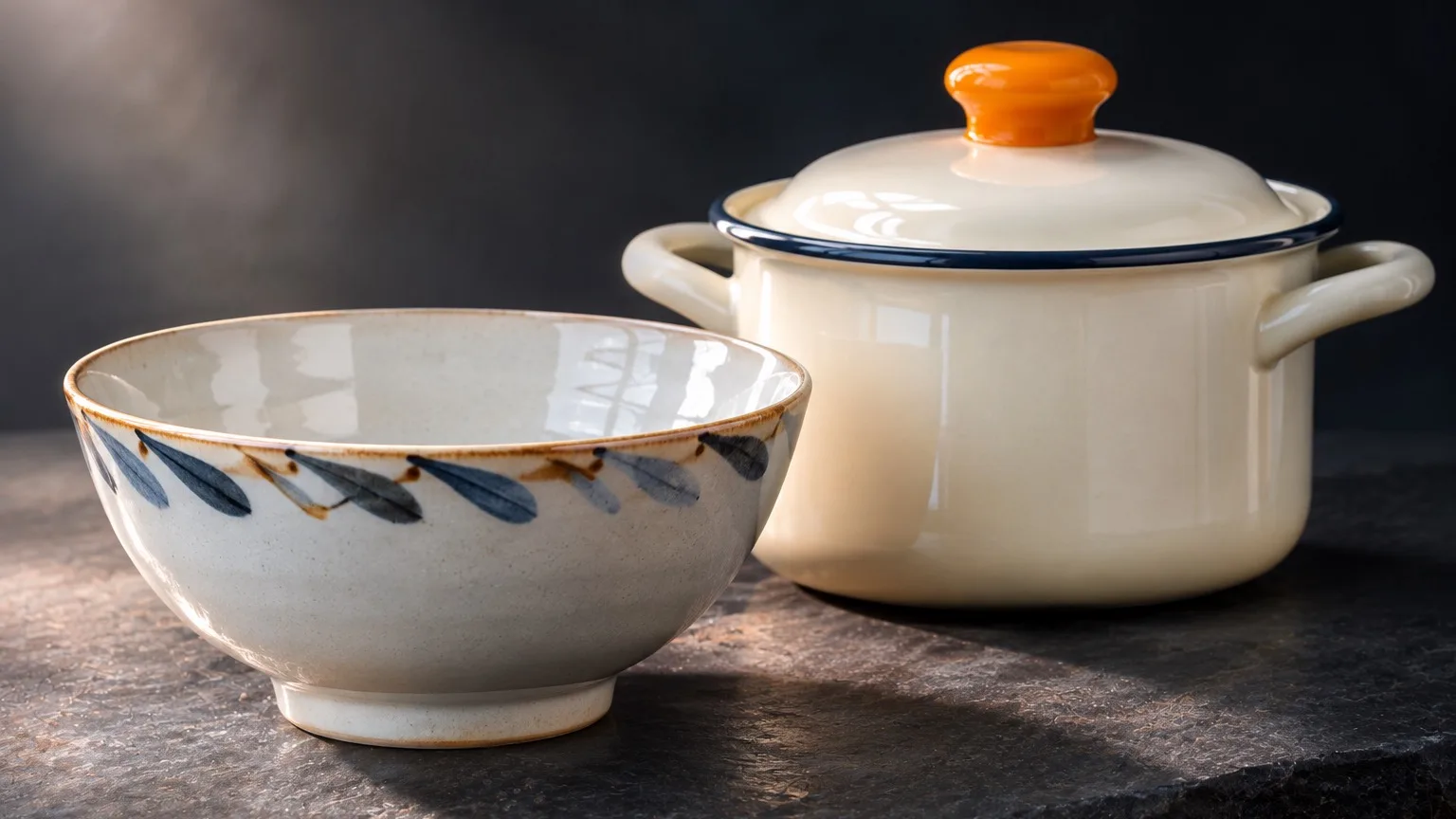
Definitions and the five categories in clauses 2 and 3: how to measure depth and capacity
Definitions in clause 2
- Container any material used to hold food, whether by putting food in it, wrapping it or any other means, including lids and stoppers
- Ceramic container a non-metallic, inorganic product that becomes stable after sintering or fusing at high temperature, used as a container. In everyday terms this is glazed earthenware; in practice, pottery, stoneware, porcelain and bone china used for food should be treated as falling within it
- Enamelled metal container a product in which a chemical coating is applied to a formed metal surface to prevent corrosion, used as a container
Five categories in clause 3
- Flatware depth of no more than 25 millimetres, measured vertically from the deepest point inside to the horizontal plane through the top rim, for example dinner plates and saucers
- Small hollowware deeper than 25 millimetres and holding less than 1.1 litres, for example bowls, cups and mugs
- Large hollowware deeper than 25 millimetres and holding 1.1 litres or more, for example mixing bowls, crocks and large jars
- Infant food containers containers used for food for children from birth to 12 months
- Cookware containers made to withstand the heat used in cooking, for example clay pots and enamel pots
Classifying a piece in practice
First, check whether the piece is designed for cooking heat or for infant food. If so, classify it as cookware or infant ware. If not, measure the depth: lay a ruler level across the top rim and measure straight down to the deepest point inside. No more than 25 millimetres is flatware. Deeper pieces are classified by capacity.
The notification sets the 1.1 litre line but does not describe how to measure capacity. In practice, laboratories usually fill the piece with water close to the rim and measure the volume. Agree the method with the laboratory when you submit samples, and ask for the category used to be stated in the report. For sets such as dinnerware sets, test every shape that falls into a different category, because the limits differ.
- 1Used for cooking heat?Yes = cookware
- 2Used for infant food?Birth to 12 months = infant ware
- 3Measure the depthFrom the deepest point to the level of the top rim
- 4No more than 25 mm deepFlatware
- 5Deeper than 25 mm: measure capacityUnder 1.1 L = small hollowware · 1.1 L or more = large hollowware
- 6State the category on the sample formSo the report compares against that category
Source: MOPH Notification No. 92 (1985), clause 3 · the order of steps is practical guidance
General requirements in clause 4 and the prohibitions in clauses 7 and 8
General quality under clause 4
Clause 4 applies to every food container, whether ceramic, enamelled, glass, metal or plastic. A container must:
- be clean
- not have been used before to hold food or anything else, except glass, ceramic, enamelled metal or plastic containers, provided they are not caught by clauses 7 and 8
- not release heavy metals or other substances into food in amounts that may harm health
- be free of pathogenic microorganisms
- not release colour into food
Clause 4 (2) is why restaurants and factories may wash and reuse plates, bowls and glass bottles: the notification exempts glass, ceramic and enamelled containers, as long as they never held prohibited goods under clause 7 and were not made for other goods under clause 8.
Clause 4 (5) on colour bleeding is directly relevant to decorated or coloured ware. In practice, if a pattern fades or peels after washing or after contact with sour food, stop using that piece for food and tell the supplier.
Prohibitions in clauses 7 and 8
- Clause 7 containers that have held or wrapped fertiliser, poisons or substances that may be hazardous to health must not be used as food containers
- Clause 8 containers made to hold goods other than food, or bearing designs or text that mislead about the essential nature of the food in them, must not be used as food containers
In practice, clause 8 matters for ceramics because the market is full of plant pots, vases, ornaments and art pieces made of the same material as tableware. These may use colours or glazes not designed for food contact. A buyer who will use them for food or serving should ask the supplier to confirm the product is made for food use, with test results.
Lead and cadmium limits for ceramic ware: Schedule No. 2
Clause 6 states that ceramic and enamelled metal containers, in addition to clause 4, must meet a quality standard for lead and cadmium: the amount of metal that leaches out, when analysed by the specified method, must not exceed Schedule No. 2 of the notification.
What "milligrams per litre" means
Milligrams per litre (mg/L) is the weight in milligrams of lead or cadmium dissolved in 1 litre of the test solution after that solution has stood in the container under the specified method. One milligram is one thousandth of a gram. The value measures what comes out of the surface, not the total lead in the clay body or the glaze.
Schedule No. 2 limits
- Flatware lead no more than 7, cadmium no more than 0.7 mg/L
- Small hollowware lead no more than 5.0, cadmium no more than 0.5 mg/L
- Large hollowware lead no more than 2.5, cadmium no more than 0.25 mg/L
- Infant food containers lead no more than 2.5, cadmium no more than 0.25 mg/L
- Cookware lead no more than 5.0, cadmium no more than 0.5 mg/L
Note that the cadmium limit is one tenth of the lead limit in every category, and that large hollowware and infant ware have the strictest limits. In practice, if you are unsure which category a piece falls into, testing against the stricter limit avoids a retest.
The test methods the notification cites
Clause 6 requires analysis by the method in the AOAC (Association of Official Analytical Chemists, United States) book, 13th edition, 1980, sections 25.031 to 25.034, except cookware, which is analysed by the method in the Journal of the AOAC, 1983, volume 66, number 3, pages 610 to 619.
In practice, laboratories may use newer standard methods developed from the original one. A buyer should check that the report names the method and soaking conditions, and states clearly which category of No. 92 Schedule No. 2 it compares against. If a report only cites another country's limits, ask the laboratory to add the Thai comparison.
Source: MOPH Notification No. 92 (1985), clauses 3 and 6 and Schedule No. 2
What leaching means, and why glaze and decoration on ceramic tableware matter
Leaching means elements or substances in the surface of a container moving into food or drink in contact with that surface. This section is general materials knowledge, not text from the notification.
Where lead and cadmium in ceramic tableware come from
The fired clay body is usually not the main source. The points to watch are the glaze and the decoration. Lead compounds have been used to help glazes melt at lower temperatures and give a glossy finish, and cadmium compounds give bright red, orange and yellow colours. If a glaze recipe is unbalanced, or the firing temperature or time is too low, these substances may not be well locked into the glassy glaze layer and can leach out when they meet acidic food.
Factors that increase leaching
- Acidic food such as vinegar, lime juice, fruit juice, tomato sauce and pickles. Standard test methods therefore usually soak the container with a dilute acetic acid solution, the same acid as in vinegar
- Long contact time pickling or storing food in a ceramic jar for days gives more chance of leaching than brief serving
- Heat warming or cooking in the container speeds up the reaction
- Damaged glaze crazing, chips, scratches, or a surface dulled by frequent dishwashing
Where the decoration sits matters
Decoration on ceramics falls into three positions: underglaze, covered by a clear glaze; in-glaze, which sinks into the glaze during firing; and on-glaze, such as decals or gold applied over the glaze and fired again at a lower temperature. On-glaze decoration touches food directly, so test reports should cover it, especially patterns inside bowls or on the rim of a cup where lips touch.
In practice, makers and OEM producers should record the glaze code, colour code and decal code in the specification, because changing glaze supplier or kiln can change leaching results even when the shape is identical.
Enamelware (enamelled metal) and cookware
Glazed and enamelled containers under Notification No. 92 fall into two groups: ceramic ware with a glaze, and enamelled metal ware, defined as products with a chemical coating on a formed metal surface to prevent corrosion. Common examples are pots, kettles, trays and enamel mugs made of iron or steel coated with a fused glass layer.
Limits for enamelled metal
Clause 6 and Schedule No. 2 apply to enamelled metal ware in the same way as to ceramics. Classify each piece under clause 3 first: a shallow enamel tray is flatware, an enamel mug is small hollowware, and an enamel pot used on the stove is cookware.
How cookware differs from serving ware
Cookware is the only category for which clause 6 requires a separate analytical method, the one in the 1983 Journal of the AOAC. Its limits are lead no more than 5.0 and cadmium no more than 0.5 mg/L. In practice, for clay pots, enamel pots and ceramic stew pots, ask for a report that tests the piece as cookware, not as an ordinary bowl, because the test conditions differ.
Risks specific to enamelware
In practice, enamel coatings can chip on impact. If a chip reaches the metal, rust forms and the coating around it may deteriorate faster. Commercial buyers such as restaurants should have a rule for removing chipped or cracked pieces from service, and makers should test rims and handles, where the coating is often thinner.
Glass, stainless steel and equipment in food plants: when there is no numeric table
Notification No. 92 mentions glass in clause 4 (2) separately from ceramics and enamelled ware, and has no numeric table for glass or for uncoated metal such as stainless steel. These containers still have to meet clause 4: clean, no heavy metals or other substances migrating in amounts that may be harmful, no pathogens and no colour bleeding, together with the prohibitions in clauses 7 and 8.
Glass
In practice, plain clear glass carries less lead and cadmium risk than coloured glazed ceramics. Glass with printed colour patterns or a painted rim, however, uses the same kind of decorating colours as on-glaze ceramic decoration, so ask for lead and cadmium results for the decorated area too, and use Schedule No. 2 as the reference value in your specification.
Stainless steel
Stainless steel food containers and utensils, such as pots, plates, pans, spoons, forks, knives and cups, are label-controlled products under Label Committee Notice No. 34 (2012). This is consumer protection law, not a Thai FDA notification. The label must state the stainless steel type under Thai Industrial Standard TIS 1378 or an international standard, such as SST304 or SST430, give use instructions, and carry the warning not to use it in a microwave oven.
Equipment in food plants
For food factories, containers and equipment on the production line fall under another framework: good manufacturing practice under MOPH Notification No. 420 (2020), whose basic requirements include a section on tools, machinery and production equipment. See our GMP 420 article for an overview.
A GMP knowledge document published on the Food Division website, on hygienic tools, machinery and production equipment (a guidance document, not a legal text), recommends that stainless steel in food contact should be grade 304, 316 or 316L, and that plastics must be food grade, not recycled plastic. In practice, if a plant uses glazed ceramic jars or vessels in its process, for example for fermenting or pickling, keep their lead and cadmium results in the equipment file like the documents for other equipment.
Infant ware, baby bottles and contaminant limits in the food itself
Ceramic infant ware
Notification No. 92 has a category for infant food containers, used for food for children from birth to 12 months. The limits are lead no more than 2.5 and cadmium no more than 0.25 mg/L, the same as large hollowware and the strictest in the schedule. In practice, ceramic bowls or cups marketed for small children should be tested against this category, even if their size would otherwise make them small hollowware.
Baby bottles and milk containers have their own notification
Baby bottles and milk containers for infants and young children (aged up to 3 years) fall under MOPH Notification No. 369 (2015). The permitted bottle materials are polypropylene, polyethersulfone and borosilicate glass. The Thai FDA explanatory notice says no migration value is set for glass, and that the notification does not apply to breast pumps, containers for non-liquid milk, or containers for storing baby food. No. 369 is covered in more detail in our baby bottle article.
Lead in containers and lead in food are separate limits
Food manufacturers who use ceramic ware in production or packing also face a contaminant standard for the food itself: MOPH Notification No. 414 (2020) on food containing contaminants, which sets lead, cadmium and other contaminants in food in milligrams per kilogram of food, for example lead in other foods no more than 1 mg/kg.
The two sets of values measure different things. No. 92 measures what leaches from the container into a test solution, while No. 414 measures what is in the finished food, so the numbers cannot be compared directly. In practice, if a food test shows unusually high lead or cadmium, containers with long or hot contact are one point to trace back, together with raw materials and water.
Document checklist for buyers, and choosing a laboratory
This checklist is our team's practical guidance, not a list set out in full by any notification. Use it when commissioning production, importing, or when a restaurant or factory qualifies a supplier.
- Product specification model, shape, depth, capacity, category under clause 3, and a statement that it is made for food use
- Lead and cadmium test report against No. 92 Schedule No. 2, for every category in the set
- Sample identification batch or lot, glaze code, colour and decoration, matching the goods delivered
- Laboratory accreditation scope covering leachable lead and cadmium from containers
- Cookware or children's ware the report must state it was tested in that category
- Retest frequency agree when to retest, for example whenever the glaze recipe, colour supplier, kiln or factory changes
- Change notification the supplier must give notice before changing materials or production site
Choosing a laboratory
The Thai FDA guideline on accepting test results, dated 3 August 2022, defines test results for plastic containers and for baby bottles and milk containers for infants and young children. It does not mention ceramic containers directly. In practice, apply the same principle: choose a government laboratory or a laboratory accredited to the international standard ISO/IEC 17025 with a scope that covers the tests. See our article on choosing a food testing lab for how to read a scope. Our advisory team can read reports against the notification, but does not offer container testing.
If the containers will be used for food made for sale, start with the product category advisor or search the original texts in the law library. For help reviewing reports and assembling a file, contact us through our document preparation service.
- ✓Specification and clause 3 categoryDepth, capacity, and a statement it is made for food use
- ✓Lead and cadmium reportAgainst No. 92 Schedule No. 2 for every shape in the set
- ✓Sample identificationLot, glaze code, colour and decoration matching the goods delivered
- ✓Laboratory scopeCovers metals leached from containers
- ✓Cookware or children's wareTested in that category
- ✓Retesting and change noticeWhen glaze, colour, kiln or factory changes
Source: Practical guidance · limits taken from MOPH Notification No. 92 (1985)
Frequently asked questions
Which Thai regulation applies to ceramic food containers?
MOPH Notification No. 92 (1985): clause 4 for general requirements, clause 6 with Schedule No. 2 for leachable lead and cadmium, and clauses 7 and 8 for prohibitions. It repealed Notification No. 17 (1979), which used to cover ceramic and enamelled ware.
What are the lead and cadmium limits for ceramic plates in Thailand?
Flatware no deeper than 25 millimetres: lead no more than 7 and cadmium no more than 0.7 mg/L. Deeper bowls and cups holding under 1.1 litres: 5.0 and 0.5. Pieces holding 1.1 litres or more, and infant ware: 2.5 and 0.25.
Do ceramic containers need a Thai FDA licence or notification?
Notification No. 92 sets the quality or standard of containers. None of its clauses sets a procedure to apply for a licence or notify ceramic containers. In practice, the evidence is a test report against Schedule No. 2 held by the maker or importer, which buyers should request and keep.
Which limits apply to enamel cookware?
Enamelled metal ware uses Schedule No. 2 like ceramics. A pot used on the stove is cookware: lead no more than 5.0 and cadmium no more than 0.5 mg/L, and clause 6 requires the separate method in the 1983 Journal of the AOAC.
Does Notification No. 92 set numeric limits for glass and stainless steel?
No specific table, but they must meet clause 4: clean, no heavy metals or other substances migrating in amounts that may be harmful, no pathogens and no colour bleeding. Stainless steel food ware is also label-controlled under Label Committee Notice No. 34 (2012).
Can restaurants reuse washed ceramic plates?
Yes. Clause 4 (2) exempts glass, ceramic, enamelled and plastic containers from the never-used-before rule, provided they never held fertiliser, poisons or hazardous substances under clause 7 and were not made for other goods under clause 8. In practice, remove chipped, cracked or peeling pieces.
Sources
- MOPH Notification No. 92 (B.E. 2528) on the quality or standard of food containers, the use of containers and the prohibition of certain materials as food containers · Open source · Search our archive
- MOPH Notification No. 17 (B.E. 2522) on the quality and standard of ceramic or enamelled metal ware used for food (repealed) · Open source · Search our archive
- Thai FDA Notice on the guideline for accepting test results for food containers, baby bottles and milk containers for infants and young children, 3 August 2022 · Open source · Search our archive
- MOPH Notification No. 369 (B.E. 2558) on baby bottles and milk containers for infants and young children · Open source · Search our archive
- Thai FDA explanatory notice on MOPH Notification No. 369 (B.E. 2558), 13 August 2015 · Open source · Search our archive
- MOPH Notification No. 414 (B.E. 2563) on food containing contaminants · Open source · Search our archive
- MOPH Notification No. 420 (B.E. 2563) on production methods, production equipment and food storage (GMP) · Open source · Search our archive
- GMP knowledge document, topic 2: hygienic tools, machinery and production equipment (Food Division) · Open source · Search our archive
- Label Committee Notice No. 34 (B.E. 2555) making stainless steel food containers and utensils label-controlled products · Open source · Search our archive
This article is for general information. It is not a Thai FDA ruling or legal advice, and rules change — check the latest notification or ask an expert before filing or producing. Spotted an error? Tell us and we will correct it
Related articles
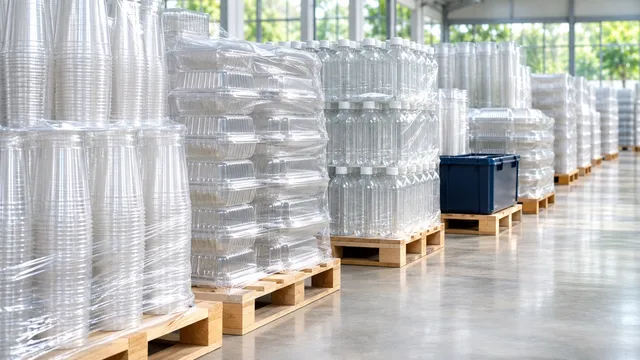 Brand ownersThailand plastic food packaging regulation: Notification 435 limits, recycled PET and the buyer's document checklistPlastic food packaging in Thailand: Notification 435 migration limits by plastic type, rPET rules, accepted labs, baby bottles, melamine, buyer checklist.
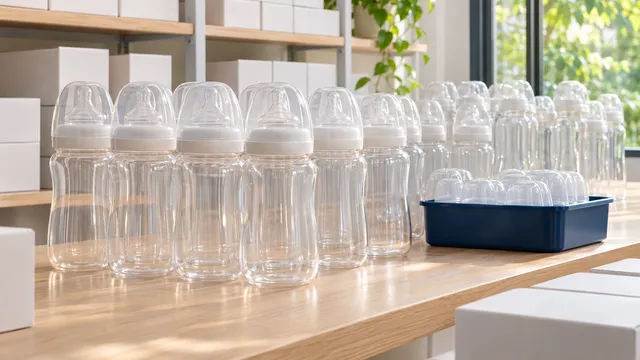
 ImportersThailand baby bottle regulation: Notification 369 materials, teats, storage bags, BPA and migration limitsThailand baby bottle regulation under Notification 369: permitted materials, glass bottles, teats, storage bags, BPA, migration limits, importer checklist.
 Brand ownersThailand Herbal Tea FDA Registration: Plant Tea Rules No. 426 and No. 471, Plant List, Quality, Labels and FilingHow to register herbal tea with the Thai FDA: plant tea vs tea and beverages, what No. 471 changed (mushrooms, licorice), quality, warnings and filing.