 FDA Thailand
 Factories / OEM
Food Testing Lab in Thailand: Which Results the Thai FDA Asks For, When, and Which Labs Qualify
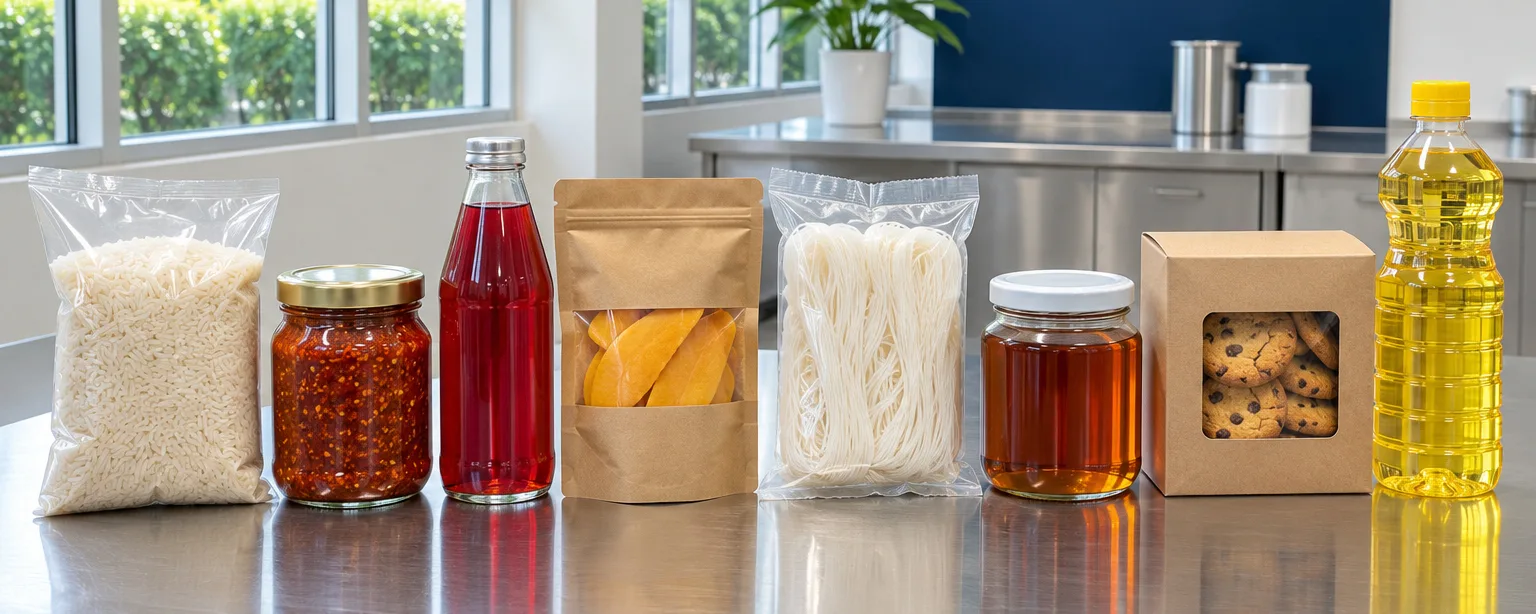
Food testing lab in Thailand: when the Thai FDA asks for results
Food producers and importers usually ask the same questions when they start a product: which food testing lab Thailand's FDA (Food and Drug Administration) will accept, what should we test, and when will the Thai FDA want to see results? The answer depends on the type of food and the step you are at.
The points at which the Thai FDA or an inspector typically asks for analytical results are:
- Applying for a food registration number for foods with a product-specific quality standard and some specific-controlled foods
- GMP 420 premises inspections, which require laboratory results on the finished product at least once a year
- Nutrition labelling, where energy and nutrient values must come from analysis of the finished product
- Import, where some food groups need a certificate of analysis at the FDA checkpoint
- Export, where overseas buyers often ask for results to their own country's requirements
This article goes through each point: what to test, which laboratories the Thai FDA's documents accept, and how to send samples so the report can be used. For shelf-life studies, see food shelf life testing in Thailand.
Source: FDA Regulation on Food Registration Numbers (No. 2) B.E. 2569 · MOPH Notification No. 420 B.E. 2563 · Q&A on Notification No. 445 B.E. 2566 · FDA explanatory notice on fruit and vegetable surveillance, 24 Jan 2020
Food registration numbers: products that need results from the first lot
Many foods get a food registration number (the 13-digit number in the FDA box) without any analytical report. However, the FDA Regulation on Food Registration Numbers (No. 2) B.E. 2569 (2026) requires one group of products to submit an additional report of quality or standard analysis under the product's own notification:
- cow's milk, flavoured milk, fermented milk and milk products
- ice cream
- beverages and foods in hermetically sealed containers
- coffee mixes, instant coffee mixes and ready-to-drink coffee
- electrolyte drinks
- dietary supplements, royal jelly and royal jelly products
The regulation asks for the original set of results when the product is first produced or imported for sale. The analysis must come from a government agency in Thailand or abroad, a body assigned or accredited by that country's government, or a body in Thailand or abroad accredited by a laboratory accreditation body to international standards. Foreign laboratory results therefore count if they meet this test.
Report age in the application checklists
Foods that need product registration have Thai FDA application checklists by category. The checklist for special purpose foods, for example, states that the analytical report must be no more than 1 year old from its issue date, and that a private laboratory must hold ISO17025 with supporting evidence. In practice, open the checklist for your food category before sending samples, then time the submission so the report is still within date when you file.
If you are unsure which group your food is in, read Thai food registration numbers first. For an example of a product standard with clear test parameters, see honey registration.
GMP 420 clause 3.9.1: test the finished product at least once a year
Even if no results are needed for registration, most food manufacturers still need finished-product results. Notification of the Ministry of Public Health (No. 420) B.E. 2563 (2020), clause 3.9.1, requires the finished product to meet the quality or standard of the relevant Ministry notifications, with analytical results from a government laboratory or an accredited laboratory at least once a year.
Clause 3.3.3 of the same notification requires water and ice used as an ingredient, or in contact with ready-to-eat food, to have results from a government or accredited laboratory at least once a year too, and clause 3.12 requires records and reports to be kept for at least 1 year after the end of the shelf life shown on the label. See GMP 420 requirements for the rest.
The Food Division test list: part 1 and part 2
The next question is which tests. The Thai FDA Food Division publishes a manual listing quality or standard tests for finished products of every food type (it is guidance, not the notification itself). It has two parts:
- Part 1 lists tests for foods with a product-specific standard, that is, specific-controlled foods and foods with prescribed quality or standard, such as drinking water, tea, coffee, honey, dietary supplements, milk and beverages in sealed containers.
- Part 2 lists tests for all foods under notifications that cover every product: contaminants, pathogenic microorganisms, food additives, pesticide residues, and products containing cannabis, hemp or cannabidiol extract.
The manual gives examples: a food with its own standard, such as a beverage in a sealed container, is tested against both parts; a food with no specific standard, such as a ready-to-eat meal or bagged rice, is tested against part 2 only.
Many products: do all of them need testing?
Point 5 of the manual's terms of use says manufacturers with many products may sample by risk factors such as food type, consumer group or production volume, using a product with a similar formula to represent the group. But every product first made for sale must be sent for analysis, and products must be sampled for analysis at least once a year after that. Point 6 says the method must report in the same unit the notification uses.
Nutritional analysis: results for the label and how close they must be
Nutrition labelling is the most common reason businesses need nutritional analysis. The Thai FDA's Q&A on the nutrition labelling notification (No. 445) B.E. 2566 (2023) answers the usual questions:
- Energy and nutrient values on the nutrition label must come from analysis of the finished product by a government laboratory or an ISO 17025 accredited laboratory; calculation from the formula cannot replace it.
- Imported food cannot use the nutrition data from the origin-country label, but can use the analytical report for that food to prepare the Thai label.
- No expiry is set for nutrition reports; it depends on the manufacturer's quality control, but if a sample is tested, the results must match the label.
- Products with the same formula differing only in flavouring may share results, case by case; if the formula differs, such as milk versus chocolate flavour, new analysis is needed.
- Non-government bodies must be accredited to an international standard at least equivalent to ISO/IEC 17025 for each nutrient tested.
How far may results be from the label?
The Food Division's finished-product manual (point 7) sets these acceptance ranges between analysis and label values:
- Protein, total carbohydrate, dietary fibre and unsaturated fat: at least 80% of the label value
- Energy, total sugar, total fat, saturated fat, trans fat and cholesterol: between 80% and 120% of the label value
- Sodium: between 80% and 120%
- Naturally present vitamins and minerals: at least 80%; added vitamins and minerals: at least 100% of the label value, and not above the permitted maximum
The basic set is often called proximate analysis: moisture, ash, protein, fat and carbohydrate, plus other items depending on the label format. Decide first between the full and short format: see full vs short nutrition label and how to read a nutrition label.
Food contaminant testing: heavy metals, mycotoxins and residues
Notification of the Ministry of Public Health (No. 414) B.E. 2563 (2020) on food containing contaminants defines a contaminant as a substance not intentionally added to food that gets in through production, processing, packing, transport, storage or the environment (physical foreign matter excluded). Maximum levels are in Schedule 1.
What if your food has no specific limit?
The Thai FDA's explanatory notice on contaminant standards sets the order:
- Use Schedule 1 of Notification No. 414 first.
- If there is none, use the latest Codex General Standard for Contaminants and Toxins in Food and Feed (CODEX STAN 193-1995).
- If the finished product has no limit but its raw material does, such as crackers made from wheat flour, the manufacturer must hold evidence such as an analytical report or certificate of analysis (COA) showing raw-material control under GMP.
- If neither the product nor its main raw materials have a specific limit, the permitted levels are tin up to 250 mg/kg, lead up to 1 mg/kg, mercury up to 0.02 mg/kg, total arsenic up to 2 mg/kg and total aflatoxins up to 20 µg/kg. The notice says it may not be necessary to test every item, depending on contamination risk.
Watch the units: mg/kg is used for metals; µg/kg (1,000 times smaller) is used for aflatoxins, mould toxins (mycotoxins) found in peanuts, maize and grains stored in damp conditions.
Pesticide residues
Residues such as pesticides fall under a separate notification. The Food Division manual says to test according to Notification No. 460 B.E. 2568 (2025), and that food types outside the listed items need not be tested every year unless there is an incident or reason to suspect residues above the limit.
Notification No. 414 also sets analytical methods in Schedule 2. In practice, when ordering contaminant tests, ask the lab whether its limit of quantification (LOQ) is low enough compared with the maximum level. If the LOQ is above the limit, a "not detected" result cannot show compliance.
Food microbiology testing: pathogens under Notification No. 416, yeasts and moulds
Notification of the Ministry of Public Health (No. 416) B.E. 2563 (2020) states that foods in Schedule 1 that are produced, imported or sold must not contain pathogenic microorganisms except as to the types and amounts in Schedule 2, and that analysis follows Schedule 3. Criteria are set by food group; common organisms in the schedule include Salmonella, Staphylococcus aureus, Bacillus cereus, Clostridium perfringens and Listeria monocytogenes.
Clause 4 says the notification does not apply to dietary supplements or food additives, so these follow microbiological criteria in their own notifications. The Food Division manual, for example, lists for dietary supplements: Staphylococcus aureus not found in 0.1 g, Clostridium spp. not found in 0.1 g and Salmonella spp. not found in 25 g.
Read units carefully: "not found in 25 g" is a presence/absence test on a 25 g sample; CFU per gram (colony forming units) is a count per gram of food, used for "not more than" limits.
Yeasts and moulds, and product standards
Yeasts and moulds are not pathogens under Notification No. 416, but some product standards set them. For honey under Notification (No. 211) B.E. 2543 (2000), the Food Division manual lists yeasts and moulds not more than 10 per gram of honey, alongside other parameters such as moisture not more than 21% by weight and hydroxymethylfurfural not more than 80 mg per kg. Before ordering food microbiology testing, read both Notification No. 416 and your product's own notification and put all the items on one request.
Microbiology testing needs a laboratory whose accreditation scope covers microbiology for that organism and method; not every lab that does chemistry has this scope.
Food additives, allergens and other tests worth knowing
Food additives
The Food Division manual asks manufacturers to test at least four functional classes of additives: preservatives, non-sugar sweeteners, colours and antioxidants, testing only those used in production. In practice, attach the list of additives actually used to the request so the lab can pick the right method and compare against the maximum level permitted for that food category.
Allergens
Testing for allergen proteins such as gluten, milk, egg, peanut or soy with immunoassay kits is a practical tool to verify cleaning of shared lines and to support label statements such as gluten-free. Results do not replace allergen declarations on the label, but help make them accurate. For allergen labelling rules, see Thai food label requirements.
Foods with their own standard also have product-specific items. Honey in the Food Division manual, for instance, includes reducing sugars, sucrose and diastase activity; choose a lab that runs these methods routinely.
On methods, the Thai FDA notice on food analysis (1 August 2024) sets methods in its schedules; where they cannot be used, a method with validation that can be audited under ISO/IEC 17025 may be used.
Imported and exported food: results at the port and for buyers
Imported food
- At the FDA checkpoint: some food groups have specific measures. For example, the explanatory notice on surveillance of fruit and vegetables that may carry agricultural residues (24 January 2020) provides for residue checks at the checkpoint every time a consignment is imported, or for the importer to show a certificate of residue analysis issued by the responsible government agency of the country of origin or a private institution accredited to ISO/IEC 17025, for that lot.
- At registration: imported foods in the groups named in the registration regulation need the original set of results when first imported for sale.
- For the Thai label: nutrition data from the foreign label cannot be used, but an analytical report can.
GMP 420, clause 6, also requires importers of food for sale to hold certification that the foreign manufacturer meets a standard equivalent to or not lower than the notification. In practice, importers should also keep the origin manufacturer's annual finished-product results. See food import licence in Thailand.
Exported food
Thai FDA export certificates rely on existing licences and registration numbers, but overseas buyers often ask for extra results to their country's requirements, sometimes per lot, and may name accepted labs or accreditation. Agree the tests, methods and lab in the contract from the start. See exporting processed food from Thailand.
Food analysis services: choosing a lab the Thai FDA accepts and reading its scope
Thai FDA documents word it slightly differently, but the core is the same: results must come from a government laboratory or a laboratory accredited to international standards.
- GMP 420 clause 3.9.1: a government laboratory or an accredited laboratory
- Food Division manual: government agencies in Thailand or abroad, or bodies accredited by a laboratory accreditation body to international standards such as ISO/IEC 17025; a COA from such a laboratory may be used, as the manual specifies case by case
- Nutrition labelling Q&A: non-government bodies must be accredited at least equivalent to ISO/IEC 17025 for each nutrient
The practical takeaway: foreign labs can be used if they qualify, and a lab "having ISO/IEC 17025" is not enough; it must be accredited for the tests you send.
Read the accreditation scope
ISO/IEC 17025 accreditation is granted per test, not for the whole lab. In practice, before buying food analysis services, ask for the certificate and scope document and check three things:
- Test item matches what you need, for example lead rather than "total heavy metals"
- Test method matches the one used, or one the notification accepts
- Sample type (matrix) covers your food, for example accredited for water but not for high-fat foods
The Thai FDA checklist for special purpose foods states that if ISO 17025 accreditation is shown on the report, the scope of accreditation from the accreditation body need not be submitted. In practice, ask the lab to mark accredited items on the report.
Supplier COA vs independent testing
A raw-material supplier's COA is useful for goods-in and as evidence of raw-material control. For finished-product results you will file or show to an inspector, in practice use a report from a government lab or a lab accredited for that test. If you would like our team to coordinate with accredited partner laboratories for the tests you need, see testing services.
- ✓Sender name and address, product name and lot number match the label and filing
- ✓Sample receipt date, test date and report issue date
- ✓Test method for each item
- ✓Detection or quantification limit (LOD or LOQ) below the legal limit
- ✓Reported unit matches the notification
- ✓Accreditation mark against items within scope
- ✓Authorised signature, and an original copy where originals are required
Source: General practice, with reference to the Food Division finished-product manual point 6 and Thai FDA application checklists
Sending food samples so the report can actually be filed
Unusable reports usually come from unplanned sampling. The following is general practice, not a requirement in the notifications.
Before sending
- Build the test list from the notifications: combine items from your product standard, the contaminant and pathogen notifications, the additives you actually use and the values on your label, and state the notification's units on the request.
- Pick the right lot: use a real production lot in the retail pack, not a development sample, and record the lot number and production date. If the report must cite one lot, send all samples from that lot.
- Ask about sample quantity in advance: each test needs a different amount; some microbiology tests use tens of grams per item. Send extra for retesting and keep a retained sample of the same lot at the factory.
In transit
Send in the original sealed pack (if you must split, use sterile containers for microbiology), control temperature to suit the food, and complete a sample submission form recording sender, receiver and times (chain of custody) so you can show samples were not mixed up.
When the report comes back
Check the report against the checklist in the previous section before filing it or adding it to your GMP records. If a result fails, find the cause, fix the process and test a new lot, rather than resending to several labs until one passes.
- 1Decide what the result is forRegistration, GMP, label, import or export
- 2Build the test list from the notificationsProduct standard, 414, 416, additives and label values
- 3Choose the lab by scopeTest, method and sample type must be accredited
- 4Sample a real production lotEnough quantity, sealed, retained sample kept
- 5Send with a submission formControl temperature, record chain of custody
- 6Check the report and file itKeep at least 1 year after the shelf life on the label
Source: MOPH Notification No. 420 B.E. 2563, clause 3.12, and general practice
Frequently asked questions
Does every food need lab testing?
Manufacturers under GMP 420 need finished-product results from a government or accredited laboratory at least once a year. Submitting results with a registration application applies to certain groups, such as milk, beverages in sealed containers and dietary supplements.
Can I use a foreign laboratory?
Yes, if it is a government agency, a body assigned or accredited by that country's government, or a body accredited by a laboratory accreditation body to international standards, as the registration regulation and Food Division manual state. It should be accredited for the tests you send.
Can a supplier COA replace finished-product testing?
A raw-material COA is evidence of raw-material control but says nothing about the finished product. The Food Division manual accepts a COA from a qualifying laboratory, case by case as the manual specifies.
How long is an analytical report valid?
It depends on the filing. Some registration checklists require the report to be no more than 1 year old from its issue date. For nutrition reports the Thai FDA says no expiry is set, but results must still match the label.
Do I need new nutritional analysis for a new flavour?
If the formula is the same and only the flavouring differs, results may be shared case by case. If the ingredient formula differs, such as milk versus chocolate flavour, new analysis is required.
Does 'not detected' always mean compliant?
Not always. Check that the lab's detection or quantification limit (LOD or LOQ) is below the maximum level in the notification and that the reported unit matches it.
Sources
- Notification of the Ministry of Public Health (No. 420) B.E. 2563 (2020) on production methods, equipment and food storage (GMP) · Open source · Search our archive
- Food Division list of quality or standard tests for finished products under GMP 420 · Open source · Search our archive
- FDA Regulation on Food Registration Numbers (No. 2) B.E. 2569 (2026) · Open source · Search our archive
- Thai FDA application checklist for special purpose foods · Open source · Search our archive
- Q&A on Notification of the Ministry of Public Health (No. 445) B.E. 2566 (2023) on nutrition labelling · Open source · Search our archive
- Q&A on the notifications on foods requiring nutrition labelling and GDA labelling · Open source · Search our archive
- Notification of the Ministry of Public Health (No. 414) B.E. 2563 (2020) on food containing contaminants · Open source · Search our archive
- FDA explanatory notice on the Ministry of Public Health notifications on food containing contaminants · Open source · Search our archive
- Notification of the Ministry of Public Health (No. 416) B.E. 2563 (2020) on microbiological quality, criteria and analysis for pathogenic microorganisms · Open source · Search our archive
- FDA notice on food analysis, dated 1 August 2024 · Open source · Search our archive
- FDA explanatory notice on surveillance of fruit and vegetables that may carry agricultural residues (24 January 2020) · Open source · Search our archive
This article is for general information. It is not a Thai FDA ruling or legal advice, and rules change — check the latest notification or ask an expert before filing or producing. Spotted an error? Tell us and we will correct it
Related articles
 Factories / OEMFood Shelf Life Testing in Thailand: What the Law Requires and How to Set a Defensible DateFood shelf life in Thailand: who sets the date, expiry vs best before, real-time and accelerated testing, Q10, what to measure and records to keep.
 Brand ownersThai Food Label Requirements: What Must Be on the Label, with an Example (2026)Thai food label requirements under Notifications 450 and 474: mandatory items, 10 allergen groups, expiry dates, letter heights and a mock label.
 Factories / OEMGMP 420 explained: key requirements, the inspection forms and how audits are scoredThailand's GMP 420 for food plants: the five basic categories, specific requirements, the TS.1–TS.5 audit forms, scoring, pass criteria and major defects.