 FDA Thailand
 Brand owners
Thailand plastic food packaging regulation: Notification 435 limits, recycled PET and the buyer's document checklist
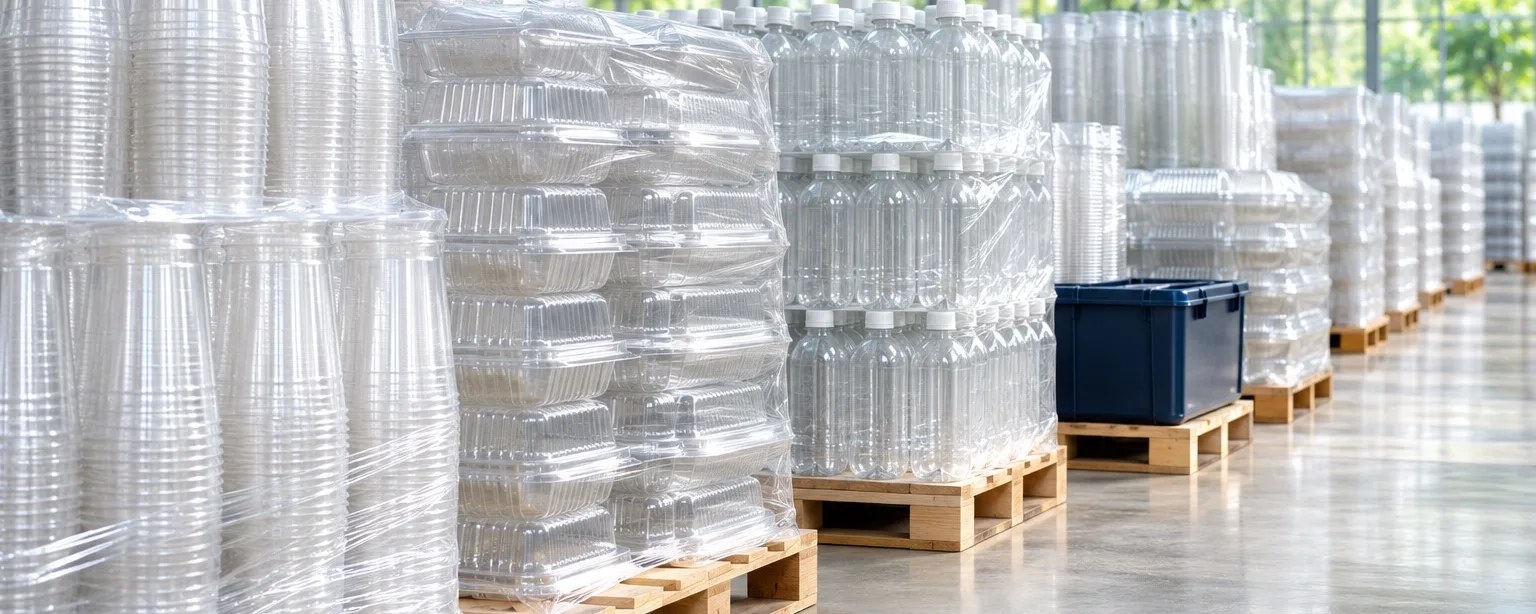
Thailand plastic food packaging regulation: the short answer for manufacturers, importers, brand owners and packaging makers
Thailand plastic food packaging regulation centres on Ministry of Public Health (MOPH) Notification No. 435 B.E. 2565 (2022) on the quality or standard of plastic containers. Any plastic that touches food, such as a bottle, cup, tray, pouch, bag or lid, must meet it. The notification covers both virgin plastic and recycled plastic, and its definition of a container includes caps and closures.
- General requirements clean, free of pathogens, food contact grade colourants, and printing inks that do not transfer to the food
- Test limits List No. 1 covers 12 plastic types plus plastics for milk, with overall migration, heavy metals, primary aromatic amines and specific migration limits
- Other plastics need a safety assessment report from an assessment body named by the Thai FDA
- Secondary recycled plastic must be food contact grade PET, and the recycling process must be assessed
- Transitional period the Thai FDA explanatory notice says it ended no later than 18 June 2025
This guide helps food manufacturers, importers, brand owners and packaging makers check a specification before they buy. Rules for food in hermetically sealed containers are in our article on Notification No. 469.
The legal framework for food containers in Thailand: Notification No. 92 and No. 435
Two layers of MOPH notifications on food containers should be read together.
- No. 92 (1985) general rules for all containers. Containers must be clean, free of heavy metals or other substances in amounts that may be harmful, and free of pathogens. Containers that once held fertiliser, poisons or hazardous substances must not be used for food.
- No. 435 (2022) the specific standard for plastic containers, issued under section 5 paragraph one and section 6 (6) of the Food Act B.E. 2522 (1979) and published in the Royal Gazette on 17 June 2022. Clauses 10 and 11 ban plastic containers that once held fertiliser or poisons, and containers made for non-food goods.
Two companion documents are worth opening: the Thai FDA explanatory notice on No. 435 dated 26 July 2022, which explains it clause by clause, and the correction notice published on 21 July 2025, which fixes the year of the Food Act in the title and the spelling of one substance name, with the substance and CAS number unchanged.
In practice, specifications and purchase orders should cite No. 435, not the repealed No. 295.
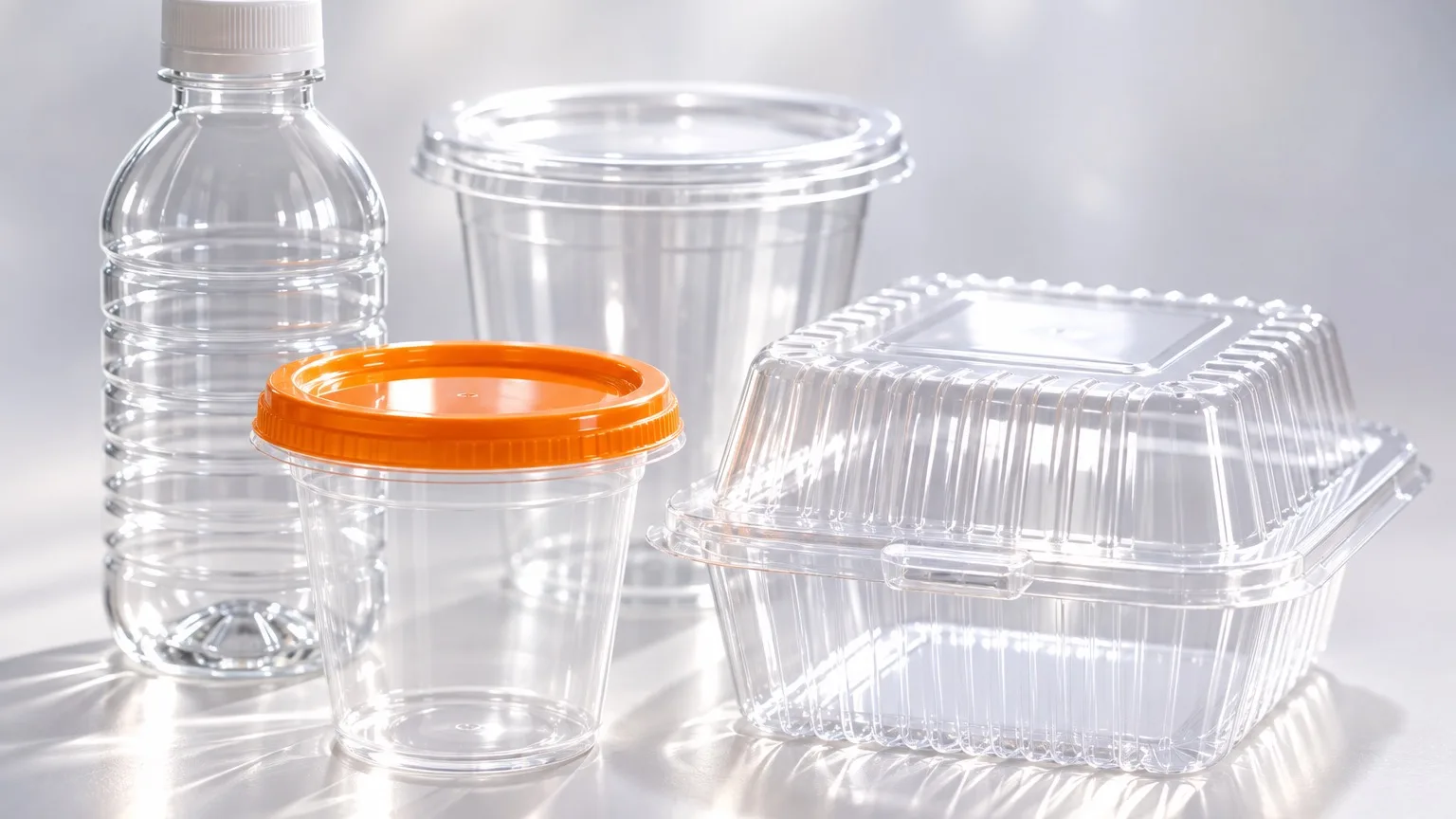
What Notification 435 covers: six container formats and six general requirements
Clause 3 lists six container formats: single-layer plastic, plastic multi-layers, multi-material multi-layers with plastic layers, other materials coated with plastic, containers where plastic is one part in contact with food (the explanatory notice gives a paper box with a plastic window as an example), and composites with plastic in the mix, such as pulp blended with plastic.
The Food Division's public manual states that plastic spoons and forks fall outside the definition of a container under this notification.
General requirements under clause 4
- Clean and free of pathogenic microorganisms. The explanatory notice recommends testing for Staphylococcus aureus, Clostridium perfringens, Bacillus cereus and Salmonella spp.
- No hazardous substances migrating in amounts that affect health, except those listed in List No. 1
- No unacceptable change to the character or composition of the food
- Colourants of food contact grade, and printing inks firmly fixed so they do not transfer to food
The explanatory notice adds that a substance found but not in List No. 1 is considered to have no health effect if it is on the authorised list of Commission Regulation (EU) No 10/2011 and within its limit. If it is not listed and is found above 0.01 milligrams per kilogram, its risk must be assessed case by case.
Food contact materials in Thailand: migration limits by plastic type (List No. 1)
List No. 1 is the core of any food contact materials check in Thailand. It covers 12 plastics: PVC, PE, PP, PS, PVDC, PET, polycarbonate, nylon, polyvinyl alcohol, polymethyl methacrylate, polymethyl pentene and melamine-formaldehyde, plus a group of plastics for milk.
- Table 1, overall migration no more than 10 milligrams per square decimetre, meaning the total mass leaving the container surface per 1 dm² of food-contact area (a 10 x 10 cm sheet)
- Table 2, 19 heavy metals in milligrams per kilogram of food or food simulant. Lead, arsenic and mercury must be not detected at 0.01, cadmium not detected at 0.002, iron no more than 48, copper no more than 5
- Table 3, primary aromatic amines (PAAs) coloured or printed containers are tested for 22 PAAs from azo colourants, each not detected at 0.002 mg/kg
- Table 4, specific migration set per plastic type; examples are in the table below
Clause 6 requires containers for yoghurt-type milk, infant formula, flavoured milk and cream (not in powder or dry form) to be polyethylene, ethylene 1-alkene copolymerised resin, polypropylene, polystyrene or PET.
Clause 5 paragraph two exempts layers behind a functional barrier if the barrier is proven. The explanatory notice sets the test: migration from those layers into food must not exceed 0.01 mg/kg, and says seasoning or sauce sachets placed inside another food container do not get this exemption.
Source: MOPH Notification No. 435 (2022), List No. 1, Tables 1 and 4
Effective date, transitional periods and the notification it replaced
Clause 1 of No. 435 repeals Notification No. 295 (2005), and clause 14 brings it into force on the day after publication in the Royal Gazette. The explanatory notice gives the effective date as 18 June 2022.
- Clause 12 virgin plastic containers in use before the notification took effect may continue for no more than three years
- Clause 13 containers meeting List No. 2 (the old criteria) may continue for no more than three years
The explanatory notice converts this to no later than 18 June 2025, after which List No. 1 applies, and says containers in use before are judged by their date of manufacture.
In practice, as of November 2026 the transitional period has passed. Buyers should ask for test reports against List No. 1 of No. 435 and check that the report date and resin lot match what is delivered. For drinks or drinking water, also read the article on beverages under No. 473 and the article on drinking water GMP.
Plastics not yet listed and containers with substances that act on the food
Clause 7 applies to plastics outside the 12 types in List No. 1. These containers must meet clause 4, release no hazardous substances in amounts that affect health, and come with 14 listed documents and a safety assessment report from an assessment body named by the Thai FDA. The documents cover the plastic (maker, monomers, additives, process), the container (converter, food type, use temperature) and supporting data (migration studies, toxicology, rules in the reference country).
A Thai FDA notice published in the Royal Gazette on 5 June 2026 names three assessment bodies (an academic institution, a foundation and a unit within the MOPH), replacing the notice of 2 November 2022. Their scope has three cases: plastics without a standard in the notification, containers with active substances that affect the food, and the efficacy of recycling processes. The applicant then files the report with the Thai FDA through e-submission. A separate Thai FDA notice on how assessment bodies operate requires at least three experts per case, in chemistry, packaging technology or materials science, and toxicology.
The Food Division's public manual says plastics already named in the notification need no assessment, and that an assessment result supports a request for approval; it is not a licence in itself.
Containers with substances that act on the food
Containers with substances added to affect the food, for example to extend shelf life, fall under case 2 of the Food Division's document checklist, which asks for the substance name and amount, its function, how it interacts with the material and food, migration results and toxicology. In practice, if a supplier offers a bag or tray that "extends shelf life", ask whether it has gone through this route, and plan product shelf life with our article on food shelf life.
Recycled PET in Thailand: conditions for food-contact rPET and the assessment route
No. 435 defines three types of recycled plastic: primary (in-plant scrap that has never touched food), secondary (used food containers ground, washed and melted by physical or mechanical means, without changing the polymer structure) and tertiary (chemical reprocessing back to starting materials).
Conditions under clauses 8 and 9
- Secondary recycled containers must use food contact grade PET as raw material
- The resin must come from a process that removes contaminants effectively, backed by an assessment report from a body named by the Thai FDA, or be recycled resin certified under a Thai Industrial Standard
- For imported recycled containers or imported food, a report from the producing country or a country with a credible assessment system may be submitted to the assessment body
- Primary and tertiary recycled plastic need no report under clause 8 (2)
A Thai FDA summary slide set explains that all recycled containers must still meet clauses 4 and 5, like virgin plastic.
Criteria for assessing a recycling process
The Thai FDA criteria for assessing recycling efficacy and recycled resin safety apply to PET that previously held food and was collected from well-managed sources within Thailand. Efficacy is shown by surrogate contaminant testing: the maximum contaminant concentration in recycled PET must not exceed 210 micrograms per kilogram. If a process cannot meet this, more data are needed, such as limiting the blend with virgin PET, using a barrier layer or restricting use.
The operator manual asks for at least one surrogate from each of four groups, and for results from an ISO/IEC 17025 laboratory or with method performance data. The applicant then files with the Thai FDA under case 3 of the document checklist.
The list of approved recycling processes
The explanatory notice says the Thai FDA will consider publishing a list of those who pass, with conditions of use. The Food Division now publishes this list. Every entry is secondary recycled PET, and each has its own conditions, such as single use, thickness, filling temperature or food type. Containers made from listed resin must still meet No. 435 and have a test report. In practice, buyers of rPET bottles or trays should ask for the process name and compare its conditions with their product point by point.
- 1Identify the recycling typePrimary · secondary · tertiary
- 2Primary or tertiaryNo report under clause 8 (2), but the container must meet clauses 4 and 5
- 3Secondary: check the feedstockFood contact grade PET
- 4Secondary: check the processReport from a body named by the Thai FDA, or Thai Industrial Standard certified resin
- 5Match the conditions of useSingle use, thickness, filling temperature, food type
- 6Test the finished containerAgainst List No. 1, as for virgin plastic
Source: MOPH No. 435 clauses 2, 8, 9 · Thai FDA slides on recycled plastic containers · Food Division list of approved processes · practical guidance
Testing plastic containers: Thai FDA test methods and accepted laboratories
The Thai FDA notice on analysis of plastic containers, dated 8 December 2022, sets the approach.
- Multi-layer containers are tested as finished articles, for overall and specific migration. For window boxes, the plastic part is tested separately
- Repeat-use containers are tested repeatedly on the same sample; results must stay within limits and not rise. Where the limit is "not detected" and the first test detects it, the sample fails
- Food manufacturers may choose simulants and conditions that match real use. Container makers should test all simulants unless the intended use is clearly stated
- Containers already filled with food may be tested for specific migration using the real food
Overall migration uses EN 1186, with simulants such as 3 percent acetic acid, 10 or 50 percent ethanol and vegetable oil, and conditions such as 10 days at 40 °C or 2 hours at 100 °C. Where these do not cover real use, Commission Regulation (EU) No 10/2011 applies. In practice, hot-fill or microwave use should be stated on the test request.
Laboratories whose results the Thai FDA accepts
A Thai FDA notice dated 3 August 2022, clause 3, accepts results from laboratories in Thailand or abroad that belong to government agencies, bodies assigned or accredited by government agencies, or bodies accredited to an international laboratory standard for tests within their accredited scope. Under clause 4 the Thai FDA may, case by case, accept tests outside scope that use the same technique, and reports must show extraction conditions, LOD, LOQ, precision, accuracy and measurement uncertainty.
In practice, check the laboratory's accreditation scope, alongside our article on choosing a food testing lab. Our consultants can read reports against the notification, but we do not offer packaging testing.
Baby bottles, melamine ware, plastic product labels and non-food items in food packs
Baby bottles
Feeding bottles and milk containers for infants and young children (up to 3 years old) have their own MOPH Notification No. 369 (2015). Permitted bottle materials are polypropylene, polyethersulphone and borosilicate glass; single-use containers are polypropylene or polyethylene. Other materials need Thai FDA approval under the Food Division manual, and there is a separate Thai FDA notice on test methods.
Melamine ware
Melamine-formaldehyde is one of the 12 plastics in List No. 1 of No. 435, with formaldehyde no more than 15, melamine no more than 2.5 and phenol no more than 3 mg/kg. Separately, Label Committee Notice No. 18 (2004) of the Office of the Consumer Protection Board makes melamine food ware a label-controlled product. Labels need three use instructions, such as not recommended for microwave ovens, and a warning not to hold food or liquid above 100 °C.
Plastic containers sold as products
Label Committee Notice No. 9 (2001) makes plastic products, including containers and films for food, label-controlled. Labels need directions for use and warnings where relevant, such as "do not use for hot contents" for products that cannot withstand more than 95 °C, and "contains used material" for products made from remelted plastic. In practice, anyone selling plastic boxes or bags to food outlets should check labels against this notice. Food labels themselves are covered in our article on Thai food labels.
Non-food items inside food packs
MOPH Notification No. 310 (2008), clause 2, allows non-food items inside a food container only to maintain food quality, as seasoning, or as a utensil, such as a desiccant sachet, a seasoning sachet or a spoon. Clause 3 allows other items in the outer packaging if they pose no health risk and cannot be mistaken for food.
Document checklist for buyers of plastic food packaging
This checklist is our own practice, not a list set out in full by any notification.
- Container specification format under clause 3, layer structure, food-contact side, thickness
- Resin type for every layer on List No. 1, or with a clause 7 assessment
- Test report against No. 435 from a qualifying laboratory, with simulants and conditions that match use
- Colourant and ink declarations food contact grade
- Recycled content evidence recycling type, process name or Thai Industrial Standard certificate, and conditions of use
- Functional barrier proof or active substance file where relevant
- Change control notice before any change of resin, colour or supplier
If you are unsure how your product is classified, start with the product type advisor, or search the original notifications in our law archive. To have our consultants read test reports and prepare a file, contact our document preparation service.
- ✓Specification and structureFormat under clause 3, layers, food-contact side
- ✓Resin type for every layerOn List No. 1 or assessed under clause 7
- ✓Test report against No. 435Overall migration, heavy metals, PAAs, specific migration
- ✓Laboratory accreditationScope covers the tests performed
- ✓Colourants and inksFood contact grade
- ✓Recycled content evidenceRecycling type, process name, conditions of use
- ✓Change controlNotice before changing resin, colour or supplier
Source: Practical guidance · conditions taken from No. 435 and the Thai FDA documents cited in this article
Frequently asked questions
Which Thai regulation applies to plastic food containers?
MOPH Notification No. 435 (2022) applies to containers made from virgin and recycled plastic, including caps and closures. General rules for all containers are in Notification No. 92 (1985), and baby bottles have their own Notification No. 369.
When did Notification 435 take effect, and has the transitional period ended?
The Thai FDA explanatory notice gives 18 June 2022 as the effective date, and says the transitional period for existing virgin plastic containers and for List No. 2 ended no later than 18 June 2025. After that, List No. 1 applies.
What is the overall migration limit for plastic food containers in Thailand?
List No. 1, Table 1, sets no more than 10 milligrams per square decimetre for all 12 plastic types and plastics for milk. Heavy metals, PAAs for coloured or printed containers, and specific migration by plastic type are also tested.
Can rPET bottles be used for drinks in Thailand?
Clause 8 of No. 435 allows secondary recycled plastic when the raw material is food contact grade PET and the resin comes from a process with an assessment report from a body named by the Thai FDA, or is certified under a Thai Industrial Standard. In practice, compare the process conditions of use with your product.
Which laboratories' results does the Thai FDA accept for plastic containers?
A Thai FDA notice dated 3 August 2022 accepts results from government laboratories, bodies assigned or accredited by government agencies, and laboratories accredited to an international standard for tests within their scope, in Thailand or abroad.
What must a melamine tableware label show in Thailand?
Label Committee Notice No. 18 (2004) makes melamine food ware label-controlled, with three use instructions and a warning not to hold food or liquid above 100 °C. The material itself is on List No. 1 of No. 435.
Sources
- MOPH Notification No. 435 B.E. 2565 (2022) on the quality or standard of containers made from plastic · Open source · Search our archive
- Correction notice for MOPH Notification No. 435 (Royal Gazette, 21 July 2025) · Open source · Search our archive
- Thai FDA explanatory notice on MOPH Notification No. 435, 26 July 2022 · Open source · Search our archive
- MOPH Notification No. 92 (1985) on the quality or standard of containers, their use and banned container materials · Open source · Search our archive
- MOPH Notification No. 295 (2005) on plastic containers (repealed) · Open source · Search our archive
- Thai FDA notice on the operation of safety assessment bodies for food containers or plastic containers (2 November 2022) · Open source · Search our archive
- Thai FDA notice listing safety assessment bodies for food containers or plastic containers (Royal Gazette, 5 June 2026) · Open source · Search our archive
- Public manual: assessment of quality, standard and safety of food containers or plastic containers (e-submission) · Open source · Search our archive
- Document checklist, case 1: plastic containers without a standard in the MOPH notification · Open source · Search our archive
- Document checklist, case 2: containers using substances that affect the food · Open source · Search our archive
- Use of plastic types not yet set in Notification No. 435 (Thai FDA infographic) · Open source · Search our archive
- Criteria, conditions and guidance for assessing recycling process efficacy and recycled resin safety for food contact materials · Open source · Search our archive
- Operator manual: preparing documents and test results to assess recycling process efficacy · Open source · Search our archive
- Document checklist, case 3: assessment of recycling process efficacy for food containers · Open source · Search our archive
- Use of containers made from recycled plastic (Thai FDA summary slides) · Open source · Search our archive
- List of approved recycling processes (Food Division) · Open source · Search our archive
- Thai FDA notice on analysis of plastic containers, 8 December 2022 · Open source · Search our archive
- Thai FDA notice on acceptance of test results for food containers, feeding bottles and milk containers for infants and young children, 3 August 2022 · Open source · Search our archive
- MOPH Notification No. 369 (2015) on feeding bottles and milk containers for infants and young children · Open source · Search our archive
- Thai FDA explanatory notice on MOPH Notification No. 369 (2015) · Open source · Search our archive
- Thai FDA notice on analysis of feeding bottles and milk containers for infants and young children · Open source · Search our archive
- Public manual: assessment of feeding bottle materials not listed in the MOPH notification · Open source · Search our archive
- Label Committee Notice No. 18 (2004): melamine food ware as a label-controlled product · Open source · Search our archive
- Label Committee Notice No. 9 (2001): plastic products as label-controlled products · Open source · Search our archive
- MOPH Notification No. 310 (2008) on food packed with non-food items in containers and packaging · Open source · Search our archive
- Thai FDA explanatory notice on MOPH Notification No. 310 (2008) · Open source · Search our archive
- Compliance manual for MOPH Notification No. 310 (2008) · Open source · Search our archive
This article is for general information. It is not a Thai FDA ruling or legal advice, and rules change — check the latest notification or ask an expert before filing or producing. Spotted an error? Tell us and we will correct it
Related articles
 Brand ownersThai Food Label Requirements: What Must Be on the Label, with an Example (2026)Thai food label requirements under Notifications 450 and 474: mandatory items, 10 allergen groups, expiry dates, letter heights and a mock label.
 Factories / OEMFood Shelf Life Testing in Thailand: What the Law Requires and How to Set a Defensible DateFood shelf life in Thailand: who sets the date, expiry vs best before, real-time and accelerated testing, Q10, what to measure and records to keep.
 Brand ownersThailand Herbal Tea FDA Registration: Plant Tea Rules No. 426 and No. 471, Plant List, Quality, Labels and FilingHow to register herbal tea with the Thai FDA: plant tea vs tea and beverages, what No. 471 changed (mushrooms, licorice), quality, warnings and filing.