 FDA Thailand
 Importers
Thailand baby bottle regulation: Notification 369 materials, teats, storage bags, BPA and migration limits
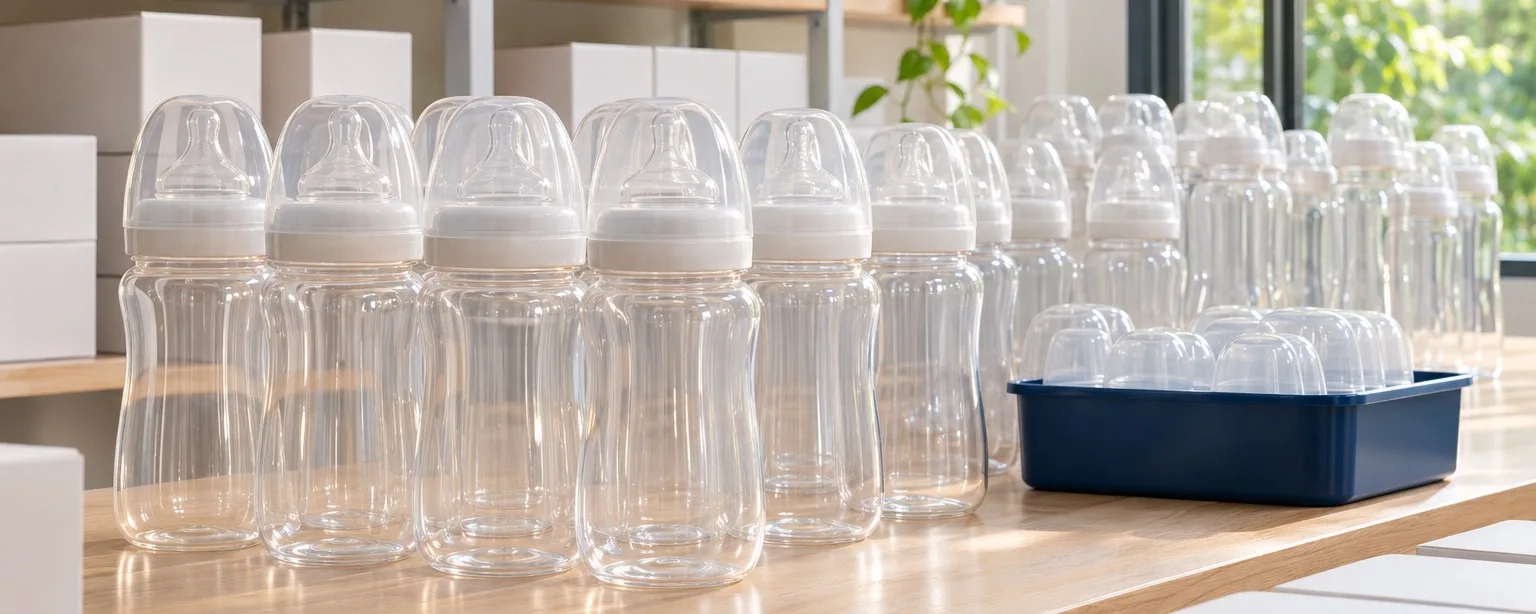
Thailand baby bottle regulation: the short answer for makers, importers, brand owners and online sellers
Baby bottles, teats and milk containers for infants and young children, such as training cups and breast milk storage bags, fall under Ministry of Public Health (MOPH) Notification No. 369 (B.E. 2558, 2015) on feeding bottles and milk containers for infants and young children. In short, Thailand baby bottle regulation asks three things: the bottle must be made of a permitted material, it must meet the migration limits in the schedule to the notification, and bisphenol A (BPA) must not be detected at the level set.
- Children up to 3 years under the definition of infants and young children in clause 2
- Permitted materials (Schedule No. 1) bottle: polypropylene (PP), polyethersulphone (PES), borosilicate glass · teat: natural or synthetic rubber · single-use containers: PP or polyethylene (PE)
- Other materials (clause 7) need the approval of the Thai Food and Drug Administration (Thai FDA)
- Migration limits (Schedule No. 2) Table 1 for plastics, Table 2 for rubber
This article is written for manufacturers, importers, brand owners who contract a factory, and online sellers. General plastic food containers are covered in our plastic food packaging article and ceramic ware in our ceramic food container article.
Where Notification No. 369 came from: bisphenol A, polycarbonate bottles and the repealed No. 117
The Thai FDA clarification of Notification No. 369, dated 13 August 2015, explains that many countries restrict or ban polycarbonate plastic baby bottles because of bisphenol A, a starting substance in making them. Although bisphenol A is not classified as a carcinogen, there was still no data to give confidence about its safety, and animal studies suggested it may interfere with oestrogen hormone function. The ministry therefore took a precautionary measure and the principle of exposure as low as reasonably achievable (ALARA). In the notification this shows up as polycarbonate being absent from the permitted list and bisphenol A having to be not detected.
The old notification, effective date and transitional period
- Clause 1 repeals MOPH Notification No. 117 (B.E. 2532, 1989) on feeding bottles
- Signed on 8 January 2015, published in the Royal Gazette on 3 February 2015, and in force after one hundred and eighty days; the clarification gives the effective date as 1 August 2015
- Clause 8 let products already approved and on sale continue to be sold for no more than 1 year; the clarification gives the last day as 2 August 2016
The transitional period ended long ago, so products on sale today must meet No. 369. Violations are punishable under section 48 of the Food Act. In practice, if a specification or test report still cites No. 117, ask the supplier for new documents.
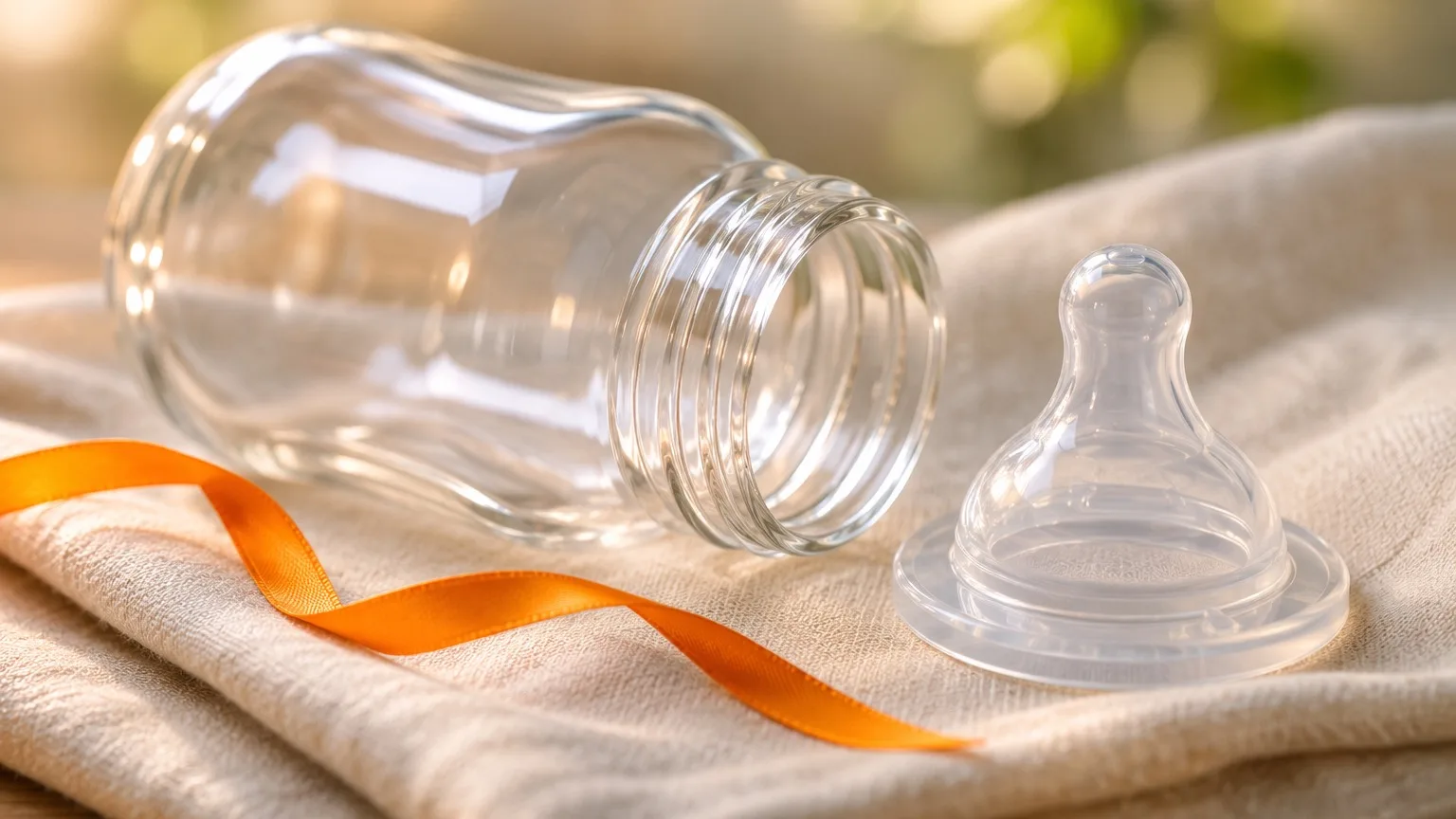
Scope: what counts as a feeding bottle or milk container, and what is outside the notification
Definitions in clause 2
- Feeding bottle a container for milk or other liquids for consumption by infants and young children, made up of the bottle, protective cover, feeding teat, locking ring and possibly a sealing disc
- Milk container for infants and young children either reusable, such as a training cup, or single-use, such as plastic bags for storing breast milk and single-use milk bags used with a feeding bottle; it does not include feeding bottles
- Infants and young children persons aged not more than 3 years
The words "other liquids" make the scope wider than milk. In practice, bottles or cups marketed for young children to drink water or juice should also have No. 369 documents.
What is outside the notification
The Thai FDA clarification states that No. 369 does not apply to breast pumps, containers for milk that is not in liquid form, or containers for storing food for infants and young children. In practice, examples are formula powder dispensers and cups for puréed food, which should follow the general container rules for their material.
Breast pumps and pacifiers
The product classification guide for mother and child health products published on the website of the Thai FDA Medical Device Control Division, data as of February 2025, puts feeding bottles and teats, breast milk storage bags and pacifiers in the not-a-medical-device column. Electric breast pumps are medical devices under Rule 11, risk class 2, and manual breast pumps under Rule 4, risk class 1.
Pacifiers are not among the parts of a feeding bottle in clause 2. In practice, importers should check the rules for that product separately, and a set that combines bottles with a breast pump should have separate documents for each item.
- 1For children up to 3 years?Definition of infants and young children in clause 2
- 2Holds milk or a liquid to drink?Feeding bottles, training cups, breast milk storage bags
- 3Is it a breast pump?Yes = not under No. 369; see medical device rules
- 4Holds formula powder or puréed food?Yes = not under No. 369; see general container rules
- 5Break it down into parts and materialsBottle, cap, teat, straw: what is each made of?
- 6Compare with Schedule No. 1Listed = prepare test results · Unlisted = seek approval under clause 7
Source: MOPH Notification No. 369 (2015), clauses 2 and 7 · Thai FDA clarification of 13 August 2015 · the order of steps is practical guidance
Glass baby bottles, PP and PES bottles: permitted materials in Schedule No. 1
Clauses 3 to 6 require each part to be made of a material in Schedule No. 1, the table of permitted materials including coatings.
| Part | Permitted materials |
|---|---|
| Bottle | polypropylene · polyethersulphone · borosilicate glass |
| Protective cover, locking ring, sealing disc | polypropylene · polyethersulphone |
| Teat | natural rubber · synthetic rubber |
| Reusable milk container | polypropylene · polyethersulphone · borosilicate glass |
| Single-use milk container | polypropylene · polyethylene |
Glass baby bottles
The glass in the list is borosilicate glass, which handles temperature changes better than ordinary glass. In practice, importers of glass baby bottles should ask for documents that name the glass type clearly, not just the word "glass", because soda-lime glass is not on the list. The Thai FDA clarification states that no migration analysis is set for glass bottles, but they must still meet clause 3 or clause 6 (1). The plastic cap and rubber teat of a glass bottle still need testing for their own material.
PP and PES plastic bottles
The clarification gives the examples of PES bottles having a clear yellowish-brown colour that is natural to the material, and PP bottles being translucent. PES bottles have extra tests for DCPS and DHPS. In practice, "BPA free" on a box is a marketing statement; it does not tell you the material and does not replace test results under Schedule No. 2.
Requirements for the bottle itself: clear, no added colour, heat resistant, volume marks and easy to clean
Clause 3 sets 7 quality requirements for the bottle, which the Thai FDA clarification explains further.
- Clean
- No hazardous substances migrating in amounts that affect health the clarification explains this means other substances not listed in Schedule No. 2 that may be harmful based on scientific data
- Clear and colourless unless the colour is natural to the material; if the material is not clear, it must not be so opaque that the liquid level cannot be seen. The clarification states that colour must not be added to the material
- Heat resistant and reusable for example boiling or steaming; the bottle must not lose its shape
- Material in Schedule No. 1 meeting Table 1 of Schedule No. 2
- Volume marks printed patterns must not be so extensive that the inside cannot be seen; inks for patterns and volume marks must be food contact grade and must not come off. The clarification adds that printing must be on the outer surface and must not cover the volume marks
- No bends or other shapes that are hard to clean
Shapes that can be cleaned thoroughly
The clarification gives guidance on shapes that are not hard to clean, for example no bends, curves but with both the mouth and base opening, curves gentle enough for an ordinary bottle brush to reach all parts, or ridges on the outside with a smooth inside, and no hole in the middle that a brush cannot reach. In practice, brand owners designing a new shape should try cleaning it with an ordinary brush before ordering the mould.
Protective cover, locking ring and sealing disc
Clause 4 requires these parts to release no colour into food, resist heat and be made of a listed plastic. The clarification explains that this clause does not ban colour in the material, but the colour must not contaminate food. Coloured caps are therefore possible, unlike the bottle itself.
Baby bottle teats: natural rubber, silicone, colour and tensile strength
In everyday Thai, the word for teat and the word for pacifier overlap, but the notification uses feeding teat for the part fitted to the bottle. Clause 5 requires teats to be clean, free of hazardous migration, colourless unless the colour is natural to the rubber, heat resistant and reusable, resistant to tensile force, and made of a rubber in Schedule No. 1 that meets Table 2 of Schedule No. 2.
Natural rubber and silicone
The Thai FDA clarification gives the examples of teats made of synthetic rubber such as silicone, which is colourless, and natural rubber teats, which are clear yellow, as natural colours. Table 2 also has an item "tested only when made of silicone rubber" in the synthetic rubber column. In practice, pink, blue or printed teats call for a question to the maker about where the colour comes from.
Heat resistance and tensile strength
The clarification explains that after heating the teat must not become sticky, crack, tear or change shape, and the boiling water must stay clear with no colour or odour; for tensile strength the teat must not tear. For both, it says testing may follow the Thai Industrial Standard on rubber teats for feeding bottles or another comparable method. In practice, ask for these physical test reports separately from the migration report.
Breast milk storage bags, training cups and reusable or single-use milk containers
Breast milk storage bags
Breast milk storage bags are single-use milk containers. Clause 6 (2) requires them to be clean, free of hazardous migration, colourless unless the colour is natural to the plastic, made of polypropylene or polyethylene meeting Table 1, and any volume marks must stay on and be printed with food contact grade ink. The clarification states that colour must not be added to the material and volume marks must be printed on the outer surface.
In practice, storage bags are often multi-layer films. Importers should ask for the structure of every layer, check that the layer in contact with milk is PP or PE, and include the zip strip and pour spout in the material list.
Training cups and reusable containers
Clause 6 (1) requires reusable containers to release no colour, withstand reuse, be made of a listed glass or plastic, and use food contact grade printing inks. The clarification explains multi-part training cups as follows.
- For a cup with a body, lid, detachable handles, straw or parts of different materials, assess only the parts that contact food
- Parts made of rubber are assessed against the standard for the natural or synthetic rubber used
- A straw or other food-contact part made of another material needs Thai FDA approval under clause 7
In practice, list every part with its material; straws, spouts and anti-spill valves are the parts to check first.
Migration limits in Schedule No. 2: the plastics table and the rubber table
The values in Schedule No. 2 are the "maximum amount permitted" of substances migrating from the material, not the amount inside the material.
Units used
- Milligrams per kilogram of food or food simulant the weight of a substance in milligrams (one thousandth of a gram) that ends up in 1 kilogram of test liquid; a food simulant is a liquid used in place of milk or juice in the test
- Micrograms per litre 1 microgram is one thousandth of a milligram
- Milligrams per cubic decimetre 1 cubic decimetre equals 1 litre
- Milligrams per kilogram of material the weight of substance released relative to 1 kilogram of rubber
Table 1: PP, PES and PE plastics
Heavy metals (mg/kg): lead 1, barium 1, cobalt 0.05, copper 5, iron 48, lithium 0.6, manganese 0.6, zinc 25 · residue on evaporation of the solvent not more than 60, both in 50% ethanol (simulant for milk and water) and 3% acetic acid (simulant for fruit juice) · bisphenol A not detected at a limit of detection (LOD) of 0.25 micrograms per litre · DCPS and DHPS (bisphenol S) not more than 0.05, tested only for polyethersulphone
Table 2: natural and synthetic rubber
Formaldehyde not detected at an LOD of 1 mg per cubic decimetre · zinc not more than 1 mg per cubic decimetre · N-nitrosamines not more than 0.01 and N-nitrosatable substances not more than 0.1 mg per kilogram of material · volatile compounds not more than 0.5% by weight, silicone rubber only · MBT not more than 8 mg per kilogram, and the antioxidants BHT and Antioxidant 2246, for vulcanised rubber in the natural rubber column only
Rubber blends and glass
The Thai FDA clarification states that a blend of natural and synthetic rubber must be analysed against the standards for both natural and synthetic rubber, while no migration analysis is set for glass bottles. In practice, when a teat is a blend, state this on the sample submission form so that the laboratory covers both columns.
Source: MOPH Notification No. 369 (2015), Schedule No. 2, Tables 1 and 2
Test methods and laboratories whose results the Thai FDA accepts
The test method notice of 26 June 2015
The Thai FDA issued a notice on the analysis of feeding bottles and milk containers for infants and young children so that testing follows one approach. The main points are as follows.
- Plastics migration tests at 70 degrees Celsius for 2 hours; heavy metals in 3% acetic acid measured by AAS · residue on evaporation by EN 1186:2002 · bisphenol A in 50% ethanol and 3% acetic acid measured by HPLC-FL · DCPS and DHPS measured by HPLC-UV
- Rubber formaldehyde by the Department of Medical Sciences method DMSc F 1036 · zinc by JETRO 2008 · N-nitrosamines by EN 12868:1999 · volatile compounds of silicone rubber (drying at 200 degrees Celsius), MBT and antioxidants by EN 14350-2:2004
Every item is a Type I (defining) method, which the notice explains means results from another method cannot be compared with results from this one. Put simply, the number depends on the method and test conditions. In practice, ask for reports that state the method, temperature, time and simulant in line with this notice. If a foreign report used other conditions, ask the laboratory first whether it can be compared with the Thai limits.
Laboratories whose results the Thai FDA accepts
The Thai FDA notice on the guideline for accepting test results for food containers, feeding bottles and milk containers for infants and young children, dated 3 August 2022, accepts results from laboratories of government agencies, of bodies assigned or recognised by government agencies, and of bodies accredited to an international standard within their accredited scope, in Thailand or abroad. It repealed the Thai FDA notice of 26 October 2015 that had named the government agencies or institutes for such testing.
In practice, a laboratory's ISO/IEC 17025 certificate should have a scope that really covers the tests. See how to read a scope in our article on choosing a food testing lab. Our consulting team can read reports against the notification, but we do not provide container testing.
Materials outside the list, and a document checklist for importers and brand owners
Materials not in Schedule No. 1
Clause 7 provides that feeding bottles and milk containers made of other materials need Thai FDA approval, with 10 items of evidence on the material, such as the material type, the material maker and the moulder, the chemicals used, the production process, the specification, conditions of use, the laws or standards of the producing or reference country, and test results under that country's rules.
The Food Division's public manual, revised 20 February 2023, expands this to 13 items, adding toxicology data, migration studies under conditions of use and colour photographs of the product. The manual states that materials already listed in the notification do not need assessment. Applicants need an Open ID account and file through the e-submission system, for which the Food Division has a separate user manual. Where more than one unlisted material is used, documents are attached separately for each. The Thai FDA also has a notice listing the safety assessment bodies it recognises, dated 20 October 2021, which covers several types of assessment including feeding bottle materials. In practice, ask the Food Division which route suits your material before preparing the dossier.
PPSU, silicone and newer materials on the market
The baby bottle market includes plastics not in Schedule No. 1, such as polyphenylsulfone (PPSU), which is a different polymer from PES despite the similar name. In practice, before ordering or importing, ask the supplier for evidence that the material has been approved under clause 7. As for silicone, Schedule No. 1 lists rubber for teats, not for the bottle, so an all-silicone bottle body should be checked with the Thai FDA first.
Documents to request from the factory
This list is our team's practice, not a complete list set by the notification.
- Material declaration for every part
- Table 1 report for plastic parts, covering heavy metals, residue, bisphenol A, and DCPS and DHPS for PES
- Table 2 report for teats and rubber parts, for the rubber actually used
- Evidence of food contact grade ink for patterns and volume marks
- Tensile and heat resistance reports for teats
- Clause 7 approval where any part is made of an unlisted material
- Laboratory details and a condition that the factory notifies you before changing material, colour or site
Start with the product category advisor, check import paperwork with the import document checker, or search the originals in the law library. If you want our team to read reports and organise the dossier, contact us through document preparation services.
- ✓Material declaration for every partBottle, cap, ring, disc, teat, straw
- ✓Table 1 reportHeavy metals, residue, bisphenol A, plus DCPS/DHPS for PES
- ✓Table 2 reportFor the rubber actually used; blends tested in both columns
- ✓Food contact grade inkPrinted outside, not covering volume marks
- ✓Teat tensile and heat resistancePhysical reports separate from chemical reports
- ✓Clause 7 approvalWhere a part is made of an unlisted material
- ✓Laboratory scope and change notificationAgree retesting when material or factory changes
Source: Practical guidance · limits from MOPH Notification No. 369 (2015)
Frequently asked questions
Which notification covers baby bottles in Thailand?
MOPH Notification No. 369 (B.E. 2558, 2015) on feeding bottles and milk containers for infants and young children, which repealed No. 117 (B.E. 2532, 1989). The test methods are in the Thai FDA notice of 26 June 2015.
Which plastics can baby bottles be made of?
The bottle can be polypropylene, polyethersulphone or borosilicate glass, and caps and locking rings polypropylene or polyethersulphone. Other materials need Thai FDA approval under clause 7.
Do glass baby bottles need migration testing?
The Thai FDA clarification states that no migration analysis is set for glass bottles, but they must still be clear, heat resistant and have volume marks under clause 3. Plastic caps and rubber teats still need testing against the table for their material.
Are silicone teats allowed?
Teats can be natural or synthetic rubber. The Thai FDA clarification gives silicone as an example of synthetic rubber, and Table 2 has a volatile compounds test only for silicone rubber. Teats must have no added colour and must resist tensile force.
Are breast milk storage bags covered?
Yes. They are single-use milk containers and must be polypropylene or polyethylene, with no colour added to the plastic, meeting Table 1. Breast pumps are not covered by this notification.
Does a BPA free label mean a bottle meets the rules?
Not on its own. Thai rules look at both the material in Schedule No. 1 and test results under Schedule No. 2, which cover heavy metals, residue and bisphenol A not detected at 0.25 micrograms per litre. In practice, ask for the full test report.
Sources
- MOPH Notification No. 369 (B.E. 2558) on feeding bottles and milk containers for infants and young children · Open source · Search our archive
- Thai FDA Notice clarifying MOPH Notification No. 369 (B.E. 2558), 13 August 2015 · Open source · Search our archive
- Thai FDA Notice on the analysis of feeding bottles and milk containers for infants and young children, 26 June 2015 · Open source · Search our archive
- Thai FDA Notice on the guideline for accepting test results for food containers, feeding bottles and milk containers for infants and young children, 3 August 2022 · Open source · Search our archive
- Public manual on assessing the quality, standard and safety of materials for feeding bottles and milk containers not listed in the MOPH notification (revised 20 February 2023) · Open source · Search our archive
- Thai FDA Notice listing the safety assessment bodies recognised by the Thai FDA, 20 October 2021 · Open source · Search our archive
- Manual for filing safety assessment applications through the e-submission system (Food Division) · Open source · Search our archive
- Product classification guide for mother and child health products, data as of February 2025 (Medical Device Control Division website) · Open source · Search our archive
- MOPH Notification No. 117 (B.E. 2532) on feeding bottles (repealed) · Open source · Search our archive
This article is for general information. It is not a Thai FDA ruling or legal advice, and rules change — check the latest notification or ask an expert before filing or producing. Spotted an error? Tell us and we will correct it
Related articles
 Brand ownersCeramic and enamelled food containers in Thailand: Notification 92 lead and cadmium limits and buyer documentsThailand ceramic food container regulation: Notification 92 categories, lead and cadmium leaching limits, enamelware, infant ware, glass, stainless steel.
 Brand ownersThailand plastic food packaging regulation: Notification 435 limits, recycled PET and the buyer's document checklistPlastic food packaging in Thailand: Notification 435 migration limits by plastic type, rPET rules, accepted labs, baby bottles, melamine, buyer checklist.
 ImportersThai medical device labeling requirements: labels and IFU under the 2025 notificationThai medical device labels under the 2025 rules: 8 label items, IFU and QR codes, Thai language, warnings, 120 days after import and a 2-year transition.