 FDA Thailand
 Importers
IVD Registration in Thailand: What an IVD Is, Classes 1 to 4, Import Routes, RUO and Self-Test Kits
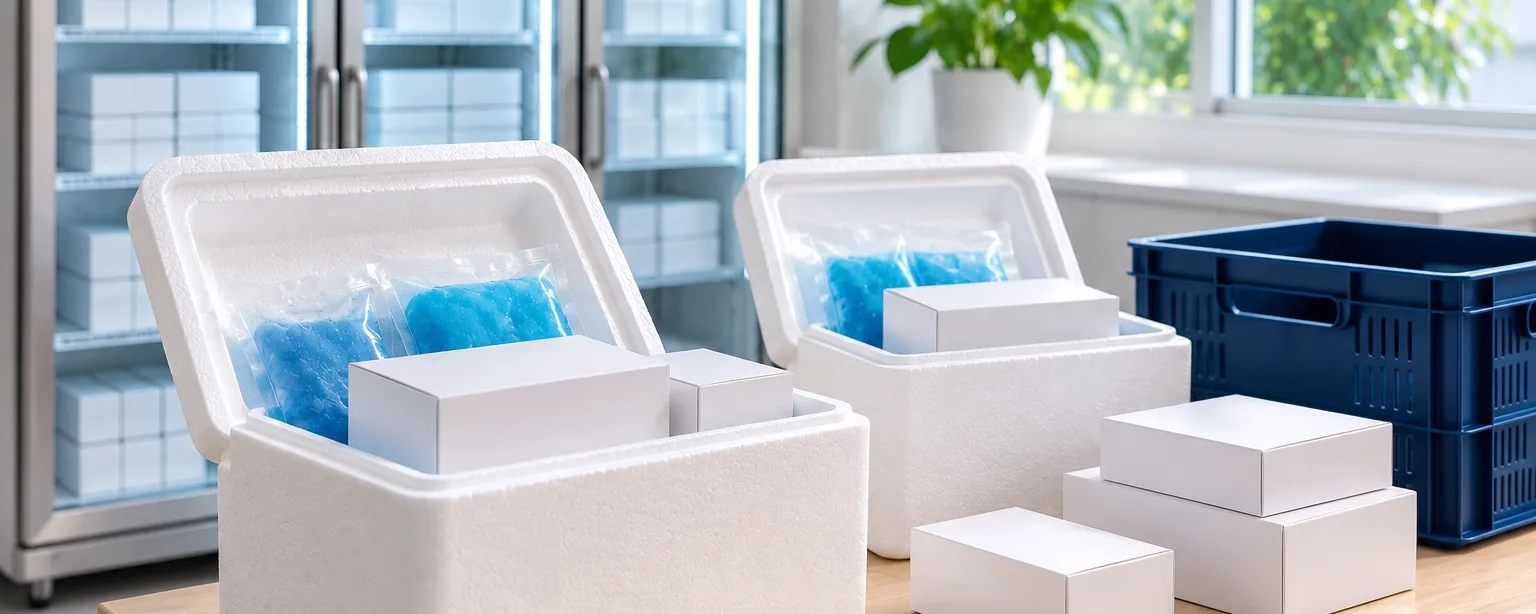
What is an IVD: in vitro diagnostic medical devices under Thai law
An IVD is an in vitro diagnostic medical device, such as a reagent, test kit, calibrator, control, analyser or specimen receptacle that the product owner intends for examining blood, urine or other specimens from the human body. A wrong result can lead to a wrong medical decision, so the classification rules are the starting point for IVD registration. Thailand regulates IVDs under the Medical Device Act B.E. 2551 like other medical devices, with its own risk rules, grouping rules and dossier guidance.
- Legal basis The Section 4 definition of a medical device lists "reagents used for testing inside or outside a laboratory" directly, and one of the listed purposes is giving information from examining specimens from the body for medical or diagnostic purposes.
- A separate track from the start Clause 1 of the Ministry of Public Health (MOPH) Notification on classifying medical devices by risk B.E. 2562 (2019) splits medical devices into two groups, IVD and non-IVD, each with its own Classes 1 to 4.
- The class sets the route Class 4 needs a licence, Classes 2 and 3 need detailed notification, and Class 1 needs listing, unless a product-specific notification says otherwise, as it does for HIV self-screening kits.
For the structure of the Act and establishment registration, read the parent article; every notification cited here is in our regulation archive.
In vitro diagnostic reagents, test kits, calibrators, controls and specimen receptacles: what counts as an IVD in Thailand
Annex 1 of the MOPH risk classification notification B.E. 2562 (2019) defines an IVD and ties it to the purpose set by the product owner, not to what the product looks like. The Thai FDA IVD registration manual (IVD-G-01, June 2021) describes the scope the same way.
The definition in the 2019 annex
An in vitro diagnostic medical device means a reagent, reagent product, calibrator, control material, kit, instrument, apparatus or equipment, system or other article, used alone or in combination, that the product owner intends for examining specimens derived from the human body, including donated blood and organs, to provide information on one of three things:
- a physiological or pathological state, or a congenital abnormality;
- safety and compatibility with potential recipients of tissue;
- monitoring of therapeutic measures.
The same definition includes specimen receptacles, and the annex applies to devices for humans, not animals.
Terms you will meet in the application
- Reagent a chemical, biological or immunological component, solution or preparation that the product owner intends for use as an IVD. Trade terms such as in vitro diagnostic reagents fall here.
- IVD for self-testing an IVD that the product owner intends for use by lay persons, meaning people without training in the relevant field.
What is not an IVD
A note under Rule 5 states that general laboratory products not manufactured, sold or presented specifically for in vitro diagnostic use are not IVDs, and an example under the same rule notes that dehydrated culture media in powder form are not ready-to-use IVDs. In practice, the same product can change status if the seller presents it for diagnosis, so start with the product classification tool and the overview in what is a medical device in Thailand.
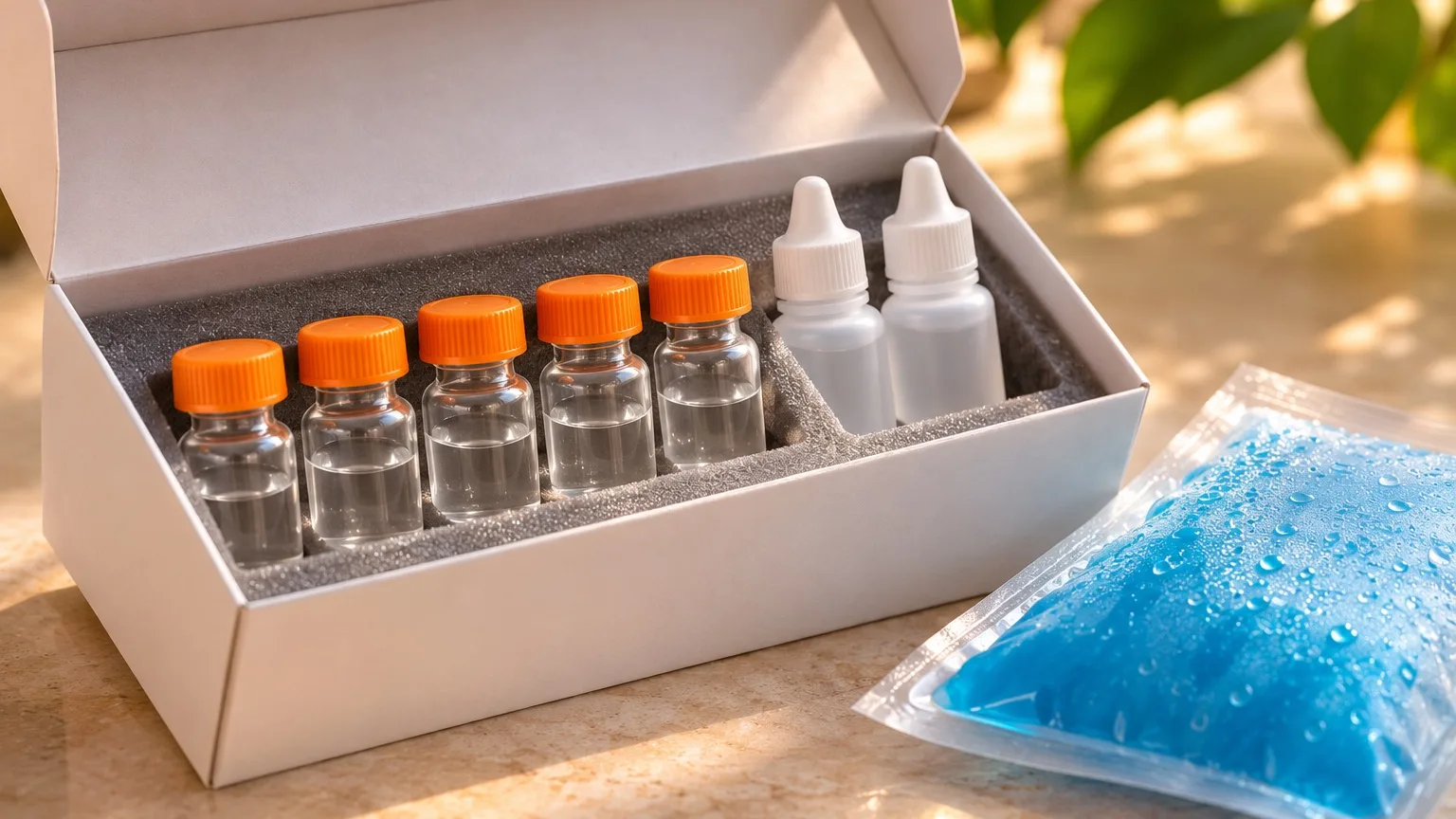
IVD test kits versus research use only (RUO) products: the line is the intended purpose
Does a product labelled For research use only need registration? The Medical Device Control Division issued a guidance document on in vitro test kits for research use only (RUO), dated 7 May 2021, with a summary infographic. It is guidance, not a ministerial notification.
What the guidance says
- RUO kits that meet the guidance definition are not medical devices under Section 4, because they are not intended to give information from human specimens for clinical or diagnostic purposes.
- The label or accompanying document must clearly carry one of the statements or symbols the guidance lists, such as "For research use only. Not for use in diagnostic procedures." or its Thai equivalent, and must not carry "For In vitro diagnostic use" or the IVD symbol.
- Making, importing or selling RUO kits that follow the guidance does not need Thai FDA approval.
When an RUO product becomes a medical device
The guidance looks at the objective intent of the manufacturer or product owner, not the label alone, including advertising, sales promotion and design documents. Examples it gives:
- sales material claiming performance or suggesting clinical interpretation;
- help with clinical validation for a clinical laboratory.
The guidance concludes that such cases may amount to manufacturing, importing or selling a medical device without product registration, which is an offence under the Medical Device Act. In practice, sales teams serving hospitals should have written instructions not to recommend RUO products for patient use, and should keep evidence that the buyer is a research body.
HIV-related research kits have a separate rule in the B.E. 2552 (2009) notification: sale only to research bodies or bodies designated by the Thai FDA, with a sales register.
IVD classification in Thailand: Classes 1 to 4 and the seven classification rules
Clause 2 of the MOPH risk classification notification B.E. 2562 (2019) classifies IVDs by risk to the individual and to public health, from low to high. looking at intended use and indications, the skill of the user and the impact of the result, not at invasiveness as for non-IVDs.
The four classes in Clause 2
- Class 1 low individual risk and low public health risk
- Class 2 moderate individual risk or low public health risk
- Class 3 high individual risk or moderate public health risk
- Class 4 high individual risk and high public health risk
Seven rules in Annex 1
- Rule 1 → Class 4 detecting transmissible agents to assess blood, cells, tissues or organs for transfusion or transplantation, and detecting agents that cause life-threatening disease or spread easily. Examples: HIV, HCV, HBV and HTLV.
- Rule 2 → Class 3 or 4 blood grouping or tissue typing. The listed ABO, Rh, Kell, Kidd and Duffy antigens are Class 4; HLA is Class 3.
- Rule 3 → Class 3 for example sexually transmitted agents, human genetic testing, selecting cancer patients, and drug-level monitoring where an error could cause immediate danger.
- Rule 4 → Class 3 or 2 self-testing IVDs are Class 3, but those whose result does not indicate a critical condition, or is preliminary and needs laboratory follow-up, are Class 2. The annex gives blood glucose monitoring as a Class 3 self-test, and pregnancy, fertility and urine test strips as Class 2 self-tests.
- Rule 5 → Class 1 specific reagents for an IVD procedure, instruments intended specifically for IVD procedures, and specimen receptacles, such as culture media and wash solutions.
- Rule 6 → Class 2 IVDs not covered by Rules 1 to 5, such as blood gases, H. pylori and physiological markers like hormones, vitamins and enzymes.
- Rule 7 → Class 2 controls without a quantitative or qualitative assigned value.
If an IVD fits more than one class, the highest applies, and under Clause 4 the Secretary-General decides classification disputes. In practice, write the intended use in the IFU precisely before classifying, because two kits that look the same can land in different classes depending on the user and indication.
Source: MOPH Notification on classifying medical devices by risk B.E. 2562 (2019), Clauses 2 and 5 and Annex 1 · group notifications for listing, detailed notification (No. 2) and licence B.E. 2563 (2020)
Import license for IVDs in Thailand: listing, detailed notification or licence by class
Clause 5 of the 2019 notification links each class to a control measure, and three group notifications list the groups. Every route starts with establishment registration; see importing medical devices into Thailand.
Class 1: listing
Clause 3 of the MOPH listing notification B.E. 2563 (2020) requires listing for these Class 1 IVDs: (1) reagents or other articles with specific characteristics intended for an IVD procedure, (2) instruments intended specifically for IVD procedures, and (3) specimen receptacles.
Classes 2 and 3: detailed notification
Clause 1 of the detailed notification group notification (No. 2) B.E. 2563 (2020) lists 15 IVD groups in Classes 2 and 3, such as genetic testing, drug-level monitoring, devices intended for self-testing (Clause 1 (12)), controls without assigned values, and any other IVD that no rule places in Class 1 or 4. Clause 3 excludes Class 1 and Class 4 groups.
Class 4: licence
Clause 2 (7) and (8) of the licence group notification B.E. 2563 (2020) require manufacturers and importers to obtain a licence for both Rule 1 groups.
Product-specific notifications override the general rule
- HIV self-screening kits Under Rule 4 a self-test is normally Class 3, but Clause 2 of the specific B.E. 2562 (2019) notification makes these kits medical devices that manufacturers and importers must have licensed.
- HIV kits under the B.E. 2552 notification Clauses 4 (4) and 5 of the detailed notification (No. 2) move only the parts within its Clause 1 groups, such as Clause 1 (10) HIV viral load, to detailed notification. In practice, kits screening donated blood still fall under Rule 1, Class 4.
- Methamphetamine urine test kits have their own B.E. 2556 (2013) notification and No. 2 of B.E. 2559 (2016).
Both the licence and detailed notification group notifications state that a product-specific notification prevails where one exists. In practice, before settling on a route, search the product name in the regulation archive and read how to check whether a notification is still in force.
CSDT dossiers for IVDs and grouping: IVD Test Kit, IVD Cluster, Family and System
Class 2 to 4 IVDs are filed in the CSDT (Common Submission Dossier Template) format. The B.E. 2563 (2020) ministerial regulations on licences and detailed notification require evidence such as product information, labels and IFU, essential principles, design verification, risk analysis, quality system, and an authorisation letter from the product owner for imports.
Manuals and forms you will use
- IVD-G-02, IVD dossier manual (July 2022) analytical performance such as sensitivity, limit of detection, specificity and precision, specimen stability and clinical evidence; studies should match the intended specimen type.
- IVD-G-03, worked example (2023) separates IFU attachments for Home use and Professional use.
- Full-CSDT checklist for IVD Class 2 to 4 (IVD_MDCD Rev.1, 11.7.2566) states that the device scope must be Clinical Laboratory and that the establishment licence must cover that scope, that documents from the product owner are in English, and that some products need Department of Medical Sciences results under a specific notification, such as HIV kits.
- IVD-F-07 table template links each evaluation requirement to the page of the test report; the applicant fills it from the manufacturer's actual reports.
Grouping several products in one application
The Thai FDA notification on medical device grouping criteria sets six grouping types: SINGLE, SYSTEM, FAMILY, SET, IVD TEST KIT and IVD CLUSTER. Applicants choose single or grouped filing voluntarily, for licences, detailed notifications and listings. The last two types are specific to IVDs.
- IVD TEST KIT reagents and articles used together, excluding any analyser used with them.
- IVD CLUSTER the IVD grouping manual (IVD-G-07) sets general conditions: every item is Class 1 or Class 2, with the same test method and category, plus conditions on the product owner and analyser. IHC reagents and FISH probes have their own frameworks.
- FAMILY and SYSTEM need a single product owner and must meet conditions on risk, intended purpose and working together. The manual states that sharing a brand name alone is not enough for grouping.
For foreign certificates used in the dossier, such as a CFS or quality system certificate, see CFS vs EC certificate, and check your list with the import documents checker.
Source: Thai FDA Notification on medical device grouping criteria, pp. 3–10 · IVD grouping manual (IVD-G-07)
Self-test kits: HIV self-screening kits, and the COVID-19 antigen self-test (ATK) rules repealed in 2024
Self-test kits carry several specific notifications, because lay users rely on the label and instructions for a correct result.
HIV self-screening test kits
- Clause 2 of the MOPH notification B.E. 2562 (2019), published in the Royal Gazette on 9 April 2019, makes them medical devices that manufacturers and importers must have licensed.
- Clause 3 sets separate standards for blood and oral-fluid kits, and Clause 4 requires a certified quality system, such as GMP or ISO 13485.
- Clause 6 requires a Thai label with red text that a reactive result must be confirmed by a service able to confirm diagnosis, plus window period information.
- The No. 2 notification B.E. 2562 (2019) excludes self-tests from the B.E. 2552 HIV notification, and a Thai FDA notification dated 17 September 2019 requires a usability study report with the application.
COVID-19 antigen self-test kits (ATK): specific rules repealed
The B.E. 2564 (2021) notification on SARS-CoV-2 antigen self-test kits, commonly called ATK, was repealed by the MOPH Notification repealing notifications on SARS-CoV-2 test kits and reagents B.E. 2567 (2024), published on 6 September 2024. Its Clause 2 repeals six notifications: technology assessment B.E. 2563 (2020), exemptions under Section 6 (18) B.E. 2563 (2020), two on assessors and assessment costs, and the antigen self-test notification B.E. 2564 (2021) with its No. 2.
The repeal has transitional provisions for holders of earlier technology-assessment certificates and pending applications. The kits themselves remain medical devices. The Thai FDA table of COVID-related products (data as of March 2026) lists rapid tests and antigen self-test kits as IVD Rule 1, Class 4, which matches the licence group, but its remarks column still cites the 2020 technology-assessment notification that has been repealed. In practice, importers of these kits should confirm the current filing route with the Medical Device Control Division before ordering.
Who you may sell test kits to: HIV test kits restricted to healthcare facilities, and sales records
Before planning channels, check whether the product is on a list restricting buyers. Distributor sales licences are covered in medical device distributor in Thailand.
The 2020 list of devices sold only to healthcare facilities
The MOPH Notification on medical devices that may be sold only to healthcare facilities or medical and public health professionals B.E. 2563 (2020), issued under Section 6 (10), has two IVD items in its annex:
- Item 3 HIV-related test kits, except HIV self-screening kits, following the B.E. 2552 HIV notification and its No. 2 of B.E. 2562.
- Item 6 SARS-CoV-2 antibody or antigen test kits and reagents, sold only to the types of facility listed. This item is not among those repealed in 2024; in practice, check its current status before planning channels.
HIV test kits under the 2009 notification
- IVD kits may be sold only to healthcare facilities, laboratories or bodies designated by the Thai FDA, except sales between licensees as specified.
- A separate Thai FDA notification lists approved places, such as medical and medical technology premises, public agencies and the Thai Red Cross Society.
- Licensed manufacturers, importers and sellers must keep a sales register at the premises for at least five years from the sale.
Kits not on these lists still fall under Section 46/1, which bars selling medical devices without a licence, detailed notification receipt or listing receipt. Online shops and distributors should ask the importer for the document numbers before stocking a product.
Labels and IFU for IVDs, clinical research use, and the WHO CRP route
Labels and IFU for IVDs
The general rules are in the MOPH Notification on labels and accompanying documents of medical devices B.E. 2568 (2025). Clause 6 (1) requires devices used by lay persons to have a clearly legible Thai label and accompanying document, and Clause 6 (2) allows Thai or English for devices for medical and public health professionals; other languages may be added if they do not conflict. The full list is in Thai medical device labeling requirements.
The IVD Full-CSDT checklist adds that Home use products must attach a Thai label and a Thai IFU translated in full from the manufacturer's IFU, and supplementary labels must not cover key original text. In practice, if a kit goes to both hospitals and pharmacies, plan labels by user at filing stage, and check drafts with the label checker.
Using IVDs in clinical research
The MOPH Notification on the use of medical devices in clinical research B.E. 2566 (2023), published on 15 January 2024, applies in stages by class: Class 4 after one year, Class 3 after two, Class 2 after three and Class 1 after four years from publication. The protocol needs approval from the Thai FDA and an accepted ethics committee, and IVD studies follow ISO 20916:2019 or a later or equivalent standard. The Division's checklist for IVD clinical research applications asks for a valid EC or IRB approval accepted by the Thai FDA.
The Thailand FDA–WHO CRP route
The Thailand FDA–WHO CRP document for IVDs (Rev.18/7/2023) describes an expedited route using the WHO evaluation report. The kit must be WHO prequalified and in Class 2 to 4; HIV, methamphetamine and COVID-19 kits are excluded. The applicant files a CSDT dossier identical to the technical information WHO approved. The document does not say that WHO prequalification alone authorises sale in Thailand.
Checklist for IVD importers and distributors before the first order
Here is the work in order for importers and distributors of test kits. Each step is practical advice based on the notifications cited above.
- IVD or RUO Read the intended use in the manufacturer's IFU.
- Classify Apply the seven rules and note whether users are lay people or professionals.
- Specific notifications HIV, methamphetamine, and COVID-related status after 2024.
- Establishment scope It must cover Clinical Laboratory.
- Documents from the product owner Authorisation letter, quality system certificate, performance reports, stability data and risk analysis.
- Grouping Choose under the IVD-G-07 conditions.
- Labels Home use in Thai; Professional use in Thai or English.
- Sales channels Check buyer restrictions, sales registers and distributors' sales licences.
If you are unsure which route applies, start with the import checker or ask the Thai FDA rules assistant. For small supplies imported alongside test kits, see importing small medical supplies into Thailand. Our consultants help classify products and prepare dossiers but do not test kit performance; test reports must come from the manufacturer or from testing units named in the relevant notification.
- ✓IVD or RUORead the intended use and the label wording against the 2021 RUO guidance
- ✓Classify 1 to 4Apply the seven rules; if several fit, take the highest
- ✓Specific notificationsHIV, methamphetamine, and COVID-related status after 2024
- ✓Establishment scopeYour licence must cover Clinical Laboratory
- ✓CSDT dossier and groupingAnalytical and clinical performance, stability, risk · choose the grouping type
- ✓Labels and sales channelsHome use in Thai · check lists restricting sales to facilities
Source: Practical advice based on the notifications and manuals cited in this article
Frequently asked questions
What does IVD stand for, and how does it differ from other medical devices?
IVD stands for in vitro diagnostic medical device. It examines specimens from the body, such as blood or urine. The 2019 notification classifies IVDs by risk to the individual and to public health, not by invasiveness as for non-IVDs.
Which class are pregnancy tests and blood glucose self-tests?
Rule 4 in the annex to the 2019 notification gives pregnancy, fertility and urine self-test strips as Class 2 examples and blood glucose self-monitoring as a Class 3 example. Both classes fall in the detailed notification group, unless a product-specific notification says otherwise.
Does a reagent labelled For research use only need registration?
Medical Device Control Division guidance dated 7 May 2021 states that RUO kits meeting its definition and carrying the required wording are not medical devices and need no Thai FDA approval. If advertising, sales promotion or technical support presents the kit for clinical diagnosis, it may count as importing an unregistered medical device.
Are the ATK notifications still in force?
The B.E. 2564 (2021) COVID-19 antigen self-test notification and its No. 2 were repealed by an MOPH notification of B.E. 2567, published on 6 September 2024. The kits remain medical devices, and the Thai FDA COVID product table (data as of March 2026) lists them as IVD Class 4; confirm the current route with the Medical Device Control Division before importing.
Can an analyser and its reagents go in one application?
The Thai FDA grouping criteria define an IVD TEST KIT as reagents and articles used together, excluding any analyser used with them. To combine an analyser and reagents, they must meet the SYSTEM conditions in the IVD grouping manual (IVD-G-07).
Which documents does this article cite, and is fdathailand.com a Thai FDA website?
This article cites MOPH notifications, Thai FDA notifications, manuals and guidance documents of the Medical Device Control Division held in the fdathailand.com archive, as listed in the sources. Notifications may be amended or repealed later; before relying on them, check the current version in the Royal Gazette or on the Medical Device Control Division website. fdathailand.com is an independent website, not a website of the Thai Food and Drug Administration.
Sources
- Medical Device Act B.E. 2551 (2008), consolidated text as amended by No. 2 B.E. 2562 (2019) · Open source · Search our archive
- MOPH Notification on classifying medical devices by risk B.E. 2562 (2019) · Open source · Search our archive
- Thai FDA manual on risk classification criteria for medical devices · Open source · Search our archive
- MOPH Notification on medical device groups requiring listing B.E. 2563 (2020) · Open source · Search our archive
- MOPH Notification on medical device groups requiring detailed notification (No. 2) B.E. 2563 (2020) · Open source · Search our archive
- MOPH Notification on medical device groups requiring a licence B.E. 2563 (2020) · Open source · Search our archive
- Ministerial Regulation on licences to manufacture or import medical devices B.E. 2563 (2020) · Open source · Search our archive
- Ministerial Regulation on detailed notification to manufacture or import medical devices B.E. 2563 (2020) · Open source · Search our archive
- Guidance on in vitro test kits for research use only (RUO) · Open source · Search our archive
- Infographic on in vitro test kits and research use only products · Open source · Search our archive
- Guidance manual for IVD medical device registration (IVD-G-01) · Open source · Search our archive
- Manual on preparing IVD dossiers for licence or detailed notification (IVD-G-02) · Open source · Search our archive
- Worked example of an IVD licence or detailed notification dossier (IVD-G-03) · Open source · Search our archive
- Full-CSDT checklist for IVD Class 2–4 (IVD_MDCD Rev.1) · Open source · Search our archive
- Template linking evaluation data to test reports for test kits (IVD-F-07) · Open source · Search our archive
- Thai FDA Notification on medical device grouping criteria · Open source · Search our archive
- IVD grouping manual for applicants (IVD-G-07) · Open source · Search our archive
- IVD grouping manual for applicants (IVD-G-07, updated) · Open source · Search our archive
- MOPH Notification on HIV self-screening test kits B.E. 2562 (2019) · Open source · Search our archive
- MOPH Notification on HIV-related test kits (No. 2) B.E. 2562 (2019) · Open source · Search our archive
- Thai FDA Notification on applying for HIV self-screening test kits · Open source · Search our archive
- MOPH Notification on HIV-related test kits B.E. 2552 (2009) · Open source · Search our archive
- Thai FDA Notification on facilities, laboratories or bodies that may buy HIV IVD test kits · Open source · Search our archive
- Thai FDA Notification on sales registers for HIV test kits · Open source · Search our archive
- MOPH Notification on methamphetamine urine test kits B.E. 2556 (2013) · Open source · Search our archive
- MOPH Notification on methamphetamine urine test kits (No. 2) B.E. 2559 (2016) · Open source · Search our archive
- MOPH Notification on COVID-19 antigen self-test kits B.E. 2564 (2021) (repealed in 2024) · Open source · Search our archive
- MOPH Notification repealing notifications on SARS-CoV-2 test kits and reagents B.E. 2567 (2024) · Open source · Search our archive
- Thai FDA table of COVID-related products (data as of 18 March 2026) · Open source · Search our archive
- MOPH Notification on medical devices that may be sold only to healthcare facilities or practitioners B.E. 2563 (2020) · Open source · Search our archive
- MOPH Notification on labels and accompanying documents of medical devices B.E. 2568 (2025) · Open source · Search our archive
- MOPH Notification on the use of medical devices in clinical research B.E. 2566 (2023) · Open source · Search our archive
- Checklist for applications to make or import IVDs for clinical research · Open source · Search our archive
- Thailand FDA – WHO Collaborative Registration Procedure (CRP) for in vitro diagnostics · Open source · Search our archive
This article is for general information. It is not a Thai FDA ruling or legal advice, and rules change — check the latest notification or ask an expert before filing or producing. Spotted an error? Tell us and we will correct it
Related articles
 ImportersThai Medical Device Act B.E. 2551 Explained: Definition, Structure, Licences, Labels, Advertising and the 2019 AmendmentA plain guide to the Thai Medical Device Act B.E. 2551 and its 2019 amendment: definition, 12 chapters, registration, risk-based filing, labels, what next.
 ImportersThai medical device labeling requirements: labels and IFU under the 2025 notificationThai medical device labels under the 2025 rules: 8 label items, IFU and QR codes, Thai language, warnings, 120 days after import and a 2-year transition.
 ImportersMedical device distributor in Thailand: when you need a sales licence and how to get oneWhen a medical device distributor in Thailand needs a sales licence, who may buy listed devices, controllers, premises, signs, GDP and post-licence duties.