 FDA Thailand
 Brand owners
Thai Folk Doctor Medicine Notebooks: Nai Nak Nakkhongkham's Texts, National vs Personal Formulas

What are the medicine texts of Nai Nak Nakkhongkham? Thai folk doctor medicine notebooks that became national texts
The medicine texts of Nai Nak Nakkhongkham
That is all that is known for certain. We searched Thai and English websites and the manuscript databases that are open to search, and found nothing about who Nai Nak was, where he lived, when the texts were used, or who keeps the four volumes. This article therefore tells no life story. It covers three things the evidence can answer: what it means when one person's medicine notebooks are declared national, how a national formula differs from a personal Thai traditional medicine formula, and what you need to do to use a formula from these texts in a product.
For an overview of rights in all three types of formula, see Thai traditional medicine formula rights.
Notice No. 23: a collection of folk doctor and personal medicine texts
Notice No. 23 stands out because almost none of its texts are royal texts or stone inscriptions. The attached list has 4 groups with 2,316 formulas in total.
- The medicine texts of Nai Nak Nakkhongkham, volumes 1–4: 4 items, 386 formulas
- The medicine texts of Nang Riam Suksongyat: 6 items, 1,152 formulas
- Ya kret medicine texts, property of the National Library: 9 items, 293 formulas
- Folk medicine texts of the Thai traditional medicine/folk doctors' association, Lamphun province: 8 items, 485 formulas
The volume titles show the subject
Nang Riam's texts are split into 6 volumes by subject. The first volume in the list is titled "Tamra ya prathom chinda, kan patisonthi lae ya raksa khan" (texts on infancy, conception and medicines for pregnancy), with 189 formulas. Other volumes are named after groups such as medicines for fever in children, cough medicines, and triphala and ya hom yai. The Lamphun group includes "Khamphi phrom lohit", on women's menstrual blood (118 formulas), and "the folk medicine texts of Mo Insom Sittitan", volume 1 (216 formulas) and volume 2 (151 formulas). These titles say what a text is about. They do not say that any medicine works.
Folk knowledge is more than formulas
The Lamphun group has one item on prayers to sacred beings, spirits of the place, spirit worship and horoscope binding. The notice counts it as "5 items", not as formulas. This item reflects how folk doctors' texts often record ritual alongside medicine formulas.
What the notice says differs by group
The ya kret group is stated to be property of the National Library, with a register number for each volume (read about this group in the ya kret manuscripts). The Lamphun group names the province and the association. The first two groups give only a person's name, the volume titles and the number of formulas. They do not say where the texts are or who keeps them.
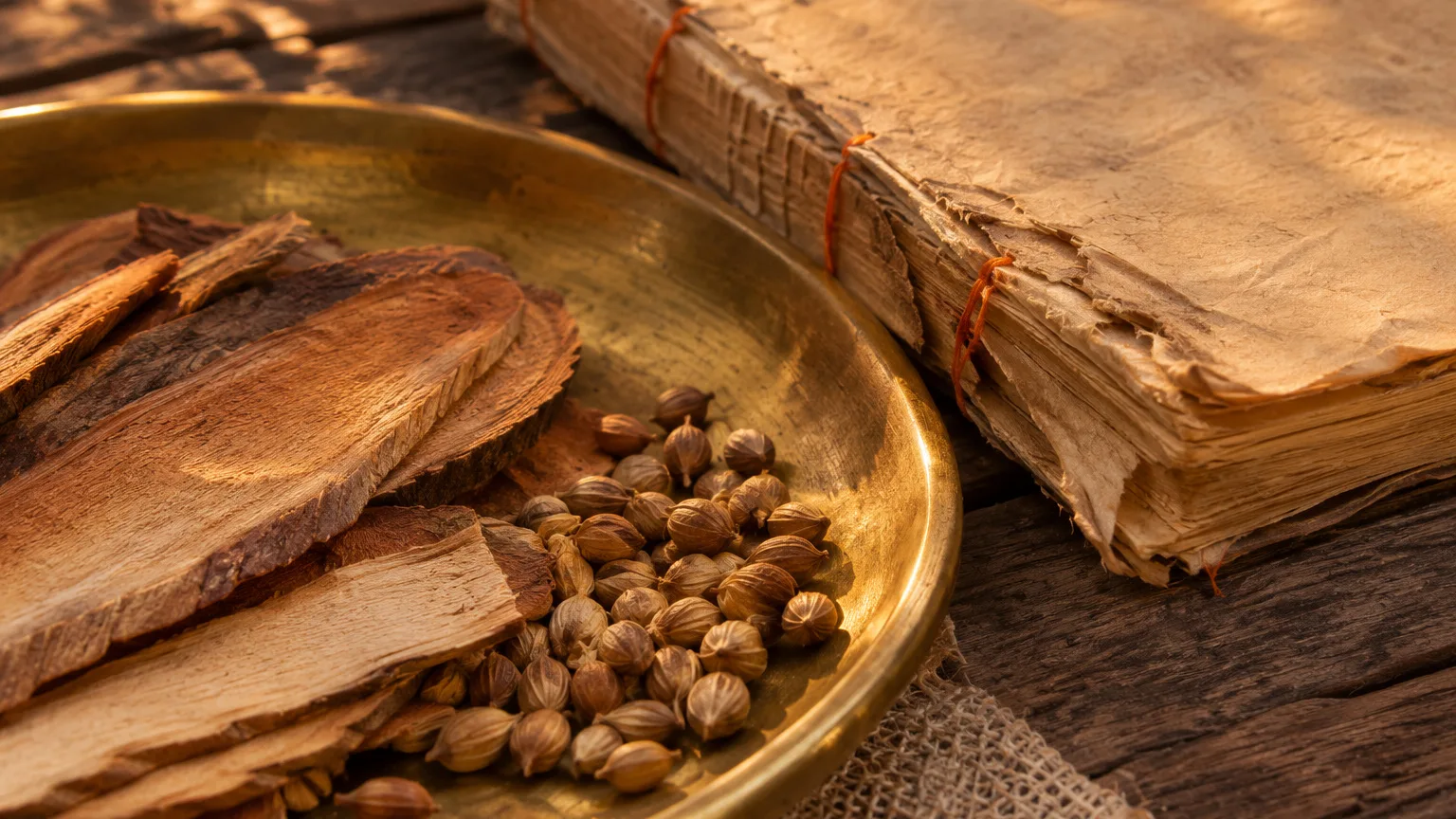
Source: List attached to the Ministry of Public Health Notice (No. 23) B.E. 2562 · figures as given in the group headings of the list
What is in Nai Nak's texts: what the notice says, and what is still unknown
The attached list gives Nai Nak's texts in 5 lines. The first is the group heading, "the medicine texts of Nai Nak Nakkhongkham, volumes 1-4, 4 items, 386 formulas", followed by one line for each of volumes 1 to 4. The surname is spelled
What the notice tells us
- The title of the text, and the name of the person it is tied to
- The number of volumes, and the number of formulas in each
- The notice number, which you need when you ask for information or apply for permission
What is still unknown
- Formula names. The notice does not list formulas one by one, so we do not know what the 386 formulas are.
- The form of the original. The notice does not say whether it is a Thai folding book, a palm-leaf manuscript or a modern notebook.
- Date. The notice gives no year of writing.
- The person. The notice uses the title "Nai" (Mr.) and does not give an occupation, a place of residence or his relationship to the texts. By contrast, the Lamphun group clearly calls Insom "Mo" (doctor). From the notice alone, we cannot tell whether Nai Nak wrote, inherited or kept the texts.
- The custodian. The notice does not say.
Search results with the same surname are present-day people with no evidence of any link to the texts, so we make no connection. This article also quotes no formula name or ingredient from these texts, because there is no source that can be checked yet.
How one person's medicine notebooks became national Thai traditional medicine texts
Notice No. 23 was signed on 28 June 2019 and published in the Royal Gazette, volume 136, special part 178 Ng, page 9, on 12 July 2019. It was issued under section 4 paragraph one and section 17 of the Protection and Promotion of Thai Traditional Medicine Wisdom Act B.E. 2542 (1999). The Minister of Public Health issued it on the advice of the Committee for the Protection and Promotion of Thai Traditional Medicine Wisdom.
Clauses 3 and 4 of the notice
Clause 3 makes the Thai traditional medicine texts in the attached list national Thai traditional medicine texts. Clause 4 makes the Thai traditional medicine formulas in those texts national Thai traditional medicine formulas. In practice, all 386 formulas in Nai Nak's four volumes are national formulas, even though the notice does not name a single one.
The criteria a national text must meet
The Ministerial Regulation on declaring national Thai traditional medicine formulas or texts B.E. 2558 (2015) sets two criteria. First, the formula or text must have been collected, developed or improved by a government agency and have documents that show its source, or it must show the national identity. Second, it must not already be protected under this Act. The notice does not say which part of the first criterion Nai Nak's texts met.
What "national" means
"National" does not mean anyone may take a formula and make a product. It means the state looks after the rights, and there is a procedure to apply for permission to use them. For folk doctor and personal medicine texts, the declaration works in two directions. On one side, the owner's name is recorded in the Royal Gazette as part of the title. On the other, using the formulas commercially goes through the same legal steps as the royal texts and stone inscriptions. The three types of formula under the law are explained in Thai traditional medicine formula rights.
Where the originals are, and where to look for more
Where the originals are is not known. The notice does not name a custodian, unlike the ya kret texts in the same notice, which are stated to be property of the National Library. We have also not found any published scan or digital copy.
Where to look for more
- The dataset of national Thai traditional medicine texts and formulas from the Department of Thai Traditional and Alternative Medicine is a downloadable spreadsheet. Its text titles and formula counts match the notice, so it can confirm the title and spelling, but it does not say where the original is.
- Request preliminary information from the registrar. This is open to people who will apply for permission to use a formula. You receive the herbal ingredients in proportion and the properties of the formula, or a short summary of the text (details in the next section).
- Ask the Department of Thai Traditional and Alternative Medicine. The unit that handles wisdom protection is likely to hold the documents the committee considered, which may show where the texts came from.
Agency and dataset names in this article are given as text so you can search for them yourself.
National formulas versus personal Thai traditional medicine formulas: the difference
A common question is: if a text belongs to a person, why is it not a personal formula? The answer is that each kind of right comes about in a different way. The Protection and Promotion of Thai Traditional Medicine Wisdom Act B.E. 2542 divides Thai traditional medicine wisdom into 3 types: national formulas or texts, general formulas or texts, and personal formulas or texts (sections 14 and 16).
National formulas: declared by the state
They come from a Ministry of Public Health notice. Nobody has to apply to own them. The evidence is the list attached to the notice in the Royal Gazette. Anyone who wants to use one commercially must apply for permission under section 19.
Personal Thai traditional medicine formulas: registered by the owner
The applicant must be a Thai national and be the inventor, the person who improved or developed the formula, or the person who inherited it (sections 20 and 21). The application is made on form Por.Tor. 7 to the registrar. Once registered, the registrar issues a certificate of rights registration on form Por.Tor. 6. The right holder has the right to produce the medicine, study and research it, sell it, and improve or develop the registered formula (section 34). The right cannot be transferred to anyone else except by inheritance (section 35). Others may use it when the right holder grants a licence (section 36).
Differences that matter in practice
- A person's name in a text's title does not make its formulas personal formulas. Nai Nak's texts are in a notice list, so their formulas are national formulas.
- Under the criteria of the Ministerial Regulation B.E. 2558, a text declared national must be one that is not already protected under this Act.
- If someone offers you a formula as a family recipe, ask whether it has been registered, ask to see the Por.Tor. 6 certificate, and check the title against the notice lists as well, because the answer decides whose permission you need.
- In practice, if a formula comes from a volume that is in a notice list, assume you need permission under section 19, even if the person giving you the formula holds the actual notebook or is an heir.
For rights registration, the term of protection and licensing to others, read more in Thai traditional medicine formula rights.
Source: Protection and Promotion of Thai Traditional Medicine Wisdom Act B.E. 2542, sections 14, 16, 17, 19, 20, 21, 36 · Ministerial Regulation B.E. 2555 (form Por.Tor. 6) · Notice No. 23 B.E. 2562
Using an old Thai medicine formula from Nai Nak's texts in a product: preliminary information and permission under section 19
Nai Nak's texts hold 386 old Thai medicine formulas that are already national formulas, and the notice does not name them. Searching by formula name therefore helps little. What you can cite is the text title, the volume number and the notice number.
When you need permission
Section 19 of the Protection and Promotion of Thai Traditional Medicine Wisdom Act B.E. 2542 provides that anyone who will use a national Thai traditional medicine formula to register a medicine formula and apply for a licence to produce medicine, or to study, research and improve it into a new formula for commercial purposes, must apply for permission to use it and pay remuneration for its use to the licensor, according to the criteria in a ministerial regulation.
You can ask for preliminary information first
The notice of the Committee for the Protection and Promotion of Thai Traditional Medicine Wisdom on disclosure of preliminary information about national Thai traditional medicine formulas or texts B.E. 2560 (2017) allows an applicant for permission who wants preliminary information to file the request form attached to the notice. The registrar discloses the herbal ingredients in proportion and the properties of the formula, or a short summary of the text. The form must name the formula or text and the number of the notice that declared it national. For these texts, write in full "the medicine texts of Nai Nak Nakkhongkham
Suggested order of work
- Write down clearly where the formula in your hands came from: from whom, and from which notebook.
- Open the notice lists in the tool check a formula before making a product and search for the text title or the name of the person involved.
- Ask the person who gave you the formula whether it is registered as a personal formula.
- If you suspect it is a formula from Nai Nak's texts, request preliminary information, giving the text title, the volume and the notice number.
- If it is, apply for permission under section 19 before registering or producing for sale.
- Plan the Thai FDA route separately, because a licence from one side does not replace the other.
This article does not state remuneration amounts or timeframes, because they depend on the criteria and decisions of the Department of Thai Traditional and Alternative Medicine. Ask the Department directly.
How far a brand can tell the story of a folk doctor's Thai traditional medicine texts
The story of a medicine notebook tied to an ordinary person's name becoming a national text is memorable. But storytelling in the media for herbal products falls under the advertising rules of the Herbal Products Act B.E. 2562 (2019). And when there is no record of the owner's life, that gap has to stay a gap. It should not be filled with invented stories.
What the law says
- Section 70: "No person shall advertise a herbal product or the benefits of a herbal product unless a licence has first been obtained from the licensing authority" (our translation).
- Section 74 prohibits 5 kinds of herbal product advertising: (1) boasting that the properties or ingredients can remedy, relieve or prevent a disease or illness in a sacred way or according to personal belief, or claiming that the product can cure a disease completely; (2) showing false or exaggerated properties, or misleading ones; (3) giving the impression that an ingredient is present when it is not, or is present in a smaller amount than implied; (4) certification or praise of properties by any person, group of persons or institution; and (5) breaching criteria announced by the Minister.
Safer storytelling angles
- Medicine texts of individuals and folk doctors are protected under the same law as the royal texts.
- Facts from the notice, such as Notice No. 23, 4 volumes and 386 formulas, stating that they come from the attached list.
- Saying plainly that there is no record yet of the text owner's life.
- Working with national formulas through the proper steps, for example saying you have been granted permission to use one, once you actually have it.
What to avoid
- Inventing a biography, picture or quotes for Nai Nak, or implying the brand descends from him or inherited his knowledge without evidence.
- Claiming that a formula from an old text works on any disease or symptom, or using words such as sacred, secret formula or a family recipe no one knows.
- Giving the impression that the Department of Thai Traditional and Alternative Medicine, the ministry or a government agency endorses the product just because the text is in a notice.
- Saying you use a formula from a national text while you do not know which volume it came from and have no permission.
- Implying you use the whole formula when the product uses only part of it or changes the proportions.
Storytelling text used to advertise a product or its benefits should go through advertising approval under section 70 before publication.
✘Avoid
- Inventing a biography, picture or quotes for the text owner
- Implying the brand inherited the owner's knowledge without evidence
- Claiming an old formula works on a disease or symptom, or calling it sacred
- Giving the impression a government agency endorses the product
- Implying the full formula is used when only part is
✔Fine to tell
- Personal medicine texts are protected under the same law as the royal texts
- Facts from the notice, stating they come from the attached list
- Saying plainly there is no record yet of the owner's life
- Holding permission to use a national formula, once you actually have it
Text used to advertise a product or its benefits needs an advertising licence under section 70 first
Source: Herbal Products Act B.E. 2562, sections 70 and 74 · Protection and Promotion of Thai Traditional Medicine Wisdom Act B.E. 2542, section 19
Illustrations and copyright: when no image of the original is available
We have not found any published image of the original of Nai Nak's texts, nor any image with a clear licence. Brands that want illustrations should be careful about two things.
Do not use another book in its place without saying so
- If you use an openly licensed image of a Thai folding book or a general medical text, the caption should say plainly that it is an example image, not Nai Nak's texts, and credit the creator and licence as the licence requires.
- Images from some databases have their own terms. For example, the manuscript database of the Princess Maha Chakri Sirindhorn Anthropology Centre states a licence that prohibits commercial use and adaptation.
- For originals held by the National Library, such as the ya kret texts in the same notice, the library's manuscript service page states that photographing or copying for commercial or profit purposes requires permission from the Director-General of the Fine Arts Department.
Copyright: take care with copies and newer printed editions
The Copyright Act B.E. 2537 (1994) protects literary works, which include books, writings and printed matter (sections 4 and 6). Copyright lasts for the life of the author plus 50 years after the author's death (section 19 of the copyright law). Regulations, notices and orders of government agencies are not copyright works (section 7), so the text titles and formula counts in the notice list can be cited.
We do not know when Nai Nak's texts were written. If a copy, printed edition or transcription from a later period turns up one day, especially one made after 1947 (B.E. 2490), do not assume it is in the public domain. Check its copyright status and ask the rights holder for permission before copying text or images. This is a caution, not a legal ruling.
Historical references
The non-legal sources in this article are given as text so you can look them up.
- Ministry of Public Health. Notice on the declaration of national Thai traditional medicine texts and national Thai traditional medicine formulas (No. 23) B.E. 2562. Royal Gazette, vol. 136, special part 178 Ng, p. 9, 12 July 2019: the attached list is the source of the text titles, spelling and formula counts in this article.
- Department of Thai Traditional and Alternative Medicine. Dataset of national Thai traditional medicine texts and formulas (spreadsheet). Department open data centre. Accessed 18 November 2026.
- National Library of Thailand, Fine Arts Department. "Manuscript services." National Library website. Accessed 18 November 2026.
- Dokrak Phayaksri. "Abscess diseases in Thai medicine texts"
(โรคฝีในตำรายาไทย). Manuscripts in Thailand database, Princess Maha Chakri Sirindhorn Anthropology Centre (Public Organization), 2022. (Image use terms of the database)
Biography of Nai Nak Nakkhongkham: searched, no published source found yet. If you have verifiable information, such as family documents or details of the body that keeps the texts, contact us so we can update this article.
Frequently asked questions
What are the medicine texts of Nai Nak Nakkhongkham?
They are four volumes of medicine texts with 386 formulas, declared national Thai traditional medicine texts by the Ministry of Public Health in Notice No. 23 of 2019 (B.E. 2562): 48 formulas in volume 1, 165 in volume 2, 52 in volume 3 and 121 in volume 4.
Who was Nai Nak Nakkhongkham?
Not known. The notice gives only the text title and the number of formulas. It does not state an occupation, place of residence, period or custodian, and we have found no published biography. This article therefore tells no life story.
What other texts are in Notice No. 23?
The attached list has 4 groups with 2,316 formulas: the medicine texts of Nai Nak Nakkhongkham, the medicine texts of Nang Riam Suksongyat, ya kret texts that are property of the National Library, and the folk medicine texts of the Thai traditional medicine/folk doctors' association of Lamphun province, which include the folk medicine texts of Mo Insom Sittitan.
How does a personal text declared national differ from a personal Thai traditional medicine formula?
National formulas come from a Ministry of Public Health notice, and commercial users need permission under section 19. Personal formulas come about when the inventor, developer or heir registers the rights (sections 20 and 21) and receives a Por.Tor. 6 certificate. A person's name in a text title does not make it a personal formula. Read more in Thai traditional medicine formula rights.
The notice does not name the formulas. How can we tell if our formula is in these texts?
An applicant for permission can request preliminary information under the Committee's notice of 2017 (B.E. 2560). The registrar discloses the herbal ingredients in proportion and the properties of the formula, or a short summary of the text. The form must give the text title, the volume and the notice number.
Can we say our product uses a formula from national folk doctor medicine notebooks?
Be careful. If the formula comes from a text declared national, registering and producing it needs permission under section 19 first, and advertising a herbal product needs a licence under section 70. Section 74 prohibits claiming sacred powers, endorsement by a person or institution, or implying the full formula is used when it is not. Do not invent a biography for the text owner either.
Sources
- Protection and Promotion of Thai Traditional Medicine Wisdom Act B.E. 2542 (1999) · Open source · Search our archive
- Ministry of Public Health Notice on national Thai traditional medicine texts and formulas (No. 23) B.E. 2562 (2019) · Open source · Search our archive
- Committee notice on disclosure of preliminary information about national Thai traditional medicine formulas or texts B.E. 2560 (2017) · Open source · Search our archive
- Ministerial Regulation on declaring national Thai traditional medicine formulas or texts B.E. 2558 (2015) · Open source · Search our archive
- Ministerial Regulation on applications to register rights in Thai traditional medicine wisdom and the certificate form B.E. 2555 (2012) · Open source · Search our archive
- Department notice prescribing the application form to register rights in Thai traditional medicine wisdom (form Por.Tor. 7) B.E. 2555 (2012) · Open source · Search our archive
- Herbal Products Act B.E. 2562 (2019) · Open source · Search our archive
- Copyright Act B.E. 2537 (1994), consolidated to amendment No. 3 B.E. 2558 (2015) · Open source · Search our archive
This article is for general information. It is not a Thai FDA ruling or legal advice, and rules change — check the latest notification or ask an expert before filing or producing. Spotted an error? Tell us and we will correct it
Related articles
 Brand ownersThai Traditional Medicine Formula Rights: National, General and Personal Formulas Before the Thai FDA StepsThai traditional medicine formulas come in 3 types. National ones need permission to use, personal ones the right holder's consent, then Thai FDA steps.
 Brand ownersThai Folk Medicine Manuscripts (Ya Kret) at the National Library: Origins, Viewing and Using National FormulasYa kret texts hold formulas outside the royal canon: about 215 National Library entries, 14,000 national formulas. Origins, viewing, section 19 permission.
 Brand ownersAyurawet Sueksa Thai Medicine Text: A 1953 Textbook Declared National, With 2,773 FormulasKhun Nitthet Sukkit's Ayurawet Sueksa, first printed in 1953, became a national Thai medicine text in 2018. Two spellings, where to read it, lawful use.