 FDA Thailand
 Brand owners
Rama V Royal Medical Texts: 33 Thai Medical Scriptures Revised in 1870 and Declared a National Text
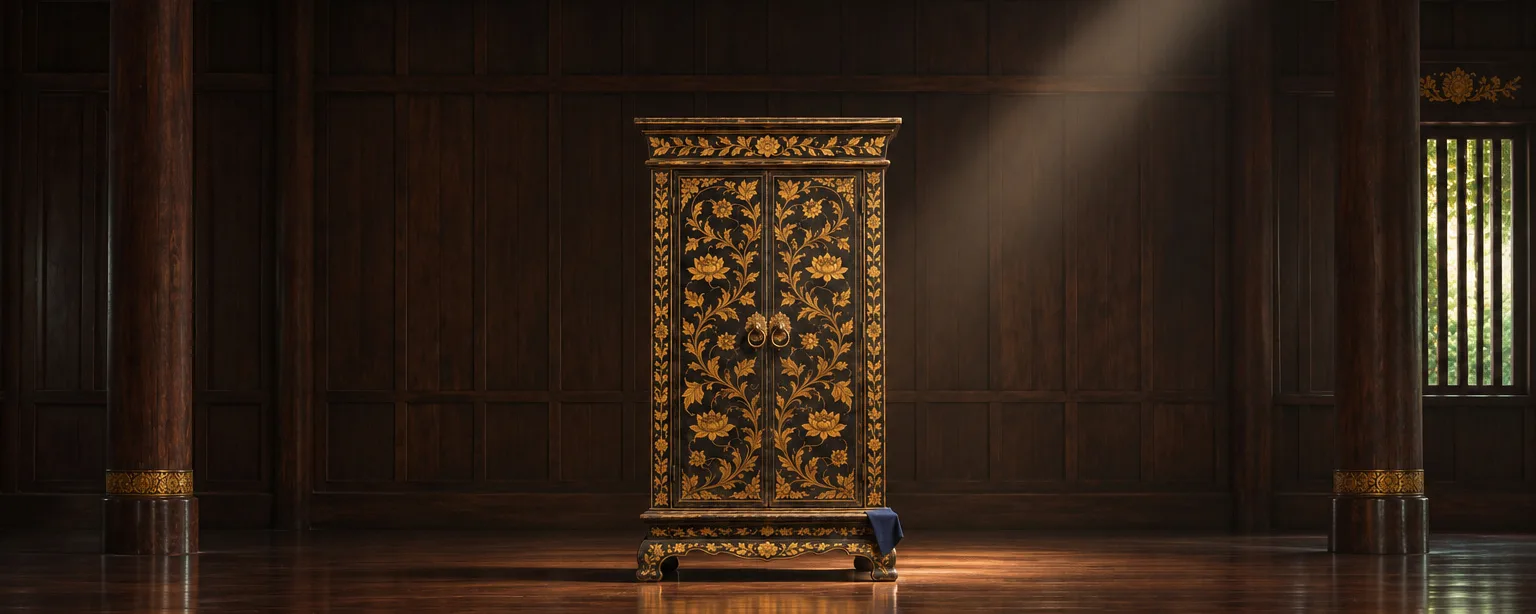
What are the Rama V royal medical texts?
The Rama V royal medical texts, known in Thai as Tamra Wetchasat Chabap Luang Ratchakan thi 5, are a set of medical scriptures that King Chulalongkorn (Rama V) had collected and revised in 1870 (B.E. 2413) and then rewritten as the "royal edition of the medical scriptures" in black samut thai, the folding books of the period. The Ministry of Public Health declared them a national Thai traditional medicine text in Notice No. 2 dated 25 December 2015 (B.E. 2558). The notice schedule lists 33 black samut thai items, and the summary table of the Department of Thai Traditional and Alternative Medicine counts 1,999 formulas.
This article tells the story of the text in time order: the royal remark that started the work, the scriptures inside, the later printing and photography, and the day it was declared national. It then covers what brand owners need to know: where to start if you want to use a formula from it, and how far you can take its story in your brand.
Two formula counts are often quoted. The first, 1,999 formulas, comes from the department's summary table, counted from the 33 samut thai volumes in the notice. The second, 1,779 formulas, comes from a 2012 news report that the printed edition had 713 formulas in volume 1 and 1,066 in volume 2. The numbers differ because they count different sources. Notice No. 2 itself does not state a formula count for this text, so this article uses 1,999 from the department's table and always names the source.
Source: MOPH Notice (No. 2) B.E. 2558 · Department of Thai Traditional and Alternative Medicine summary table · Wattana Chayathawat (2021) · Chulalongkorn University library records
1870: when Thai medical scriptures were "being lost and badly corrupted"
Before printing spread, the knowledge of Thai healers lived in samut thai and palm-leaf manuscripts copied by hand over many generations. Every copy was a chance for an ingredient or a dose to be dropped or miswritten, and old books wore out and disappeared.
According to Wattana Chayathawat (2021), in the year 1232 of the Chula Sakarat era, which is 1870, King Chulalongkorn remarked that Thai medical scriptures were "being lost and badly corrupted". He therefore commanded Krommamuen Phubodi Ratchaharuethai, head of the Department of Physicians, to lead the work of collecting and revising (chamra) the medical scriptures in use at the time. Chamra here means checking and correcting a text.
Once revised, the work passed to Krommamuen Aksonsatsanasophon, head of the Department of Royal Scribes, who had it rewritten as the "royal edition of the medical scriptures" in black samut thai. Two departments therefore handled it: the physicians looked after the medical content, and the royal scribes, the court office for writing and documents, produced the books. The result was the set of medical scriptures that the court treated as its reference edition.
The Royal Institute Dictionary defines samut thai as a book made of long, narrow sheets of khoi-bark paper folded back and forth like a pleated cloth, in white or black paper, also called samut khoi. This royal set is the black-paper kind.
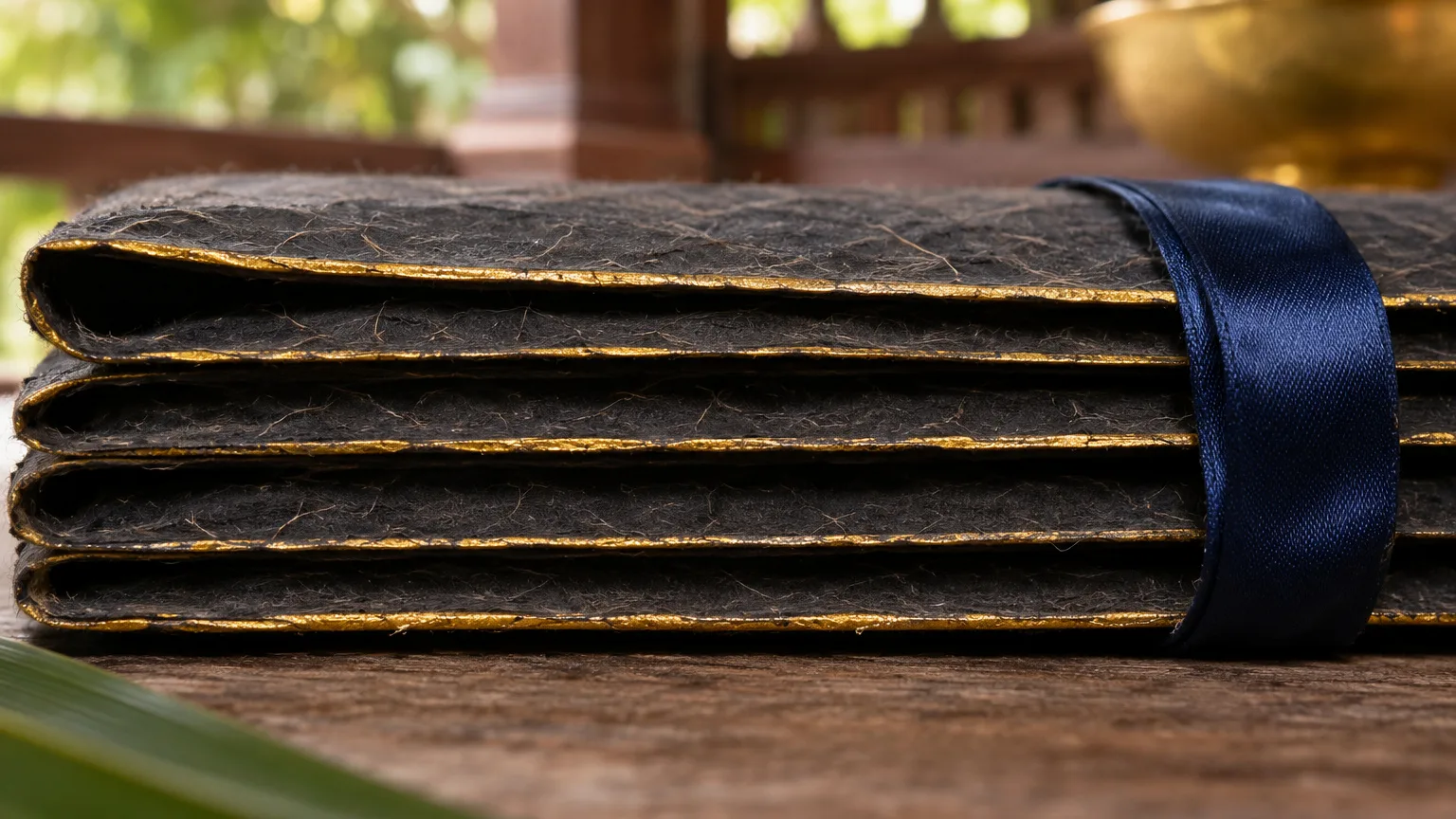
What is inside: 33 volumes of Thai medical scriptures in the notice schedule
The schedule to Notice No. 2 splits the royal medical texts into 33 items. Every item is described as a black samut thai book in the medicine category (royal edition, Rama V) with a document number. The scriptures in the schedule are:
- Khamphi Prathom Chinda, 11 volumes (volume 1 and volumes 3 to 12), the largest group. Wattana Chayathawat (2021) describes Prathom Chinda and Takkasila as classic scriptures at the core of Thai traditional medicine training.
- Khamphi Kasai volumes 1–2 · Khamphi Takkasila volumes 1–2 · Khamphi That Wiphang volumes 1–2
- Khamphi Phaen Nuat (massage charts) volumes 1–2 and Phra Tamrap Phaen Fi Dat volumes 1–3
- Khamphi Moranayan Sut volume 2 · Khamphi Maha Chotarat volume 2 · Khamphi Mutcha Pakkhanthika · Khamphi Roka Nithan
- Khamphi Sapphalaksana Sapphakhun volumes 2–3 · Khamphi Uthara Rok · Khamphi Chawadan volume 1 · Khamphi Samutthan Winitchai volumes 1 and 3 · Phra Khamphi Aphai Santa volume 1 (abridged)
What these scriptures are about
The sources we could check describe only some volumes, so we report only what is documented.
- Sapphalaksana Sapphakhun: according to Wattana Chayathawat (2021), it gives the names of herbs, the parts used and their properties, much like a materia medica for healers.
- Maha Chotarat, Moranayan Sut and Uthara Rok: a 2012 news report of the department's information gave examples: Maha Chotarat covers remedies to expel and nourish the blood, Moranayan Sut covers element disorders by season and the ten signs of failing elements, and Uthara Rok covers eighteen abdominal disorders. These describe the topics of the texts, not proof that any remedy works.
- Phra Tamrap Phaen Fi Dat: the Royal Institute Dictionary defines fi dat as an epidemic disease, also called smallpox. Which pustular diseases this particular text covers has not been confirmed by any study we found.
- Phaen Nuat: the name means massage charts. The same notice also places Phaen Nuat volume 1 (no. 1008) and Takkasila volume 1 (no. 1003) inside another declared text, the Thai leech-therapy charts.
- Roka Nithan and Aphai Santa: we found no source that describes the content of these volumes in the royal set, so this article reports only their names and order in the notice.
Several of these scripture names, such as Kasai, Takkasila, Prathom Chinda, Maha Chotarat and Uthara Rok, also appear in other national texts. A shared name does not mean the other text was copied from the royal edition.
From black samut thai to print: a Thai medical text copied, checked and photographed
Some thirty-five years after the revision, the royal edition became the master for a printed text. According to Wattana Chayathawat (2021), Phraya Phitsanu Prasatwet (Khong Thawarawet), with permission from Prince Damrong Rajanubhab, printed the royal edition of "Phaetthayasat Songkhro" in two volumes, first printed on 1 March 1907 (B.E. 2450). The Chulalongkorn University library record describes it as "compiled and checked against the royal original in the Vajirayana Library", which shows that in that year the royal scriptures were in the Vajirayana Library and were used as the reference copy.
The 1999 photographic edition and the 2011 volume
In 1999 the Committee for Documents and Archives photographed the samut thai pages directly from the original and printed them as a book titled "Tamra Wetchasat Chabap Luang Ratchakan thi 5", to mark the royal sixth-cycle birthday celebrations of 5 December 1999. Readers therefore see the real samut thai pages rather than newly typeset text. The Chulalongkorn University library record names the publisher as the National Library, Fine Arts Department, first printing 1999, 34 cm, with the year given as "1999–", the form used for a multi-volume set issued over time.
The same record runs to volume 3 and carries occasion headings for both 5 December 1999 and 5 December 2011, which shows a later volume came out in 2011 (B.E. 2554). Wattana Chayathawat (2021) also names the printing company of the 1999 edition in the reference list.
The printed edition is the easiest way for most people to reach the content, because it does not require handling the original samut thai. Remember that the formula count from the two printed volumes (1,779 formulas in the 2012 report) does not match the count from the 33 samut thai volumes (1,999 formulas in the department's table), so say which edition a number comes from.
- Collected and revisedKing Chulalongkorn commanded the revision of the medical scriptures and a royal edition in black samut thai
- Phaetthayasat SongkhroPhraya Phitsanu Prasatwet printed two volumes checked against the royal original in the Vajirayana Library
- Photographic editionPrinted from photographs of the original for the royal sixth-cycle birthday celebrations
- A later volumeThe library record carries an occasion heading of 5 December 2011
- Declared nationalNotice No. 2 dated 25 December 2015, published in the Royal Gazette on 12 January 2016
Source: Wattana Chayathawat (2021) · Chulalongkorn University library records · MOPH Notice (No. 2) B.E. 2558
Where is the original, and how can you read this Thai medical text?
According to the notice schedule, all 33 black samut thai items are ancient documents of the National Library. Three pieces of evidence are relevant.
- The schedule to Notice No. 2 describes every item as an "ancient document of the National Library" and gives a "document number of the National Library" between 1000 and 1050.
- In 1907 the royal original was in the Vajirayana Library, according to the Phaetthayasat Songkhro record above.
- The 1999 photographic edition was published by the National Library, Fine Arts Department.
We have not found a document that states directly that samut thai nos. 1000 to 1050 are all the same set made in 1870, or that names where the set is kept today, so this article does not draw that conclusion for you.
Where to start if you want to read it
- Printed edition in a library: search university libraries for "Tamra Wetchasat Chabap Luang Ratchakan thi 5". Chulalongkorn University holds records in its central library and in the King Chulalongkorn library.
- Electronic edition: the National Library website has an e-book page titled "Tamra Wetchasat Chabap Luang Ratchakan thi 5, volume 2" in its knowledge and publications section.
- Viewing the samut thai: take the scripture name and document number from the notice, search the National Library's ancient manuscripts database, then file the request form for ancient documents at the National Library. Members of the public use a national ID card, and researchers use a letter from their institution. Up to 5 items may be requested at a time. If a printed, microfilm or electronic copy exists, the reading room shows the copy instead of the original.
Reading a text for study is one matter. Taking a formula from it into a product for sale is another, covered in the next sections.
Declared a national Thai traditional medicine text: Notice No. 2 of 2015
The royal medical texts were declared in the Ministry of Public Health Notice on the Designation of National Thai Traditional Medicine Texts and National Thai Traditional Medicine Formulas (No. 2) B.E. 2558, dated 25 December 2015 and published in the Royal Gazette on 12 January 2016. The notice has two clauses. Clause 1 makes the texts in the attached schedule national Thai traditional medicine texts. Clause 2 makes the Thai traditional medicine formulas in those texts national formulas. As a result, every formula in these 33 samut thai volumes is a national formula, even though the notice does not name the formulas one by one.
The notice relies on sections 4 and 17 of the Protection and Promotion of Thai Traditional Medicine Wisdom Act B.E. 2542 (1999). Section 17 empowers the Minister to designate formulas or texts that are "of special benefit or value in medicine or public health" as national. "National" therefore does not mean anyone may use the text commercially as they please. It means the state holds and manages the rights, and commercial use needs permission. An overview of the three types of formula is in Thai traditional medicine formula rights.
The same schedule lists seven other texts, including the Royal Pharmacopoeia of the Second Reign and the formula book of Prince Sai Sanitwong. Each has its own story and will be covered in its own article. You can search the texts and formulas in the notices with the formula rights check tool.
Using a formula from this text: preliminary information and permission under section 19
If you want to use a formula from this text in a product, there are two documents to know.
1. Ask the registrar for preliminary information
Under clause 3 of the Committee Notice on Disclosure of Preliminary Information on National Formulas or Texts B.E. 2560 (2017), an applicant for permission who wants preliminary information files the request form attached to the notice. Clause 4 says the registrar will disclose information "on the herbal ingredients, in proportion, and the properties of the formula, or a brief summary of the essential content of the national text". The form asks for the purpose and the name of the formula or text with the number of the notice. For this text that is Notice No. 2 of B.E. 2558.
2. Apply for permission under section 19
Section 19 of the Thai Traditional Medicine Wisdom Act provides that anyone who wants to use a national formula to register a drug formula and apply for a drug manufacturing licence under the drug law, or to research it to improve or develop a new formula for commercial benefit, or to research a national text to develop new Thai traditional medicine wisdom for commercial use, must apply for permission to use it and pay remuneration for that use to the licensing authority. The steps, the contract and the duties after permission are in Thai traditional medicine formula rights.
This text needs one extra check. Several scripture names here also appear in other national texts. If your formula comes from "Khamphi Prathom Chinda", find out which edition and which volume it comes from, because the notice number you write on the application will differ.
The finished product must still pass the Thai FDA under the Herbal Products Act B.E. 2562 (2019), separately from the formula rights.
How far can a brand tell the story of this Thai medical text?
This text has a compelling story: a royal concern that knowledge would be lost, two departments that revised and rewrote it, and the photographing of every page to preserve it. Once the story moves onto a label or into an advertisement, the herbal products law applies.
What the law says
Section 70 of the Herbal Products Act B.E. 2562 provides that "no person shall advertise a herbal product or the benefits of a herbal product unless a licence has first been obtained from the licensing authority". Section 74 prohibits advertising a herbal product in five ways: (1) boastfully claiming that its properties or ingredients can cure, relieve or prevent disease or illness in a sacred way or according to personal belief, or claiming it can cure a disease completely; (2) showing properties that are false, exaggerated or misleading; (3) "making it understood that a substance is an ingredient when in fact the product does not contain it, or contains less than the advertisement leads one to understand"; (4) "a certification or praise of the properties of the herbal product by any person, group of persons or institution"; and (5) breaching the advertising rules set by the Minister.
Safer storytelling angles
- Tell verifiable historical facts: the year of revision, the departments involved, the black samut thai format, and the declaration as a national text in Notice No. 2 of 2015.
- Tell it as a story of an effort to keep knowledge from being lost, and as an early example of systematic document checking.
- State the origin of the formula accurately: the scripture, the volume, whether you use the full formula or an adaptation, and that you hold section 19 permission (once you actually do).
- Write traditional use as "the text records its use for…", and keep it clearly separate from advertising wording that has been licensed.
What to avoid
- Do not use "secret royal formula" or any wording that suggests sacredness, guaranteed results or a complete cure.
- Telling the story as if the palace, the library or any agency endorses the product.
- Using the text's name for a product that uses only part of a formula, so buyers believe it contains the full formula.
- Using royal names, royal portraits or emblems to sell. Other rules apply here; check them separately before use.
✘Avoid
- Secret royal formula, sacred, or a claim of complete cure
- Suggesting the palace, the library or an agency endorses the product
- Using the text's full name when only part of a formula is used
- Using images of the original without Fine Arts Department permission
✔You can tell
- The year of revision, the departments involved and the black samut thai format
- The declaration as a national text in Notice No. 2 of 2015
- The formula's origin: scripture, volume and permission status
- Traditional use written as: the text records its use for…
Advertising a herbal product needs a licence first under section 70
Images of the original and copyright in the printed editions
Images of the original samut thai pages make a story far more convincing, but there are two layers of conditions to know before using them.
Images of the original in the National Library
According to the National Library's ancient documents service page, photographing or copying an original requires a request, and commercial use requires permission from the Director-General of the Fine Arts Department. Work that uses the material must credit the National Library and send one copy to its manuscripts and inscriptions group. If you plan to use an image on packaging or in advertising, ask for permission before the design work.
Images or text from the printed editions
The 1999 photographic edition and its later volume are recent publications of a state agency, so do not assume they are in the public domain. The Copyright Act B.E. 2537 (1994) gives the copyright owner the exclusive right to reproduce, adapt and communicate the work to the public (section 15), and reproducing or adapting it without permission is an infringement (section 27). Exceptions such as non-profit research or study do not cover use on a product. Ask the publisher before scanning pages for use.
A common confusion is that copyright and formula rights are separate laws. Section 6, paragraph two, of the Copyright Act says copyright does not cover ideas, procedures, processes or systems. Commercial use of a national formula is still subject to section 19 of the Thai Traditional Medicine Wisdom Act, even if you use no image or text from the book at all. This section is a general caution, not a legal opinion on any specific case.
If you want illustrations without using images of the original, openly licensed photos of samut khoi books or of the library are an option, but caption them accurately as examples, not as the royal medical texts.
Historical references
The historical facts in this article come from the sources below. Facts with a single source are attributed in the text. The legal texts are listed under sources at the end of the article and in the law library.
- Wattana Chayathawat. (2021). "The origin of herbal properties in Thai traditional medicine texts: a case study of cinnamon (Op Choei)." Journal of Thai Traditional Medicine Research 7(2) (July–December 2021), p. 137 onward. Thai Traditional Medicine Program, Faculty of Allied Health Sciences, Pathumthani University. (In Thai)
- National Library, Fine Arts Department. (1999–). Tamra Wetchasat Chabap Luang Ratchakan thi 5. 1st printing. Bangkok: Fine Arts Department. 34 cm. (Chulalongkorn University Library record b1552162)
- King Chulalongkorn Library, Chulalongkorn University. Record "Tamra Wetchasat Chabap Luang Ratchakan thi 5" (item 4357).
- National Library of Thailand. E-book page "Tamra Wetchasat Chabap Luang Ratchakan thi 5, volume 2", knowledge and publications section.
- Phraya Phitsanu Prasatwet, comp. (R.S. 126 [1907]). Phaetthayasat Songkhro. 2 vols. Bangkok: Suphakan Chamrun Press. (Chulalongkorn University Library record b1226490)
- Department of Thai Traditional and Alternative Medicine. Summary table "Protection of Thai traditional medicine formulas in Thai traditional medicine texts" (document 5.1) and the open dataset "List of Thai traditional medicine formulas in texts declared by Ministry of Public Health notices" (updated 22 April 2026).
- Manager Online. (28 May 2012). Quality of life news report on national Thai traditional medicine texts from the department.
- Office of the Royal Society. Royal Institute Dictionary (online), entries "samut thai" and "fi dat". Accessed 18 November 2026.
- National Library of Thailand. Ancient documents service page, and the database of ancient documents, inscriptions, samut thai, scripture cabinets and palm-leaf manuscripts. Accessed 18 November 2026.
Frequently asked questions
How many formulas are in the Rama V royal medical texts?
The summary table of the Department of Thai Traditional and Alternative Medicine counts 1,999 formulas from the 33 samut thai volumes in Notice No. 2 of 2015. The figure of 1,779 comes from counting the two-volume printed edition. The notice itself states no count.
Who made the royal edition of the medical scriptures?
According to Wattana Chayathawat (2021), in 1870 King Chulalongkorn commanded Krommamuen Phubodi Ratchaharuethai, head of the Department of Physicians, to lead the collection and revision, and Krommamuen Aksonsatsanasophon, head of the Department of Royal Scribes, had it rewritten as the royal edition in black samut thai.
Where is the original kept?
The notice schedule describes every item as an ancient document of the National Library with a document number, and the 1999 photographic edition was published by the National Library, but no source we found states directly where the 1870 set is kept today.
Where can I read this text?
The 1999 photographic edition published by the National Library is held in university libraries, and the National Library has an e-book page for volume 2. To see the samut thai, request the ancient documents service at the National Library.
What must I do to sell a product made from a formula in this text?
The formulas in this text are national formulas. Registering and manufacturing, or researching for commercial development, needs permission under section 19, and you can first ask the registrar for preliminary information. Search the list with the formula rights check.
Can my advertising say the formula comes from the royal texts?
Advertising a herbal product needs a licence first under section 70, and section 74 prohibits claims of sacredness, endorsement by any person or institution, or implying ingredients that are absent or incomplete. You can tell the verifiable history, but do not use it as evidence that the product works.
Sources
- Protection and Promotion of Thai Traditional Medicine Wisdom Act B.E. 2542 (1999) · Open source · Search our archive
- MOPH Notice on the Designation of National Thai Traditional Medicine Texts and National Thai Traditional Medicine Formulas (No. 2) B.E. 2558 (2015) · Open source · Search our archive
- Committee Notice on Disclosure of Preliminary Information on National Thai Traditional Medicine Formulas or Texts B.E. 2560 (2017) · Open source · Search our archive
- Herbal Products Act B.E. 2562 (2019) · Open source · Search our archive
- Copyright Act B.E. 2537 (1994), consolidated to Amendment No. 3 B.E. 2558 (2015) · Open source · Search our archive
This article is for general information. It is not a Thai FDA ruling or legal advice, and rules change — check the latest notification or ask an expert before filing or producing. Spotted an error? Tell us and we will correct it
Related articles
 Brand ownersThai Traditional Medicine Formula Rights: National, General and Personal Formulas Before the Thai FDA StepsThai traditional medicine formulas come in 3 types. National ones need permission to use, personal ones the right holder's consent, then Thai FDA steps.
 Brand ownersAyurawet Sueksa Thai Medicine Text: A 1953 Textbook Declared National, With 2,773 FormulasKhun Nitthet Sukkit's Ayurawet Sueksa, first printed in 1953, became a national Thai medicine text in 2018. Two spellings, where to read it, lawful use.
 Brand ownersKhun Sophit Bannalak's Thai Traditional Medicine Text: a 1961 Teacher's Textbook Declared National Three TimesThe Khun Sophit Thai traditional medicine text: who wrote it, what is inside, why it was declared three times, formula permission and copyright caution.