 FDA Thailand
 Brand owners
Vetchasat Wannana: The Five-Volume Thai Medical Text Printed for Doctors and Households
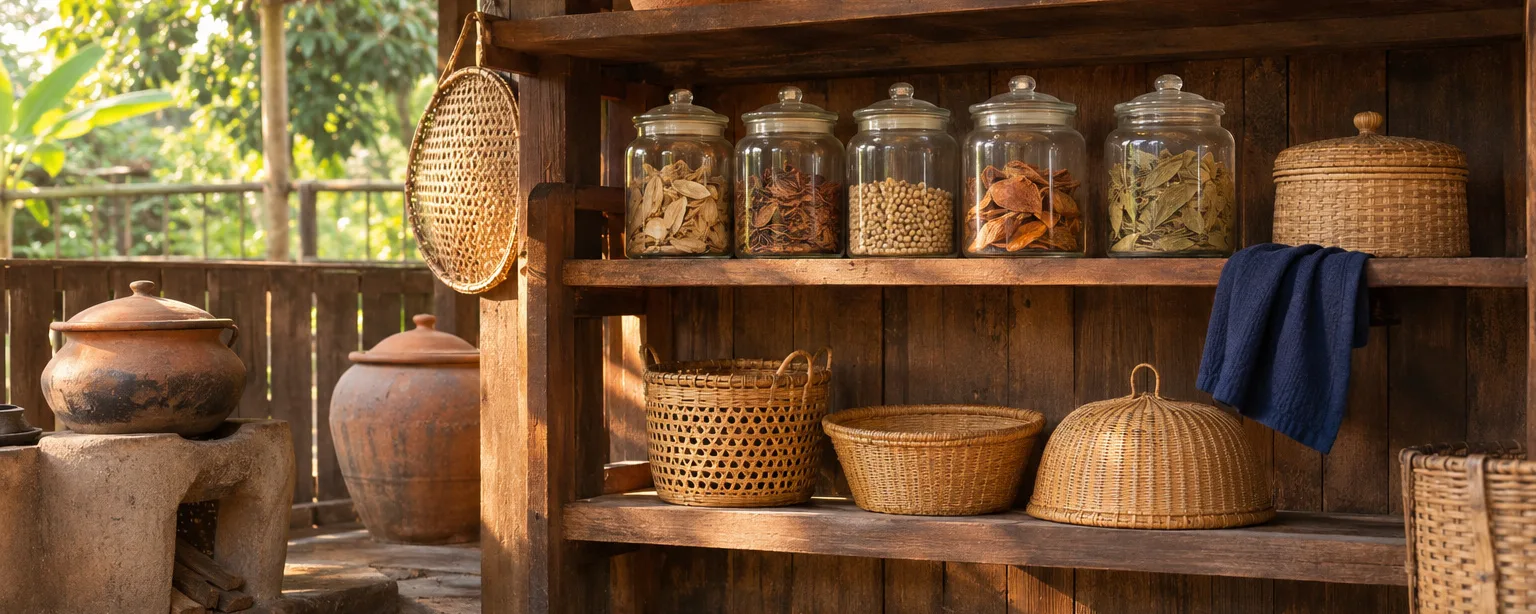
What is the Vetchasat Wannana Thai medical text: five printed volumes that are now a national Thai traditional medicine text
The Vetchasat Wannana Thai medical text, named in the notices as
This article tells the story of the text in time order: the years when medical texts began to be printed as books, the compiler, why the set was printed, what each volume contains, the printed edition that can still be traced, and the day it was declared a national text. It then sets out what a brand owner should know before telling this story or using a formula from it. For an overview of rights in every kind of Thai traditional formula, read Thai traditional medicine formula rights.
One title, many spellings
The title is spelled differently even within the same notice. The preface quoted in the notice's annex writes
Source: MOPH Notices (No. 15) B.E. 2560 and (No. 17) B.E. 2561 · Thai Junior Encyclopedia vol. 33 · Wattana Jayathavaj (2021) · Saengsit Kritsadee · Mahidol University bibliography
When the Thai traditional medicine text moved from palm leaf and folding book to print
To understand Vetchasat Wannana, start with the reign of King Rama V. In 1870 (B.E. 2413), King Rama V had the Thai medical texts, which were scattered and had been miscopied over time, revised so that they were correct and consistent. The revised texts are known as the Royal Edition of the Vetchasat texts
The early printed medical texts
In the same period, knowledge that had lived in palm-leaf manuscripts and folding books began to be printed as books. Wattana Jayathavaj (2021) relates that Phraya Phitsanu Prasatwet
The Thai Junior Encyclopedia states that Vetchasat Wannana was also printed in 1907 (B.E. 2450). This set therefore belongs to the same wave as the printed royal texts, with one interesting difference that the text's own preface reveals: it was not meant only for doctors at the school.
What came after
The Thai Junior Encyclopedia and an article by Naruedee Nantawet and Chuleerat Charoenporn (2022) record that in 1915 (B.E. 2458) the teaching of Thai traditional medicine at the Royal Medical College was ended, and Siriraj stopped dispensing Thai medicines to patients. Printed texts such as Vetchasat Wannana thus became one of the important channels through which Thai medical knowledge could still be passed on outside the medical school.
The compiler and why it was printed: a Thai traditional medicine text for doctors and households
Three sources we could access name the same compiler: Phraya Prasoetsat Thamrong
- The Thai Junior Encyclopedia, volume 33, says that in 1907 (B.E. 2450) a
"ตำราแพทย์ศาสตร์วรรณา" was printed, compiled and arranged by Phraya Prasoetsat Thamrong (Mo Nu) from several old treatises that had been checked. - Wattana Jayathavaj (2021) quotes the preface of the book Mai Thet Mueang Thai by Mo Sa-ngiam Phongbunrot, which refers to "Vetchasat Wanna by Phraya Prasoetsat Damrong (Nu)".
- A teaching document on Thai medicine by Saengsit Kritsadee of Suan Sunandha Rajabhat University gives his full name as Nu Worakitphisan
(หนู วรกิจพิศาล).
The title is spelled slightly differently from source to source, as "Thamrong"
The teacher of a teacher
Saengsit Kritsadee's teaching document also states that Phraya Phitsanu Prasatwet, who printed Phaetsat Songkhro and wrote Vetchasueksa, was a pupil of Phraya Prasoetsat Thamrong. This comes from a single source, but if it is right, Vetchasat Wannana is the teacher's work and Vetchasueksa is the pupil's. The two sets were printed only about a year apart, and both are national Thai traditional medicine texts today.
Printed for doctors, and for people caring for their families
The text's preface, copied into the annex of Notice No. 15, states plainly why it was printed. Its opening, translated, says that the book of Vetchasat Wannana, which tells of various treatises of medicine, "was printed for doctors who need it, and for householders, fathers and mothers of the home
This sentence tells us a lot. In an age when most medical knowledge was still passed on among doctors and their pupils, the compiler meant this text to sit in ordinary homes too. The phrase
Inside the five volumes: traditional Thai remedies from Prathom Chinda, Maha Chotarat and many other treatises
The annex of Notice No. 15 lists which treatises each volume contains and counts the formulas treatise by treatise. The table below summarises that annex, with treatise names as spelled in the notice.
| Volume | Treatises in the volume (number of formulas) | Total |
|---|---|---|
| Volume 1 | Chanthasat | 228 |
| Volume 2 | Thatu Wiwon | 279 |
| Volume 3 | Prathom Chinda | 446 |
| Volume 4 | Prathom Chinda volume 9 (56) · volume 10 (49) · volume 11 (37) · volume 12 (55) · Maha Chotarat | 401 |
| Volume 5 | Aphai Santa | 117 |
The five volumes add up to 1,471 formulas, matching the number in Notice No. 15.
A library of treatises in one set
The list shows that this is not a text on a single subject but something like a small library of treatises. There are treatises on being a doctor, on medicinal plants, on the elements, on the winds, and treatises grouped by condition, such as fevers, cataracts, abdominal diseases and diseases of the throat and mouth, as the text classifies them. Volumes 3 and 4 are mostly Prathom Chinda, and volume 3 alone holds almost a third of all the formulas in the set.
Wattana Jayathavaj (2021) points out that the names of several treatises in this set match treatises in the Royal Edition of the Vetchasat texts from the reign of King Rama V, such as Takkasila, Prathom Chinda, Maha Chotarat and Uthara Rok. But we have found no evidence that Vetchasat Wannana was copied directly from the royal edition, so we can only say that the treatise names match.
A second notice adds 578 formulas
Notice No. 17 of 2018 uses the same preface and adds 13 formulas from volume 1 (from the Taksila and Sapphakhun treatises), 3 from volume 3, 3 from volume 4 and 559 from volume 5. The volume 5 formulas come from Aphai Santa (24), Manchusara Wichian (1), the Atisan treatise
The 1917 printed edition
The clearest trace of a printed edition we found comes from the bibliography of Mahidol University's database of commonly used plants and indications for traditional medicine registration. It records
Two more things remain unknown: the printer of the first edition, and which printed edition was used to prepare the annex of the notices. This article does not guess at them.
- Medical texts revisedKing Rama V had the Thai medical texts revised, producing the Royal Edition of the Vetchasat texts
- Royal Medical CollegeTeaching both Thai and Western medicine
- Phaetsat Songkhro in printPhraya Phitsanu Prasatwet printed the two-volume royal text
- Vetchasat Wannana printedThe Thai Junior Encyclopedia says Phraya Prasoetsat Thamrong (Mo Nu) compiled and arranged it
- Vetchasueksa, three volumesA shorter text for students by Phraya Phitsanu Prasatwet
- Thai medicine teaching ends at the Royal Medical CollegePrinted texts became a channel for knowledge outside the medical school
- Edition in 5 volumes, 1,038 pagesPhisan Bannanit Press, under the name Sum Worakitphisan (single source)
- Notice No. 151,471 formulas, published in the Royal Gazette on 12 Feb 2018
- Notice No. 17578 more formulas, published in the Royal Gazette on 5 Jun 2018
Source: Thai Junior Encyclopedia vol. 33 · Wattana Jayathavaj (2021) · Naruedee and Chuleerat (2022) · Mahidol University bibliography · Royal Gazette
Where the copies are and how to read this Thai traditional medicine text
Vetchasat Wannana is a printed book, not a palm-leaf manuscript or folding book with a single original. Copies may therefore be spread across libraries and the homes of Thai traditional doctors, but we could confirm the catalogue title of only one item.
The National Library's digital library
The digital library of the National Library of Thailand (D-Library) has an item titled
Other libraries
Our web search found no catalogue entries at Chulalongkorn University, Thammasat University, Mahidol University or the Vajirayana digital library, but we have not yet searched those libraries' own catalogue systems directly. This result therefore does not mean that no copies exist.
Reading from the notice annex
The easiest route for a business is to start from the annexes of Notices No. 15 and No. 17, published in the Royal Gazette. The annexes do not give the formulas themselves, but they list the treatises and the number of formulas in each volume. Use them to work out where the formula you are interested in is likely to be, then ask the registrar for the formula details using the steps in the next sections.
Declared a national Thai traditional medicine text twice: Notices No. 15 and No. 17
Vetchasat Wannana has been declared a national Thai traditional medicine text twice. Both notices were issued under Section 4, paragraph one, and Section 17 of the Protection and Promotion of Thai Traditional Medicinal Intelligence Act B.E. 2542 (1999), on the advice of the Committee for the Protection and Promotion of Thai Traditional Medicinal Intelligence.
- Ministry of Public Health Notice (No. 15) B.E. 2560, issued on 23 November 2017 and published in the Royal Gazette, volume 135, special part 32 Ng, page 12, on 12 February 2018. It covers volumes 1 to 5, with 1,471 formulas in all.
- Ministry of Public Health Notice (No. 17) B.E. 2561, issued on 18 April 2018 and published in the Royal Gazette, volume 135, special part 128 Ng, page 26, on 5 June 2018. It adds formulas from volumes 1, 3, 4 and 5, with 578 formulas in all.
Clause 1 of both notices makes the texts listed in the annex national Thai traditional medicine texts, and clause 2 makes the Thai traditional formulas in those texts national Thai traditional formulas.
What "national" means
Section 17 lets the Minister declare as national any formula or text of particular value to medicine or public health. The key consequence for business is in Section 19: anyone who wants to register a national Thai traditional formula and obtain a licence to produce the medicine, or to study, research and improve it into a new formula for trade, must apply for permission to use it and pay the usage remuneration set by ministerial regulation.
In practice, if your formula comes from any printed edition of Vetchasat Wannana, regard it as a national formula, even though the notices do not name formulas one by one. Details on the three types of rights and the steps under the ministerial regulation are in Thai traditional medicine formula rights, and you can search the notices with the formula rights check tool.
Using a traditional Thai remedy from Vetchasat Wannana in a product: preliminary information, then Section 19 permission
Before you invest in developing a product from a formula in Vetchasat Wannana, there are two steps to know. The first tells you what the formula in the notice actually contains. The second is the permission to use it.
Step 1: ask the registrar for preliminary information
The Committee's Notice on the disclosure of preliminary information about national Thai traditional formulas or national Thai traditional medicine texts B.E. 2560 (2017) lets an applicant who wants preliminary information file the request form attached to the notice (form Por Tor 17). The form asks for the purpose, such as registering a formula and obtaining a production licence, or researching and developing a new formula for trade, and for the name of the formula or text with the number of the notice. For this text that is Notice No. 15 of 2017 or Notice No. 17 of 2018, depending on which notice covers the formula you want. What the registrar discloses is the herbal composition in proportions and the stated properties of the formula, or a brief summary of the text. Documents to attach include an ID card, company documents, the establishment licence, and a power of attorney if someone files on your behalf.
This step matters especially for this text, because Vetchasat Wannana was printed more than once. The formula in your copy may not match the formula in the notice letter for letter. Comparing the formula you have with the registrar's information first tells you whether you are using the full national formula, part of it, or an adapted version.
Step 2: apply for permission under Section 19
If you will register and produce the formula, or research and develop it into a new formula for trade, you must apply for permission under Section 19 of the Protection and Promotion of Thai Traditional Medicinal Intelligence Act B.E. 2542. This permission is separate from the Thai FDA steps under the herbal products law, which you still need to complete as usual. The detailed order of work is in Thai traditional medicine formula rights.
How far a brand can tell the story: traditional Thai remedies and the herbal advertising rules
The story of Vetchasat Wannana has a feature few other texts share: a preface that says plainly it was printed for both doctors and householders. Herbal brands and family-care brands can make good use of this angle, but the story has to stay within the facts and the advertising rules.
Safe angles for the story
- Verifiable facts, such as being a printed text in five volumes, being declared a national text in Notices No. 15 and No. 17, and the number of formulas in the notices.
- The preface saying it was printed for doctors and for
"พ่อบ้านแม่เรือน" (householders), citing the notice annex as the source. - The compiler, written as "several sources say…", and the teacher and pupil link, saying which source it comes from.
- The names of treatises in the set, such as Prathom Chinda, Maha Chotarat and Thatu Wiphang, writing "the text states that…" when describing content.
- Once you have Section 19 permission, which formula the product uses, within the scope of the permission.
- If the text was only an inspiration, say so plainly: it is inspiration, not the original formula.
What to avoid
Section 70 of the Herbal Products Act B.E. 2562 (2019) prohibits anyone from advertising a herbal product or its benefits unless they have first obtained a licence from the licensing authority. Section 74 prohibits several kinds of advertising, including boasting that a product can heal, relieve or prevent disease or illness in a miraculous way or according to personal belief, or claiming it can completely cure a disease; stating properties that are false, exaggerated or misleading; implying that an ingredient is present when it is not, or is present in a smaller amount than advertised; and having any person, group of persons or institution certify or praise the product's properties. Applied to the story of this text, the points to watch are:
- Using the age of the text, or the words "national text", as evidence that the product works.
- Calling it a household remedy for every complaint, or using words that suggest the miraculous.
- Implying that a government agency, a library or the doctors behind the text endorse the product.
- Claiming to use the full formula when you use only some of the herbs or have changed the proportions.
- Telling more about the compiler or the publisher than the sources say, for example guessing that Sum Worakitphisan was Mo Nu's heir.
✘Avoid
- Using the words national text, or the text's age, as evidence that the product works
- A household remedy for every complaint, or words that suggest the miraculous
- Implying that a government agency, a library or the text's doctors endorse the product
- Claiming the full formula when you use only part of it
- Guessing about the publisher beyond what the sources say
✔Fine to tell
- A printed text in five volumes, and Notices No. 15 and No. 17
- The preface saying it was printed for doctors and householders
- The compiler as several sources name him, with the source
- The treatises in the set, writing the text states that…
- The formula you use, once you have Section 19 permission
Advertising a herbal product needs a licence first (Section 70)
Source: Herbal Products Act B.E. 2562, Sections 70 and 74 · Protection and Promotion of Thai Traditional Medicinal Intelligence Act B.E. 2542, Section 19
Images of the books and copyright in printed editions of the Thai traditional medicine text
Images are often overlooked, but they involve the rights of several parties. The points below are cautions, not a legal ruling.
Images from the National Library
The National Library's page on its ancient documents service states that photographing or copying documents requires a request, and that commercial or profit-making use requires permission from the Director-General of the Fine Arts Department. Its service rules also ask for a letter to the Director-General before publishing images of ancient documents, and for the National Library to be credited. Vetchasat Wannana is a printed book, not an ancient palm-leaf manuscript or folding book, but if you want to use scanned images from the digital library on a label or in sales material, ask the National Library about its conditions of use first.
Copyright in the printed editions
The Copyright Act B.E. 2537 (1994) provides that copyright lasts for the life of the author and for 50 years after the author's death. The 1907 and 1917 editions are very old, but we have not checked the copyright status of each edition, and we do not know who published the 1917 edition. Reprints, commentaries, illustrations and page layouts made after 1947 (B.E. 2490) should generally not be assumed to be in the public domain, so do not conclude on your own that they are free to use.
The safe route is to use images you photograph or create yourself, such as herbal raw materials or old books with no legible text, or images with a clear licence credited as required, and to cite the sources of information as text.
Historical references
The list below gives the sources used for the historical story in this article. The laws cited are in the source list at the end of the article.
- Ministry of Public Health Notice on the designation of national Thai traditional medicine texts and national Thai traditional formulas (No. 15) B.E. 2560. Royal Gazette, volume 135, special part 32 Ng, page 12, 12 February 2018 (preface and annex).
- Ministry of Public Health Notice on the same subject (No. 17) B.E. 2561. Royal Gazette, volume 135, special part 128 Ng, page 26, 5 June 2018 (preface and annex).
- Thai Junior Encyclopedia Project Foundation. Thai Junior Encyclopedia, volume 33, "Thai traditional medicine: history of Thai traditional medicine".
- Wattana Jayathavaj. "The origin of drug properties in Thai traditional medicine texts: a case study of cinnamon." Journal of Thai Traditional Medicine Research 7, no. 2 (2021): 137–160.
- Naruedee Nantawet and Chuleerat Charoenporn. "The establishment of Thai traditional medicine institutions." Journal of MCU Nakhondhat 9, no. 6 (2022): 51–67.
- Saengsit Kritsadee. Thai Medicine (Vetchakam Thai) [teaching document]. Suan Sunandha Rajabhat University, n.d.
- Mahidol University. Bibliography of the database of commonly used plants and indications for traditional medicine registration (entry: Sum Worakitphisan, Vetchasat Wannana, an old-style medical text, volumes 1–5, Phisan Bannanit Press, 1917).
- National Library of Thailand. Digital library (D-Library): item
"เวชศาสตร์วัณณนา เล่ม ๑ตำราแพทย์แบบเก่า". Accessed 18 November 2026. - National Library of Thailand, Fine Arts Department. "Ancient documents service" and the service rules of the ancient documents database. Accessed 18 November 2026.
Frequently asked questions
What is Vetchasat Wannana?
A printed Thai medical text in five volumes, named in the notices as
How many formulas does it contain?
Notice No. 15 counts 1,471 formulas across volumes 1 to 5, and Notice No. 17 adds another 578, for 2,049 in all. This total is the sum of the figures in the two notices.
Who compiled it?
The Thai Junior Encyclopedia, an article by Wattana Jayathavaj (2021) quoting a preface by Mo Sa-ngiam Phongbunrot, and a teaching document from Suan Sunandha Rajabhat University all name Phraya Prasoetsat Thamrong (Mo Nu). The same teaching document gives his full name as Nu Worakitphisan and says he was the teacher of Phraya Phitsanu Prasatwet.
Why is the title spelled in different ways?
The notices themselves use several spellings, such as
What must I do to produce and sell a formula from this text?
The formulas in this text are national Thai traditional formulas. To register and produce one, or to research and develop it into a new formula for trade, you must first obtain permission to use it under Section 19, and you can ask the registrar for preliminary information under the Committee's 2017 notice. You also still need to complete the Thai FDA steps as usual.
Can I say in advertising that it was a text for householders?
You can tell it as a historical fact, citing the preface in the notice annex. But advertising a herbal product needs a licence under Section 70, and Section 74 prohibits using the story as evidence of efficacy, claiming the miraculous, or having a person or institution endorse the product.
Sources
- Protection and Promotion of Thai Traditional Medicinal Intelligence Act B.E. 2542 (1999) · Open source · Search our archive
- Ministry of Public Health Notice on national Thai traditional medicine texts and formulas (No. 15) B.E. 2560 · Open source · Search our archive
- Ministry of Public Health Notice on national Thai traditional medicine texts and formulas (No. 17) B.E. 2561 · Open source · Search our archive
- Committee Notice on the disclosure of preliminary information about national Thai traditional formulas or texts B.E. 2560 · Open source · Search our archive
- Herbal Products Act B.E. 2562 (2019) · Open source · Search our archive
- Copyright Act B.E. 2537 (1994), consolidated to (No. 3) B.E. 2558 · Open source · Search our archive
This article is for general information. It is not a Thai FDA ruling or legal advice, and rules change — check the latest notification or ask an expert before filing or producing. Spotted an error? Tell us and we will correct it
Related articles
 Brand ownersThai Traditional Medicine Formula Rights: National, General and Personal Formulas Before the Thai FDA StepsThai traditional medicine formulas come in 3 types. National ones need permission to use, personal ones the right holder's consent, then Thai FDA steps.
 Brand ownersVetchasueksa Phaetsat Sangkhep: The Thai Medicine Textbook a Teacher Rewrote for Students, Now a National TextThe Vetchasueksa: a three-volume Thai medicine textbook first printed in 1908, 269 formulas, declared national in 2018: its story and what brands must know
 Brand ownersAyurawet Sueksa Thai Medicine Text: A 1953 Textbook Declared National, With 2,773 FormulasKhun Nitthet Sukkit's Ayurawet Sueksa, first printed in 1953, became a national Thai medicine text in 2018. Two spellings, where to read it, lawful use.