 FDA Thailand
 Brand owners
Honey Thai FDA Registration: the No. 211 Standard, Premises, Serial Number and Honey Labels
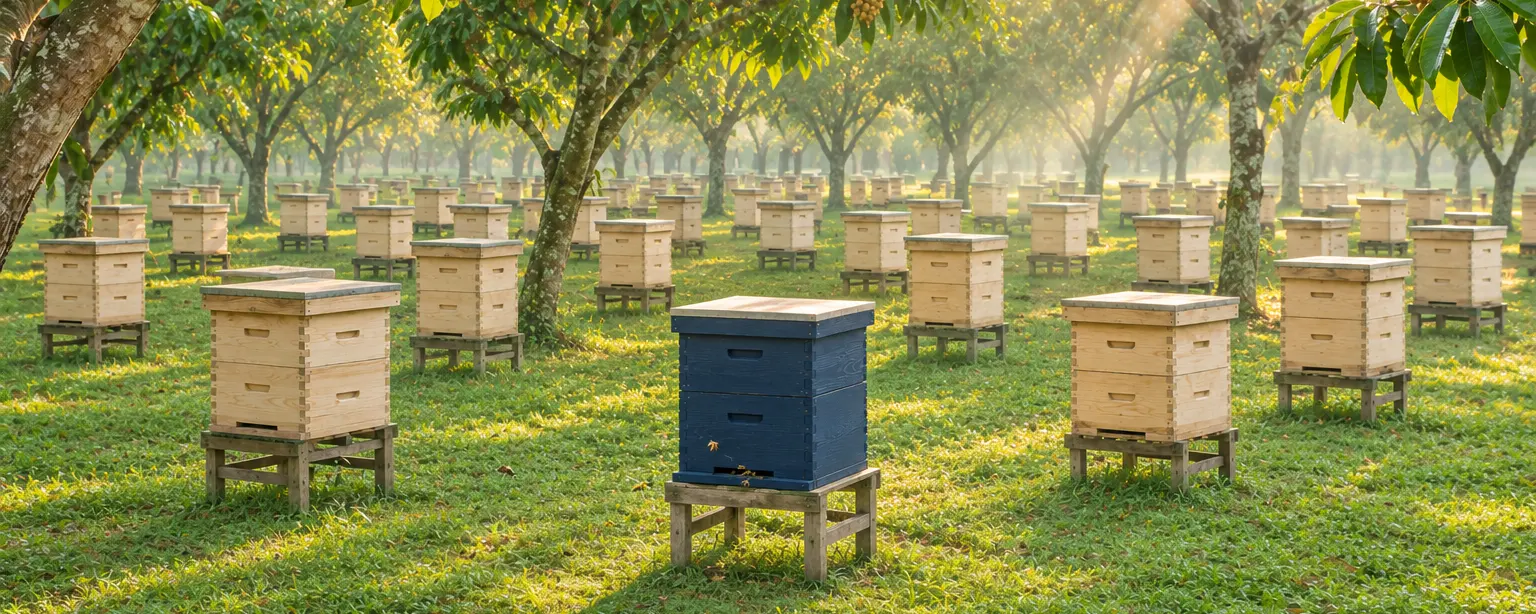
Honey Thai FDA registration: which food group honey is in, and which rules apply
Honey Thai FDA registration starts with one fact many new sellers miss: honey is not a general food in Thailand. Whether you are a beekeeper bottling your own harvest, a contract packer, or an importer, honey has its own Ministry of Public Health notification, Notification No. 211 (B.E. 2543, 2000) on honey, which makes honey a "food with prescribed quality or standard" (clause 2).
That status has three practical consequences. Honey on sale must meet the quality criteria written in the notification. It must be produced in licensed premises that meet the production standard. And the product needs permission and a food serial number before sale, unless one of the exemptions in the Thai FDA product manual applies, which section 6 explains.
The rules honey producers need to know
- Notification No. 211 (2000): definition and quality criteria
- Notifications No. 413, 415 and 417 (2020): amend parts of No. 211 so that contaminants, pathogenic microorganisms and food additives follow the central notifications
- Notification No. 420 (2020): production methods, equipment and storage of food, commonly called GMP 420
- Notification No. 450 (2024): labelling of pre-packaged food, as amended by No. 474 (2026)
- Food Act B.E. 2522 (1979), Chapter 4: defines impure food, adulterated food and sub-standard food
Where a topic already has its own article, such as getting a Thai food registration number and Thai food labels, this guide covers only what is specific to honey and links out.
What Thai law means by real honey: the definition in Notification No. 211
Clause 3 of Notification No. 211 gives a very short definition: honey "means a sweet liquid produced by bees". Two elements matter: it is a sweet liquid, and bees produced it. The notification does not split honey by bee species or by flower, and the word "real" (Thai: thae) is not part of the definition.
Whether a product is real honey is answered in two layers under Thai law.
Layer 1: it meets the definition and the clause 4 criteria
A product sold as "honey" must be a liquid made by bees and must meet every quality criterion in clause 4. If the analysis fails the criteria, section 28 of the Food Act classes it as sub-standard food. If a nutritional component is more than thirty percent below the minimum or above the maximum, section 27(5) classes it as adulterated food.
Layer 2: nothing else has been passed off as honey
Section 27 of the Food Act classes food as adulterated if another substance has been used to replace part of it and it is sold as the genuine food or under the genuine food's name, or if something has been made to imitate a food and is sold as the genuine food. Syrup made to look like honey, or honey blended with syrup and sold as honey, therefore falls under this section whether or not the label says "real".
"Real" on the label is a separate question
Using "real" or "100% real" as part of the food name has conditions set out in the Food Division's food naming criteria (November 2025 edition), explained in the label section below. In practice, real honey in the legal sense is honey that fits the definition, meets the criteria and has nothing added. The word "real" on a label is a term you may use when the conditions are met. It is not a certification mark from any agency.
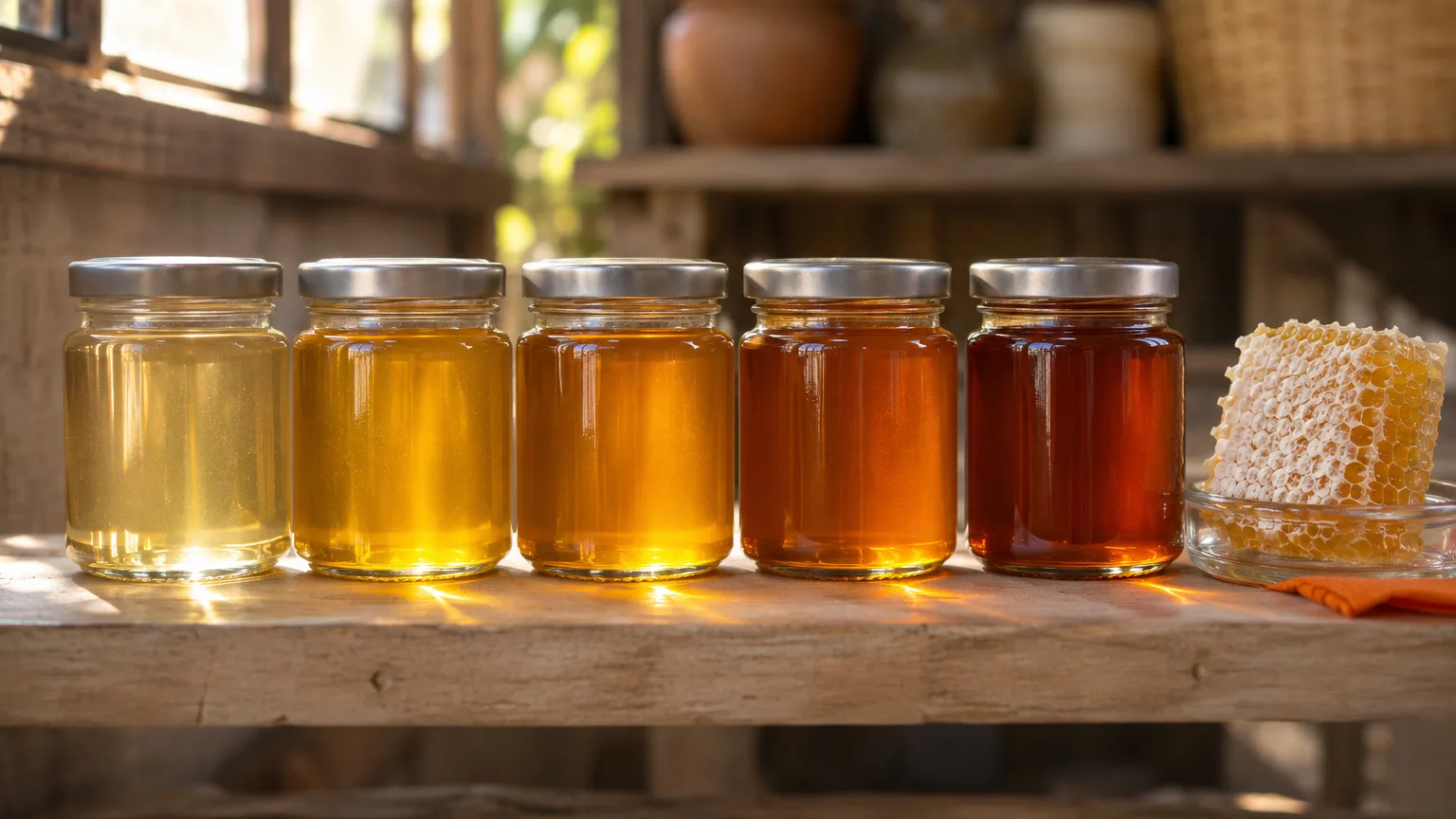
Thai honey standard: the quality criteria in clause 4 of No. 211
Clause 4 of Notification No. 211 says honey "must have the following quality or standard" and lists 15 sub-clauses. The table below takes the figures from the original text in the Royal Gazette (Vol. 118, Special Part 6 Ngor, 24 January 2001). Sub-clauses amended later are covered in the next section.
Units: "percent by weight" means grams per 100 grams of honey. "Milligrams per 1 kilogram" equals parts per million (ppm).
The numeric criteria are reducing sugars calculated as invert sugar (2), moisture (3), sucrose (4), water-insoluble solids (5), ash (6), acidity (7), diastase activity (8), HMF (9), and yeasts and moulds (14). The two non-numeric ones are (1) colour, odour and taste characteristic of honey, and (13) no microbial toxins in amounts that may harm health.
What each figure tells you (technical view)
This part is a technical explanation to help producers understand the criteria. It is not text from the notification.
- Moisture: honey with too much water ferments more easily in storage. Beekeepers usually harvest from capped comb.
- Reducing sugars and sucrose: honey is mostly glucose and fructose. Unusually high sucrose may come from unripe honey, sugar feeding of bees during the honey flow, or adulteration, so find the cause before drawing conclusions.
- HMF and diastase: these two show the heat history and age of honey. HMF rises with heating or long storage in hot conditions, while diastase enzyme activity falls under the same conditions.
Foreign honey standards, such as the Codex standard, may set some figures differently from the Thai notification. Honey sold in Thailand must meet No. 211. Exporters need to check the destination's criteria as an extra layer.
Source: Ministry of Public Health Notification No. 211 (2000), clause 4 · The right-hand column is a technical explanation, not text from the notification
What changed in 2020: food additives, pathogens and contaminants
In 2020 the Ministry moved requirements that used to sit in individual product notifications into central notifications. Sub-clauses (10), (11), (12) and (15) of clause 4 changed as a result.
| Original sub-clause in No. 211 | What changed | Amending notification |
|---|---|---|
| (10) no food additives | Repealed | No. 417, clause 45 |
| (11) no colour | Replaced by "the use of food additives shall follow the Ministry of Public Health notification on food additives" | No. 417, clause 46 |
| (12) no pathogenic microorganisms | Replaced by a reference to the notification on pathogenic microorganisms in food (No. 416) | No. 415, clause 27 |
| (15) contaminants (originally arsenic and lead) | Replaced by "contaminants not exceeding the maximum levels set in the Ministry of Public Health notification on food standards for contaminants" (No. 414) | No. 413, clause 17 |
Food additives in honey
After the amendments, No. 211 no longer says "no food additives" or "no colour". It refers to the food additives notification, which sets types and levels by food category. In practice, check the honey category before using any substance, and ask whether the product can still be called "honey" or "real" once something is added. For the basics, see food additives and INS numbers.
Microorganisms and contaminants
The yeast and mould limit in sub-clause (14) remains in No. 211. Pathogens now follow No. 416, which lists honey as one of its food groups. For contaminants, the original limits of 0.2 mg arsenic and 0.5 mg lead per kilogram of honey were replaced by a reference to No. 414, so compare results with the current No. 414, not the old figures.
Honey blends and honey drinks: when a product is no longer "honey"
Before applying for a product such as honey with lime or honey with ginger, decide whether it is still "honey" under No. 211 or has become another type of food.
How to classify
The clause 3 definition is a sweet liquid produced by bees. Once a producer adds other ingredients, in practice the product usually no longer fits that definition and should be classified again using the Food Division's food classification guidance: check whether a specific notification covers that food, and if none does, it is a general food. The full sequence is in getting a Thai food registration number.
Common examples
- Honey-lime drinks in sealed bottles generally fall under Notification No. 356 on beverages in hermetically sealed containers, a food with prescribed quality or standard. No. 465 (2025) divides these beverages into four types, and No. 473 (2026) amended the naming rules, for example drinks with less than 20 percent fruit are named "…-flavoured drink" (Thai: nam rot). They are filed on form Sor Bor 5 under the food classification manual. See sealed beverages amendment No. 473 and Thai FDA rules for snacks, chili pastes and beverages.
- Foods that use honey as an ingredient, such as honey-roasted peanuts, are other foods containing honey. As finished products they do not have to meet clause 4 of No. 211, but the honey used as a raw material should meet the standard.
- Royal jelly and royal jelly products have their own notification, No. 294 (2005). When sold as a dietary supplement, the label must be approved before use, so royal jelly does not follow the honey route.
The name must match what is in the jar
The food naming criteria say a name must not suggest that a substance is present when it is not, or is present in an amount too small to have the stated property, and they give common names such as "honey-roasted peanuts" as examples. In practice, a honey blend should have a name that says what it is blended with, and the label should show the percentage of key ingredients under the labelling notification, so consumers do not take it for pure honey.
Premises for producing and packing honey: licences and GMP 420
Before you can register honey, you need licensed production premises. Clause 5 of No. 211 says producers or importers of honey for sale "must comply with the Ministry of Public Health notification on production methods, production equipment and food storage". Today that is Notification No. 420 (GMP 420).
Two kinds of premises licence
- Premises that qualify as a factory apply for a food production licence (form Or 2).
- Premises that do not qualify as a factory, such as a beekeeper's small packing room, apply for a production premises number (form Sor Bor 1/1).
The factory thresholds, how to count machine horsepower and workers, and the filing steps are in Thai food production licence and home-based food production in Thailand.
Exemptions for small producers
- Clause 8 of No. 211 states that the notification "does not apply to honey produced for sale by production premises that do not qualify as a factory under the factory law".
- The Food Division's product permit manual lists "honey from production premises that do not qualify as a factory, where the producer sells directly to consumers" as exempt from product permission.
The manual's exemption has two conditions: the premises are not a factory and the producer sells directly to consumers. In practice, if you plan to sell through shops, distributors or other people's online stores, check with the provincial public health office where your premises are located first, because that is no longer direct sale. These exemptions do not lift section 25 of the Food Act, which prohibits selling impure food, including food produced or packed in unsanitary conditions.
GMP 420 for a honey packing room
Notification No. 420 applies to premises producing food for sale. Honey follows the basic requirements and is not in the groups with extra specific requirements. Honey packing rooms usually need to work on keeping insects and dust out of the straining and filling area, and on recording the source of each batch. All requirements are covered in GMP 420 requirements.
Packaging also has rules. Clause 6 of No. 211 requires honey containers to follow the notification on food containers. In practice, ask your jar or lid supplier for documents confirming food-contact suitability.
Getting the food serial number: form Sor Bor 7 and what to prepare
With licensed premises, the next step is product permission to obtain a 13-digit food serial number. The Food Division's food type manual for the Sor Bor 7 group (updated 20 August 2026) lists honey among the "food types that must apply for product permission on form Sor Bor 7", together with tea, herbal tea, pure coffee, jams and several other foods with prescribed quality. The approval document is form Sor Bor 7/1.
So although honey is a food with prescribed quality or standard, it is not filed on form Sor Bor 5 like milk or beverages in hermetically sealed containers.
Who applies, and where
The product permit manual states that applying is the duty of the food producer, through the e-Submission system, and the approval must be obtained before producing for sale. For imported honey, the applicant is the holder of the import licence. Brand owners using a contract packer should agree whose name the serial number will be in, because it is tied to the production premises. The online steps are in getting a Thai food registration number.
What to prepare
The Sor Bor 7 food type manual considers information such as the name, characteristics, formula by percentage, detailed production process, purpose of use, how it is eaten, container, pack size and storage. For honey, in practice prepare:
- The food name "honey" and the trade name (if any) to be used on the label
- The formula: for pure honey, state 100 percent
- The process, such as receiving honey from the hive, straining, warming (if used, with temperature and time), settling and filling
- A draft label consistent with the name and formula submitted
- Analysis results against the clause 4 criteria, which you should have before sale even if the system does not ask for them every time
Applications often stall when the name or label does not match the formula submitted.
- 1Confirm it is honey by definitionIf anything is added, classify it again
- 2Check quality against clause 4Including contaminants (414) and pathogens (416)
- 3License the production premisesOr 2 for a factory, Sor Bor 1/1 if not a factory
- 4Bring the packing room up to GMP 420Hygiene, straining, batch records
- 5File Sor Bor 7 on e-SubmissionReceive Sor Bor 7/1 and a 13-digit serial number
- 6Print labels under No. 450 and 474Check the name, the word real and any claims
Source: Notifications No. 211, 420, 450, 474 · Sor Bor 7 food type manual (20 Aug 2026) · Food product permit manual
Honey labels in Thailand: required information and words to watch
Clause 7 of No. 211 says "labelling of honey shall comply with the Ministry of Public Health notification on labels". No. 211 itself therefore has no honey-specific label statement. Honey labels follow the pre-packaged food labelling notification No. 450 (2024), as amended by No. 474 (2026, in force 31 October 2026). The full rules are in Thai food label requirements. This section covers only what honey producers ask most often.
Core label information
Clause 5 of No. 450 lists the required information, including the food name, food serial number, name and address of the producer or importer, net quantity, key ingredients, and the expiry or best-before date. A brand name must carry the word "brand" (Thai: tra) or a trademark symbol (clause 13).
The expiry date is the producer's responsibility to set and justify. See food shelf life testing in Thailand.
The food name, and the words "real" and "natural"
The Food Division's naming criteria refer to clause 14 of No. 450: use a specific or common name, the type name given in a specific notification, or a trade name accompanied by the food type. For honey, the type name is "honey" (Thai: nam phueng). The same document sets conditions for qualifying words:
- "Real" may be used for products that have their own Ministry of Public Health notification and that are solely that product, 100 percent, with nothing else added. Honey has its own notification, so it meets the first part.
- "100% real" requires the product to be solely that product, 100 percent, with nothing else added.
- "Natural": the document gives "natural honey" as an example and refers to the current food advertising criteria.
- Names showing origin or a specific characteristic, such as a flower or a region: the product must be consistent with that name. In practice, keep evidence of origin such as apiary locations, harvest periods and pollen analysis (if available).
Beyond the naming criteria, section 27(4) of the Food Act classes food with a label that deceives or tries to deceive buyers about quality, quantity, benefit, or place and country of production as adulterated food. A false flower or origin claim is therefore a bigger risk than a label correction.
Health benefits and advertising
The naming criteria prohibit names that suggest medicinal properties, such as relieving or preventing disease, or effects on body shape or organs. Clause 5 of the 2026 food advertising criteria likewise prohibits false or deceptive claims of benefit. Health claims on labels must follow Notification No. 447 (2023). See Thai food advertising rules 2026.
✘Avoid
- Calling it real when syrup or herbs are added
- Claiming it relieves coughs, lowers blood sugar or prevents disease
- Naming a flower or origin without evidence
- Naming a honey blend so it looks like pure honey
✔Fine when conditions are met
- 100% real honey, when nothing at all is added
- A flower or region name, when the product matches and evidence exists
- Honey with lime, with the percentage of key ingredients
- Storage advice and an explanation of crystallisation
Examples to compare the concepts. Actual assessment looks at the name, formula and food type together.
Source: Food naming criteria, Food Division (Nov 2025) · Food Act B.E. 2522, section 27 · Food advertising criteria B.E. 2569 (2026)
Honey testing: the parameters usually checked under No. 211
Testing tells a producer whether each batch of honey meets the criteria before sale. The basic GMP 420 requirements (annex, clause 3.9.1) require the finished product to "have quality or standard consistent with the relevant Ministry of Public Health notifications, with analysis results from a government laboratory or an accredited laboratory at least once a year".
Tests commonly used for honey
The list below comes from clause 4 of No. 211 and the amending notifications. The test methods mentioned are general laboratory practice.
- Moisture: usually measured with a refractometer (an instrument that measures how light bends through the sample).
- Reducing sugars and sucrose: by chemical methods or high-performance liquid chromatography (HPLC), which separates individual sugars.
- HMF and diastase: indicators of heat and age, worth testing after warming steps or long storage.
- Contaminants such as lead and arsenic: No. 414 requires Codex methods, methods published by standards bodies, or validated methods verifiable under ISO/IEC 17025.
- Yeasts and moulds, and pathogens: these are microbiological tests and must go to a laboratory that offers microbiology testing. No. 416 requires the methods in its annex, or other methods that report results as the law requires and are accredited to ISO 17025.
Planning tests sensibly
In practice, small producers often check moisture themselves for every batch with a refractometer, then send the full panel to an accredited laboratory at the frequency GMP requires, or when they change honey sources, change warming or straining, or before export.
Some buyers ask for extra tests, such as adulteration with syrup. These are commercial requirements, not criteria in No. 211.
Importing honey and exporting honey from Thailand
Importing honey
Clause 5 of No. 211 refers to "producers or importers of honey for sale", so imported honey must meet the same quality criteria as honey produced in Thailand. The clause 8 exemption covers premises that are not factories under Thai law and does not help importers.
Importers need a food import licence (form Or 7) and licensed storage, explained in Thai food import licence (Or 7). In addition, clause 6 of No. 420 requires importers of food for sale to "provide certification to a standard equivalent to or not lower than the criteria in the annex to this notification", meaning evidence that the foreign producer's system is not below GMP 420.
In practice, ask the producer for a certificate of analysis (COA) for each batch and compare it with clause 4 of No. 211, not only with the standard of the country of origin. The Thai label must show the importer's name and address and the producer's name and country under No. 450.
Exporting honey
The product permit manual lists "food produced for export only" as exempt from product permission (except specially controlled food), but the production premises still need a licence and must meet GMP. For labels, No. 474 amended clause 7 of No. 450 so that export food labels may be in any language and must show at least one of three items: the food serial number, the production premises number, or the name and address of the production premises.
The heavier requirements usually come from the destination country, such as producer registration and residue limits. In practice, get the buyer's document list before agreeing on price. See exporting processed food from Thailand and health certificates for Thai food exports.
Frequently asked questions
Do I need Thai FDA approval to sell honey I produce myself?
If you pack in premises that are not a factory and sell directly to consumers, the Thai FDA product permit manual lists this as exempt from product permission. If your premises qualify as a factory, or you sell through shops or agents, obtain a premises number and a food serial number, and check with the provincial public health office first.
Is honey filed on form Sor Bor 5 or Sor Bor 7?
Honey is filed on Sor Bor 7 under the Food Division's Sor Bor 7 food type manual, and the approval is Sor Bor 7/1. A honey drink in a hermetically sealed bottle is a beverage in a hermetically sealed container, which is filed on Sor Bor 5.
Is crystallised honey sub-standard?
Clause 4 of No. 211 has no criterion on crystallisation. Technically, crystallisation is a natural characteristic of many honeys. In practice, explain it on the label, and if you warm honey to dissolve crystals, watch HMF and diastase.
Can I put "100% real honey" on the label?
Yes, if the product is solely honey, 100 percent, with nothing else added, under the Food Division's food naming criteria, and the honey meets the quality criteria in No. 211.
What does honey need to be tested for?
The clause 4 criteria of No. 211, such as moisture, sugars, HMF, diastase, and yeasts and moulds, plus contaminants (No. 414) and pathogens (No. 416). GMP 420 requires results from a government or accredited laboratory at least once a year.
What does importing honey into Thailand require?
A food import licence (Or 7), certification that the foreign producer meets a standard not lower than GMP 420, analysis results compared with clause 4 of No. 211, a food serial number on form Sor Bor 7, and a Thai label.
Sources
- Ministry of Public Health Notification No. 211 (B.E. 2543) on honey · Open source · Search our archive
- Ministry of Public Health Notification No. 417 (B.E. 2563) on criteria, conditions, methods of use and levels of food additives (No. 1) · Open source · Search our archive
- Ministry of Public Health Notification No. 413 (B.E. 2563) amending notifications that set standards for contaminants in food · Open source · Search our archive
- Ministry of Public Health Notification No. 415 (B.E. 2563) on quality or standard criteria for pathogenic microorganisms in food · Open source · Search our archive
- Ministry of Public Health Notification No. 416 (B.E. 2563) on quality or standard, criteria, conditions and analytical methods for pathogenic microorganisms in food · Open source · Search our archive
- Thai FDA Notification explaining Ministry of Public Health Notification No. 416 (B.E. 2563) · Open source · Search our archive
- Ministry of Public Health Notification No. 414 (B.E. 2563) on food standards for contaminants · Open source · Search our archive
- Food Act B.E. 2522 (1979), Chapter 4: Food control (sections 25–30) · Open source · Search our archive
- Ministry of Public Health Notification No. 420 (B.E. 2563) on production methods, production equipment and food storage · Open source · Search our archive
- Food type manual for the Sor Bor 7 group (updated 20 Aug 2026) · Open source · Search our archive
- Food product permit manual (Food Division) · Open source · Search our archive
- Food product permit manual (e-Submission system) · Open source · Search our archive
- Food product permission (infographic on electronic approval documents) · Open source · Search our archive
- Ministry of Public Health Notification No. 450 (B.E. 2567) on labelling of pre-packaged food · Open source · Search our archive
- Ministry of Public Health Notification No. 474 (B.E. 2569) on labelling of pre-packaged food (No. 2) · Open source · Search our archive
- Food naming criteria (Food Division, November 2025) · Open source · Search our archive
- Thai FDA Notification on food advertising criteria B.E. 2569 (2026) · Open source · Search our archive
- Ministry of Public Health Notification No. 447 (B.E. 2566) on health claims on food labels · Open source · Search our archive
- Ministry of Public Health Notification No. 356 (B.E. 2556) on beverages in hermetically sealed containers · Open source · Search our archive
- Ministry of Public Health Notification No. 465 (B.E. 2568) on beverages in hermetically sealed containers (No. 3) · Open source · Search our archive
- Ministry of Public Health Notification No. 473 (B.E. 2569) on beverages in hermetically sealed containers (No. 4) · Open source · Search our archive
- Ministry of Public Health Notification No. 294 (B.E. 2548) on royal jelly and royal jelly products · Open source · Search our archive
This article is for general information. It is not a Thai FDA ruling or legal advice, and rules change — check the latest notification or ask an expert before filing or producing. Spotted an error? Tell us and we will correct it
Related articles
 Brand ownersThai Food Label Requirements: What Must Be on the Label, with an Example (2026)Thai food label requirements under Notifications 450 and 474: mandatory items, 10 allergen groups, expiry dates, letter heights and a mock label.
 Brand ownersGetting a Thai FDA food serial number: what you need, step by stepHow to get a Thai FDA food serial number: which form fits your food group, foods that need none, the e-Submission steps, documents, and duties afterwards.
 Brand ownersThai FDA registration for snacks, chili paste and beverages: which category and which formHow snacks, chili paste (nam prik) and drinks are classified by the Thai FDA, which form to file, home-based premises, GMP level and label rules.