 FDA Thailand
 Brand owners
Mai Thet Mueang Thai: A Thai Herbal Text of 783 Herbs and Its Wat Pho Successor, Declared National
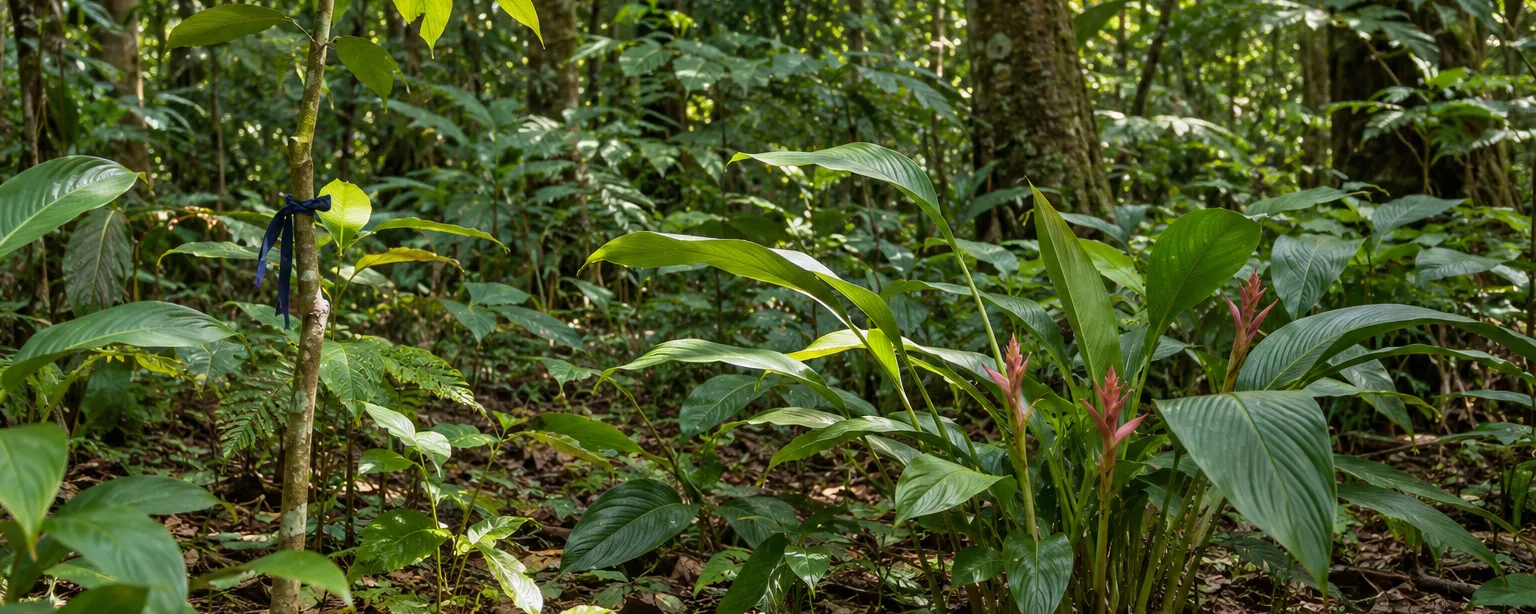
What is Mai Thet Mueang Thai: a book of 783 herbs declared alongside the three-part Pramuan Sappakhun Ya Thai
The Mai Thet Mueang Thai herbal text, in full "Tamra Mai Thet Mueang Thai: Sappakhun khong Ya Thet lae Ya Thai" (the properties of foreign and Thai drugs), is a book of medicinal herbs compiled and edited by Mo Sa-ngiam Phongbunrot. The Ministry of Public Health declared it a national Thai traditional medicine text in Notice No. 22 of B.E. 2562 (2019). The notice's annexed list says the text "consists of 783 kinds of herbs" and does not count them as formulas. The text declared alongside it is Pramuan Sappakhun Ya Thai, parts one to three, which the notice counts at 536, 519 and 358 formulas, 1,413 in all.
Many national texts are palm-leaf or folding-book manuscripts whose writers are unknown. This pair is different. They are modern printed books, and we know the compiler's name. Mo Sa-ngiam was a traditional doctor who went on field surveys of herbs with government scientists, so his book is where Thai doctors' knowledge meets modern botany: Thai names, local names and scientific names sit in one volume.
This article tells the story of the texts in order, explains how to find a printed copy, and sets out what a business should know before using a formula or the story in a product. For the full picture of rights in every type of formula, read Thai traditional medicine formula rights.
Source: Ministry of Public Health Notice (No. 22) B.E. 2562, annexed list items 1 and 2.1–2.3
Mo Sa-ngiam Phongbunrot: a traditional doctor who surveyed herbs with Department of Science pharmacists
Little is known about Mo Sa-ngiam Phongbunrot's life. We have not found his year of birth or of death. The most detailed source is the preface he wrote to Mai Thet Mueang Thai, which Watthana Chayathawat quotes in an article in the Journal of Thai Traditional Medicine Research (2021). The facts in this section come mainly from the author's own account, through that article.
Field surveys of herbs, 1939 to 1947
According to the preface as quoted by Watthana Chayathawat (2021), Mo Sa-ngiam took part in herb surveys with Professor Arno Viehoever and Rudolf Schaller, pharmacists of the Department of Science, between B.E. 2482 and 2490 (1939 to 1947). The surveys covered the north, the east and the central region. He also wrote that he had met traditional doctors from every region, and that he had helped advise the government on setting up an herb garden at Khao Soi Dao in Chanthaburi province.
The explanatory note in Pramuan Sappakhun Ya Thai describes him from another side: it says the compiler was a traditional doctor and a former Department of Science official in charge of the herb garden (as quoted in the same article). This sets him apart from earlier teachers. He did not learn herbs from books alone; he walked the forest and looked at living plants with scientists.
A preface that links him to the teacher line
In the same preface, Mo Sa-ngiam wrote that he had studied medicine and the properties of traditional drugs, and named the texts he used:
- the Wat Pho medical inscriptions at Wat Phra Chetuphon
- Phaetsat Songkhro, compiled by Phraya Phitsanu Prasat Wet (Mo Khong), whose story is told in our article on Wetchasueksa Phaetsat Sangkhep
- Wetchasat Wannana by Phraya Prasoet Sat Damrong (Nu), as he spelled it; most other sources spell the title "Thamrong". Read more in Wetchasat Wannana
Mo Nu was Mo Khong's teacher, and their books were core texts of the medical schools of King Rama V's reign. By citing both, Mo Sa-ngiam linked his work to the Bangkok line of medical teachers. The knowledge in Mai Thet Mueang Thai rests on the teachers' texts and then builds on them with fieldwork.
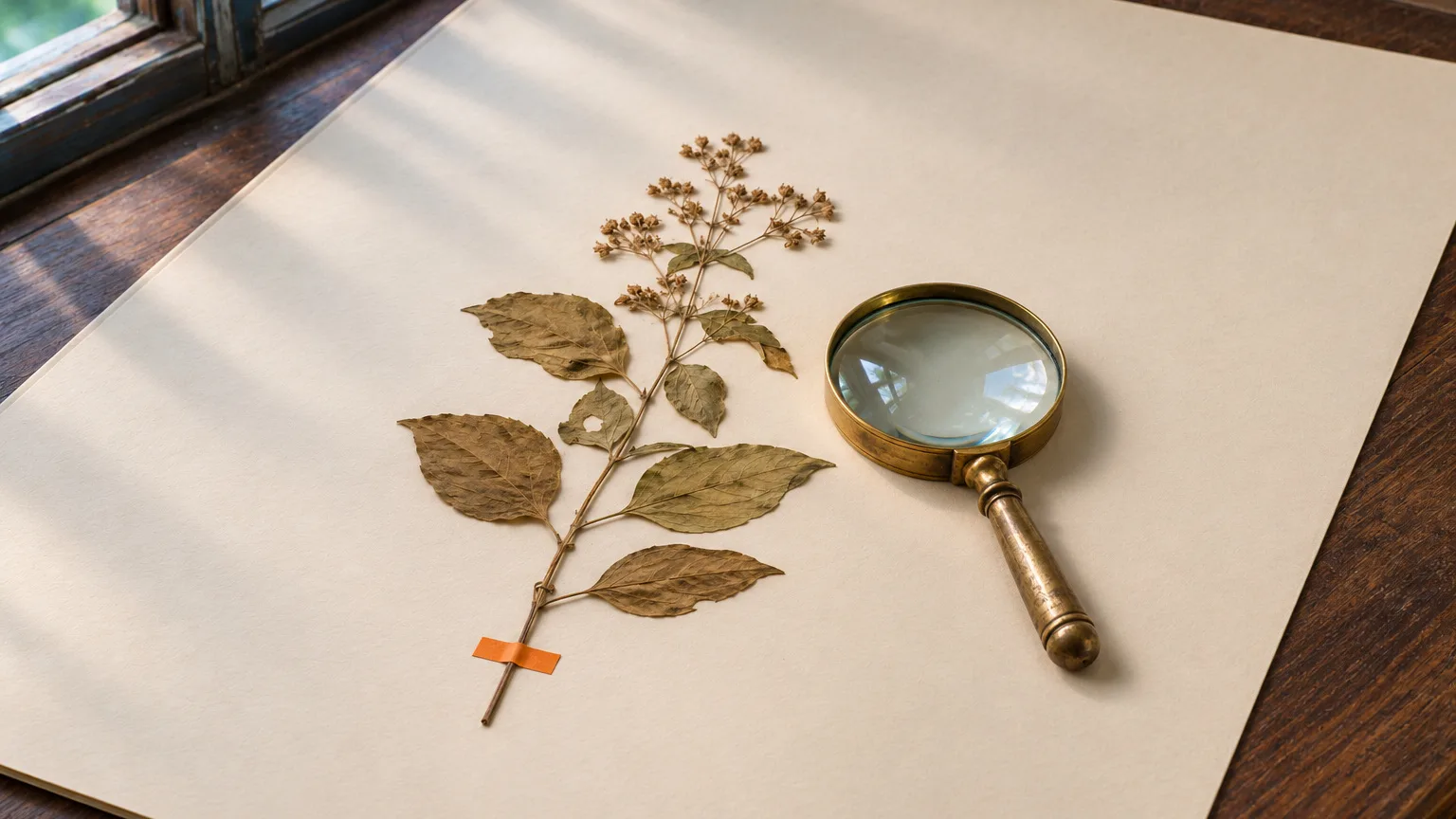
Inside Mai Thet Mueang Thai: ancient Thai herbs in alphabetical order, with scientific names
The subtitle, "the properties of foreign and Thai drugs", already tells you the scope: drugs from abroad and drugs found in Thailand. Watthana Chayathawat (2021) describes the structure of the 1979 printing like this:
- Arranged in Thai alphabetical order, from "kachae" to "oi chang", 783 entries in all
- Several layers of data per entry: the scientific name, a description, the medicinal use recorded in the text, and local names
- A grouping by property at the back, so a reader can look up a plant by name or by group of properties
The figure 783 matches Notice No. 22, which says the text "consists of 783 kinds of herbs". The notice does not count these entries as formulas, because each one describes a single drug, not a recipe that combines several.
Watthana Chayathawat's article itself uses this book as evidence in tracing where the properties of drugs in Thai medicine texts came from, with cinnamon as its case study. Scholars still use the text as a source.
Why herbal and cosmetic brands should know this book
The practical value of Mai Thet Mueang Thai lies in naming plants correctly, not in proving that a plant works. Thai herb names cause problems that product teams meet often:
- One name, different plants. Some Thai or local names refer to different species in different regions.
- One plant, many names. A single species can have several local names, so a supplier's documents and a formula sheet may not match.
- Modern documents use scientific names. Formulation work usually specifies a raw material by scientific name and plant part, and plant ingredient names in the international cosmetic ingredient naming system (INCI) start from the scientific name.
A book that sets Thai names, local names and scientific names side by side is a bridge between old recipes and modern raw-material documents. One caution: the scientific names in the book are those of the time it was printed, and some may since have changed as plants were reclassified. Before you use a name in a real document, check it against a current botanical database and check the actual raw material as well.
From Mai Thet Mueang Thai to the Wat Pho school's Pramuan Sappakhun Ya Thai
The story of Mai Thet Mueang Thai does not end with one book. Mo Sa-ngiam's work was edited further into Pramuan Sappakhun Ya Thai, published by the Traditional Medicine School of Wat Phra Chetuphon (Wat Pho).
A 1964 explanatory note and a botanist's foreword
According to Watthana Chayathawat (2021), Pramuan Sappakhun Ya Thai carries an explanatory note dated 10 October B.E. 2507 (1964). Two academics helped check the botanical names: Professor Titto Bunnag and Darun Phonsiri of the Faculty of Pharmacy. Professor Titto's foreword says the content came from Mo Sa-ngiam's Mai Thet Mueang Thai, and that the author passed away before he could print a revised edition.
That tells us two things. First, Mo Sa-ngiam died before the revised work appeared, although the foreword gives no year. Second, because pharmacy academics checked the botanical names, this pair of texts took scientific names seriously from the start.
Printings we found evidence of
- Mai Thet Mueang Thai. Watthana Chayathawat says it was first printed by Kasem Bannakit Press in B.E. 2514 (1971). The bibliography of Mahidol University's database of commonly used plants lists a B.E. 2519 (1976) printing by Kasem Bannakit, 596 pages. The B.E. 2522 (1979) printing by Krungthon Press is the one Watthana Chayathawat uses to describe the book's structure.
- Pramuan Sappakhun Ya Thai, parts 1 to 3. The same bibliography lists a B.E. 2520 to 2521 (1977 to 1978) edition published by the Traditional Medicine School Association of Wat Phra Chetuphon and printed by Phaisan Sin Kanphim: part 1 has 184 pages, part 2 has 219 and part 3 has 200. Watthana Chayathawat records a reprint of part one by Bophit Kanphim in B.E. 2537 (1994).
The dates do not quite join up. The explanatory note in Pramuan Sappakhun Ya Thai is dated 1964, earlier than the 1971 printing of Mai Thet Mueang Thai that we found, so the content of Mai Thet Mueang Thai may have existed before that printing. We have not found evidence of an earlier printing, so this article gives each date as each source records it and does not join them up ourselves.
What Pramuan Sappakhun Ya Thai covers
The annexed list of Notice No. 22 describes all three parts as dealing with "plants, minerals and animal materials of many kinds", that is, drugs from plants, minerals and animals. The notice counts part one at 536 formulas, part two at 519 and part three at 358. Watthana Chayathawat notes that the figures in the Royal Gazette differ from a count made from the books' tables of contents. For legal purposes, the figures in the notice are the ones that count.
- Field surveys of herbsWith Department of Science pharmacists, per the author's preface
- Explanatory note of Pramuan Sappakhun Ya ThaiTraditional Medicine School, Wat Phra Chetuphon
- Mai Thet Mueang Thai first printedKasem Bannakit Press, per Watthana Chayathawat (2021)
- Later printingsKasem Bannakit, 596 pages · Krungthon Press
- Pramuan Sappakhun Ya Thai, three partsPhaisan Sin Kanphim (part one reprinted 1994)
- Notice No. 22Declared a national text (Royal Gazette, 29 Apr 2019)
Source: Watthana Chayathawat (2021) · Mahidol University plant database bibliography · MOPH Notice No. 22 (2019)
Where to read this Thai herbal medicine text
There is no handwritten original of this pair to request at a library. What you can find are printed copies, from several printings and presses. These steps work in practice.
1. Search library catalogues by title
Search for
2. Use a bibliography as a map
The bibliography of Mahidol University's database of commonly used plants and indications for traditional medicine registration records several printings (items S.58 to S.60 for the three parts of Pramuan Sappakhun Ya Thai, and S.67 for the 1976 printing of Mai Thet Mueang Thai). Use it as a starting list when asking a library to lend or show you a copy.
3. If you plan a product, ask the registrar
An applicant for a use permit can ask the registrar for preliminary information on a formula or a short summary of a text (see the section on using a formula below). This confirms that what you hold matches the declared text, not a later edited printing.
You may read the printed Thai herbal medicine texts for study, but before you copy pages, long passages or images from the books, read the copyright section below.
Declared a national Thai traditional medicine text: Notice No. 22 of 2019
Ministry of Public Health Notice on the Declaration of National Thai Traditional Medicine Texts and National Thai Traditional Formulas (No. 22) B.E. 2562 (2019) was issued under section 4 paragraph one and section 17 of the Protection and Promotion of Thai Traditional Medicinal Intelligence Act B.E. 2542 (1999). It was signed on 17 April 2019 and published in the Royal Gazette, volume 136, special part 106 Ng, page 1, on 29 April 2019.
The annexed list names three texts: Mai Thet Mueang Thai (783 kinds of herbs, no formulas counted), Pramuan Sappakhun Ya Thai in three parts (1,413 formulas), and Tam Ha Ya Hariphunchai, an old Lanna-script document in 11 items with 757 formulas. The whole notice therefore covers 2,170 formulas.
What "national" means
Clause 3 of the notice makes the texts in the annexed list national Thai traditional medicine texts, and clause 4 makes the Thai traditional formulas in those texts national Thai traditional formulas. So all 1,413 formulas in Pramuan Sappakhun Ya Thai are national formulas, and Mai Thet Mueang Thai has the status of a national text. Anyone who wants to use a national formula in the ways section 19 lists needs a permit first. Reading, studying or telling the history of the text is not on the section 19 list. Rights in every type of formula are explained in Thai traditional medicine formula rights.
If you want to use a formula from Pramuan Sappakhun Ya Thai, or a recipe that cites Mai Thet Mueang Thai
If you have a recipe taken from Pramuan Sappakhun Ya Thai, or a recipe your team developed using information from Mai Thet Mueang Thai, there are two things to do before you invest in production.
1. Ask for preliminary information on the formula or text
The Committee Notice on Disclosure of Preliminary Information about National Thai Traditional Formulas or Texts B.E. 2560 (2017) lets an applicant for a use permit who wants preliminary information file the request form attached to the notice. The registrar discloses the herbal ingredients in proportion and the indications of a formula, or a short summary of the essence of a text. The form asks for your purpose, the name of the formula or text, and the number of the declaring notice, which for this pair is Notice No. 22.
This route suits this pair well. The notice does not list the formulas in Pramuan Sappakhun Ya Thai by name, and Mai Thet Mueang Thai is a text with no formulas counted. Comparing your recipe with the registrar's information shows whether it relates to a national formula or text.
2. Apply for a use permit under section 19
Section 19 of the Protection and Promotion of Thai Traditional Medicinal Intelligence Act provides that anyone who wants to use a national Thai traditional formula to register a drug formula and apply for a production licence, or to research and improve it into a new formula for commercial purposes, must apply for a use permit and pay compensation to the licensor, as set by ministerial regulation. The steps, forms and contract are covered in Thai traditional medicine formula rights.
Section 19 speaks of national "formulas", and Mai Thet Mueang Thai was declared as a text with no formulas counted. If your recipe only draws on plant information from this book, first check whether it matches a formula in Pramuan Sappakhun Ya Thai or in another national text. If you are unsure, use the preliminary-information route in step 1.
A permit on the traditional-knowledge side does not replace the Thai FDA steps. The product itself still goes through the Thai FDA under the Herbal Products Act B.E. 2562 (2019) as usual. Browse the texts and formula counts in every notice with the Formula rights check tool.
How far a brand can tell the Mai Thet Mueang Thai story, and why you cannot copy its properties into ads
Mai Thet Mueang Thai has plenty of story to tell, but there is one common trap: copying a plant's "properties" or "medicinal use" from the book into product advertising, on the idea that information from a national text must be usable. It is not, for reasons found in two sections of the Herbal Products Act B.E. 2562 (2019).
Section 70: advertising needs a licence first
Section 70 reads, in our translation: "No person shall advertise a herbal product or the benefits of a herbal product unless they have first obtained a licence from the licensor." The property statements in the book are a record of past doctors' knowledge, not advertising text licensed for your product. A text being national does not turn its wording into something you may advertise.
Section 74: five prohibited kinds of advertising
- Boasting that the properties or ingredients of a herbal product can heal, relieve or prevent disease or illness in a sacred way or according to personal belief (the same item also prohibits advertising that it "can cure a disease completely, or using any other words with a similar meaning")
- Showing properties that are false, exaggerated or misleading about the herbal product
- Implying that a substance is an ingredient when the product does not contain it, or contains less than the advertising implies
- Certifying or praising the properties of the herbal product through any person, group of persons or institution
- Breaching the advertising criteria, methods and conditions set by the Minister on the Committee's advice
Applied to copying properties from the text: item 2 matters because a plant's recorded properties are not proven results for that product; item 3 matters when the product contains less of the plant than the wording implies; and item 4 matters when the doctor, the traditional medicine school or the academics who checked the plant names are presented as if they endorse the product.
Safe angles
- A doctor who surveyed forests with scientists: the 1939 to 1947 fieldwork, as the author's preface describes it
- A bridge between Thai and scientific names: explain that the brand used the text to identify the right species
- The teacher line: a preface that cites the books of Mo Nu and Mo Khong
- From one book to Wat Pho's three-part text: give the printing years as recorded
What to avoid
- Copying property or medicinal-use statements from the book into advertising or labels
- Wording that makes the text sound sacred, or says the product works because the text is old
- Wording that implies Wat Pho, the traditional medicine school, the Department of Thai Traditional and Alternative Medicine or any institution endorses the product
- Saying "a formula from Pramuan Sappakhun Ya Thai" when the product uses only part of a formula, or when there is no evidence of which formula it comes from and no permit
If you state where a recipe or raw material comes from, describe exactly what you did. Advertising a herbal product or its benefits needs a licence under section 70 before publication.
✘Avoid
- Copying a plant's properties from the book into advertising
- Saying the product works because the text is old or national
- Implying Wat Pho, the medical school or a government body endorses the product
- Claiming a formula from the text when you use only part of it or have no permit
✔You can tell
- A traditional doctor who surveyed herbs with scientists, 1939 to 1947
- Using the text to match Thai names with scientific names and pick the right species
- A preface that cites the books of Mo Nu and Mo Khong
- Credit the text, the notice and the studies by name
Advertising a herbal product or its benefits needs a licence under section 70 and must not fall under the prohibitions in section 74 of the Herbal Products Act B.E. 2562 (2019).
Book images and copyright for texts printed after 1947
Mai Thet Mueang Thai and Pramuan Sappakhun Ya Thai are books printed between 1971 and 1994, not old library manuscripts. The rules that matter are mainly those of book copyright. What follows is caution, not a legal ruling.
Do not treat books printed after 1947 as public domain
The Copyright Act B.E. 2537 (1994) protects literary works, which include books, writings and printed matter (sections 4 and 6). The owner has the exclusive right to reproduce, adapt and communicate the work to the public (section 15), and copyright lasts for the author's life and 50 years after the author's death (section 19).
We do not know the year Mo Sa-ngiam died, so we cannot work out when copyright in his work ends. The Wat Pho school printings also contain other people's work, such as the explanatory note, the foreword and the checking of botanical names, which may carry separate rights. The safe course is not to treat these books as public domain.
What you can do, and what needs permission first
- Section 6 paragraph two says copyright protection does not extend to ideas, procedures, processes, systems or concepts. Retelling facts about the text in your own words, with credit, is different from reprinting pages of the book.
- Section 7 says regulations, notices and orders of government agencies are not copyright works, so you can cite the text names and figures in the notice's annexed list.
- Before scanning pages, illustrations or long passages for packaging, websites or sales material, ask the publisher or the rights holder's heirs.
Images you can use instead
If you need an image to go with the story, the safe options are photos you take yourself, such as real herbal raw materials, or images with a clear licence and credit given as required. Write an accurate caption, and do not call it a page of Mai Thet Mueang Thai if it is not.
Historical sources
- Ministry of Public Health Notice on the Declaration of National Thai Traditional Medicine Texts and National Thai Traditional Formulas (No. 22) B.E. 2562. Royal Gazette, vol. 136, special part 106 Ng, p. 1, 29 April 2019.
- Watthana Chayathawat. (2021). The origin of drug properties in Thai traditional medicine texts: a case study of cinnamon [in Thai]. Journal of Thai Traditional Medicine Research, 7(2), 137–160.
- Sa-ngiam Phongbunrot. Mai Thet Mueang Thai: Sappakhun khong Ya Thet lae Ya Thai [in Thai]. Bangkok: Kasem Bannakit (1971, 1976); Krungthon Press (1979).
- Traditional Medicine School Association of Wat Phra Chetuphon. Pramuan Sappakhun Ya Thai, parts 1–3 [in Thai]. Bangkok: Phaisan Sin Kanphim (1977–1978); part 1: Bophit Kanphim (1994).
- Mahidol University. Bibliography of the database of commonly used plants and indications for traditional medicine registration (items S.58–S.60 and S.67).
Frequently asked questions
What is Mai Thet Mueang Thai?
It is Tamra Mai Thet Mueang Thai, a book on the properties of foreign and Thai drugs compiled and edited by Mo Sa-ngiam Phongbunrot. Ministry of Public Health Notice No. 22 of 2019 declared it a national Thai traditional medicine text, consisting of 783 kinds of herbs, with no formulas counted.
How is Mai Thet Mueang Thai related to Pramuan Sappakhun Ya Thai?
Professor Titto Bunnag's foreword to Pramuan Sappakhun Ya Thai (as quoted by Watthana Chayathawat, 2021) says its content came from Mo Sa-ngiam's Mai Thet Mueang Thai. Pramuan Sappakhun Ya Thai was published by the Traditional Medicine School of Wat Phra Chetuphon. Both were declared together in Notice No. 22, with 1,413 formulas in the three parts of Pramuan Sappakhun Ya Thai.
Who was Mo Sa-ngiam Phongbunrot?
A traditional doctor. According to his preface, as quoted by Watthana Chayathawat (2021), he surveyed herbs with Department of Science pharmacists between 1939 and 1947 in the north, the east and the central region. We have not found his years of birth or death.
Can I use the scientific names in Mai Thet Mueang Thai in raw-material documents?
They are a good starting point, because the book sets Thai names, local names and scientific names side by side. But the names are those of the time of printing and some may have changed since. Check them against a current botanical database and check the actual raw material.
Can I copy a plant's properties from Mai Thet Mueang Thai into an advert?
No. Section 70 of the Herbal Products Act B.E. 2562 (2019) prohibits advertising a herbal product or its benefits without a licence, and section 74 prohibits false, exaggerated or misleading properties. The properties in the text are a record of knowledge, not advertising text licensed for a product.
Can I use a formula from Pramuan Sappakhun Ya Thai in a product?
Its formulas are national Thai traditional formulas under Notice No. 22. To register a drug formula and apply for a production licence, or to research and improve one into a new formula for commercial purposes, you need a use permit under section 19, and the product still goes through the Thai FDA. Browse the notices in the Formula rights check tool.
Sources
- Protection and Promotion of Thai Traditional Medicinal Intelligence Act B.E. 2542 (1999) · Open source · Search our archive
- Ministry of Public Health Notice on the Declaration of National Thai Traditional Medicine Texts and National Thai Traditional Formulas (No. 22) B.E. 2562 (2019) · Open source · Search our archive
- Committee Notice on Disclosure of Preliminary Information about National Thai Traditional Formulas or Texts B.E. 2560 (2017) · Open source · Search our archive
- Herbal Products Act B.E. 2562 (2019) · Open source · Search our archive
- Copyright Act B.E. 2537 (1994), consolidated to amendment No. 3 B.E. 2558 (2015) · Open source · Search our archive
This article is for general information. It is not a Thai FDA ruling or legal advice, and rules change — check the latest notification or ask an expert before filing or producing. Spotted an error? Tell us and we will correct it
Related articles
 Brand ownersThai Traditional Medicine Formula Rights: National, General and Personal Formulas Before the Thai FDA StepsThai traditional medicine formulas come in 3 types. National ones need permission to use, personal ones the right holder's consent, then Thai FDA steps.
 Brand ownersVetchasat Wannana: The Five-Volume Thai Medical Text Printed for Doctors and HouseholdsThe Vetchasat Wannana Thai medical text: five printed volumes declared national in 2017 and 2018, 2,049 formulas. Its story and what brands must know.
 Brand ownersVetchasueksa Phaetsat Sangkhep: The Thai Medicine Textbook a Teacher Rewrote for Students, Now a National TextThe Vetchasueksa: a three-volume Thai medicine textbook first printed in 1908, 269 formulas, declared national in 2018: its story and what brands must know