 FDA Thailand
 Brand owners
Ya Hom Wani, Wat Suthat Formula: A Temple Ya Hom Declared a National Thai Traditional Formula

What is Ya Hom Wani, the Wat Suthat formula
The Ya Hom Wani Wat Suthat formula (
Unlike most national texts, this formula does not come from a samut thai book in the National Library. It comes from a temple, and the notice declares it in the body of the notice, not in the annexed list. The same notice also declares Khamphi Prathom Chinda volumes 3 to 12, with another 556 formulas, so the whole notice covers 557 formulas.
This article tells only what the documents confirm. We searched and have not found any history of this formula, nor any reliable source on where the name "Wani" comes from, so we do not guess. The article then explains what kind of Thai traditional medicine ya hom is, and what steps apply if you want to make ya hom from a national formula. For an overview of rights in every type of formula, read Thai traditional medicine formula rights.
Source: Ministry of Public Health Notice (No. 40) B.E. 2569, clauses 3 and 4 and annexed list, Royal Gazette vol. 143, special part 100 Ng, p. 11
What is ya hom: a group of old Thai traditional formulas found in texts of many periods
The word "ya hom" (
Ya hom in royal texts and national texts
- The Royal Medicine Text of King Rama II (
ตำราพระโอสถ ครั้งรัชกาลที่ 2), first printed in B.E. 2459 (1916), has a part on "medicines of the royal dispensary", and within it a separate section on "ya hom formulas". The royal physicians treated ya hom as a group of its own. - King Narai's medicine text includes "Ya Hom Dum", one of four formulas revived by the Thai Khadi Research Institute, Thammasat University, according to a report in Naewna (read about this text in King Narai's medical text).
- National formula notices already list several ya hom names, such as Ya Hom Nam Kaeo in the first notice of B.E. 2558 (2015) (see the Wat Pho inscriptions) and Ya Hom Nawakot in Notice No. 11 of B.E. 2560 (2017).
- The Ministry of Public Health Notice on Traditional Household Remedies of B.E. 2556 (2013), issued under the Drug Act B.E. 2510 (1967), lists four ya hom formulas, Ya Hom Thepphachit, Ya Hom Thipphaosot, Ya Hom Inthachak and Ya Hom Nawakot, among the 24 traditional formulas in its clause 4.
The same name does not mean the same formula
Each ya hom is a formula of its own, with ingredients and proportions that differ from text to text. Ya Hom Wani is one formula in the ya hom group, not a general name for ya hom. This matters for businesses, because what decides whether you need permission is which declared formula your actual recipe matches, not the words "ya hom" on the box.
Under current law, ya hom is a Thai traditional medicine, and the Herbal Products Act B.E. 2562 (2019) defines herbal products to include Thai traditional medicines (section 4). Ya hom made for sale therefore goes through the Thai FDA under that Act. See the section on ya hom on the market below.
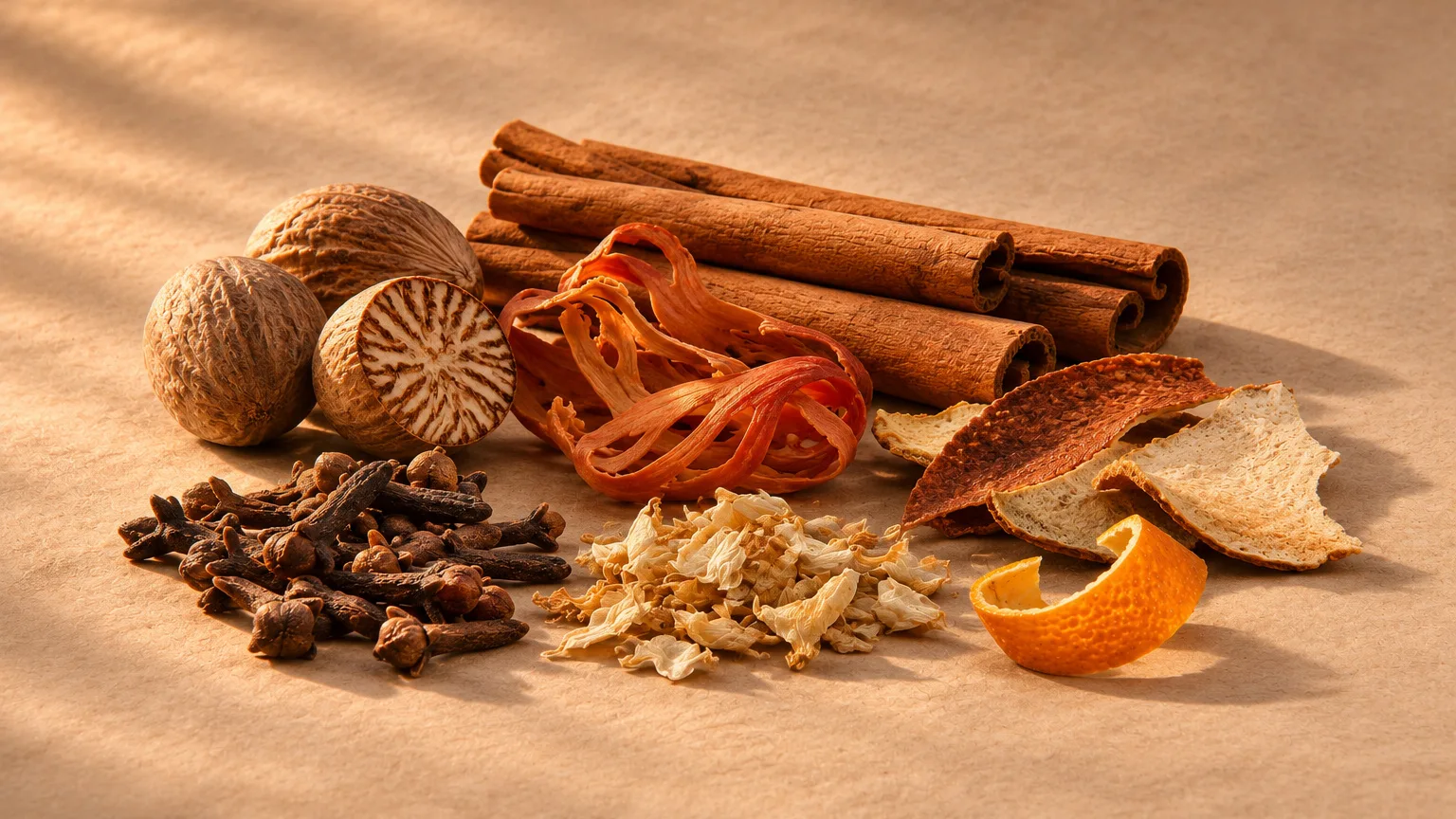
From a temple to the Royal Gazette: how a temple's ya hom became a national formula
Most old Thai formulas that became national formulas come from texts in the National Library, but the law does not limit the source to that. Ya Hom Wani shows that a formula from a temple can also be declared national, just as some earlier notices declared single formulas from other sources, such as the Mo Decha cannabis oil formula in Notice No. 26 of B.E. 2563 (2020).
The criteria
Section 17 of the Protection and Promotion of Thai Traditional Medicinal Intelligence Act B.E. 2542 (1999) lets the Minister declare national formulas or texts under criteria in a ministerial regulation of B.E. 2558 (2015). That regulation requires a formula or text that the government collected, developed or improved and whose source can be documented, or one that shows national identity, has value for study and research, affects the national economy, or could be developed into a new drug. It must also not already be protected under this Act. The Committee for the Protection and Promotion of Thai Traditional Medicinal Intelligence advises the Minister.
The preamble of Notice No. 40 gives its reason: the texts and formulas in the notice show national identity that should be preserved, or have value for study and research, or are of special benefit to medicine or public health.
Timeline from the documents
- 7 October 2025: the date stated in clause 4, next to the name of the person the formula came from.
- 23 February 2026: the Committee gives its advice, at meeting no. 111-1/2569.
- 25 March 2026: the notice is signed.
- 20 April 2026: published in the Royal Gazette; in force from the day after publication.
- 23 April 2026: the Department of Thai Traditional and Alternative Medicine posts news of the notice on its website.
What we have not found
We searched the Royal Gazette, the website and open data of the Department of Thai Traditional and Alternative Medicine, and related news. We have not found any document saying since when the temple has used this formula, who devised or recorded it, or where the name "Wani" comes from. We found no press coverage of this formula either. We therefore add no further story. If the temple or the department publishes more information later, we will update this article.
- Date in clause 4The notice states this date next to the name of the person the formula came from
- Committee adviceMeeting no. 111-1/2569
- Notice No. 40 signedYa Hom Wani, 1 formula, and Prathom Chinda, 556 formulas
- Royal GazetteVol. 143, special part 100 Ng, p. 11; in force the next day
- Department newsDepartment of Thai Traditional and Alternative Medicine
Source: MOPH Notice No. 40 (2026) · Department of Thai Traditional and Alternative Medicine news post, 23 Apr 2026
Declared in the same notice: Khamphi Prathom Chinda volumes 3 to 12, a national Thai traditional medicine text with 556 formulas
Clause 3 of Notice No. 40 makes the texts in the annexed list national Thai traditional medicine texts, and the formulas in them national Thai traditional formulas. The list has 10 items from the National Library, with 556 formulas in all. All of them are "Khamphi Prathom Chinda" (
- Vol. 3, no. 1020: 61 formulas · Vol. 4, no. 1021: 52 formulas
- Vol. 5, no. 1022: 68 formulas · Vol. 6, no. 1023: 72 formulas
- Vol. 7, no. 1024: 52 formulas · Vol. 8, no. 1025: 55 formulas
- Vol. 9, no. 1026: 55 formulas · Vol. 10, no. 1027: 49 formulas
- Vol. 11, no. 1028: 37 formulas · Vol. 12, no. 1029: 55 formulas
The list says every volume is an ancient document of the black samut thai type, kept in bundle 67, cabinet 112, shelf 4/3, with the history "received from the Ministry of Public Instruction on 10 June B.E. 2480 (1937)". The notice does not explain what "matching the royal edition" means, and it does not name the formulas one by one.
Same name, different items
An article by Watthana Chayathawat (2021) counts Prathom Chinda among the classic texts at the core of Thai traditional medicine study. The name therefore appears in more than one national text. For example, the Royal Medical Texts of King Rama V, declared in Notice No. 2 of B.E. 2558 (2015), also contains several volumes of Khamphi Prathom Chinda. Nos. 1020 to 1029 in Notice No. 40 are a different set of documents. If your recipe comes from "Prathom Chinda", you need to know which volume and which number, because the notice number you write on the application will differ.
Where to read the Ya Hom Wani formula, and where the Prathom Chinda originals are
Ya Hom Wani: no published version found
Notice No. 40 gives the formula's name, who it came from, and the count, but not its ingredients or method. We have not found a printed edition or a government web page that publishes the formula. The route the law provides is to ask the registrar for preliminary information, which discloses the herbal ingredients in proportion and the indications of the formula (see the section on making ya hom below).
Khamphi Prathom Chinda: search the National Library
Originals nos. 1020 to 1029 are at the National Library of Thailand, Fine Arts Department. The library's service pages give these steps.
- Search the register in the National Library's ancient documents database (manuscript.nlt.go.th), samut thai tab. You can search by register number, or by register title, cover title or subject. Try nos. 1020 to 1029, or the Thai name "
ประถมจินดา ". - Register and apply online using the form to request permission to study and use ancient documents. When the Director of the National Library approves, the system notifies you by email, and you then use the service at the Manuscripts and Inscriptions Group.
- Note the details: the service rules advise noting the category, group, title and number before you apply.
- In the reading room: if a printed, microfilm or digital copy already exists, the library shows you the copy instead of the original. Users may not photograph ancient documents themselves; ask staff for copies.
Work that uses information from the documents must credit the National Library and send one copy to the Manuscripts and Inscriptions Group.
Notice No. 40 and national Thai traditional medicine texts: what "national" means
The Notice of the Ministry of Public Health on the Declaration of National Thai Traditional Medicine Texts and National Thai Traditional Formulas (No. 40) B.E. 2569 was issued under section 4, paragraph one, and section 17 of the Protection and Promotion of Thai Traditional Medicinal Intelligence Act B.E. 2542 (1999). It has four clauses. Clause 1 gives the title, clause 2 brings it into force from the day after publication in the Royal Gazette, clause 3 declares 10 items of Khamphi Prathom Chinda with 556 formulas, and clause 4 declares Ya Hom Wani, 1 formula, for 557 formulas in total.
What "national" means
Once a formula is a national Thai traditional formula, anyone who will use it in the ways section 19 lists must obtain permission first, even though the formula came from a temple. Reading, studying or telling the history of the formula is not on the list in section 19. National formulas differ from personal formulas, which are formulas that an inventor, improver or inheritor registers as a right (sections 20 and 21). Rights in every type of formula are explained in full in Thai traditional medicine formula rights.
If you want to make ya hom from the Wani formula: preliminary information and a section 19 permit
Making ya hom for sale from the Ya Hom Wani formula involves two steps on the formula rights side that are worth doing before you invest in production.
1. Ask for preliminary information about the formula
The Notice of the Committee for the Protection and Promotion of Thai Traditional Medicinal Intelligence on Disclosure of Preliminary Information about National Thai Traditional Formulas or National Thai Traditional Medicine Texts B.E. 2560 (2017) lets an applicant for a use permit who wants preliminary information file the request form attached to the notice. The registrar discloses the herbal ingredients in proportion and the indications of the formula. The form must state the purpose, the name of the formula, and the number of the notice, which for this formula is Notice No. 40, clause 4.
This step matters especially for Ya Hom Wani, because no published version of the formula has been found. Comparing your recipe with the registrar's information tells you whether it matches the national formula.
2. Apply for a use permit under section 19
Section 19 of the Protection and Promotion of Thai Traditional Medicinal Intelligence Act says that anyone who will take a national Thai traditional formula to register a drug formula and apply for a licence to produce the drug, or to study, research and improve it into a new formula for commercial purposes, must apply for permission to use it and pay compensation for the use to the permitting authority, as set by ministerial regulation. The steps, forms and contract are explained in Thai traditional medicine formula rights.
A permit on the traditional knowledge side does not replace the Thai FDA steps, and getting the formula directly from the temple does not replace a section 19 permit. Search the texts and formula counts in every notice with the Formula rights check.
Ya hom on the market is a herbal product: registration, advertising and brand storytelling
The Thai FDA steps under the Herbal Products Act B.E. 2562 (2019)
Ya hom sold on the market is a Thai traditional medicine, so it is a herbal product under the definition in section 4. Permission works at three levels: a licence to produce, import or sell (sections 17 and 20), a formula registration certificate (section 34), and a detailed notification or listing receipt (section 45). The Minister issues notices saying which route each product takes (section 6), so check the notices that apply to your product before you file.
On advertising, section 70 says that no one may advertise a herbal product or the benefits of a herbal product unless they have a licence from the licensing authority.
Section 74 prohibits five kinds of advertising
- Boasting about the properties or ingredients of a herbal product by claiming they can treat, relieve or prevent disease or illness in a sacred way or according to personal belief (the same clause also prohibits claims that it "can cure a disease completely", or other words with a similar meaning).
- Stating properties that are false, exaggerated or misleading.
- Implying that the product contains an ingredient that it does not contain, or contains in a smaller amount than the ad implies.
- Endorsing or praising the product's properties through any person, group of persons or institution.
- Breaching the advertising criteria, methods and conditions set by the Minister on the Committee's advice.
Safe storytelling angles
- A temple formula that became a national formula: give the notice number, date and wording as printed.
- Ya hom is a long-standing group of medicines: the royal text of King Rama II kept a separate section of ya hom formulas.
- The protection system still takes in new formulas: Notice No. 40 was issued in 2026.
- State the source of your recipe truthfully: once you have permission, cite the notice number.
What to avoid
- Stating the properties of Ya Hom Wani on labels or in posts without an advertising licence.
- Wording or images that make the formula seem sacred, or say it works because it comes from a temple.
- Wording or images that imply the temple, monks or a government agency endorse the product.
- "Wat Suthat formula" or "Ya Hom Wani" on a product that uses only part of the formula, or before a section 19 permit is granted.
- Stories about the origin of the name "Wani" that have no evidence.
✘Avoid
- Stating the properties of ya hom without an advertising licence
- Making it seem sacred, or saying it works because it comes from a temple
- Using temple or monk images so the temple seems to endorse the product
- Using the formula name on a product that uses part of it or has no permit
- Stories about the origin of the name Wani without evidence
✔Fine to tell
- A temple formula declared a national formula
- The notice number, date and wording as printed
- Ya hom is a group that royal texts kept as its own section
- The true source of your recipe, once you have permission
Advertising a herbal product or its benefits needs a licence under section 70 and must not fall under the prohibitions in section 74 of the Herbal Products Act B.E. 2562 (2019).
Temple images, images of originals, and copyright
Images of Wat Suthat
Some images of Wat Suthat Thepwararam on Wikimedia Commons are under a CC BY-SA licence, which requires credit to the photographer and the licence, and requires adapted images to be shared under the same licence. Even when an image may be used under its licence, placing a temple or a monk next to a product may lead viewers to think the temple endorses it, which comes close to the prohibition in section 74 (4). Temple images fit better in articles about history than on packaging.
Images of the Prathom Chinda originals
The National Library's ancient documents service page says that photographing or copying for trade or profit needs permission from the Director-General of the Fine Arts Department, and that publishing images of ancient documents in a book, research or article requires a letter to the Director-General. Without permission, use a samut thai image with a clear licence, and caption it as an example of a samut thai, not as the Prathom Chinda original.
A modern printed edition may be under copyright
The Copyright Act B.E. 2537 (1994) counts books and printed matter as literary works, and gives the copyright owner the exclusive right to reproduce, adapt and communicate the work to the public (sections 4, 6 and 15). Regulations, notices and orders of government agencies are not copyright works (section 7). Quoting Notice No. 40 is therefore different from reprinting pages of someone else's printed edition or transcription. If you want to use pages or images from a book for commercial purposes, ask its makers first. This section is a caution, not a legal opinion on any particular case.
Historical references
The list below gives the sources for the historical story in this article. The laws cited are in the source list at the end of the article.
- Notice of the Ministry of Public Health on the Declaration of National Thai Traditional Medicine Texts and National Thai Traditional Formulas (No. 40) B.E. 2569. Royal Gazette, vol. 143, special part 100 Ng, p. 11, 20 April 2026.
- Department of Thai Traditional and Alternative Medicine. News post on Notice of the Ministry of Public Health (No. 40) B.E. 2569, 23 April 2026.
- Department of Thai Traditional and Alternative Medicine. Open dataset "List of Thai traditional formulas in Thai traditional medicine texts under Ministry of Public Health notices" (dtam-acad-002), updated 22 April 2026.
- Tamra Phra Osot Khrang Ratchakan thi 2 (Royal Medicine Text of King Rama II). First printing B.E. 2459 (1916). Bangkok: Sophon Phiphatthanakon Press. Electronic edition, Vajirayana Digital Library.
- Watthana Chayathawat. "The sources of drug properties in Thai traditional medicine texts: a case study of cinnamon." Journal of Thai Traditional Medicine Research, vol. 7, no. 2 (July to December 2021).
- Naewna newspaper (Like Sara column). Report on the study and revival of formulas from King Narai's medicine text by the Thai Khadi Research Institute, Thammasat University.
- National Library of Thailand, Fine Arts Department. Ancient documents service. Accessed 18 November 2026.
- National Library of Thailand. Database of ancient documents, inscriptions, samut thai, scripture cabinets and palm-leaf manuscripts: search page, service rules, and guide to requesting ancient documents. Accessed 18 November 2026.
- Wikimedia Commons. Images of Wat Suthat Thepwararam Ratchaworamahawihan (CC BY-SA licence). Accessed 18 November 2026.
Frequently asked questions
Which notice declared Ya Hom Wani, the Wat Suthat formula?
Clause 4 of Ministry of Public Health Notice No. 40 of B.E. 2569 (2026), dated 25 March 2026 and published in the Royal Gazette, vol. 143, special part 100 Ng, p. 11, on 20 April 2026. It covers 1 formula.
Where does the name "Wani" come from?
We have not found a reliable source that explains the name, nor any history of the formula. The notice gives only the formula's name, who it came from, a date and the count, so this article does not guess at the name's origin.
What is ya hom?
Ya hom is a group of Thai traditional formulas found in texts of many periods. The Royal Medicine Text of King Rama II, for example, has a separate section of ya hom formulas, and several national formula notices list formulas whose names begin with ya hom. Each formula has its own ingredients, so the same name does not mean the same recipe.
Can I make and sell ya hom from the Wani formula?
The formula is a national Thai traditional formula. To register a drug formula and apply for a production licence, or to research and improve it into a new formula for commercial purposes, you need a use permit under section 19 first, and the product must still go through the Thai FDA under the Herbal Products Act B.E. 2562 (2019).
Which law covers ya hom sold on the market?
Ya hom is a Thai traditional medicine, which falls within the definition of herbal products in section 4 of the Herbal Products Act B.E. 2562 (2019). It needs a licence to produce or import, plus registration, detailed notification or listing as the notices require. Advertising needs a licence under section 70.
How many formulas does Khamphi Prathom Chinda have in Notice No. 40?
10 items, volumes 3 to 12 "matching the royal edition", National Library nos. 1020 to 1029, black samut thai, with 556 formulas. With Ya Hom Wani, the whole notice covers 557 formulas. Search the list with the Formula rights check.
Sources
- Protection and Promotion of Thai Traditional Medicinal Intelligence Act B.E. 2542 (1999) · Open source · Search our archive
- MOPH Notice on the Declaration of National Thai Traditional Medicine Texts and National Thai Traditional Formulas (No. 40) B.E. 2569 (2026) · Open source · Search our archive
- Ministerial Regulation on the Declaration of National Thai Traditional Formulas or National Thai Traditional Medicine Texts B.E. 2558 (2015) · Open source · Search our archive
- Committee Notice on Disclosure of Preliminary Information about National Thai Traditional Formulas or Texts B.E. 2560 (2017) · Open source · Search our archive
- MOPH Notice on the Declaration of National Thai Traditional Medicine Texts and National Thai Traditional Formulas B.E. 2558 (2015) (first notice) · Open source · Search our archive
- MOPH Notice on the Declaration of National Thai Traditional Medicine Texts and National Thai Traditional Formulas (No. 11) B.E. 2560 (2017) · Open source · Search our archive
- MOPH Notice on Traditional Household Remedies B.E. 2556 (2013) · Open source · Search our archive
- Herbal Products Act B.E. 2562 (2019) · Open source · Search our archive
- Copyright Act B.E. 2537 (1994), consolidated to Amendment No. 3 B.E. 2558 (2015) · Open source · Search our archive
This article is for general information. It is not a Thai FDA ruling or legal advice, and rules change — check the latest notification or ask an expert before filing or producing. Spotted an error? Tell us and we will correct it
Related articles
 Brand ownersKing Narai Medical Text: An Ayutthaya Palm-Leaf Formula Book Declared a National Thai TextThe King Narai medical text: an Ayutthaya palm-leaf book of 79 formulas, declared national in 2015. Its story, the 1917 edition, and what brands must know.
 Brand ownersRama V Royal Medical Texts: 33 Thai Medical Scriptures Revised in 1870 and Declared a National TextThe Rama V royal medical texts: 33 black samut thai volumes and 1,999 formulas. Who revised them, what is inside, where to read them, and brand use.
 Brand ownersThai Traditional Medicine Formula Rights: National, General and Personal Formulas Before the Thai FDA StepsThai traditional medicine formulas come in 3 types. National ones need permission to use, personal ones the right holder's consent, then Thai FDA steps.